How to Plan a Successful Wildlife Safari Program in India : A Complete B2B Guide for International Travel Designers
How to Plan a Successful Wildlife Safari Program in India | OceanTripMakers
B2B Guide · Wildlife Travel
Safari programs built for connection, not just sightings.
India is one of the world's most diverse wildlife destinations — tiger safaris, rare species tracking, birdwatching, and luxury jungle retreats. A complete guide for international travel designers on building a safari program that delivers immersive, memorable experiences.
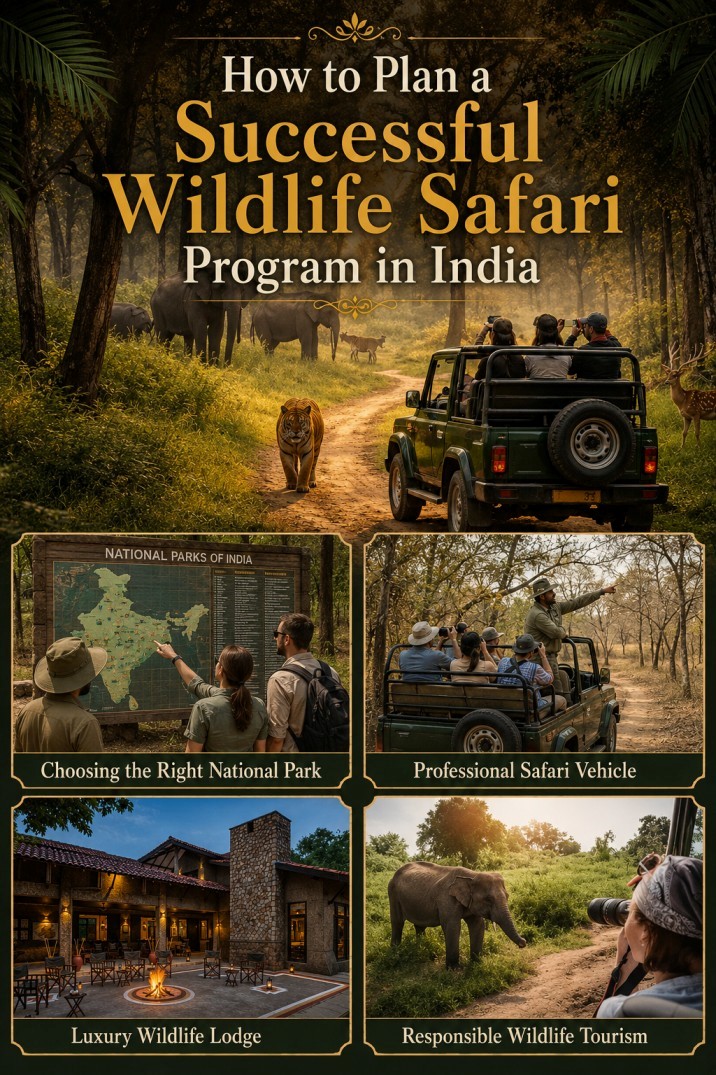
Step 01 Choose the right national parks
Selection should depend on client interest, season, and accessibility — matched against first-time versus repeat travelers.
Central India
Bandhavgarh & Kanha
Classic tiger reserves, dense forest terrain.
Rajasthan
Ranthambore
Accessibility paired with a heritage combination.
Assam
Kaziranga
Rhinos and wetland ecosystems.
South India
Periyar & Nagarhole
Elephants and rich biodiversity.
B2B Insight
Match destinations with client expectations — first-time versus repeat travelers.
The Framework
Step-by-step guide to planning a safari program
Seasonality, accommodation, permits, pacing, signature experiences, and logistics — in the order they need to be locked in.
- October to June — best safari season
- March to May — higher chances of sightings
- Monsoon — many parks remain closed
Accurate seasonal planning increases client satisfaction.
- Premium wildlife lodges with naturalists
- Boutique eco-resorts
- Heritage properties near parks
Stay quality often defines the overall safari experience.
- Book jeep safaris early
- Choose the best zones within parks
- Arrange experienced naturalist guides
Early planning is critical for premium clients.
- 2–3 safaris per destination
- Leisure time between drives
- Combine wildlife with culture or relaxation
Balance enhances comfort and overall experience.
- Walking safaris, where permitted
- Boat safaris — Periyar, Sundarbans
- Night safaris in select reserves
- Birdwatching tours with experts
These experiences create high-value, memorable journeys.
- Reliable transfers — road, rail, or air
- Buffer time between connections
- On-ground coordination
Smooth logistics are essential for luxury travel.
Reference Itinerary
Sample wildlife safari program — 8 to 10 days
A working structure that blends tiger territory, central India's reserves, and a cultural extension.
Day 1–2
Delhi
Arrival, rest, and cultural introduction.
Day 3–5
Ranthambore
Tiger safaris, luxury lodge stay.
Day 6–8
Central India
Kanha / Bandhavgarh — multiple safaris, nature experiences.
Day 9–10
Extension
Agra or Jaipur — cultural add-on for a complete India experience.
Where It Gets Hard
Common challenges, and how they're solved
Challenges
- Limited permits
- Remote locations
- Seasonal constraints
- Unpredictable wildlife sightings
Solutions
- Book early
- Work with experienced partners
- Set realistic expectations
- Focus on overall experience, not just sightings
Looking Ahead
Future trends in wildlife safari travel
"A DMC turns a safari plan into a seamless, high-quality travel experience — and safaris into long-term client relationships."Planning Wildlife Safari Programs in India
Build a safari program worth remembering.
From permits to lodges to logistics — we handle the on-ground detail so your client's safari delivers more than sightings.
Get in TouchRecent Posts