West India
- Home
- West India
Explore Categories
Tour Packages & Services for West India
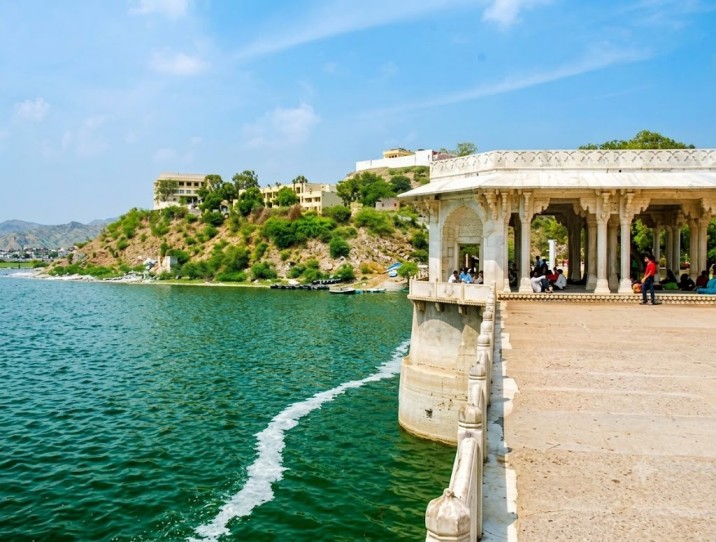
Anasagar lake - the serene jewel of ajmer
Located in the historic city of Ajmer in Rajasthan, Ana Sagar Lake is a beautiful artificial lake that seamlessly blends history, architecture, and natural beauty. Constructed in the 12th century by Anaji Chauhan, the grandfather of the legendary ruler Prithviraj Chauhan, the lake has served as an important water reservoir and a cherished recreational destination for centuries. Surrounded by the scenic Aravalli Hills, landscaped gardens, elegant Mughal monuments, and bustling city life, Ana Sagar Lake is one of Ajmer's most visited attractions. Ana Sagar Lake tourism appeals to families, couples, solo travelers, photographers, history enthusiasts, and pilgrims exploring the cultural treasures of Rajasthan.
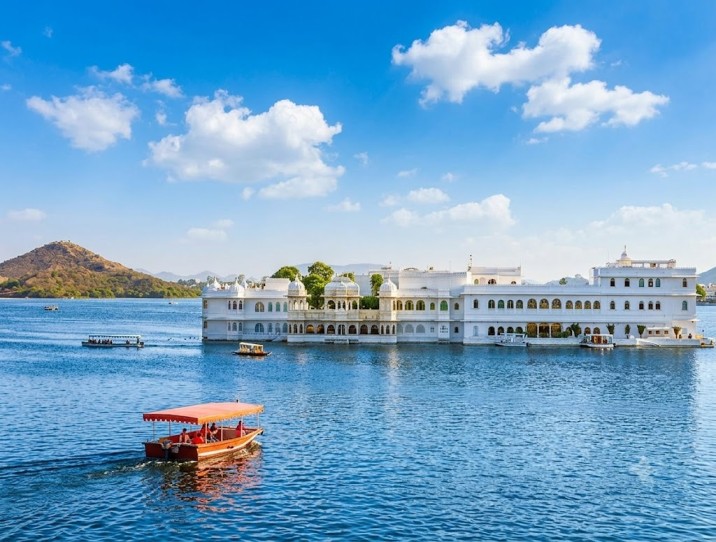
Lake Pichola: The Timeless Beauty of Udaipur
Located in the heart of Udaipur, Rajasthan, Lake Pichola is one of India's most beautiful and iconic artificial lakes. Created in 1362 CE by a local Banjara tribesman named Pichhu Banjara and later expanded by the rulers of Mewar, the lake is surrounded by magnificent palaces, ancient temples, ghats, and the scenic Aravalli Hills. Spread across nearly 7 square kilometers, Lake Pichola is the centerpiece of Udaipur, famously known as the "City of Lakes." Its shimmering waters, royal architecture, and breathtaking sunsets attract families, couples, solo travelers, photographers, history enthusiasts, and luxury travelers from around the world. Lake Pichola tourism offers a perfect blend of heritage, romance, and scenic beauty that defines the essence of Rajasthan.
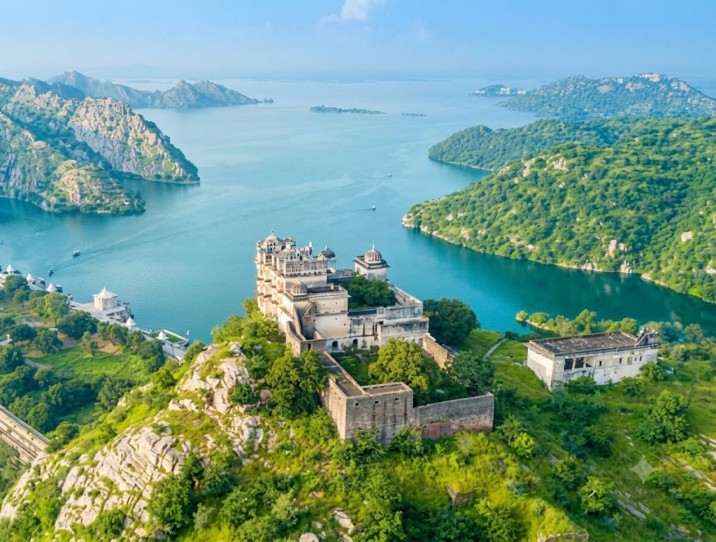
Jaisamand Lake: Explore One of Asia's Largest Artificial Lakes
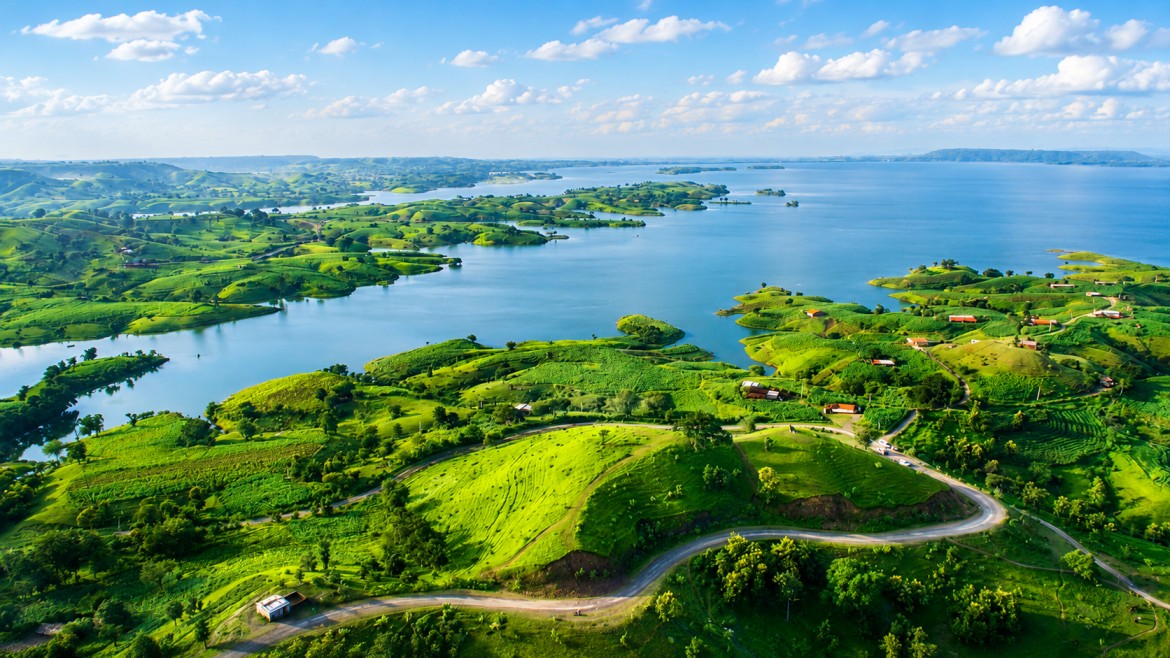
Nestled in the tranquil hill station of Bhandardara in Maharashtra's Ahmednagar district, Arthur Lake is a picturesque freshwater reservoir renowned for its serene surroundings and breathtaking natural beauty. Formed by the backwaters of the Wilson Dam on the Pravara River, the lake is surrounded by the majestic Sahyadri Mountains, lush forests, and rolling hills. Its calm waters, misty mornings, and spectacular sunsets make it one of Maharashtra's most peaceful travel destinations. Arthur Lake tourism attracts families, couples, solo travelers, photographers, campers, and adventure enthusiasts seeking a refreshing escape from city life amidst nature.
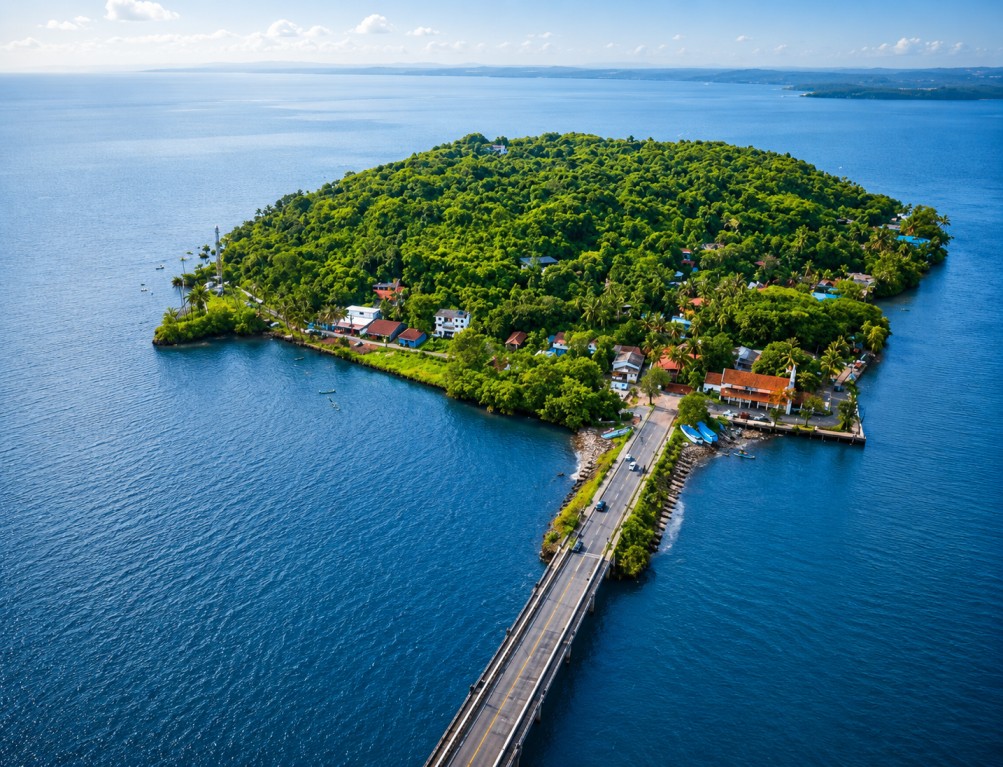
Divar-Island : A Peaceful Escape In West India
Nestled along the tranquil Mandovi River, Divar Island is one of Goa's best-kept secrets, offering a peaceful escape from the state's bustling beaches and vibrant nightlife. Located just a short ferry ride from Old Goa and Panaji, this picturesque island is known for its lush paddy fields, Portuguese-era houses, scenic river views, and rich cultural heritage. Unlike Goa's popular coastal destinations, Divar Island tourism focuses on slow travel, authentic village life, and natural beauty. With its quiet roads, historic churches, charming villages, and serene landscapes, Divar Island is an ideal destination for families, couples, solo travelers, photographers, and culture enthusiasts seeking a unique Goan experience.
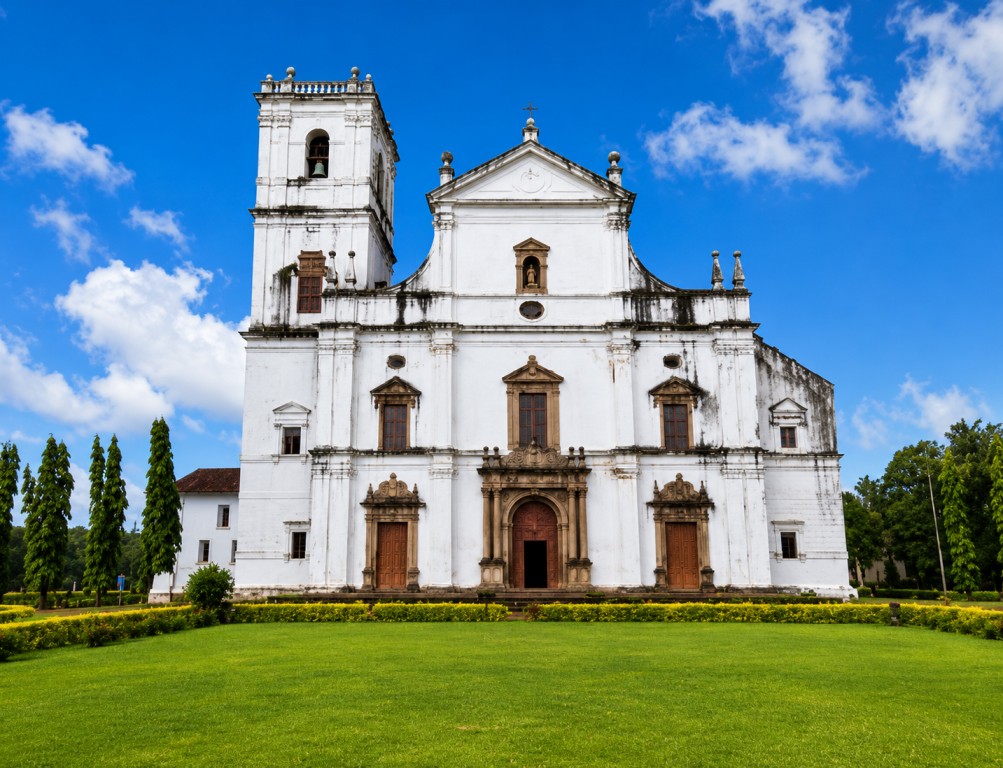
Convents-Of-Churches : Timeless Symbols Of Christianity In India
The Convents and Churches of Goa represent one of India's most remarkable collections of colonial-era religious monuments and are recognized as a UNESCO World Heritage Site. Located primarily in Old Goa, about 10 kilometres from Panaji, these magnificent churches and convents reflect the rich cultural, architectural, and religious heritage of Portuguese India. Built between the 16th and 18th centuries, the complex showcases impressive examples of Baroque, Manueline, Mannerist, and Gothic-inspired architecture while preserving centuries of Christian history. Grand cathedrals, peaceful chapels, historic convents, museums, and beautifully landscaped grounds make this heritage destination one of Goa's most important cultural attractions. Combining history, spirituality, architecture, and art, the Convents and Churches of Goa attract pilgrims, historians, photographers, families, architecture enthusiasts, and travellers from around the world.
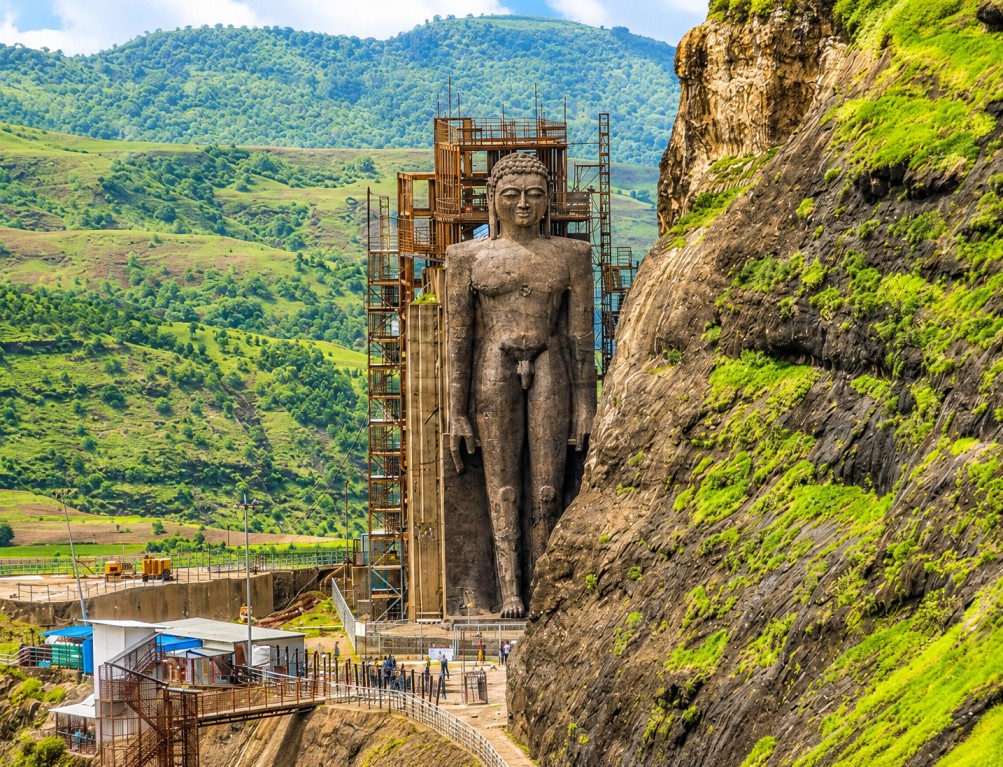
Mangi Tungi - Statue of Ahimsa (World’s Tallest Jain Idol)
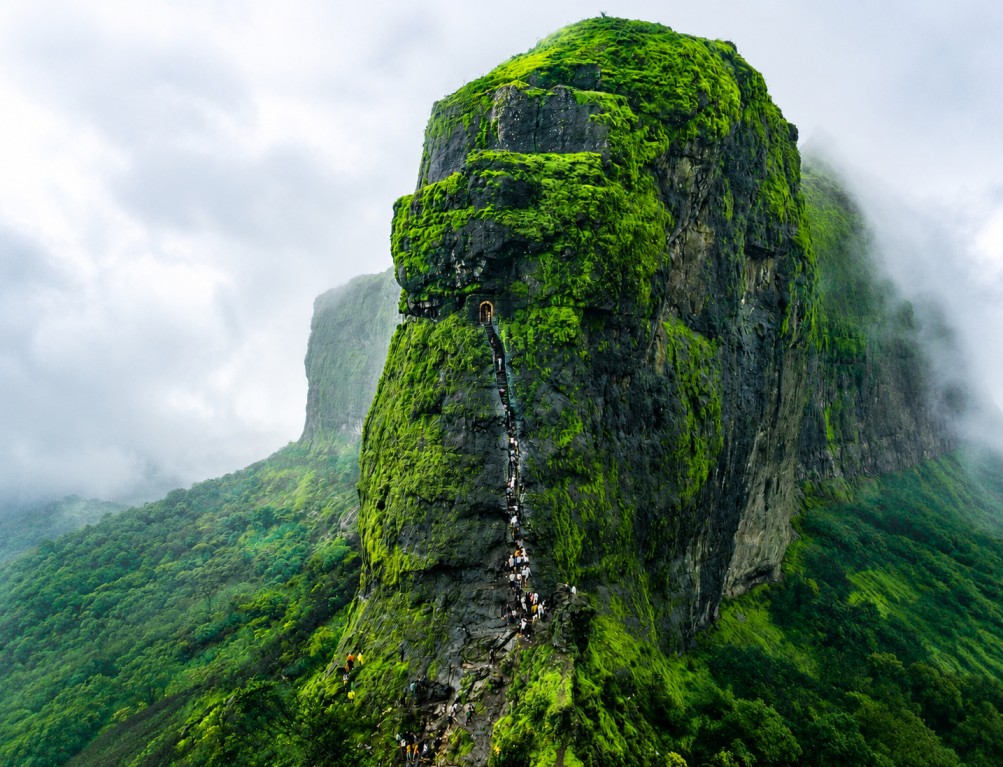
Nestled in the Baglan Taluka of Nashik district, Maharashtra, near the Gujarat border, Mangi Tungi is one of India's most revered Jain pilgrimage sites and a captivating destination for nature lovers and adventure enthusiasts. Renowned for its dramatic twin peaks, ancient cave temples, and the iconic 108-foot Statue of Ahimsa, Mangi Tungi offers a unique blend of spirituality, history, and breathtaking natural beauty. Rising prominently above the surrounding Sahyadri landscape, this sacred hill complex attracts thousands of pilgrims and travelers each year who come to experience its peaceful atmosphere, panoramic mountain views, and rich cultural heritage.
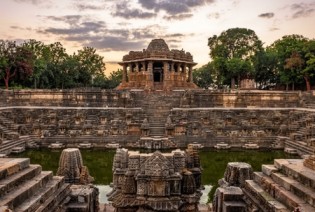
Patan: A Living Masterpiece of History
There are cities that wear their history lightly, and there are cities where the past is so present, so woven into the daily fabric of life, that to walk their streets is to move through centuries simultaneously. Patan, in the Mehsana district of northern Gujarat, belongs firmly to the second kind. Once the medieval capital of Gujarat — known then as Anhilwara Patan — it was for three centuries one of the most powerful, prosperous, and culturally sophisticated cities in the Indian subcontinent. Empires rose and fell around it. Armies came and went. The capital eventually moved on. And yet Patan endured, carrying its heritage forward not in museums or monuments alone, but in the living traditions of its craftspeople — most extraordinarily, in the hands of the weavers who still produce, in a handful of families, one of the most technically complex textiles ever created by human beings.
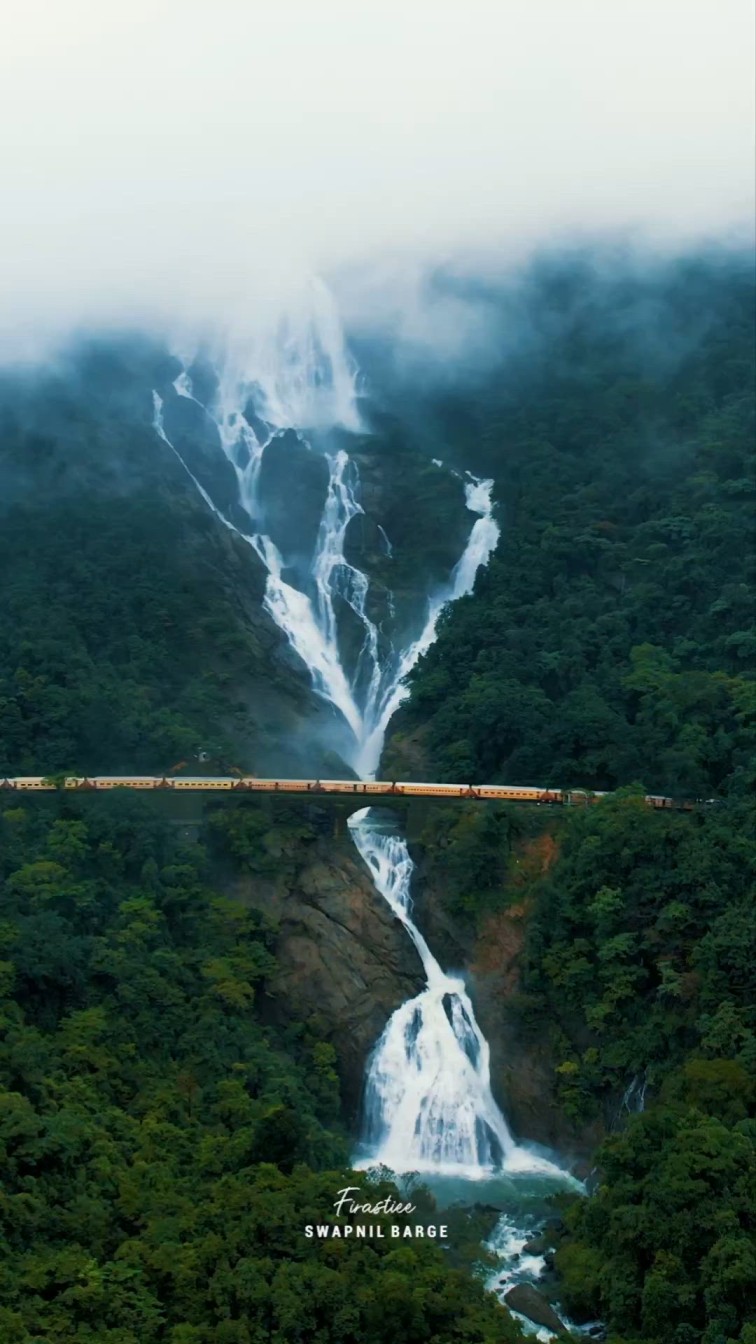
Dudhsagar Falls - India's Majestic Cascade
There are waterfalls you appreciate, and there are waterfalls that stop you completely — that produce a physical response before your mind has had time to process what your eyes are seeing. Dudhsagar Falls belongs emphatically in the second category. Tumbling down the face of the Western Ghats in four distinct cascades across a total height of approximately 310 metres, Dudhsagar is one of India's tallest waterfalls and, by near-universal agreement of those who have seen it, one of its most dramatically beautiful. The name means exactly what it sounds like — Sea of Milk — and when the falls are running at full volume after the monsoon, the white torrent of water crashing down dark basalt rock and generating clouds of mist genuinely does evoke an enormous pouring of milk down the mountainside.
Chacha Kota - nature's spectacular cascade
Imagine standing at the edge of a rugged gorge, the warm amber light of a Rajasthan evening painting ancient fort walls in shades of gold and rust, the sound of the Chambal River rushing far below, and nothing but wild, untamed landscape stretching to the horizon in every direction. That's Chachakota for you — not just a hidden corner of Rajasthan, but a revelation. Tucked away in the Sawai Madhopur district amid the dramatic ravines of the Chambal valley, this small yet extraordinary destination has quietly held its secrets for centuries. Once you arrive, you begin to understand why those who find it rarely forget it.
Sambhar Lake - India's largest saltwater wonder
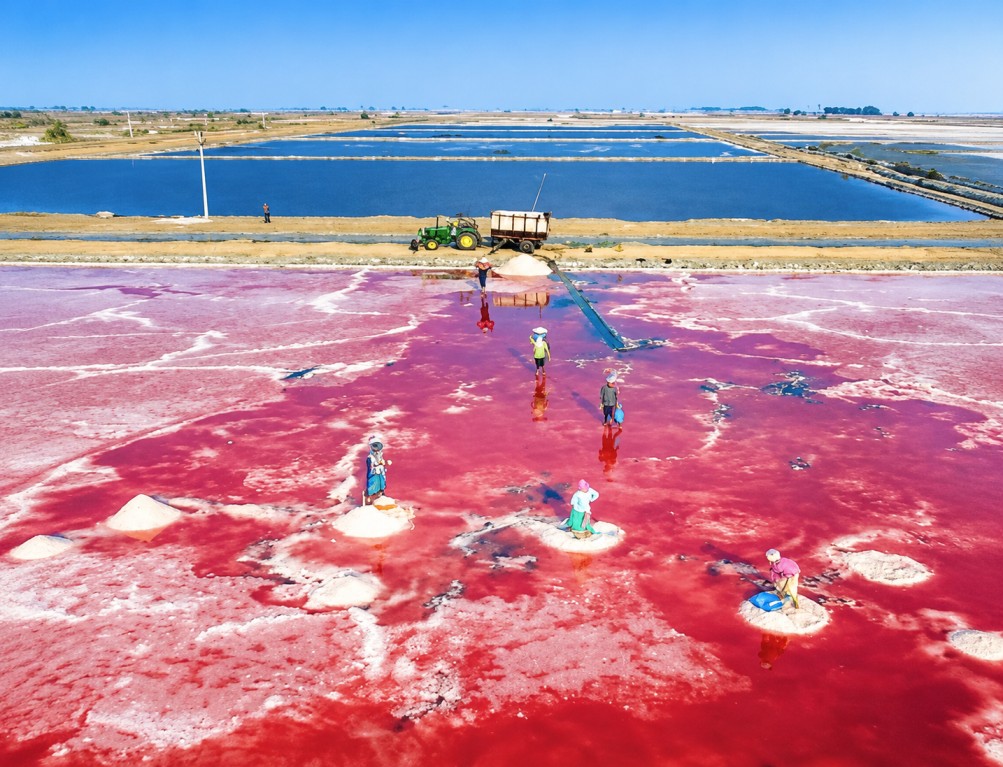
Imagine standing at the edge of an endless stretch of silver-white salt, the horizon dissolving into pale sky, and thousands of flamingos wading through shallow brine just a few hundred metres away. The air carries a sharp mineral tang, the light is soft and golden, and for a moment, you wonder if you've wandered off the edge of the world into something entirely dream-like. That's Sambhar Lake for you — not just a natural wonder, but a state of mind. Cradled in the arid landscape of Rajasthan, roughly 80 kilometres southwest of Jaipur, this ancient saltwater lake is India's largest inland saline lake, and one of its most hauntingly beautiful secrets.
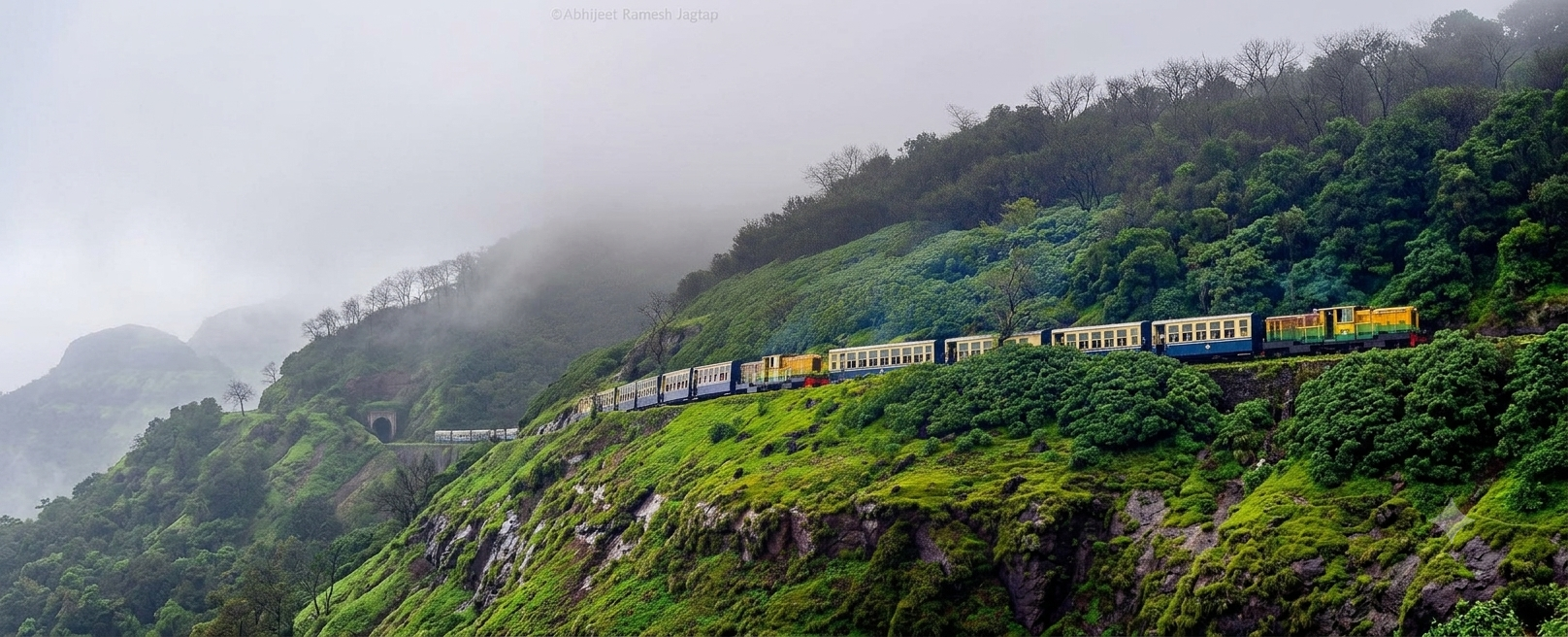
Matheran : A Peaceful Escape In The Western Ghats
Tucked into the folds of the Western Ghats at an elevation of roughly 800 metres above sea level, Matheran is unlike any other hill station in India. It is Asia's smallest and India's only automobile-free hill station — no cars, no motorbikes, no autorickshaws, nothing with an engine. Just red laterite paths winding through dense forests, the rustle of leaves, langurs swinging overhead, and air so clean it almost feels unfamiliar. Located a mere 83 kilometres from Mumbai, Matheran is proof that one of the country's most dramatic escapes sits just a toy train ride away from one of its most chaotic cities.
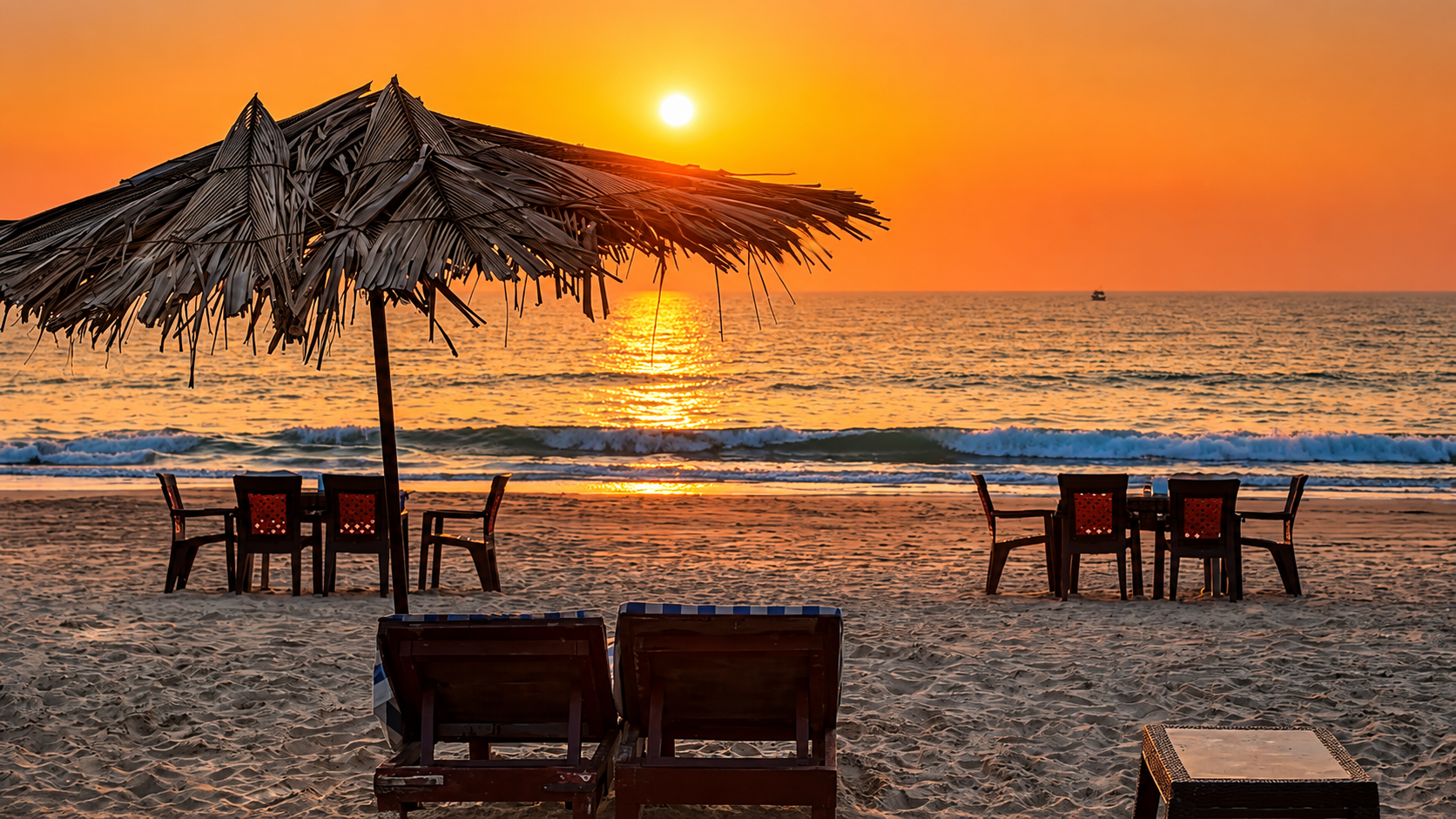
Goa : Where Every Sunset Feels Like a Dream Destination
Goa stands as one of India's most vibrant and culturally layered destinations, representing a unique confluence of Hindu, Muslim, and Portuguese heritage. Situated on the western coast of India, bordered by the Arabian Sea, Goa is recognized for its distinctive blend of colonial architecture, pristine beaches, spice plantations, and a cosmopolitan atmosphere that sets it apart from other Indian destinations. The state draws travelers, cultural enthusiasts, and leisure seekers from across the world, offering a landscape defined by centuries-old churches, forts, and backwater lagoons, coupled with an atmosphere of relaxed coastal charm and cultural vibrancy rarely matched elsewhere.
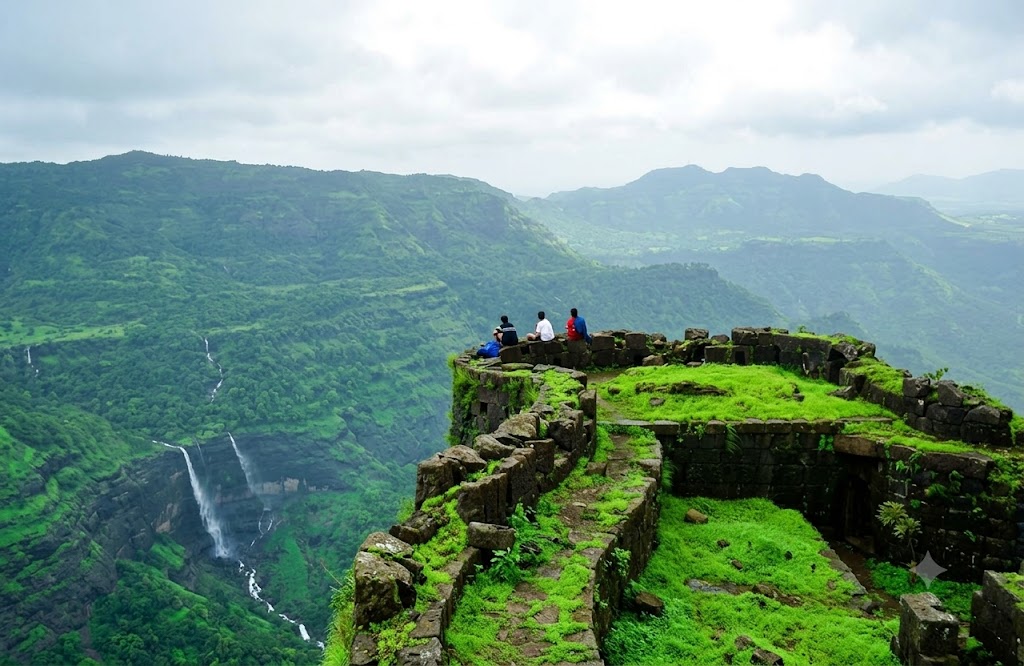
Lonavala : A Monsoon Paradise
There's a reason Lonavala has been Mumbai and Pune's favorite weekend escape for generations — the moment the Western Ghats start rising on either side of the expressway, and the air turns cool and faintly sweet with the smell of rain on earth, you can feel the city stress simply lift off your shoulders. No long flights, no complicated planning, just a couple of hours of driving and suddenly you're surrounded by waterfalls, ancient forts, and clouds that drift right past your window.
Nestled in the Sahyadri mountains between Mumbai and Pune, Lonavala is one of Maharashtra's most beloved hill stations — a place where misty viewpoints, monsoon waterfalls, centuries-old caves, and the famous local fudge come together to create the kind of easy, joyful getaway that never really goes out of style.
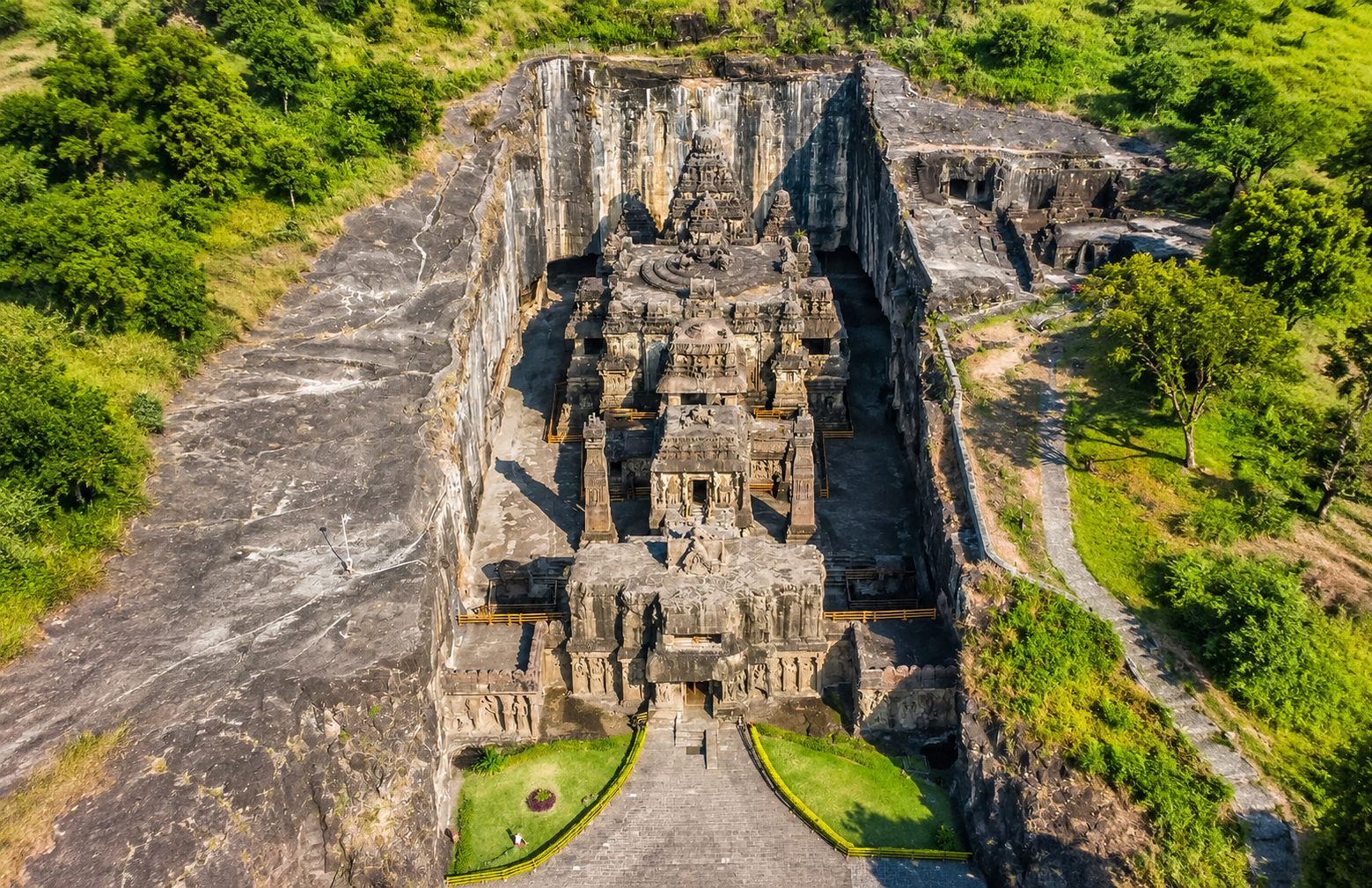
Ellora Caves : India's Rock Cut Marvel
Imagine standing at the base of a temple and realizing it wasn't built brick by brick — it was carved downward out of a single mountain, top to bottom, by people who had to imagine the entire finished structure before they'd even removed the first slab of rock. No blueprints in the modern sense, no margin for error, just centuries of accumulated skill and unimaginable patience. That's the Kailasa Temple at Ellora, and it's just one of 34 reasons this place leaves visitors speechless.
Tucked into the basalt cliffs of the Charanandri Hills, about 30 km from Aurangabad in Maharashtra, the Ellora Caves are one of India's most remarkable UNESCO World Heritage Sites — a place where Buddhist, Hindu, and Jain artisans worked side by side across centuries to create something that still feels impossible to fully comprehend, even when you're standing right in front of it.
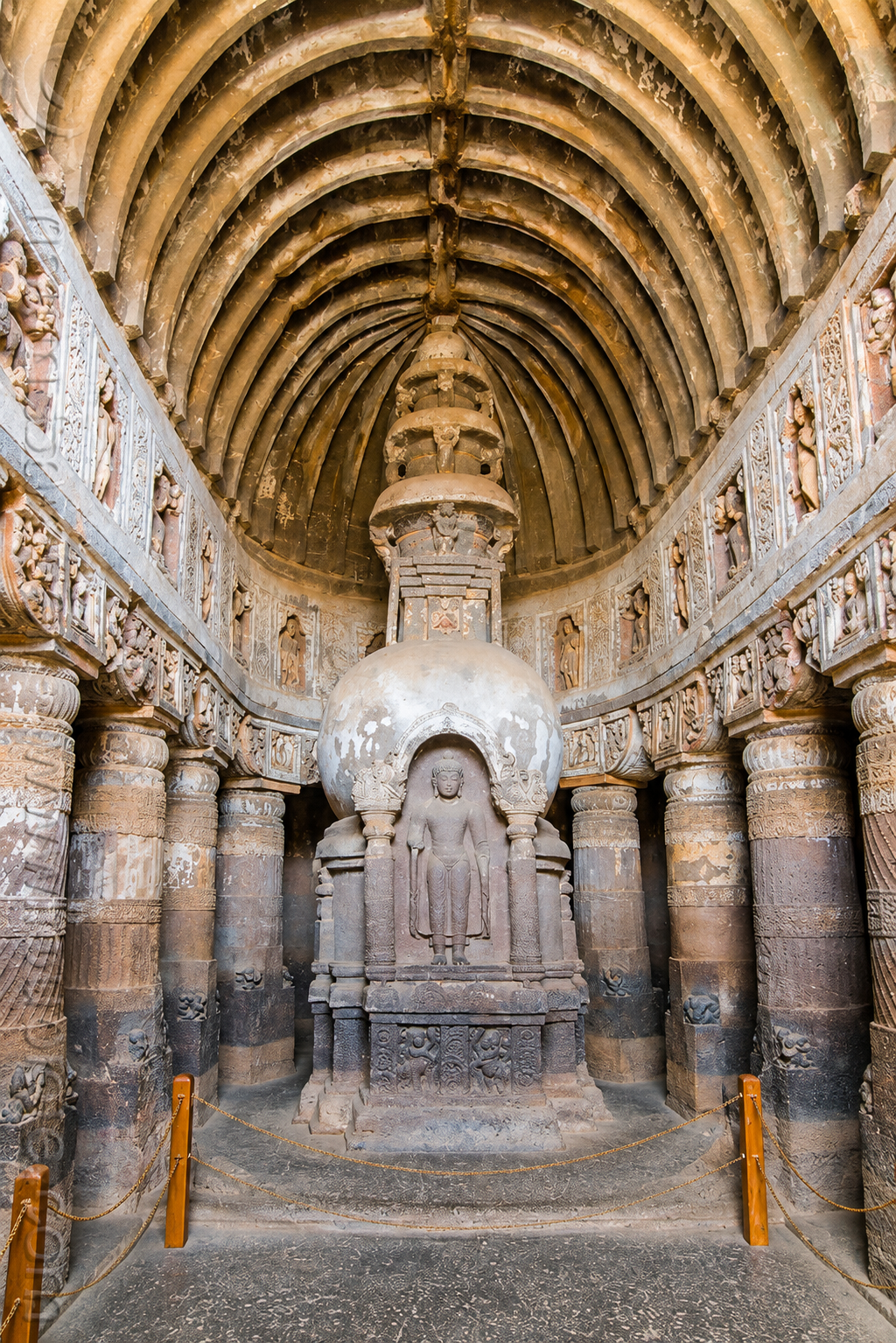
Ajanta Caves : India's Ancient Masterpiece
There's a particular kind of silence that hits you inside the Ajanta Caves — not empty silence, but the kind that feels full of something. Maybe it's the weight of two thousand years. Maybe it's the painted eyes of a Bodhisattva watching you from a wall lit only by reflected sunlight. Whatever it is, almost every visitor describes the same feeling: they walked in as a tourist and walked out a little changed.
Carved into a steep, horseshoe-shaped cliff above the Waghora River in northern Maharashtra, the Ajanta Caves are one of India's true masterpieces — a UNESCO World Heritage Site that ranks among the finest surviving examples of ancient Buddhist art anywhere on Earth. If you've ever wanted to stand inside history rather than just read about it, this is the place.
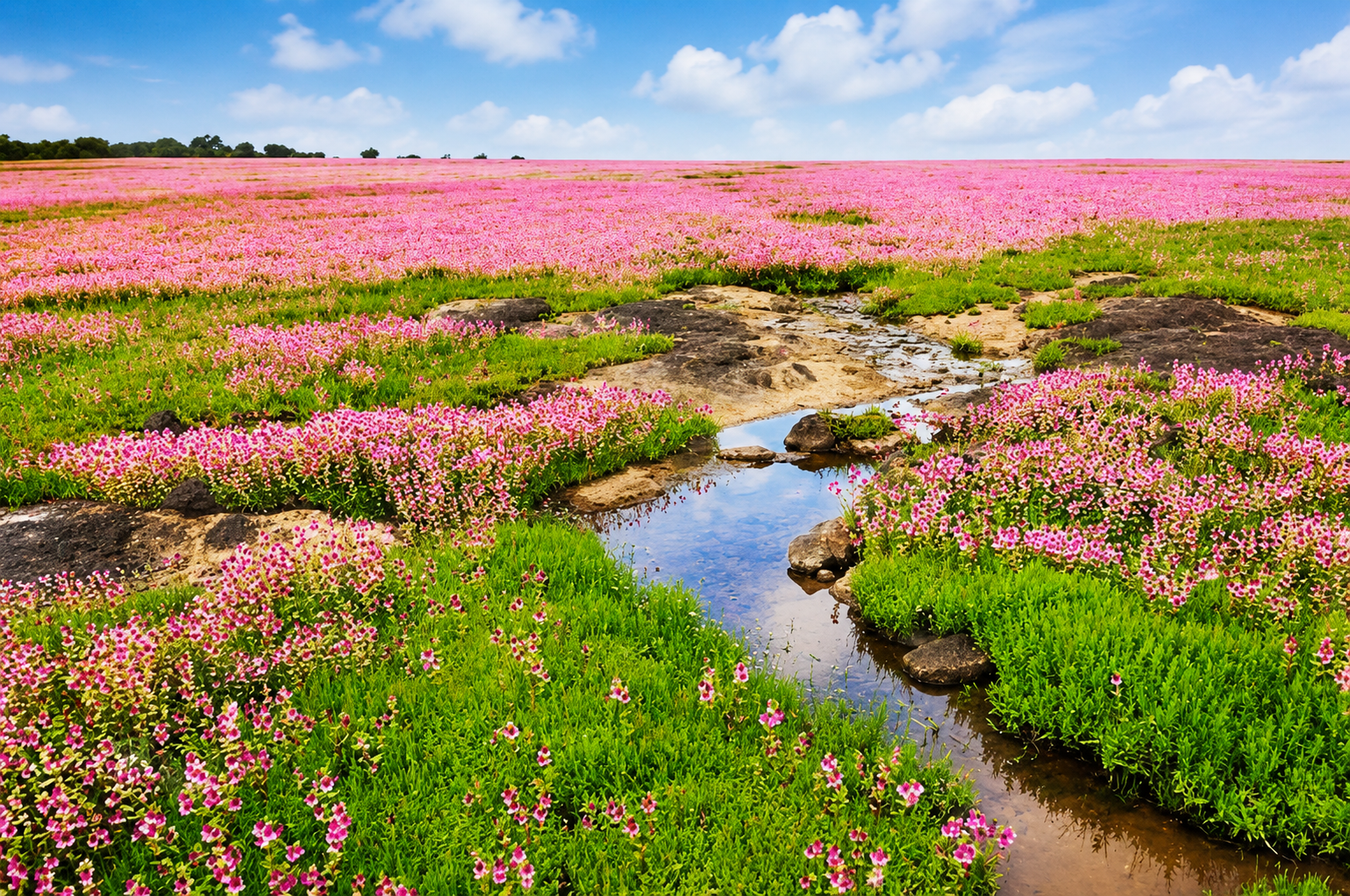
Kaas Plateau : Nature's Floral Wonderland
There are landscapes you visit, and then there are landscapes that seem to happen to you — once a year, for a few short weeks, like the earth decided to throw a party and only told a handful of people. Kaas Plateau is exactly that kind of place. For most of the year, it's a quiet, rocky highland in the Western Ghats. Then the monsoon arrives, and almost overnight, this barren plateau erupts into a living carpet of pink, purple, yellow, and white wildflowers stretching as far as you can see. Locals call it the Valley of Flowers of Maharashtra, and honestly, the name undersells it.
Perched at an elevation of around 1,200 meters near Satara, the Kaas Plateau is one of India's most extraordinary natural phenomena — a UNESCO World Heritage Site that draws nature lovers, photographers, and curious travelers from across the country to witness something that exists nowhere else in quite the same way.
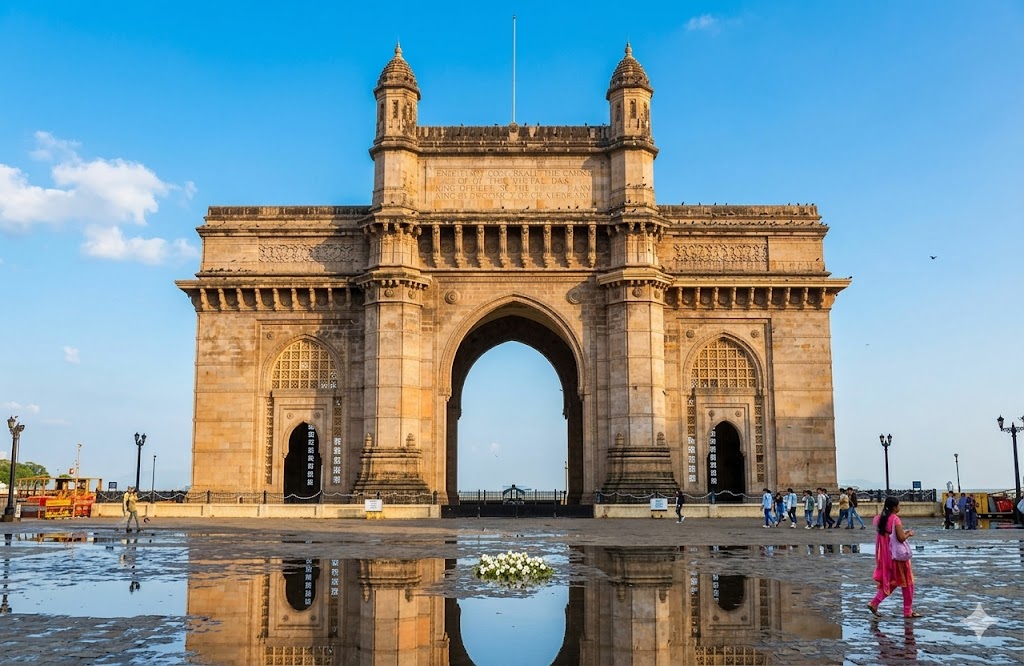
Mumbai : The City Of Dreams
There's a particular energy you feel the moment you step out into Mumbai — the honking taxis, the smell of fried snacks drifting from a roadside stall, waves crashing against the Marine Drive promenade, and millions of people moving with a purpose that's somehow both chaotic and oddly comforting. Mumbai doesn't ease you in gently. It grabs your hand and pulls you straight into the rhythm of its streets, and within a day, you'll understand exactly why people fall in love with this city, frustrations and all.
Spread along the western coast of Maharashtra, Mumbai is India's financial capital, its entertainment powerhouse, and arguably its most fascinating city — a place where Bollywood glamour, colonial-era architecture, ancient cave temples, fishing villages, and gleaming skyscrapers all exist within a few kilometers of each other.
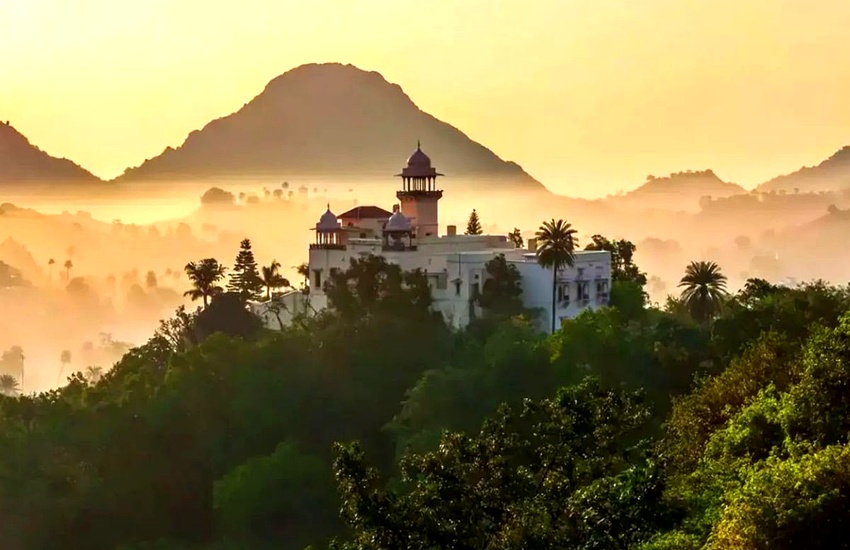
Mount Abu: The Hill Station Of Rajasthan
When most people think of Rajasthan, they think of sand dunes and desert heat, of camels and forts and a sun so fierce it turns the landscape golden by ten in the morning. They do not think of pine forests, cool breezes, a serene lake at sunset, or the kind of misty morning where you can see your breath and wrap your hands around a hot cup of chai and feel completely, perfectly at ease. And that is precisely why Mount Abu surprises every single person who visits it for the first time.
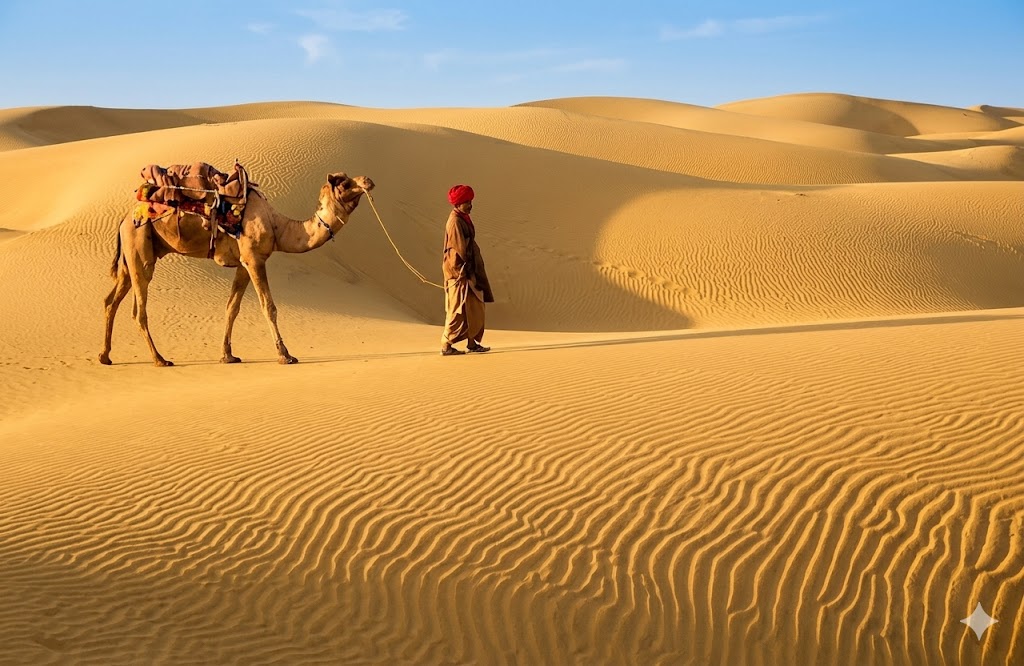
Sam Sand Dunes: The Desert Beauty
golden waves of sand stretching endlessly into the horizon, a camel's silhouette against a blazing orange sunset, and a sky so full of stars at night that it feels like you could reach out and touch the Milky Way. Welcome to Sam Sand Dunes, the beating heart of the Thar Desert and one of Rajasthan's most unforgettable destinations.
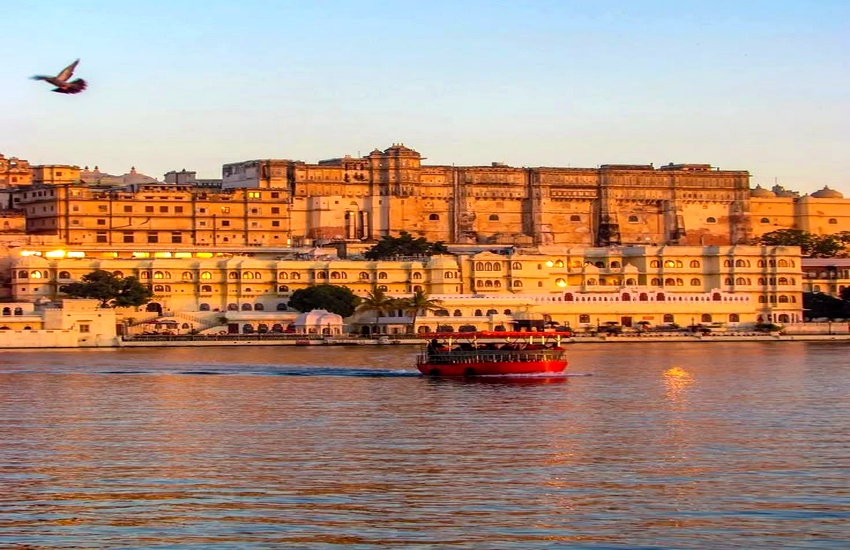
City Palace: The Palace Where History Lives
There are monuments that impress you and monuments that move you. City Palace, Udaipur belongs firmly in the second category. It is not simply grand — though it is undeniably, breathtakingly grand. It is the kind of place that makes you feel something the moment you see it rising above the blue waters of Lake Pichola, its white marble and pale sandstone walls catching the Rajasthan sun and throwing it back at the world in a blaze of gold and cream. It is the kind of place where you round a corner inside a courtyard and stop completely because what is in front of you — a mosaic wall, a painted archway, a view of the lake framed by carved stone — is more beautiful than you were prepared for.
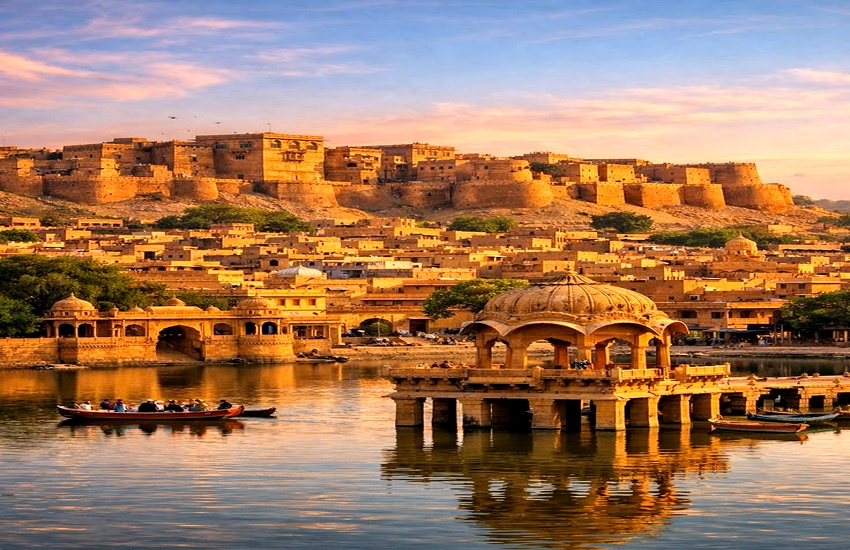
Jaisalmer Fort: One Of The World's Few "Living Fort"
Most forts in India are empty. You walk through grand gateways, past crumbling palaces and dry courtyards, reading plaques that tell you what used to happen here, and you try to imagine the life that once filled these walls. Jaisalmer Fort asks nothing of your imagination. It is still alive — still breathing, still inhabited, still humming with the sounds of daily life in a way that no other fort in Rajasthan, perhaps in all of India, can claim. Nearly three thousand people live inside its walls today. Families have called it home for generations. Shops sell spices and silver. Children run through medieval lanes. Temples ring with bells in the early morning. And all of this happens inside a fortress that is over 850 years old, rising from the Thar Desert like a sandcastle built by the gods and left standing as proof that some things are simply too beautiful to abandon.
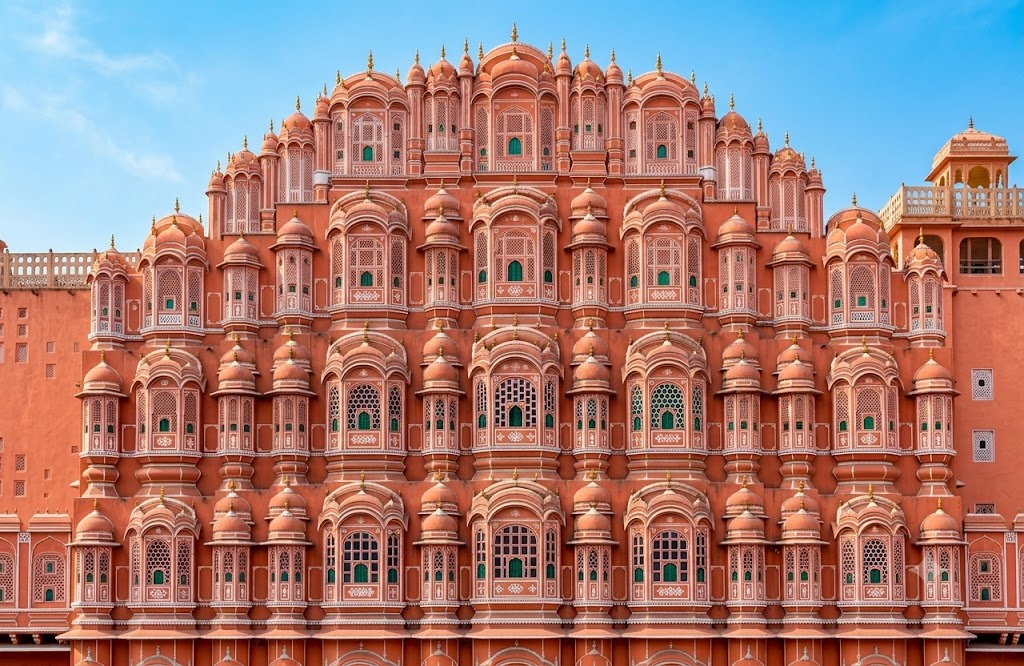
Hawa Mahal: The Palace Of Winds
There are buildings you photograph and buildings you feel. Hawa Mahal is both, but it is the feeling that stays longest. You are walking through the old bazaar of Jaipur, the street noisy and fragrant and completely alive around you, and then you turn a corner and there it is — rising five storeys above the pink sandstone streetscape like a crown someone left balanced on the edge of the city, its 953 intricately carved windows catching the morning light and throwing it back in a thousand different directions at once. And you stop. You actually stop walking, which almost never happens on a busy Indian street, because what is in front of you is so unexpectedly beautiful that your feet make the decision before your brain does.
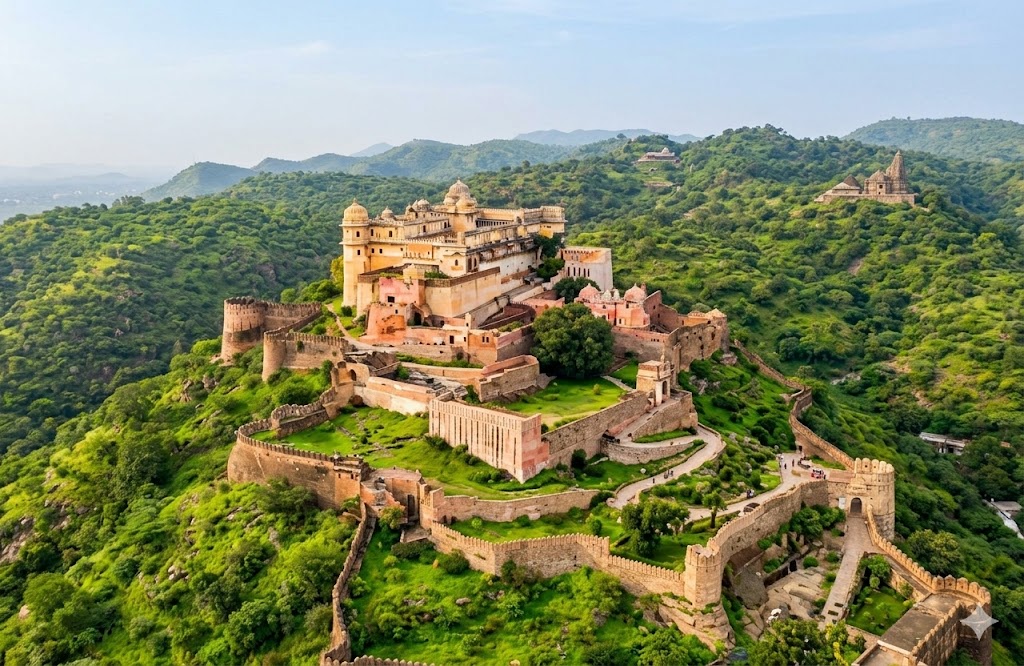
Chittorgarh Fort: Unesco World Heritage Site
There are places in India that are beautiful. There are places that are historically significant. And then there are places that are both of those things and something more — places that carry an emotional weight, a moral seriousness, a sense of human story so large and so profound that standing in them changes something in you, quietly and permanently. Chittorgarh Fort is that kind of place.
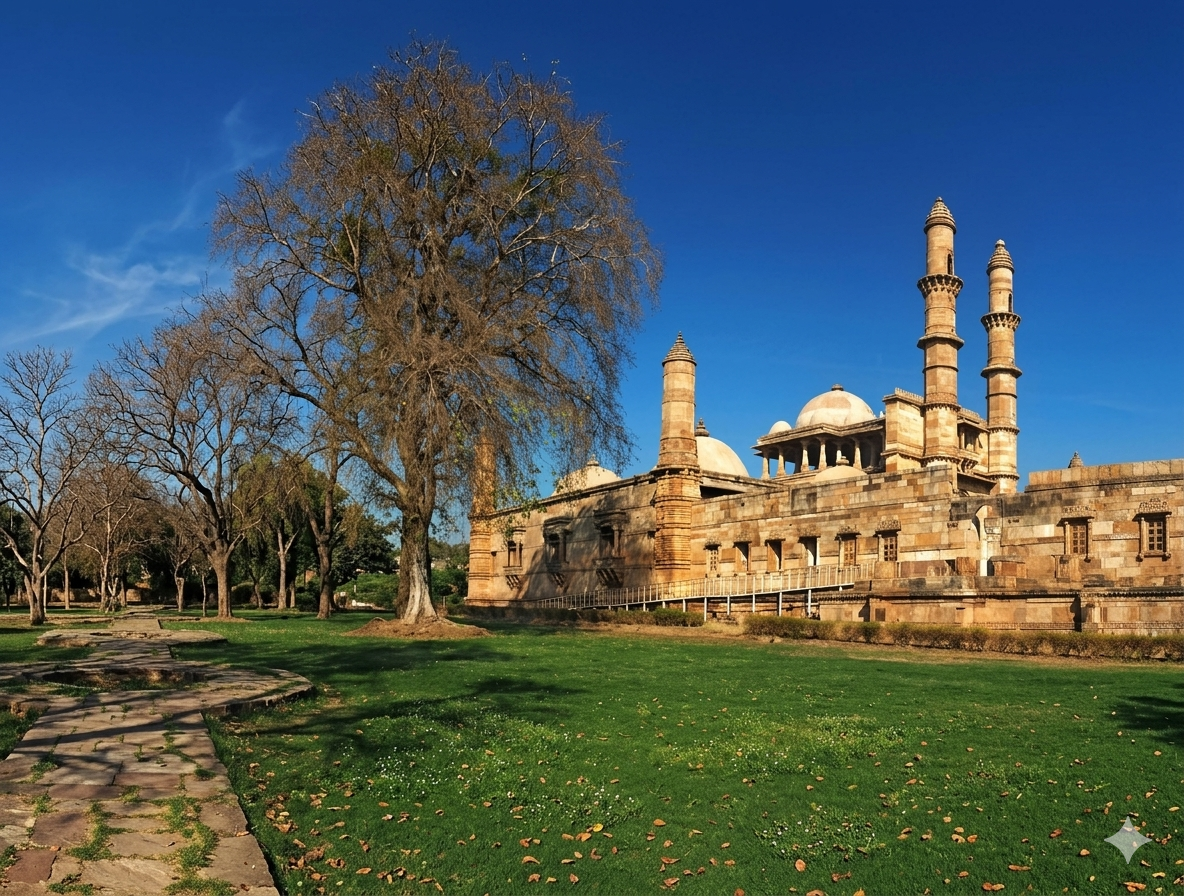
Champaner-Pavagadh Archaeological park
There are places in India where history does not merely linger — it accumulates, layer upon layer, century upon century, until the very ground beneath your feet feels dense with human story. Champaner-Pavagadh in the Panchmahal district of Gujarat is one such place. Designated a UNESCO World Heritage Site in 2004, it is the only complete and unchanged Islamic pre-Mughal city still standing in India, set against the dramatic backdrop of the ancient Pavagadh Hill, whose own history stretches back far beyond the Islamic period into the deep Hindu and Jain past. To visit Champaner-Pavagadh is to move through several civilisations at once — empires that rose, flourished, clashed, and left behind an architectural legacy of extraordinary richness and variety.
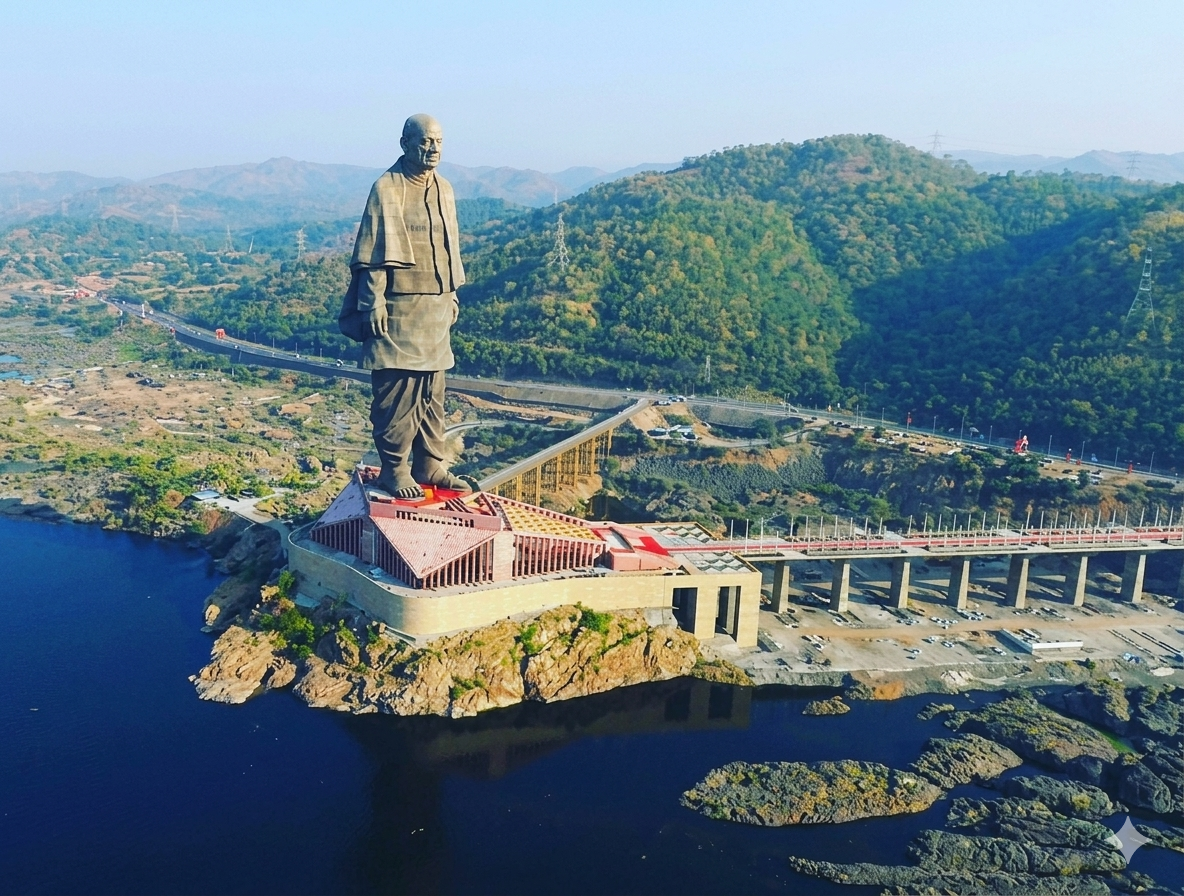
Statue Of Unity
There is a particular kind of monument that stops you before you even reach it. You see it from the road, rising above the treeline and the river valley, impossibly large, impossibly still, and something in you shifts slightly — the way it does when scale exceeds expectation and the mind scrambles to catch up with what the eyes are reporting. The Statue of Unity in Kevadia, Gujarat is that kind of monument. At 182 metres from base to crown, it is the tallest statue in the world — nearly twice the height of the Statue of Liberty, and almost 30 metres taller than its nearest rival. But height alone does not explain why it has become India's most visited modern tourism attraction, drawing millions of visitors every year from across the country and around the world. The Statue of Unity earns its place not just through scale, but through the story it tells and the experience it delivers.
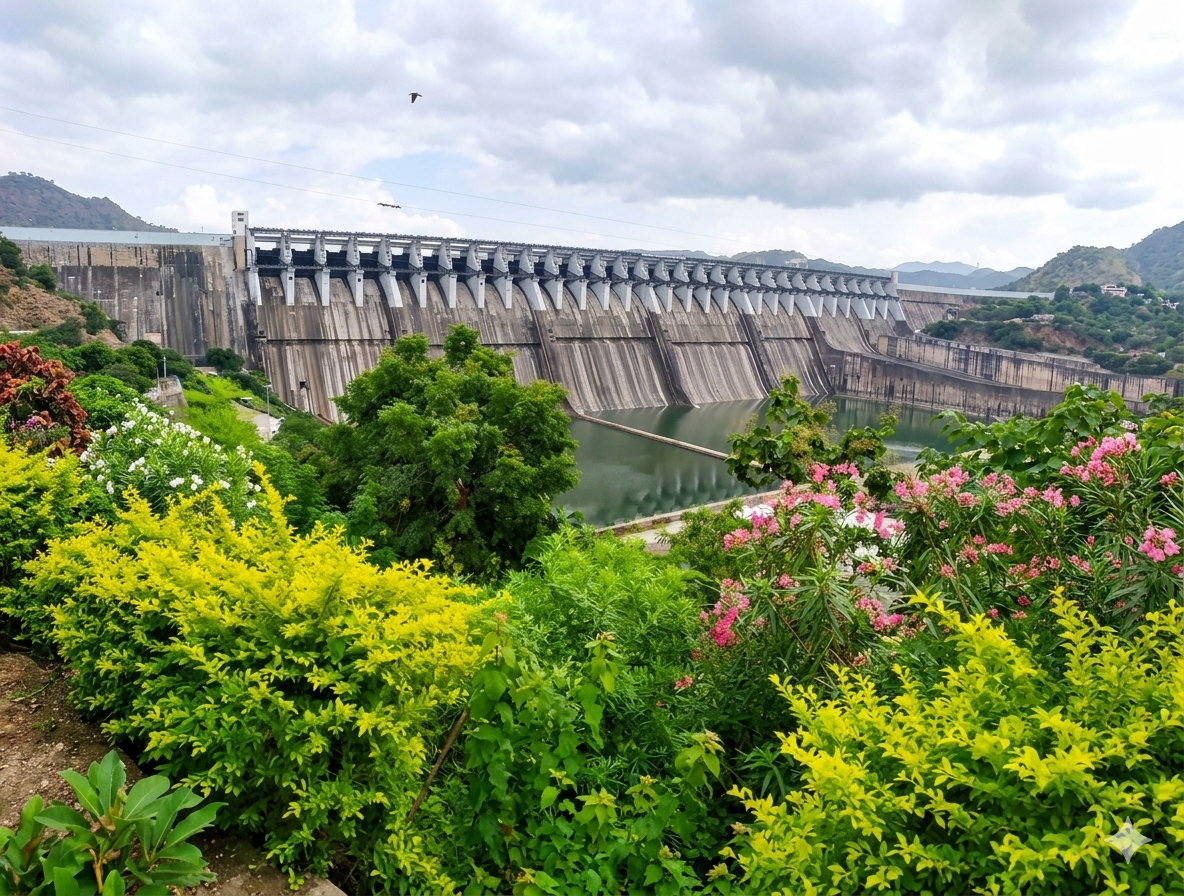
Sardar Sarovar Dam: India's River Of dreams
There are structures built purely for function, and there are structures that transcend function entirely — becoming symbols, landmarks, and destinations in their own right. The Sardar Sarovar Dam on the Narmada River in Gujarat is both. It is one of the largest dams in the world by volume, an engineering achievement of staggering scale, and at the same time a place of genuine natural beauty — where a mighty river meets a wall of concrete and stone, and the landscape opens up into something unexpectedly spectacular. To visit Sardar Sarovar is to stand at the intersection of human ambition and natural grandeur, and to understand, in a very visceral way, what it means to reshape a river.
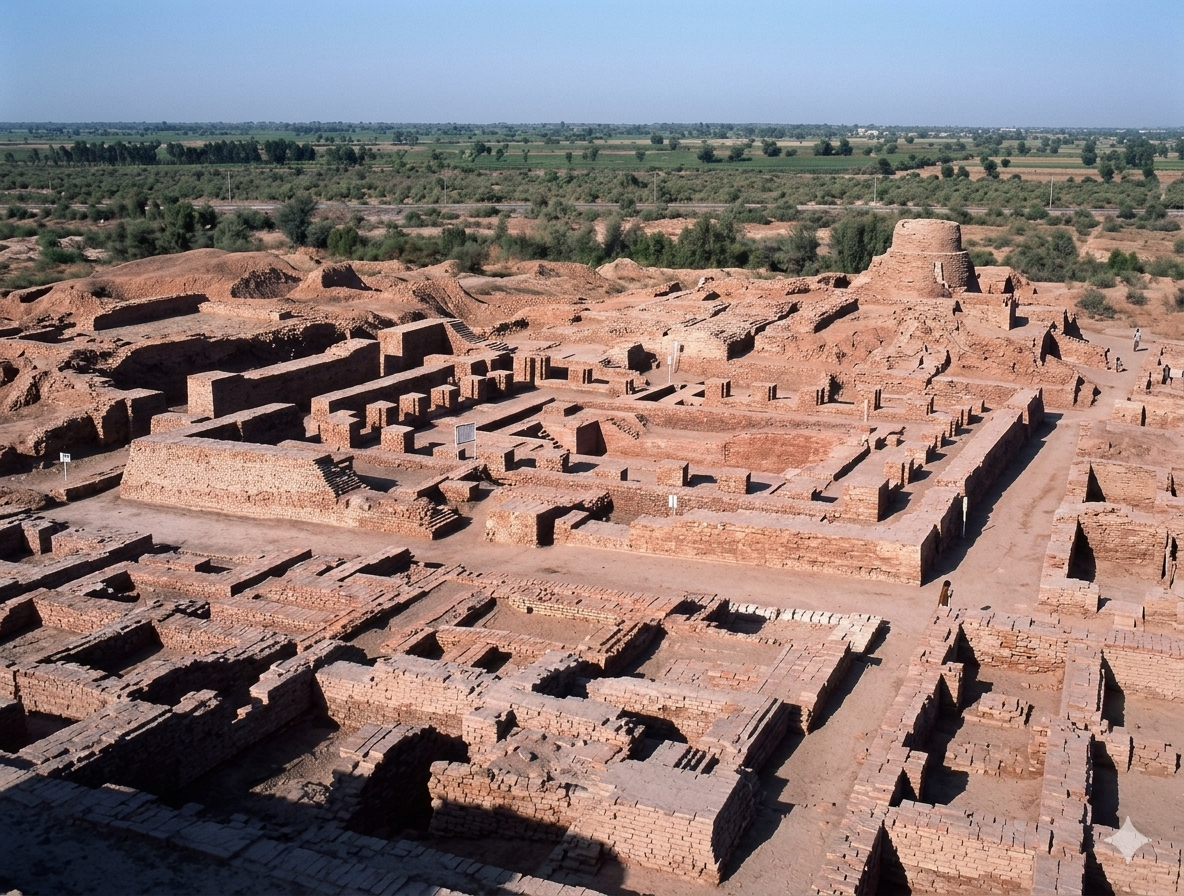
Dholavira: A Harappan City
Some destinations offer escape. Others offer perspective. Dholavira, located on the remote Khadir Island in the Great Rann of Kutch in Gujarat, offers something rarer still — a direct encounter with one of humanity's oldest and most sophisticated urban civilisations. This is not a reconstructed heritage site or a museum recreation. It is the actual, physical remains of a city that flourished over 4,500 years ago, when much of the world was still figuring out how to build in stone. Walking through Dholavira is walking through time itself.
Recognised as a UNESCO World Heritage Site in 2021, Dholavira is one of the five largest known cities of the Indus Valley Civilisation, also called the Harappan Civilisation, which reached its peak between 2600 and 1900 BCE. At its height, this civilisation was the largest of the ancient world, surpassing even Egypt and Mesopotamia in geographic extent. Dholavira was one of its crown jewels — a meticulously planned, architecturally advanced city with a level of civic sophistication that still astonishes archaeologists today
Get In Touch
We are a specialist B2B Destination Management Company (DMC) with over 17 years of operational experience across India. We work exclusively with travel agencies, tour operators, and wholesalers in the USA, UK, and Europe handling every aspect of ground operations so your programs run smoothly, your clients are safe, and your brand reputation stays protected.
Ocean Trip Makers Pvt. Ltd., All right reserved.
Designed & Developed By Random Soft Solution