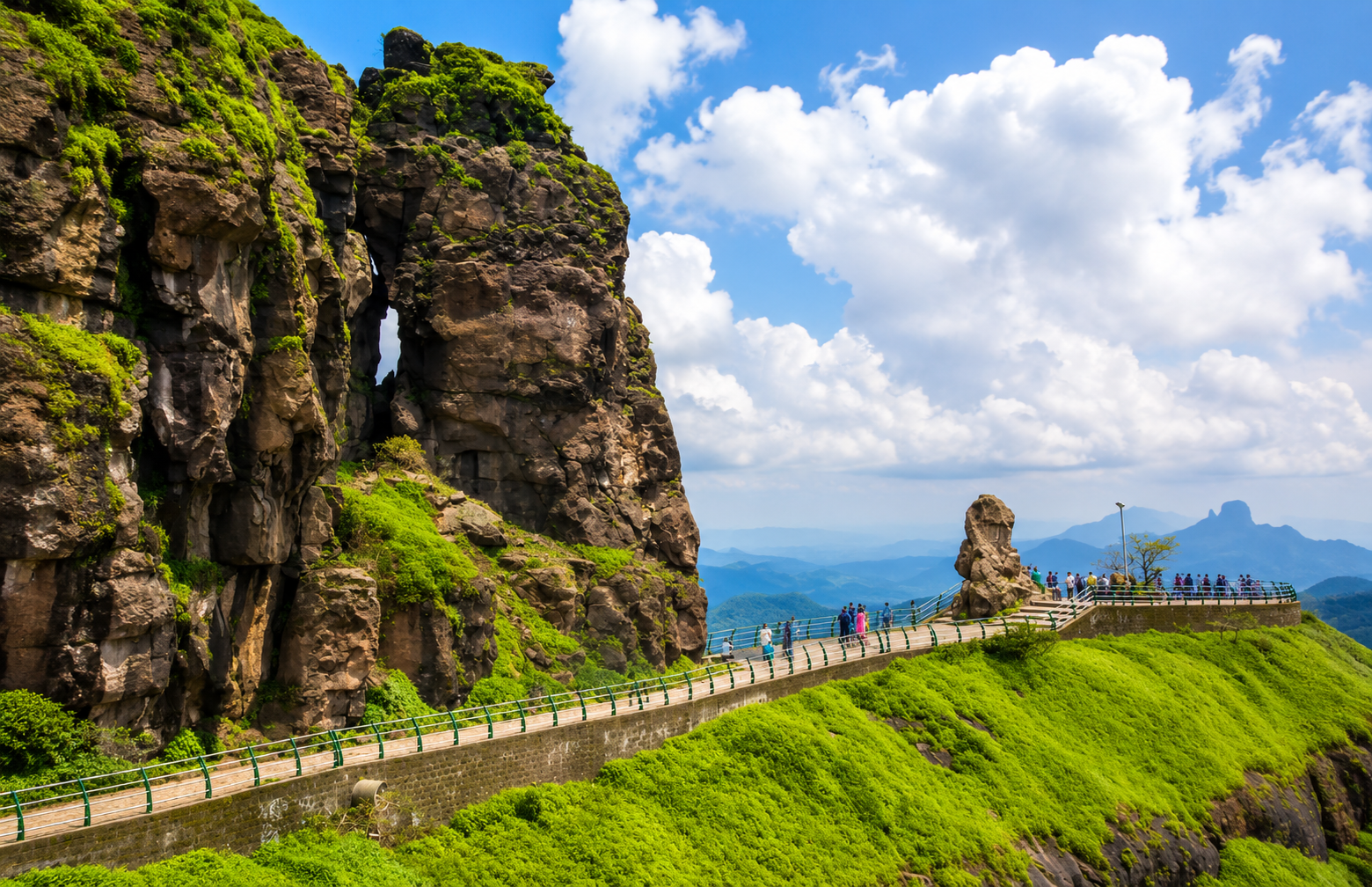
🌄 Netarhat, Jharkhand: The Queen of Chotanagpur That Steals Your Heart at Sunrise
📍 Location
Latehar district, Jharkhand
⛰️ Elevation
About 1,128 metres above sea level
🌅 Famous For
Magnolia Point Sunrise & Sunset Point
🌲 Experience
Forests, waterfalls, tribal culture, birdwatching
🌿 An Introduction — A Hill Station That Feels Like a Well-Kept Secret
There are hill stations that have been loved so loudly and for so long that they've lost a little of themselves in the process. And then there is Netarhat — a place that has somehow managed to stay quietly extraordinary while the rest of the world rushed past it toward more famous destinations. Sitting at an elevation of about 1,128 metres above sea level in the Latehar district of Jharkhand, Netarhat is locally and lovingly called the Queen of Chotanagpur, and the moment you arrive, you understand exactly why that title was given and why it has never been taken away.
This is not a hill station that will overwhelm you with crowds, souvenir shops, or cable cars. What Netarhat offers instead is something far more valuable — silence, space, and a kind of unhurried beauty that feels increasingly rare in the modern world. Ancient sal forests stretch out in every direction. The air carries the scent of pine and wet earth. And the sunrises here are the kind that make even the most seasoned travellers stop mid-sentence, reach for their camera, and quietly forget what they were saying.
If you are looking for a destination that rewards the curious and the patient, that gives you real nature without a tourist infrastructure built on top of it, and that leaves you feeling genuinely rested rather than just technically relocated — Netarhat is your answer.
📜 History and Interesting Facts
Netarhat's story as a destination goes back to the British colonial era, when it was discovered by administrators and planters looking for a cool retreat from the heat of the plains. The British were drawn to its elevation, its forests, and its extraordinary sunrises and sunsets, and they established a small but elegant presence here that still echoes in some of the older colonial-era bungalows that dot the hillside.
The most famous institution in Netarhat's history is undoubtedly the Netarhat Residential School, established in 1954 and widely regarded as one of the finest residential schools in India. For decades, this school has produced some of the country's most distinguished civil servants, scientists, academics, and public figures. The school sits within the forest with a quiet dignity that matches its surroundings, and its reputation gives Netarhat a cultural and intellectual weight that most hill stations simply don't have. Locals speak of it with a pride that is genuine and entirely deserved.
The surrounding Chotanagpur Plateau, on which Netarhat sits, is one of the oldest geological formations in India — part of the ancient Gondwana landmass that existed long before the continents drifted into their current shapes. The forests here are some of the most ecologically significant in eastern India, home to dense sal and bamboo groves that have sustained tribal communities for thousands of years. The Oraon and Munda peoples have lived in harmony with these forests for generations, and their presence gives the landscape around Netarhat a cultural depth that goes far beyond its scenic beauty.
One fact that surprises many first-time visitors is just how cold Netarhat gets in winter. Temperatures regularly drop to near freezing in December and January, occasionally dipping below zero at night. Frost on the grass, fog hanging between the trees at dawn, and the sharp cold air that greets you when you step outside at five in the morning to catch the sunrise — these are experiences that feel distinctly un-Indian to those who haven't explored Jharkhand's highlands before.
🌅 What to Do at Netarhat
The single most important thing to do in Netarhat, the one experience that defines the destination more than anything else, is to wake up before dawn and watch the sunrise from Magnolia Point. This viewpoint, perched at the edge of the plateau with the valley falling away far below, offers what many people genuinely consider to be one of the most beautiful sunrises in all of India. The sky begins to change colour while it's still dark — deep indigo giving way to violet, then rose, then a spreading gold that lights up the valley floor far below in layers of amber and green. On clear mornings, the horizon seems infinite, and the silence is so complete that you can hear your own breathing. People travel from across the country specifically for this moment, and it never disappoints.
Sunset Point, another viewpoint on the western edge of the plateau, offers an equally spectacular experience in the evenings. The sun descends through a sky that turns through every shade of orange, red, and purple before disappearing below the forested horizon, and the silhouettes of the sal trees against that burning sky are the kind of image that stays in your mind for years. Locals and tourists gather here in the late afternoon, setting up their cameras and their expectations, and the sunset invariably exceeds both.
Beyond the viewpoints, Netarhat is a destination built for walking. The forestyou can wander for hours without a map, following the sound of a stream or the call of a bird you've never heard before, and feel entirely at peace. The forests are home to a remarkable variety of birds, making this one of the better birdwatching destinations in Jharkhand. Look out for the Indian paradise flycatcher, the rufous treepie, various species of hornbill, and the occasional glimpse of a bird of prey riding the thermals above the plateau edge.
Lodh Falls, also known as Burhaghaugh Falls, is one of the most spectacular natural attractions within driving distance of Netarhat and deserves a full day of its own. Dropping nearly 143 metres through a forested gorge, Lodh is the tallest waterfall in Jharkhand and one of the tallest in the whole of eastern India. The drive to the falls passes through dense jungle and tribal villages, and the falls themselves are genuinely awe-inspiring — remote, powerful, and surrounded by forest that feels entirely untouched. The trek to the base is moderately challenging but completely worth it.
The Upper and Lower Ghaghari Falls, accessible within the Netarhat area, are quieter and more intimate cascades that reward visitors who take the time to find them. These are not dramatic spectacles but gentle, beautiful places where the forest meets the water in a way that invites you to sit down and stay a while.
For those who want to engage more deeply with the landscape, nature walks with local guides from the nearby villages offer an entirely different perspective. These guides know the forest in the way only people who have grown up inside it can — they know which plants are edible, where the deer come to drink in the early morning, and which paths lead to viewpoints that no travel guide has ever mentioned.
🍲 Local Culture and Cuisine — The Honest Flavours of Jharkhand's Highlands
The culture around Netarhat is rooted in the traditions of the Oraon tribal community, and spending time here means encountering a way of life that is deeply connected to the land, the seasons, and the forest. The Oraon people are known for their warmth toward visitors, their elaborate festival traditions, and their knowledge of the forest that surrounds them. The Sarhul festival, celebrating the flowering of the sal tree in spring, is one of the most joyful and colourful events in the regional calendar — if your visit coincides with it, you will witness something genuinely beautiful.
The food in and around Netarhat is simple, seasonal, and honest in the best possible way. Because you are in the highlands, the cooking here has a slightly different character from the food you find near the lowland waterfalls, though the shared Jharkhandi traditions run through all of it.
Start your mornings in Netarhat with a steaming bowl of Sattu porridge or a plate of Dhuska — the beloved deep-fried rice and lentil cake that is the breakfast staple of Jharkhand. Crispy, warm, and deeply filling, it sets you up perfectly for a morning of walking in the cool forest air. Pair it with strong, sweet ginger tea from one of the small stalls near the market area and you have a breakfast that costs almost nothing and tastes like everything.
Litti Chokha is essential here as it is across Jharkhand, but the version you find near Netarhat often has a slight smokiness from the wood fires used for cooking that elevates the dish even further. The wheat balls come out of the fire with a charred, crackling crust and a warm, spiced interior, and the Chokha — that rough mash of roasted brinjal, tomato, and potato with mustard oil and green chillies — is the perfect counterpoint. Eat it with your hands, outdoors, preferably with a view of the forest.
The highland forests around Netarhat produce some unique seasonal ingredients that show up in local cooking. Mahua flowers, harvested from the sacred Mahua tree in spring, are used in everything from sweet preparations to the traditional Mahua liquor that is central to tribal celebrations. Bamboo shoots, foraged from the dense groves that line the hillsides, appear in simple, lightly spiced curries that are earthy and delicious. Wild turmeric, foraged herbs, and forest honey all find their way into local cooking in ways that connect every meal to the landscape it came from.
Rugra mushroom curry, the wild forest mushroom preparation that Jharkhand is quietly famous for among food lovers, appears here too during the monsoon months. If you visit between June and September and find a dhaba offering it, order it without hesitation. The deep, earthy flavour of the forest mushroom in a lightly spiced gravy is something that no cultivated mushroom can replicate.
For something sweet after a meal, Malpua — the syrup-soaked pan-fried pancake flavoured with cardamom — is available at local sweet shops and makes a wonderful indulgence on a cold Netarhat evening. And on truly cold winter nights, a bowl of Khichdi made with local rice and lentils, seasoned simply with ghee and served with a dollop of pickled mango, is the most comforting thing you can eat at altitude.
📅 Best Time to Visit
Netarhat is a destination with a different personality in each season, and the best time to visit depends on what you're looking for. October to February is widely considered the most rewarding window. The air is clear and cool, the skies are sharp and blue, and the sunrises and sunsets at Magnolia Point and Sunset Point are at their most vivid and dramatic. December and January bring genuine cold — temperatures can fall close to freezing overnight — which gives the destination a quality that feels genuinely alpine and rather magical, especially for visitors from the plains.
The monsoon months of July to September transform Netarhat into a different kind of beautiful. The forest turns an almost unreal shade of green, the streams and waterfalls in the area swell with rainwater, and the mist that drifts between the sal trees in the early morning has a quality that is almost cinematic. Lodh Falls is at its most spectacular during these months. Roads can be slippery and occasionally blocked by fallen trees, so travelling with a sturdy vehicle and a flexible attitude is advisable.