🏺 Overview
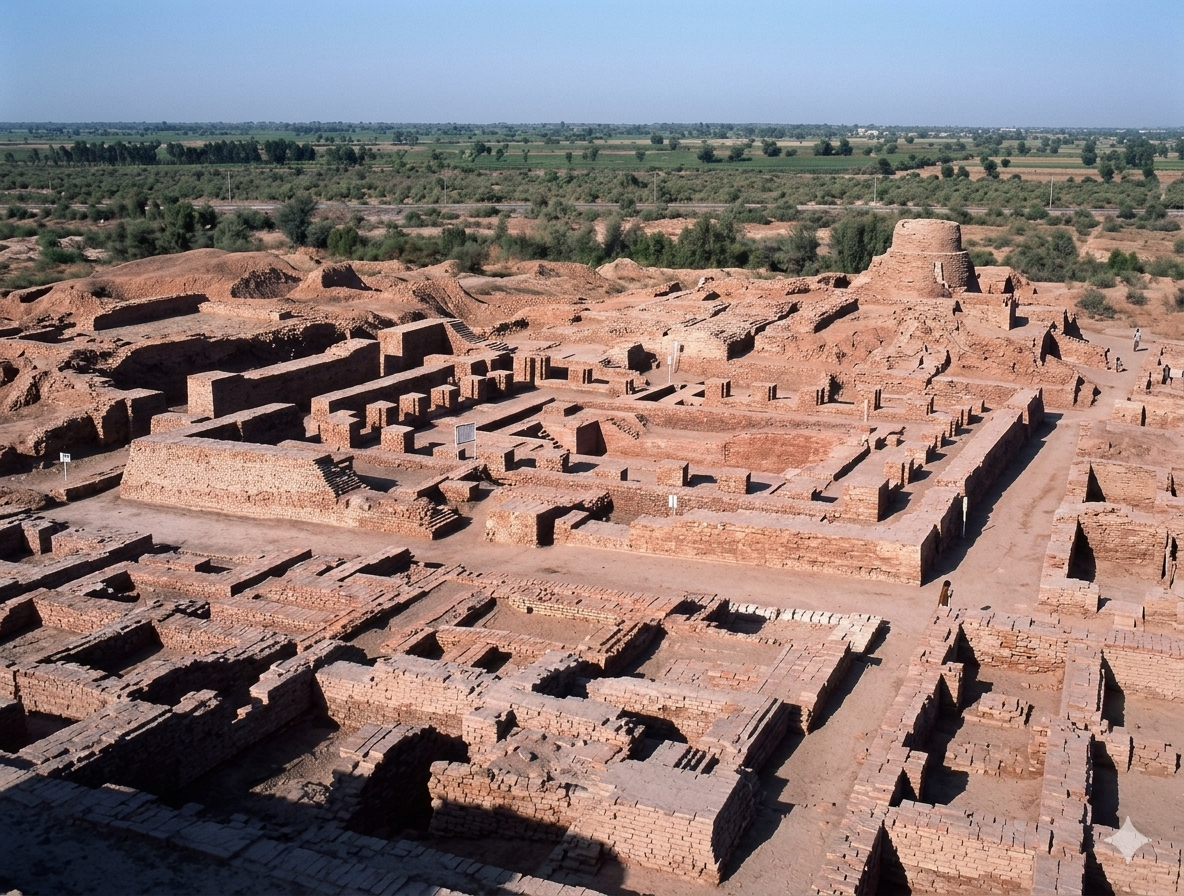
Some destinations offer escape. Others offer perspective. Dholavira, located on the remote Khadir Island in the Great Rann of Kutch in Gujarat, offers something rarer still — a direct encounter with one of humanity's oldest and most sophisticated urban civilisations. This is not a reconstructed heritage site or a museum recreation. It is the actual, physical remains of a city that flourished over 4,500 years ago, when much of the world was still figuring out how to build in stone. Walking through Dholavira is walking through time itself.
Recognised as a UNESCO World Heritage Site in 2021, Dholavira is one of the five largest known cities of the Indus Valley Civilisation, also called the Harappan Civilisation, which reached its peak between 2600 and 1900 BCE. At its height, this civilisation was the largest of the ancient world, surpassing even Egypt and Mesopotamia in geographic extent. Dholavira was one of its crown jewels — a meticulously planned, architecturally advanced city with a level of civic sophistication that still astonishes archaeologists today.
🏛️ A City Built for the Ages
What makes Dholavira exceptional among Indus Valley sites is not just its scale, but its state of preservation and the ingenuity it reveals. The city was divided into three distinct sections — a fortified citadel, a middle town, and a lower town — each separated by massive stone walls and connected by carefully designed gateways.
The most remarkable achievement of the Dholavira civilisation was its water management system — widely considered the most sophisticated of the ancient world. Situated in one of India's most arid regions, the city engineered an elaborate network of reservoirs, channels, and dams to harvest and store every drop of seasonal rainwater.
Among the most striking individual discoveries at the site is a large signboard — believed to be the world's oldest — found near the northern gate of the citadel.
✨ Why Visit
Dholavira was awarded UNESCO World Heritage status in 2021, joining a list that includes the Taj Mahal, the Great Wall of China, and the Pyramids of Giza.
Standing at the edge of the citadel ramparts, looking out over the vast excavated city with the white salt flats of the Rann shimmering in the distance, it is easy to imagine the streets below filled with merchants, craftsmen, and citizens going about their daily lives in what was, by every measurable standard, one of the most advanced urban societies of the ancient world.
🔎 Activities
🏺 Archaeological Tours
Archaeological Tours are the centrepiece of any Dholavira visit. The Archaeological Survey of India maintains the site and trained guides are available to walk visitors through the major excavated areas — the citadel, the ceremonial ground, the reservoirs, the residential quarters, and the gateways.
🧵 Heritage Tourism
Heritage Tourism around Dholavira extends beyond the site itself. The journey to Khadir Island, across the vast white landscape of the Little Rann, is an experience in its own right.
🌤️ Best Time to Visit
Ideal weather for exploration
Extreme summer temperatures
Best photography conditions
🏕️ Recommended Stay
One night on-site or in the nearby village allows for an unhurried visit — an evening to absorb the atmosphere as the site empties of visitors and the ruins settle into silence, and a full morning to explore before the day grows warm.
For travellers visiting the broader Kutch region, Dholavira combines naturally with the Rann of Kutch's famous white salt desert and the craft villages of Bhujodi and Ajrakhpur into a deeply rewarding two to three day itinerary.
Dholavira does not announce itself loudly. It does not need to. It simply waits — as it has for four and a half thousand years — for those who come to listen
Hidden Gems Nearby [Dholavira]
Rann Of Kutch : The Desert Festival Of Gujrat
Rann-Utsav : The White Desert's Grand Celebration
Gir-National-Park : Home Of Asiatic Lions
Mount Abu: The Hill Station Of Rajasthan
Lakshmi Vilas Palace
Statue Of Unity