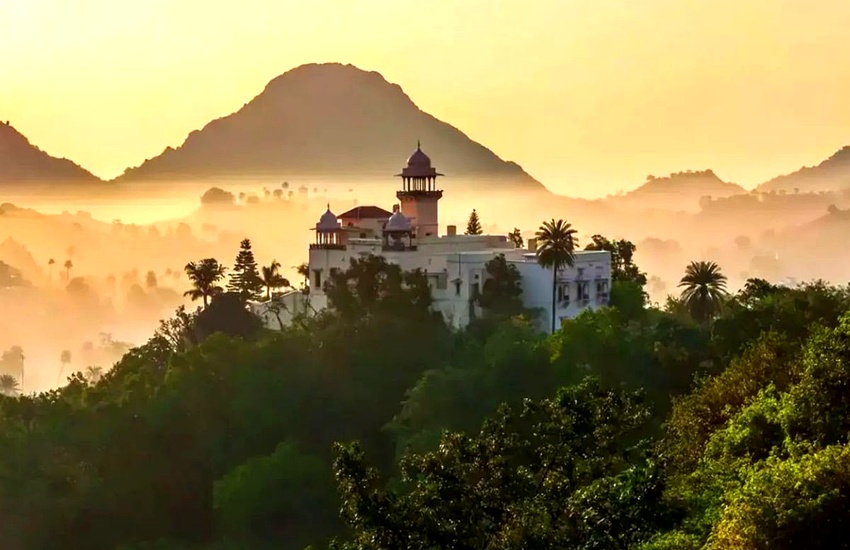
🏔️ Mount Abu, Rajasthan: The Hill Station That Rajasthan Never Told You It Had
An Introduction — A Cool Surprise in the Middle of the Desert
🌿 An Introduction — A Cool Surprise in the Middle of the Desert
When most people think of Rajasthan, they think of sand dunes and desert heat, of camels and forts and a sun so fierce it turns the landscape golden by ten in the morning. They do not think of pine forests, cool breezes, a serene lake at sunset, or the kind of misty morning where you can see your breath and wrap your hands around a hot cup of chai and feel completely, perfectly at ease. And that is precisely why Mount Abu surprises every single person who visits it for the first time.
Mount Abu is Rajasthan's only hill station, and it carries that distinction with a quiet confidence that makes you wonder how it has stayed as unhurried and genuine as it has. Sitting at an elevation of about 1,220 metres above sea level in the southern Aravalli Range near the border of Rajasthan and Gujarat, Mount Abu is a destination that offers something genuinely rare in this part of India — relief from the heat, green forest, clean air, and a pace of life that feels like someone has turned down the volume on everything that usually demands your attention.
But Mount Abu is not merely a climate escape. It holds within it some of the most extraordinary temple architecture in the entire Indian subcontinent, a lake of exceptional beauty, a rich tribal and cultural heritage, a history that stretches from ancient sages to medieval Rajput dynasties to the British colonial administration that developed it as a summer retreat, and a warmth of character that reflects the best qualities of both Rajasthan and Gujarat — the two great cultures that have shaped this hill equally. It is a place that gives you more than it promises, and it promises quite a lot.
📜 History and Interesting Facts
Mount Abu's history begins not with kings or conquerors but with sages. Ancient Hindu texts reference Mount Abu — known in Sanskrit as Arbuda — as a place of great spiritual significance, a mountain where the gods themselves are said to have performed sacred rituals.
The Puranas describe it as the abode of the sage Vashishtha, one of the most revered sages in Hindu tradition, and the site of a great yajna — a sacred fire ceremony — from which the four great Rajput clans of India, the Agnivanshi or fire-born dynasties, are said to have emerged.
✨ Cultural Significance
Whether this is understood literally or as a mythological expression of the mountain's central importance to Rajput identity, the story gives Mount Abu a foundational place in the cultural imagination of the region that no amount of history can diminish.
The hill was known to Buddhist monks and Jain pilgrims long before it became a Rajput stronghold, and the extraordinary Dilwara Temples — built between the eleventh and thirteenth centuries — stand as testament to the depth and sophistication of Jain patronage of art and architecture in medieval India.
The British discovered Mount Abu in the early nineteenth century and recognised immediately what the elevated, forested plateau offered — cool air, manageable temperatures, and a landscape that felt reassuringly un-Indian to administrators homesick for a European climate.
One fact that surprises many visitors is Mount Abu's deep association with the Brahma Kumaris spiritual organisation, which was founded here in the 1930s and has grown into one of the largest spiritual movements in the world with centres in over one hundred countries.
🏛️ What to Do at Mount Abu
🕍 The Dilwara Temples
The Dilwara Temples are the reason Mount Abu is on the map, and they are the experience that makes it unforgettable.
🚣 Nakki Lake
Nakki Lake is the emotional heart of Mount Abu and the place where the town's social life concentrates in the gentle hours of late afternoon and evening.
🌅 Sunset Point
Sunset Point is where Mount Abu gathers every evening to watch the sun go down over the plains of Gujarat far below.
⛰️ Guru Shikhar
Guru Shikhar, at 1,722 metres the highest peak in the Aravalli Range and indeed the highest point anywhere between the Himalayas in the north and the Nilgiris in the south, is a short drive from Mount Abu and an essential half-day excursion.
🏰 Achalgarh Fort
The Achalgarh Fort, about 11 kilometres from Mount Abu, is a medieval fortification built by the Paramara dynasty and later renovated by Maharana Kumbha of Mewar.
🦅 Trevor's Tank
The Trevor's Tank, a small reservoir and wildlife sanctuary about five kilometres from town, is a wonderful early morning destination for birdwatchers and nature lovers.
🍛 Local Culture and Cuisine — Where Rajasthan Meets Gujarat on a Plate
🥘 Gujarati Thali
The Gujarati Thali is perhaps the most complete and satisfying single meal experience available in Mount Abu.
🍲 Dal Baati Churma
Rajasthani food is equally available and equally excellent in Mount Abu.
🌯 Dabeli
Dabeli — a Kutchi snack of spiced potato mixture in a soft bread roll, topped with tamarind chutney, pomegranate seeds, and sev — is enormously popular.
🌶️ Mirchi Bada
Rajasthani Mirchi Bada makes an appearance at snack stalls throughout the town.
🍚 Poha
For breakfast, look for Poha — flattened rice cooked with onions, mustard seeds, turmeric, and curry leaves.
🍬 Traditional Sweets
Mohanthal and Churma Laddoo are among the most popular traditional sweets available in Mount Abu.
🌤️ Best Time to Visit
❄️ Winter (Nov–Feb)
Temperatures drop to between five and fifteen degrees Celsius, making this the most atmospheric season.
☀️ Summer (Mar–Jun)
Mount Abu remains pleasantly comfortable while surrounding regions experience extreme heat.
🌧️ Monsoon (Jul–Sep)
Heavy rains, lush greenery, rushing waterfalls, and dramatic landscapes define this season.
🚗 How to Reach Mount Abu
✈️ By Air
Maharana Pratap Airport in Udaipur, Surat Airport, and Ahmedabad Airport provide convenient access.
🚆 By Rail
Abu Road Station is the nearest railway station, approximately 28 kilometres away.
🛣️ By Road
Well-connected roads link Mount Abu with Udaipur, Ahmedabad, Jaipur, Jodhpur, and surrounding cities.
💡 Travel Tips
Book your accommodation in advance if you are visiting between March and June or during the Summer Festival in May.
Entry to the Dilwara Temples is free but restricted to non-Jains from noon to 6 PM.
Wear layers at any time of year.
The market area around Nakki Lake is good for shopping, particularly for Rajasthani handicrafts, silver jewellery, and local spices.
📍 Nearby Places to Explore
Mount Abu sits within easy reach of several destinations that reward a day trip or an extended itinerary.
🛕 Arbuda Devi Temple
The Arbuda Devi Temple — also known as Adhar Devi — is a cave temple dedicated to the goddess Arbuda.
🏘️ Delwara Village
Delwara village gives you a glimpse of rural life in the Aravalli hills.
🏞️ Udaipur & Chittorgarh
Udaipur and Chittorgarh Fort complement a Mount Abu visit beautifully.
❤️ Why You Should Visit Mount Abu
Mount Abu will surprise you. That is perhaps the most honest and useful thing that can be said about it.
You will find Dilwara's marble so fine it seems to exist outside the normal rules of what stone can do.
You will find a lake so serene at sunset that you will sit beside it longer than you planned and feel better for doing so.
You will find food that reflects two of India's great culinary traditions in the same meal.
Mount Abu is the hill station that Rajasthan kept a little to itself for a long time.
🌄 Final Thought
Go. The cool air is waiting. The marble temples are waiting. The lake at sunset is waiting. And Rajasthan, it turns out, has one more extraordinary thing to show you.
Explore Around the [Mount-Abu]
Kumbhalgarh Fort
Lake Pichola: The Timeless Beauty of Udaipur
Sam Sand Dune
Jawai : The Leopard Hills Of Rajasthan
Desert Festival