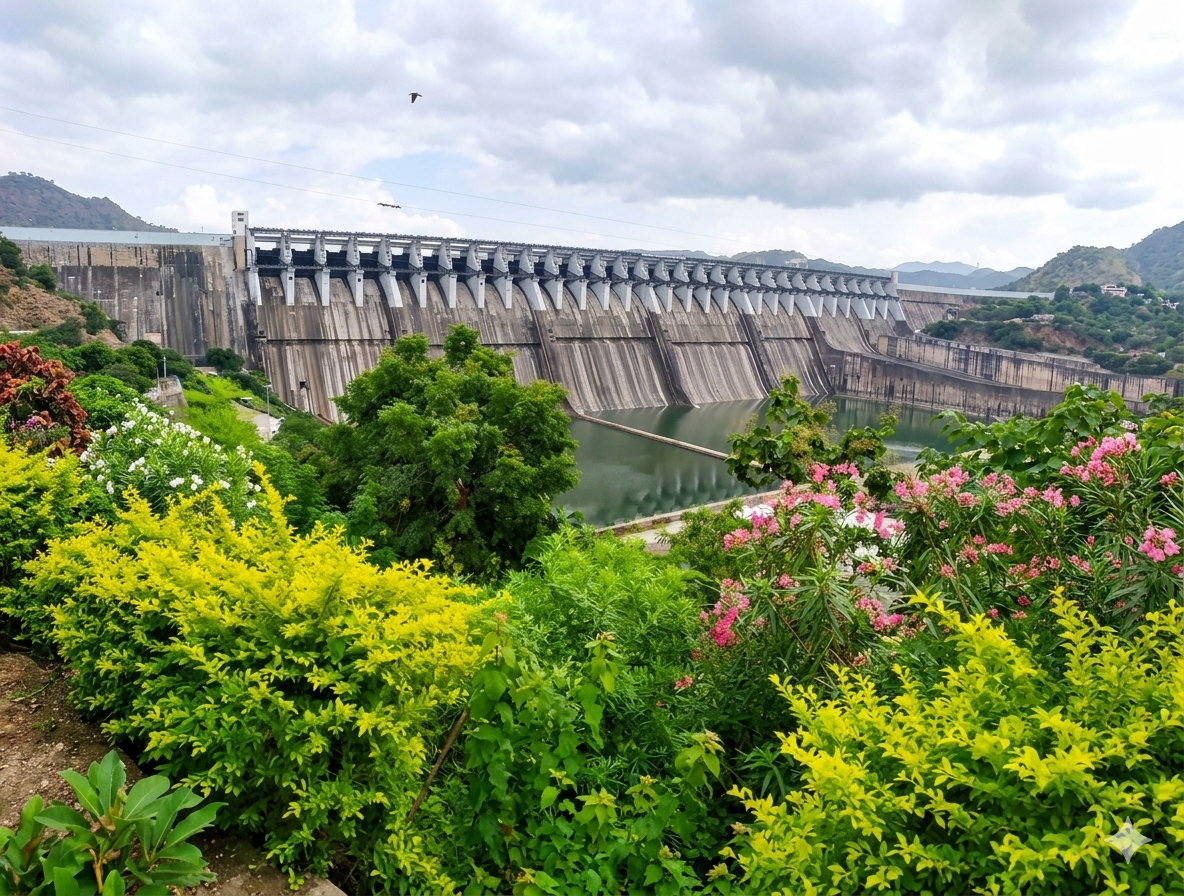
There are structures built purely for function, and there are structures that transcend function entirely — becoming symbols, landmarks, and destinations in their own right. The Sardar Sarovar Dam on the Narmada River in Gujarat is both. It is one of the largest dams in the world by volume, an engineering achievement of staggering scale, and at the same time a place of genuine natural beauty — where a mighty river meets a wall of concrete and stone, and the landscape opens up into something unexpectedly spectacular. To visit Sardar Sarovar is to stand at the intersection of human ambition and natural grandeur, and to understand, in a very visceral way, what it means to reshape a river.
The dam sits near Kevadia in the Narmada district of Gujarat, approximately 100 kilometres from Vadodara, and forms the centrepiece of the Narmada Valley Development Project — one of the most ambitious river development schemes ever undertaken in Asia. Named after Sardar Vallabhbhai Patel, the Iron Man of India whose vision drove the early conception of the project, the dam is not merely an infrastructure achievement. It is a statement of national resolve, a monument to the belief that water, managed well, can transform entire civilisations.
🏗️ The Scale of the Achievement
Numbers alone begin to convey what Sardar Sarovar represents. The dam stands 163 metres tall, making it one of the highest concrete gravity dams in the world. Its length stretches 1,210 metres across the Narmada River. The reservoir created behind it — Indira Sagar — spreads across hundreds of kilometres and holds a volume of water that supplies drinking water to tens of millions of people across Gujarat, Madhya Pradesh, Maharashtra, and Rajasthan. The canal network fed by the dam is among the longest in the world, carrying water deep into the arid heartland of Saurashtra and the drought-prone districts of northern Gujarat, transforming agricultural land that was once at the mercy of the monsoon into reliably irrigated farmland.
Standing on the viewing platform above the dam, looking down at the controlled release of water thundering through the spillways and churning into white foam far below, the sheer physical force of what has been engineered is impossible to ignore. The Narmada, one of India's most sacred rivers, has been harnessed here with a precision and power that is genuinely awe-inspiring. The dam does not diminish the river. It redirects it, amplifies it, and sends it outward in a hundred directions to touch millions of lives it would never otherwise have reached.
🌿 A Landscape of Unexpected Beauty
What surprises many first-time visitors to Sardar Sarovar is how beautiful it is. The Narmada Valley in this stretch is dramatic — forested hills rolling down to the water on both sides, the reservoir stretching away in a wide, gleaming sweep into the distance, the air clean and cool with the spray from the dam. The viewpoints around the dam offer some of the finest river valley panoramas in western India, with the scale of the landscape giving even seasoned travellers pause.
The area around Kevadia has been developed in recent years into a full destination in its own right. The Statue of Unity — the world's tallest statue, depicting Sardar Vallabhbhai Patel — stands just a few kilometres from the dam, visible from across the valley and drawing visitors from across India and beyond. The development of the Ekta Nagar township around it has added gardens, river cruise facilities, a tent city, and a range of viewing experiences that make the broader Kevadia area a genuinely immersive destination for a half-day or full-day visit.
The Jungle Safari and Cactus Garden nearby add further dimensions to the experience, while the Narmada riverfront walk in the early morning — when the mist sits low over the water and the valley is quiet — offers a moment of stillness that contrasts beautifully with the overwhelming scale of the dam itself.
⚙️ An Engineering Marvel
The story of Sardar Sarovar's construction is itself a remarkable one. First conceived in the 1940s and formally approved in the 1980s following an international tribunal ruling on water sharing between the four states it serves, the dam took decades to complete amid intense debate, legal challenges, and one of the most prominent environmental movements in Indian history. The Narmada Bachao Andolan, led by activist Medha Patkar, brought global attention to the human and ecological costs of large dam projects and forced a genuine reckoning with questions of displacement, environmental impact, and the ethics of development.
The result of those decades of negotiation, protest, and perseverance is a structure that stands as one of modern India's most complex achievements — not just in engineering terms, but in human terms. The dam is a reminder that great infrastructure is never built in a vacuum. It carries within it the stories of everyone it touched along the way — the engineers who designed it, the workers who built it, the communities displaced by its reservoir, and the millions of farmers and families whose lives were transformed by the water it delivers.
📅 Best Time to Visit
October to March offers the most rewarding experience. The post-monsoon months bring the reservoir to its fullest extent, the spillways are often operational creating dramatic water releases, and the valley landscape is green and lush. As winter deepens, the mornings grow cool and the light over the water turns a rich, warm gold. The heat of summer makes extended outdoor time at the dam uncomfortable, and the monsoon season, while dramatic, can limit access to certain viewing areas.
🕒 Recommended Stay: Half Day
Sardar Sarovar is best experienced as a focused half-day visit, ideally combined with the nearby Statue of Unity and the broader Kevadia circuit into a full day's itinerary. Arrive in the morning, spend time at the dam's viewing platforms, follow the river valley paths, and carry the scale of what you have witnessed with you long after you leave.
Some structures exist to serve. Sardar Sarovar does that — and then asks you to stop, look, and consider what human will, applied at sufficient scale, is capable of achieving.
Hidden Gems Near [Sardar Sarovar Dam]
Statue Of Unity
Lakshmi Vilas Palace
Rann-Utsav
Rann Of Kutch
Gir-National-Park : Home Of Asiatic Lions
Dholavira: A Harappan City