🌸 Kaas Plateau, Maharashtra: The Day the Mountains Turn Into a Painting
🌿 Overview
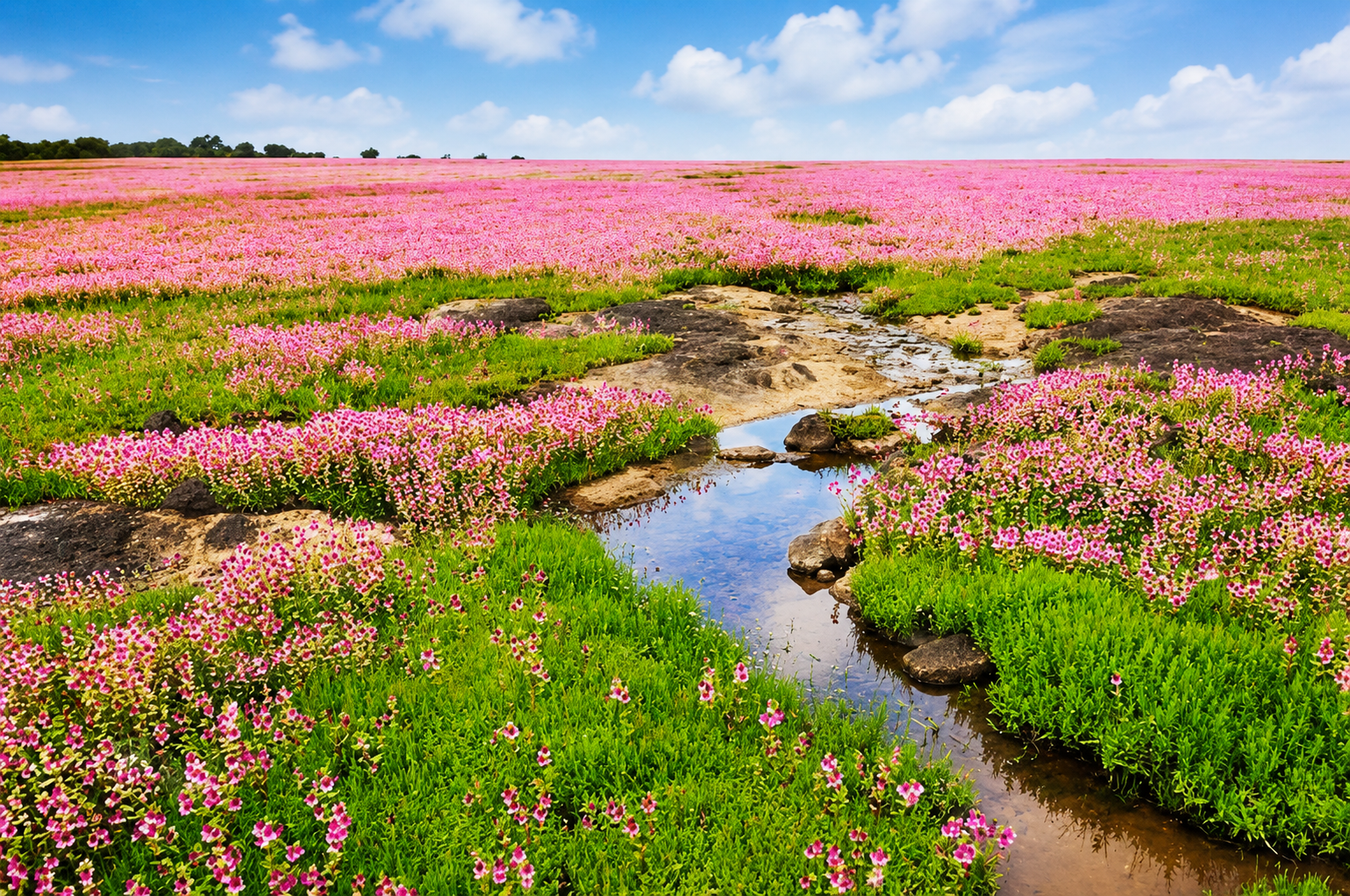
There are landscapes you visit, and then there are landscapes that seem to happen to you — once a year, for a few short weeks, like the earth decided to throw a party and only told a handful of people. Kaas Plateau is exactly that kind of place. For most of the year, it's a quiet, rocky highland in the Western Ghats. Then the monsoon arrives, and almost overnight, this barren plateau erupts into a living carpet of pink, purple, yellow, and white wildflowers stretching as far as you can see. Locals call it the Valley of Flowers of Maharashtra, and honestly, the name undersells it.
Perched at an elevation of around 1,200 meters near Satara, the Kaas Plateau is one of India's most extraordinary natural phenomena — a UNESCO World Heritage Site that draws nature lovers, photographers, and curious travelers from across the country to witness something that exists nowhere else in quite the same way.
🌼 Why Kaas Plateau Is So Special
What makes Kaas genuinely rare isn't just its beauty — it's its biodiversity. This volcanic plateau is home to over 850 species of flowering plants, many of them found nowhere else on Earth. Recognized as a vital part of the Western Ghats, one of the world's biodiversity hotspots, Kaas has been carefully preserved for its unique habitat and rare flora. And here's the part that makes every visit feel like a once-in-a-lifetime moment: different flower species bloom at different points during the season, which means the plateau you see in early September looks completely different from the one you'd see in late October. No two visits, and arguably no two days, look quite the same.
Some species are even rarer than that. The Topli Karvi, a striking purple flower native to this region, blooms only once every seven years — meaning some visitors get to witness something most people will never see in their lifetime, purely by timing.
It's not just about flowers, either. Kaas sits surrounded by misty hills, ancient volcanic rock formations, and the peaceful Kaas Lake, creating a landscape that feels almost otherworldly — equal parts wild meadow and natural art installation.
📜 History and Interesting Facts
Geologically, Kaas Plateau sits on a basaltic rock formation created by ancient volcanic activity in the Deccan Plateau, the same dramatic geological event that shaped much of the Western Ghats. Over thousands of years, a thin layer of soil formed over this volcanic rock — just shallow enough that trees couldn't take root, but perfect for hundreds of specialized flowering species that evolved to survive in these harsh, rocky conditions.
This unusual ecology is exactly why Kaas became a UNESCO World Heritage Site as part of the Western Ghats Natural Heritage cluster, recognized for its high degree of endemism. Many of the plants found here, including rare orchids and even carnivorous species like Drosera Indica, exist almost nowhere else in the world. Researchers and botanists travel from across the globe specifically to study this fragile, fascinating ecosystem.
📍 Major Attractions and Activities
🌺 The Wildflower Carpet
The undisputed star of the show. Walking the designated trails as the plateau bursts into color is an experience that photographs simply cannot fully capture.
🏞️ Kaas Lake
A serene, picture-perfect lake near the plateau, ideal for a peaceful break and some quiet reflection.
🥾 Trekking Trails
Several scenic routes, including the popular trail toward Bamnoli village, offer panoramic views of Shivsagar Lake and the surrounding Sahyadri hills.
📸 Photography
Macro shots of rare blooms, wide shots of rolling flower fields, and misty hill backdrops make this a dream destination for photography enthusiasts.
🌱 Botanical Exploration
Spotting rare and carnivorous plant species is a quiet thrill for nature lovers and amateur botanists alike.
🏰 Sajjangad Fort Visit
Combine your trip with a visit to this nearby hilltop fort, the historic abode of Saint Ramdas.
🍛 Local Culture and Cuisine
The Satara region carries the warm, rustic charm of rural Maharashtra. After a day on the plateau, treat yourself to a wholesome Maharashtrian thali featuring pithla bhakri, a comforting combination of spiced gram-flour curry and millet flatbread that's a staple of this region. Don't miss kanda bhaji (crispy onion fritters), perfect with a hot cup of masala chai on a misty Satara evening. The area is also known for its fresh strawberries and locally made jams, thanks to its proximity to Mahabaleshwar's famous strawberry farms. Homestays around Kaas village often serve simple, home-cooked vegetarian meals that offer a genuine taste of local hospitality.
🗓️ Best Time to Visit
The single most important thing to know about Kaas Plateau is its timing: the flowering season runs roughly from September to October, with the peak bloom typically falling between mid-August and late September. Outside this short window, the plateau looks like a fairly ordinary rocky highland, so timing your trip correctly is everything. Keep in mind this is also the busiest period, with large crowds visiting daily, so booking your visit and accommodation in advance is strongly recommended.
🚗 How to Reach Kaas Plateau
By Air: The nearest airport is Pune International Airport, located approximately 140 km away. The airport is well connected with frequent flights from major Indian cities. From Pune, you can hire a taxi or take a bus to Satara, and then continue on to Kaas Plateau, a journey of roughly 2 to 3 hours by road.
By Rail: Satara Railway Station is the nearest railhead, located about 25 km from the plateau, and is well connected to Mumbai, Pune, and Kolhapur through regular trains. From Satara, taxis and buses are readily available for the scenic onward drive to Kaas.
By Road: Kaas Plateau is most commonly reached by road, and the journey is half the experience. The plateau sits just off NH48, about 22–25 km from Satara city, and the scenic drive along Kaas Road winds through the Western Ghats with breathtaking, misty views — especially magical during monsoon season. Travelers from Pune (around 125–130 km) or Mumbai (around 278 km) can drive via NH48 to Satara and continue toward Kaas.
💡 Travel Tips for First-Timers
- Book your permit in advance — entry to Kaas Plateau requires pre-booked online tickets, and visitor numbers are capped daily to protect the fragile ecosystem.
- Stick to designated walking paths at all times; stepping off the trail can damage rare, delicate flowering plants.
- Avoid visiting outside the bloom season, as the plateau looks dramatically different without its wildflowers.
- Carry a light raincoat or umbrella, since the monsoon season brings frequent showers alongside the blooms.
- Overnight stays on the plateau itself aren't permitted — plan to stay in Satara or nearby homestays around Kaas village instead.
- Wear comfortable, waterproof footwear, as trails can get muddy and slippery during the rains.
📍 Nearby Places to Explore
- Sajjangad Fort – A historic hilltop fort associated with the revered saint Ramdas, offering sweeping views and spiritual significance.
- Thoseghar Waterfalls – A spectacular multi-tiered waterfall that comes alive during monsoon, located a short drive from Satara.
- Shivsagar Lake (Koyna Backwaters) – A vast, scenic reservoir perfect for peaceful boating and nature walks.
- Mahabaleshwar – The popular hill station, famous for its strawberry farms, viewpoints, and cool climate, is within comfortable driving distance.
- Satara City – Worth exploring for its historic forts, local markets, and easy access to regional cuisine.
✨ Why You Should Visit Kaas Plateau
Because nature rarely offers an encore performance quite like this one. Kaas isn't just a scenic destination — it's a brief, breathtaking window into one of the most biodiverse and visually stunning ecosystems in India, one that transforms completely within just a few weeks each year. It rewards travelers who plan ahead with something genuinely rare: a landscape that feels less like a place you visited and more like a moment you witnessed.
Whether you're a passionate photographer chasing the perfect shot, a nature lover eager to spot rare and endemic species, or simply someone craving a peaceful escape into the misty hills of the Sahyadris, Kaas Plateau offers an experience that's as fleeting as it is unforgettable.
So mark your calendar for monsoon season, book your tickets early, and get ready to walk through one of Maharashtra's most magical natural wonders — while it's still in bloom.
Beyond The Main Attraction
Sinhagad Fort
Raigad Fort
Shaniwar Wada
Karla Caves
Aga Khan Palace