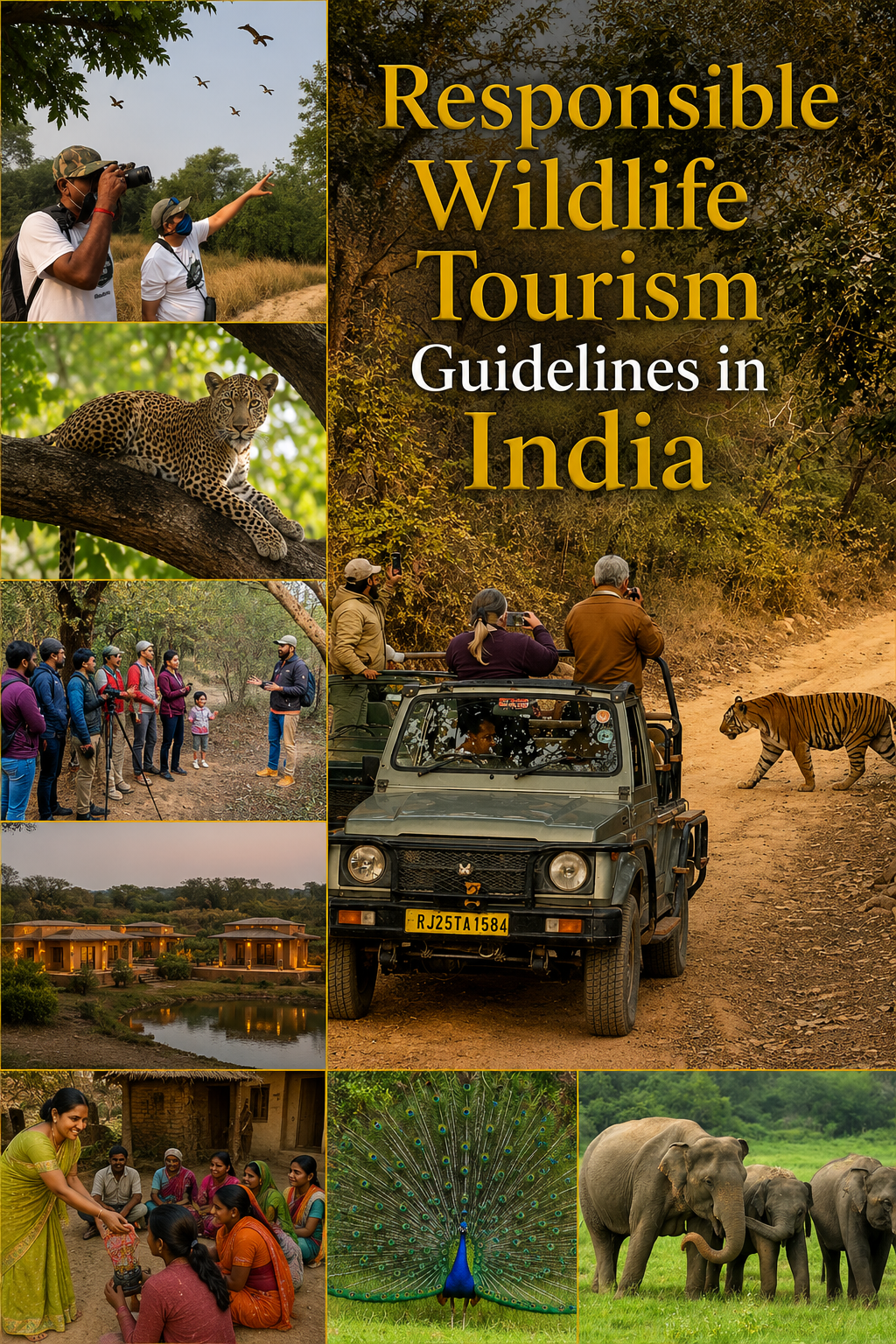
Responsible Wildlife Tourism Guidelines in India : A Practical Framework for Ethical, Sustainable Safari Programs
Responsible Wildlife Tourism Guidelines in India | Ethical Safari Framework for Tour Operators
A Practical Framework for Ethical Safari Programs
Responsible wildlife tourism guidelines in India
Wildlife tourism is one of India's strongest experiential offerings — and one of its greatest responsibilities. As demand grows, so does the need for ethical, sustainable, conservation-focused practices.
Why Responsible Wildlife Tourism Matters
Wildlife tourism directly impacts
- Animal behavior and habitats
- Local ecosystems
- Community livelihoods
- Long-term sustainability of destinations
B2B Insight
Responsible practices are no longer optional — they are a core expectation from global travelers and partners.
Core Principles of Responsible Wildlife Tourism
Five rules that hold every safari program together
01 Respect wildlife
- Maintain safe distances
- Avoid disturbing natural behavior
- No feeding or interaction
02 Follow park regulations
- Adhere to rules and safari timings
- Use authorized vehicles and guides
- Respect designated routes
03 Minimize environmental impact
- Avoid littering
- Reduce noise pollution
- Limit plastic usage
04 Support conservation
- Choose eco-certified lodges
- Work with conservation-focused operators
- Promote traveler awareness
05 Benefit local communities
- Engage local guides and staff
- Support community initiatives
- Ensure fair economic contribution
Best Practices for Travel Designers
A working checklist for building the itinerary
Choose the right destinations
Select parks known for responsible management and genuine conservation efforts.
Work with certified naturalists
Experienced guides enhance both safety and educational value.
Limit vehicle density
Avoid overcrowded safari zones and peak congestion.
Educate travelers before arrival
Set clear expectations about:
- Wildlife unpredictability
- Ethical viewing practices
- Conservation importance
Design balanced itineraries
- Avoid excessive safari drives
- Include nature walks and interpretation sessions
- Combine wildlife with cultural experiences
Responsible Wildlife Photography Guidelines
The shot is never worth the disturbance
- No flash photography
- Maintain distance
- Avoid chasing animals for better shots
- Respect natural light and habitat
B2B Insight
Ethical photography enhances both guest experience and conservation awareness — it's a selling point, not a restriction.
Common Mistakes to Avoid
Where well-meaning itineraries go wrong
- ✕ Overpromising wildlife sightings, e.g. guaranteed tiger sightings
- ✕ Overloading itineraries with multiple safaris per day
- ✕ Ignoring park rules to satisfy client demands
- ✕ Partnering with non-compliant operators
- ✕ Treating wildlife as entertainment rather than conservation
The Role of a DMC
A bridge between conservation goals and delivery
A Destination Management Company keeps every safari program accountable to both the guest experience and the ecosystem it depends on.
- Collaboration with ethical, certified safari providers
- Compliance with national park regulations
- Training and briefing for guides and drivers
- Real-time monitoring of safari operations
- Integration of sustainability into itineraries
Future Trends in Wildlife Tourism
Where responsible safari travel is heading
Increased demand for low-impact, high-value experiences
Growth of conservation-focused travel
Smaller group sizes and private safaris
Integration of education and storytelling
Stronger regulations and sustainability standards
Conclusion
Balance unforgettable experiences with long-term conservation
Adopting ethical practices protects natural heritage for future generations while ensuring client satisfaction today. With the support of an experienced DMC, wildlife itineraries can be immersive, sustainable, and globally responsible.
© 2026 India Wildlife Travel Standards · Ethical Safari Framework for Tour Operators
Recent Posts