🌿 Jagdalpur (Chhattisgarh)
Overview
🏞️ Overview
Jagdalpur stands as one of the most culturally distinctive and naturally spectacular destinations in central India, representing the vibrant tribal heartland of the Bastar region in the state of Chhattisgarh and offering a landscape of extraordinary diversity where ancient indigenous traditions, dramatic waterfalls, dense forests, and a rich artistic heritage converge in a setting of genuine and largely undiscovered natural and cultural wonder. Situated in the Bastar district of Chhattisgarh, Jagdalpur serves as the administrative and cultural capital of the vast Bastar division, a region of enormous geographical extent that encompasses some of the most biologically rich and culturally distinctive terrain in the entire Indian subcontinent. The destination draws tribal culture enthusiasts, nature travelers, waterfall seekers, and off-the-beaten-path explorers from across the country, offering a landscape defined by the thundering cascades of Chitrakote and Tirathgarh, the dense sal and teak forests of the surrounding region, the remarkable living traditions of the Gond, Muria, and Halba tribal communities, and an atmosphere of authentic and unhurried discovery that sets Jagdalpur apart from more conventionally developed tourism destinations.
What distinguishes Jagdalpur from other heritage and nature destinations in central India is not merely its natural beauty or its tribal cultural richness, but the unique combination of living indigenous artistic traditions, dramatic riverine landscapes, ancient royal heritage, and the genuinely frontier character of a destination that remains far less visited than its remarkable attributes deserve. The area is anchored by the legendary Chitrakote Falls, often described as the widest waterfall in India, and complemented by the Bastar Palace, the Anthropological Museum of exceptional quality, the weekly tribal markets that bring the surrounding forest communities into the town with extraordinary cultural vitality, and the network of waterfalls, caves, and wildlife habitats that extend across the surrounding Bastar landscape. This layered character elevates Jagdalpur beyond a simple regional center into a destination of genuine cultural, natural, and historical discovery of the highest order.
✨ Why Visit Jagdalpur
The recognition of the Bastar region as one of the most culturally significant tribal heartlands in India reflects the unparalleled importance of Jagdalpur as its gateway and center within the broader landscape of Indian cultural heritage. Unlike more commercialized tribal tourism destinations or single-attraction nature spots, Jagdalpur offers a cohesive experience where thundering waterfalls, ancient forests, living tribal art forms, royal dynasty heritage, and one of the most remarkable weekly markets in India work together to create a destination of exceptional variety and cultural depth.
One of the most compelling reasons to visit is the extraordinary living vitality of the tribal cultures that define the Bastar region. The Gond, Muria, Dhurwa, and Halba communities of this landscape maintain artistic, musical, and ceremonial traditions of remarkable antiquity and continued creative energy, visible in the distinctive bell metal craft known as Dhokra casting, the intricate bamboo and cane work, the terracotta traditions, and the ceremonial dances performed during festivals that draw communities together in expressions of cultural identity that have persisted for centuries. Encountering these traditions in their living context, rather than in a museum or a staged cultural performance, offers an experience of genuine and irreplaceable cultural richness.
Additionally, Jagdalpur showcases a dramatic natural landscape through the Indravati River that flows through the surrounding region and tumbles over the extraordinary horseshoe curve of Chitrakote Falls, one of the most visually spectacular waterfalls in India at any time of year but reaching a state of thunderous and overwhelming grandeur during the monsoon months. The combination of natural spectacle, living tribal heritage, royal history, and the genuine sense of discovery available at this relatively unexplored destination further strengthens its appeal as a deeply rewarding and memorable travel experience.
🌊 Key Highlights Within the Area
📍 Chitrakote Falls
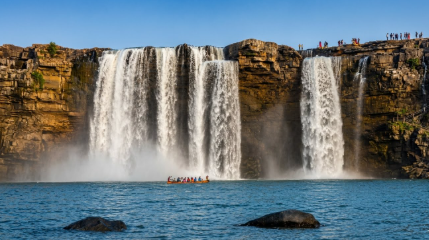
Among the natural landmarks, Chitrakote Falls stands out as the most iconic and overwhelmingly spectacular feature of the Jagdalpur region. Where the Indravati River sweeps around a broad horseshoe curve before plunging over a ledge in a curtain of white water stretching nearly three hundred metres across, Chitrakote presents a spectacle of natural power and visual drama that ranks it among the most impressive waterfalls in the entire Indian subcontinent. During the monsoon months, when the Indravati runs red with laterite sediment and the volume of water cascading over the falls reaches its maximum, the spectacle takes on a quality of raw natural force and visual grandeur that is genuinely overwhelming and deeply memorable.
🌿 Tirathgarh Falls
Tirathgarh Falls, located within the Kanger Valley National Park a short distance from Jagdalpur, is another significant natural highlight. Descending in multiple tiers through a forested gorge of considerable natural beauty, Tirathgarh presents a more intimate and layered waterfall experience than the broad sweep of Chitrakote, with the forested setting and the multiple cascading levels creating a setting of refreshing natural calm and scenic variety.
🐾 Kanger Valley National Park
The Kanger Valley National Park, encompassing the area surrounding Jagdalpur and protecting one of the finest stretches of tropical moist forest in central India, adds a rich wildlife and ecological dimension to the visit. The park is home to the rare wild buffalo or gaur, leopard, flying squirrel, and an exceptional diversity of birdlife, and also contains the remarkable Kailash and Kotamsar caves, featuring stalactite and stalagmite formations of considerable geological interest and aesthetic beauty.
🎭 Weekly Tribal Market
The weekly tribal market held at Jagdalpur, drawing communities from across the surrounding forest villages every Sunday, is perhaps the most culturally vivid and humanly compelling highlight of the destination. The convergence of tribal communities in their distinctive traditional dress, carrying produce, crafts, and goods from the surrounding forests and villages, creates a scene of extraordinary cultural vitality and visual richness that offers an unmediated and deeply authentic encounter with the living culture of the Bastar region.
🚶 Activities
Visiting Chitrakote Falls at different times of day and season is the most celebrated natural activity of the Jagdalpur region, with the falls presenting a dramatically different character in the clear water of the dry season and the red-brown torrent of the monsoon months. Boat rides to the base of the falls, available during appropriate water levels, offer a close and visceral encounter with the power and scale of the cascade from the river level below.
Exploring the Kanger Valley National Park through guided jungle walks and jeep excursions is a rewarding wildlife and nature activity, with the park's network of forest trails leading through dense tropical forest to the Tirathgarh Falls, the Kailash and Kotamsar caves, and the riverine habitats along the Kanger River where wildlife sightings are most reliable. The cave visits are particularly memorable, as the chambers of Kotamsar in particular contain stalactite formations of remarkable size and variety illuminated against the absolute darkness of the cave interior.
Engaging with the tribal craft traditions of the Bastar region through visits to craft cooperatives, the tribal art museum, and the weekly Sunday market is a deeply rewarding cultural activity that provides direct insight into the Dhokra bell metal casting, the Bastar ironwork, the bamboo craft, and the distinctive painting traditions of the region. The Anthropological Museum in Jagdalpur, one of the finest of its kind in central India, offers an essential and expertly curated introduction to the cultural history, material traditions, and social organization of the many tribal communities of the Bastar region.
📅 Best Time to Visit
The most favorable period to visit Jagdalpur is from October to March, when temperatures are pleasant, the forest trails of Kanger Valley are at their most accessible, and the waterfalls flow clearly enough to allow boat rides and close viewing from the base. During these months, the comfortable conditions and settled weather make exploring the full range of natural and cultural highlights across the Bastar region particularly enjoyable, and the tribal markets and craft traditions are at their most active and accessible.
The monsoon season from July to September transforms Jagdalpur and the surrounding Bastar landscape dramatically, bringing the waterfalls to their most thunderous and visually spectacular state and covering the forest in a vivid intensity of green that is genuinely extraordinary. Chitrakote Falls during the monsoon is a spectacle of rare natural power that draws visitors specifically for this experience, though the red-brown flood waters preclude boat rides and some forest trails become difficult during heavy rainfall periods.
The summer months from April to June bring significant heat to the plains of Chhattisgarh, making midday outdoor exploration demanding, though the waterfalls and forested areas of Kanger Valley provide considerably cooler conditions than the open town and the early morning hours remain rewarding for wildlife observation and cultural exploration throughout this period.
🚆 Connectivity
Jagdalpur is accessible from several urban centers in central India, with the nearest major connectivity hub being Raipur, the state capital of Chhattisgarh, situated approximately 300 kilometres away and served by Swami Vivekananda Airport with regular domestic flights from Delhi, Mumbai, Bengaluru, Hyderabad, and other major Indian cities. Jagdalpur itself has a small airport with limited seasonal connectivity that has been progressively developed to improve air access to the Bastar region.
Rail connectivity is available through Jagdalpur Railway Station, which is connected to Visakhapatnam on the Andhra Pradesh coast by a scenic rail route through the Eastern Ghats, as well as to Raipur and the broader central Indian rail network, offering a practical and scenically rewarding approach from both the east and the north. Road connectivity from Raipur, Visakhapatnam, and Bhubaneswar is established through national and state highway routes, with the journey from Raipur taking approximately six to seven hours through the forested landscape of central Chhattisgarh. This makes Jagdalpur a meaningful inclusion in tribal heritage and nature itineraries across central India, as well as a natural companion destination for travelers combining visits to the Kanger Valley, the Indravati Tiger Reserve, and the broader cultural and natural landscape of the remarkable Bastar region.
must - visit places around
chitrakote fall