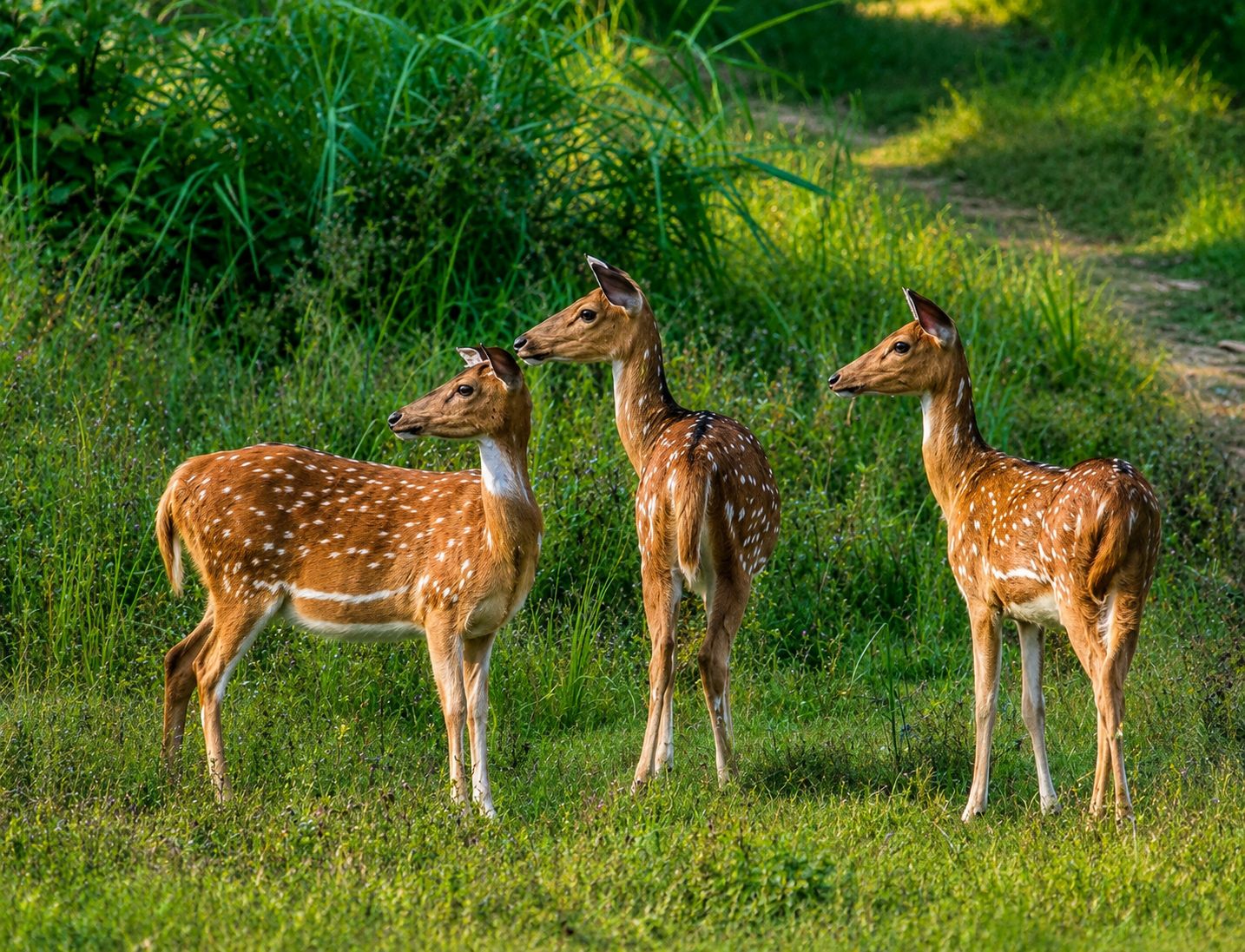
🌿 Kanger Valley National Park (Chhattisgarh)
📖 Overview
Kanger Valley National Park stands as one of the most biologically rich and scenically extraordinary protected areas in central India, a compact but remarkably diverse wilderness of dense tropical forests, dramatic limestone cave systems, cascading waterfalls, and perennial river valleys that together create a natural landscape of unusual depth and variety within a relatively contained geographical area. Located in the Bastar district of Chhattisgarh, approximately twenty-seven kilometres from Jagdalpur, the park encompasses an area of approximately two hundred square kilometres through which the Kanger river flows in a series of pools, rapids, and gentle reaches that sustain the ecological vitality of the surrounding forest. The destination draws wildlife enthusiasts, cave explorers, naturalists, birdwatchers, and travelers drawn to the broader cultural and natural richness of the Bastar region, offering an experience that combines the pleasures of jungle immersion with the rare geological spectacle of some of the most elaborately formed cave systems in India.
What distinguishes Kanger Valley from other national parks in central India is the exceptional concentration of natural experiences it offers within a single protected landscape. Few wildlife destinations in the country combine a significant population of the endangered hill myna, the state bird of Chhattisgarh, with a series of world-class limestone caves, a perennial river of considerable scenic beauty, and a waterfall of the calibre of Tirathgarh within the boundaries of a single national park. This density of natural highlights, set within the culturally distinctive landscape of Bastar and accessible from the well-established base of Jagdalpur, gives Kanger Valley a character of layered natural richness that rewards extended exploration and returns visits across different seasons.
🌳 Why Visit Kanger Valley National Park
The designation of Kanger Valley as a national park reflects the ecological significance of a landscape that shelters a remarkable diversity of flora and fauna within a forest type, the southern tropical moist mixed deciduous forest, that is increasingly rare and threatened across central India. The park represents one of the most intact surviving examples of this forest type in the region and functions as a critical refuge for species whose populations have declined dramatically outside protected areas.
One of the most compelling reasons to visit is the Kanger Valley cave system, comprising the Kutumsar, Kailash, and Dandak caves, which together constitute one of the most impressive concentrations of speleological formations in India. The Kutumsar Cave in particular, one of the longest natural caves in the country, harbours a population of blind fish, Horaglanis, that have adapted over geological time to the complete darkness of the cave environment, representing one of the most extraordinary biological specialisations found anywhere in the Indian subcontinent. The elaborate stalactite and stalagmite formations within these caves, built over millions of years of slow mineral accretion, create underground landscapes of otherworldly beauty that are entirely unlike any surface experience the park offers.
Additionally, Kanger Valley benefits enormously from its position within the Bastar landscape, one of the most culturally and ecologically distinctive regions in India, where the living traditions of the Gond, Muria, and other tribal communities create a human context for the natural environment that deepens the meaning of every visit. The park's accessibility from Jagdalpur, combined with the broader network of natural and cultural attractions in the surrounding Bastar district, makes it a natural centrepiece for a multi-day exploration of one of the most rewarding regions in central India.
⭐ Key Highlights Within the National Park
💧 Tirathgarh Falls
Tirathgarh Falls, located within the national park boundaries and fed by the Kanger river and its tributaries, is among the most beautiful and architecturally distinctive waterfalls in Chhattisgarh, descending in a series of cascading white tiers down a stepped limestone and laterite cliff face that creates a visual effect quite different from the single dramatic plunge of Chitrakote.
🕳️ Kutumsar Cave
The Kutumsar Cave, the most celebrated and extensively explored of the Kanger Valley cave system, descends into the earth through a series of chambers of increasing grandeur, decorated with an extraordinary profusion of stalactites, stalagmites, cave curtains, and flowstone formations.
🪨 Kailash Cave
The Kailash Cave, smaller and less extensively explored than Kutumsar but no less remarkable in the quality of its mineral formations, contains within its chambers a natural Shivalinga formation of white calcite that has made it a site of religious significance.
🏞️ Kanger River
The Kanger river, flowing through the heart of the park in a series of pools and rapids bordered by dense forest, sustains a corridor of riverine habitat of exceptional ecological value and considerable scenic beauty.
🐦 Hill Myna
The hill myna population of Kanger Valley, one of the most significant remaining concentrations of this increasingly threatened bird in India, represents a wildlife highlight of particular importance for birdwatchers and conservation-minded visitors.
🥾 Activities
Guided exploration of the Kutumsar and Kailash caves, conducted through the forest department's official visitor programme, is the most distinctive and remarkable activity Kanger Valley offers, providing an encounter with an underground world of geological formations and biological adaptations that has no equivalent in the surface landscape of the park.
Wildlife and birdwatching walks through the park's forest zones, undertaken in the early morning hours with a knowledgeable forest guide, offer the most direct and immersive engagement with the park's biodiversity.
Visiting Tirathgarh Falls and spending time in its immediate surroundings, exploring the viewpoints above and below the main cascade and walking the forest paths that lead along the river corridor below the falls, constitutes a full and deeply rewarding activity in its own right.
Exploring the Kanger river corridor by foot along the designated forest tracks, pausing at the natural pools and rapids where wildlife congregates and the forest canopy creates deep shade over the water, allows a quality of leisurely engagement with the park's riverine ecosystem.
📅 Best Time to Visit
The most favorable period to visit Kanger Valley National Park is from November to June, when the park is open to visitors and the conditions for both cave exploration and forest wildlife observation are at their most productive.
The winter months of November through February offer the most comfortable temperatures for extended outdoor activity, the clearest forest visibility following the seasonal leaf fall of some deciduous species, and the most pleasant conditions for walking the forest tracks and river corridors that form the backbone of the visitor experience.
The months of March to May, as the dry season advances and the deciduous trees shed their leaves, open up the forest canopy and understorey in ways that significantly improve wildlife sightlines and make the detection of birds and mammals in the forest considerably easier.
The monsoon months from July to October bring the Kanger river to its fullest extent and Tirathgarh Falls to its most spectacular expression, transforming the park's watercourses into powerful and visually dramatic features of the landscape.
🚗 Connectivity
Kanger Valley National Park is accessible from Jagdalpur, the administrative headquarters of Bastar district, located approximately twenty-seven kilometres from the park's main entrance.
Jagdalpur is connected by rail to Raipur, the state capital of Chhattisgarh, with the journey taking approximately six to seven hours, and by road to Raipur along a route of approximately three hundred kilometres that passes through the forested landscape of central Chhattisgarh.
Raipur Airport serves as the primary air gateway for visitors approaching from outside the state, offering regular domestic flights from Delhi, Mumbai, Kolkata, and other major cities.
Jagdalpur serves as the natural base for visiting Kanger Valley, offering a range of accommodation options and functioning as the hub from which the broader network of Bastar's natural and cultural attractions can be explored in combination with the national park.
Nearby places to explore