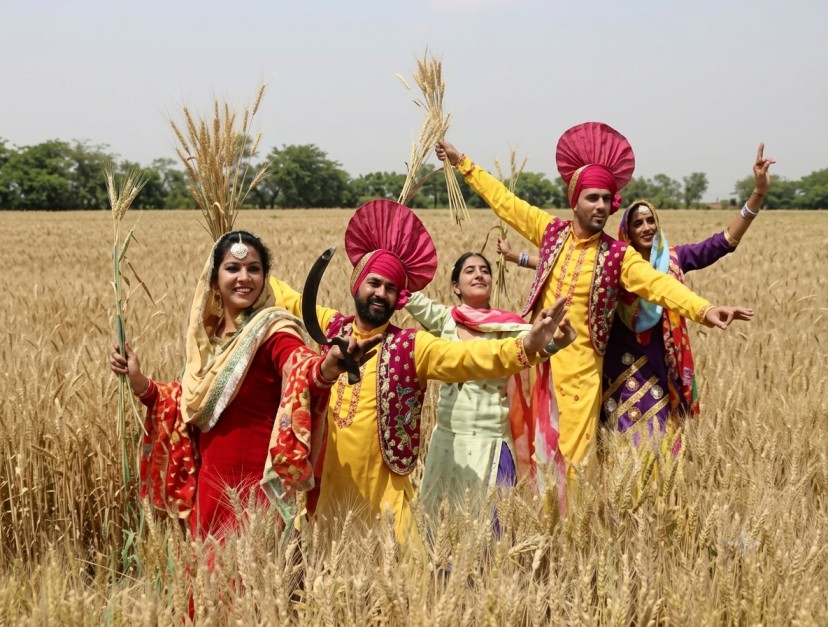
Baisakhi Festival : The Harvest Festival Of Punjab
There are few single days in the Indian calendar that carry as much layered meaning as Baisakhi. On the same April morning, golden wheat fields across Punjab sway ready for harvest, farmers offer prayers of gratitude for the season's bounty, Sikhs around the world commemorate one of the most defining moments in their faith's history, and in parts of India, the solar new year quietly begins. Few festivals manage to be this many things at once, and fewer still manage to celebrate all of them with the same explosive, infectious joy that defines Baisakhi.
🌾 Baisakhi Festival: Where Harvest Joy Meets the Birth of a Faith
There are few single days in the Indian calendar that carry as much layered meaning as Baisakhi. On the same April morning, golden wheat fields across Punjab sway ready for harvest, farmers offer prayers of gratitude for the season's bounty, Sikhs around the world commemorate one of the most defining moments in their faith's history, and in parts of India, the solar new year quietly begins. Few festivals manage to be this many things at once, and fewer still manage to celebrate all of them with the same explosive, infectious joy that defines Baisakhi.
📖 A Day Shaped by Wheat Fields and History
Celebrated most vibrantly across Punjab, Haryana, and parts of Himachal Pradesh, Baisakhi, also spelled Vaisakhi, is a festival that captures something essential about North Indian life — the deep, almost spiritual relationship between land, labour, and faith. For travellers, it offers a rare window into a celebration that is at once agricultural, historical, and deeply devotional, all unfolding against the backdrop of dhol beats, swirling Bhangra, and the golden glow of a Punjabi spring.
At its heart, Baisakhi marks the culmination of the Rabi harvest season, the moment when months of labour in Punjab's wheat fields finally come to fruition. For generations of farming families, this has always been a day of profound gratitude, a pause to thank the land for its generosity before the next agricultural cycle begins. Falling on the solar calendar rather than the lunar one most Indian festivals follow, Baisakhi consistently lands around the 13th or 14th of April each year, with the 2026 celebration set for Tuesday, the 14th of April.
But it was a single, transformative event in 1699 that elevated Baisakhi from a regional harvest festival into one of the most sacred dates in Sikh history. At Anandpur Sahib, the tenth Sikh Guru, Guru Gobind Singh Ji, gathered thousands of followers for what would become an extraordinary moment of testing and transformation. With Mughal persecution of Sikhs at its peak, the Guru emerged from his tent holding an unsheathed sword and asked a question that fell like silence over the crowd: who among them was willing to give their life for their faith? One by one, five men stepped forward, each disappearing into the Guru's tent, the crowd holding its breath each time. To everyone's astonishment and relief, all five emerged alive, having passed what was, in truth, a profound test of devotion and courage rather than a literal sacrifice. These five men became known as the Panj Pyare, the Five Beloved Ones, and on that day, Guru Gobind Singh Ji baptised them, formally establishing the Khalsa Panth, a community of saint-soldiers bound by equality, discipline, and an unwavering commitment to justice.
This single Baisakhi gave Sikhs not only a new spiritual identity but also a visible one, introducing the Five Ks and a code of conduct that continues to shape Sikh life today. The day carries one more, heavier layer of history as well. In 1919, British troops opened fire on an unarmed crowd gathered for Baisakhi celebrations at Jallianwala Bagh in Amritsar, an act of violence that claimed hundreds of lives and became a defining moment in India's struggle for independence. Even today, the memory of that tragedy lingers quietly beneath the festival's joy, a reminder of resilience woven into a day otherwise defined by celebration.
🌅 A City Awake Before Dawn
Nowhere is Baisakhi experienced more powerfully than in Amritsar, where the Golden Temple becomes the spiritual centre of the entire celebration. Devotees begin arriving well before sunrise, often around four in the morning, for Amrit Vela, when the temple complex resonates with the sound of Gurbani hymns drifting across the still water of the Sarovar. As the first light touches the temple's golden dome and its reflection shimmers across the surface of the sacred pool, many visitors describe the moment as one of quiet, overwhelming transcendence, a stillness that feels worlds apart from the celebratory energy that will fill the streets just hours later.
By mid-morning, Amritsar transforms entirely. Nagar Kirtan processions wind through the city, led by the Panj Pyare dressed in saffron robes, followed by crowds singing devotional hymns, performing Gatka martial arts demonstrations, and carrying the Guru Granth Sahib in a beautifully decorated float. The streets fill with colour, music, and the rhythmic clatter of swords and shields from Gatka performers, while onlookers crowd rooftops and balconies along the procession route. Throughout the city, gurdwara langars run continuously, offering free meals to anyone regardless of religion, caste, or background, embodying the very principle of equality that the Khalsa Panth was founded upon.
Beyond Amritsar, Anandpur Sahib itself draws devoted pilgrims seeking a more intimate connection to where it all began. Here, celebrations carry a quieter, more reflective intensity, centred around Takht Sri Kesgarh Sahib and the striking Virasat-e-Khalsa museum, which traces the journey of Sikh history with remarkable depth and visual storytelling.
🥁 Music, Dance, and the Joy of Harvest
Away from the religious processions, Baisakhi in rural Punjab carries the unmistakable energy of a harvest celebration. Farmers, freed from months of fieldwork, dance Bhangra with an enthusiasm that seems to erupt spontaneously, dhol drummers leading lines of men who leap and spin with their arms raised skyward in classic Bhangra form. Women perform Gidda in equally spirited circles, clapping and singing playful folk verses that often poke gentle fun at in-laws, husbands, and village life, a tradition as much about humour and camaraderie as dance itself.
Markets and fairs spring up in towns and villages, selling everything from seasonal produce to handicrafts, while community feasts bring extended families together for long, leisurely meals. The overall atmosphere is one of release and celebration, a community exhaling together after months of hard agricultural labour, grateful for what the land has given and hopeful for what the coming year will bring.
👘 Traditional Attire and Dress Code
Baisakhi is awash in bright colour, with yellow and orange holding particular symbolic significance, representing prosperity, happiness, and the ripened mustard and wheat fields that define this season. Men often wear colourful turbans alongside kurta-pyjamas, while Bhangra performers dress in vibrant, tassel-adorned outfits designed to amplify every spirited movement. Women favour bright Punjabi suits, lehengas, or salwar kameez paired with phulkari dupattas, the region's signature embroidered textile, adding both elegance and tradition to the day's festivities.
🍲 Local Food and Special Dishes
Punjabi cuisine takes centre stage during Baisakhi celebrations, with sarson da saag and makki di roti remaining the most iconic seasonal pairing, often served alongside a generous serving of homemade white butter. Chole bhature, lassi, and an array of festive sweets like jalebi and kheer round out the celebratory spread, while langar meals at gurdwaras across Punjab offer visitors an opportunity to taste community cooking at its most generous and inclusive. Amritsari kulchas, served hot and stuffed, are a particular favourite among visitors exploring the food stalls that spring up around the Golden Temple during festival days.
📌 Festival Highlights
📍 Best Places to Experience the Festival
Amritsar remains the undisputed centre of Baisakhi celebrations, offering the combined experience of the Golden Temple, the historic Jallianwala Bagh memorial, and the patriotic spectacle of the Wagah Border ceremony, all within a short distance of one another. Anandpur Sahib, roughly 180 kilometres from Amritsar, offers a deeply meaningful pilgrimage for those wishing to visit the birthplace of the Khalsa Panth itself. Beyond Punjab, Baisakhi is celebrated with great enthusiasm in Himachal Pradesh and Haryana, while Sikh communities across the globe, from London to Toronto, host their own vibrant gurdwara celebrations and processions each year.
🌍 Tourism Significance
Baisakhi has grown into one of India's most internationally recognised festivals, drawing not only domestic travellers but a significant global Sikh diaspora returning to Punjab specifically for this occasion. Its blend of religious depth, historical weight, and joyful public celebration makes it an exceptional showcase of Indian cultural heritage, attracting visitors interested in spirituality, history, and folk traditions alike. The festival also plays a meaningful role in sustaining the local economy of Amritsar and surrounding towns, supporting hospitality, transport, and handicraft trade during the lead-up to and aftermath of the celebrations.
✨ Interesting Facts
Baisakhi is one of the few major Indian festivals determined by the solar calendar rather than the lunar one, which is why its date remains remarkably consistent year after year, typically falling on the 13th or 14th of April. The festival is also recognised as a gazetted public holiday in Punjab, reflecting its deep civic and cultural importance within the state.
💡 Did You Know?
The same day that Sikhs celebrate as the founding of the Khalsa Panth is also observed by Hindus in several regions as Mesha Sankranti, marking the solar new year, making Baisakhi a rare example of a single date carrying distinct religious significance for multiple communities simultaneously. The Panj Pyare tradition established in 1699 continues to this day, with five baptised Sikhs chosen to lead major Nagar Kirtan processions during Baisakhi celebrations across the world.
🚗 How to Reach the Festival Destination
Sri Guru Ram Dass Jee International Airport in Amritsar offers the most direct access for travellers, located roughly eleven kilometres from the city centre with both domestic and select international flight connections. Amritsar Junction railway station, just a few kilometres from the Golden Temple, provides extensive rail connectivity to Delhi and other major Indian cities. For those continuing on to Anandpur Sahib, private cabs or hired taxis from Amritsar typically take around three and a half hours, making a combined pilgrimage itinerary entirely feasible within a single trip.
📅 Best Time to Visit
Baisakhi 2026 falls on Tuesday, the 14th of April, making this the definitive date for experiencing the festival's full religious and cultural significance. Travellers are encouraged to arrive a day or two early, particularly in Amritsar, where roads around the Golden Temple often close late on the night before the festival in anticipation of the following day's enormous crowds.
🎒 Travel Tips for Visitors
Booking accommodation within walking distance of the Golden Temple is highly advisable, given both the early morning darshan timings and the road closures that accompany the festival. Visiting for pre-dawn Amrit Vela offers a noticeably more peaceful experience before the city's energy builds toward the main Nagar Kirtan procession later in the morning. Dressing modestly and covering one's head before entering gurdwara premises is an important sign of respect, and visitors are warmly encouraged to participate in langar meals, which remain open to people of all backgrounds. Staying hydrated and comfortable is equally important, as April afternoons in Punjab can grow quite warm despite cooler mornings and evenings.
❤️ Why You Should Experience This Festival
Baisakhi offers an exceptionally rare combination within a single celebration: the quiet, almost meditative spirituality of pre-dawn prayers at the Golden Temple, the historical weight of standing where the Khalsa Panth was born, and the unrestrained, joyful release of Bhangra dancers celebrating a successful harvest. Few festivals allow visitors to move so fluidly between reflection and celebration, between centuries-old history and present-day community spirit, all within the span of a single remarkable day.
As the Nagar Kirtan procession winds its way through Amritsar's golden afternoon light, dhol beats echoing off centuries-old buildings and langar halls filled with the comforting aroma of shared meals, Baisakhi reveals itself as something far greater than a single-day festival. It is a living testament to faith, gratitude, and resilience, carried forward by a community that has, for centuries, chosen to meet history's heaviest moments with music, generosity, and an unshakeable sense of togetherness.