Lohri Festival : The Festival Of Bonfire And Joy
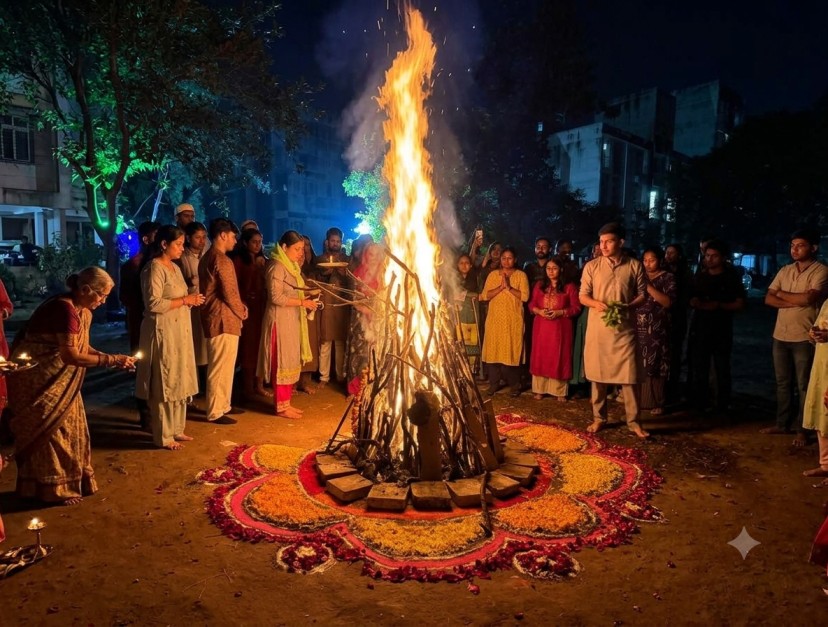
As the bitter chill of a North Indian winter reaches its peak, something extraordinary happens across Punjab, Haryana, and Himachal Pradesh on the evening of the 13th of January. Families step out of their warm homes, gather in courtyards and open fields, and light enormous bonfires that crackle against the darkening sky. Children sing in loud, joyful voices, peanuts and popcorn are tossed into the flames, and the unmistakable rhythm of dhol beats begins to pull people into spontaneous Bhangra. This is Lohri, one of Punjab's most beloved festivals, a celebration that manages to be simultaneously about fire and warmth, harvest and gratitude, folklore and family, all wrapped into a single radiant evening. Lohri occupies a special place in North Indian culture precisely because it belongs to everyone. Celebrated by Punjabis across religious lines, including both Hindus and Sikhs, it is fundamentally a cultural festival rather than a religious one, rooted deeply in the agrarian rhythms of the land rather than scripture. That inclusiveness, paired with its irresistible blend of music, food, and community spirit, is part of what makes Lohri such a magnetic experience for travellers hoping to witness authentic Indian festive traditions.
🔥 Lohri Festival: The Bonfire That Warms Punjab's Winter Soul
As the bitter chill of a North Indian winter reaches its peak, something extraordinary happens across Punjab, Haryana, and Himachal Pradesh on the evening of the 13th of January. Families step out of their warm homes, gather in courtyards and open fields, and light enormous bonfires that crackle against the darkening sky. Children sing in loud, joyful voices, peanuts and popcorn are tossed into the flames, and the unmistakable rhythm of dhol beats begins to pull people into spontaneous Bhangra. This is Lohri, one of Punjab's most beloved festivals, a celebration that manages to be simultaneously about fire and warmth, harvest and gratitude, folklore and family, all wrapped into a single radiant evening.
Lohri occupies a special place in North Indian culture precisely because it belongs to everyone. Celebrated by Punjabis across religious lines, including both Hindus and Sikhs, it is fundamentally a cultural festival rather than a religious one, rooted deeply in the agrarian rhythms of the land rather than scripture. That inclusiveness, paired with its irresistible blend of music, food, and community spirit, is part of what makes Lohri such a magnetic experience for travellers hoping to witness authentic Indian festive traditions.
🌾 A Festival Forged in Harvest and Folklore
Lohri's origins are closely tied to Punjab's agricultural calendar, marking the end of the winter crop-sowing season and celebrating the harvest of sugarcane, a crop deeply tied to the festival's signature offerings of jaggery and sweets made from gur. The day after Lohri also traditionally marks something of a financial new year for Punjabi farmers, with new agricultural tenancies often beginning and rents collected, reflecting just how intertwined the festival is with rural economic life. Falling a day before Makar Sankranti, Lohri also celebrates the sun's gradual northward journey, a transition that in Punjab is referred to as Maghi, since it heralds the start of the Hindu month of Magh and the slow lengthening of warmer days ahead.
But ask most Punjabis about Lohri, and it is rarely the agricultural calendar they speak of first. It is the story of Dulla Bhatti, a legendary figure whose name is woven into nearly every traditional Lohri song. Dulla Bhatti lived in Punjab during the reign of the Mughal emperor Akbar and is remembered as something of a folk Robin Hood, a man who robbed from the wealthy and used what he gathered to help the poor. The most cherished tale tells of two young Punjabi girls, often named Sundri and Mundri in the songs, who were at risk of being forcibly taken and sold in slave markets. Dulla Bhatti is said to have rescued them, arranged their marriages with dignity, and even provided a dowry from his own resources, transforming him into a symbol of justice and protection that Punjabi families have honoured in song for centuries. According to legend, Dulla Bhatti eventually led a guerrilla rebellion against imperial authority and was executed for his defiance, yet rather than fading into fear, his memory was kept alive through Lohri's bonfires and ballads, sung by women and children who refused to let his courage be forgotten.
Interestingly, even the festival's name carries its own quiet history. Some accounts trace the word Lohri back to "Tilorhi," a combination of til, meaning sesame seeds, and rorhi, referring to jaggery, two ingredients central to the celebration even today. Over generations, the pronunciation softened into the Lohri we now know, a small but charming reminder of how language and ritual evolve together over centuries.
🔥 Around the Bonfire: Rituals, Music, and Shared Warmth
As dusk falls on Lohri evening, families and neighbours gather around a large bonfire lit in open courtyards, fields, or community spaces. The fire itself is treated almost reverently, regarded as a witness to prayers for prosperity and a symbol of burning away winter's chill along with any lingering negativity from the year before. People circle the flames, offering sesame seeds, jaggery, sugar candy, popcorn, peanuts, and rewari into the fire as gestures of gratitude and abundance, a ritual that blends harvest thanksgiving with quiet personal hope for the months ahead.
Music is inseparable from the celebration. Folk songs fill the air, many of them centred on Dulla Bhatti, sung in call-and-response fashion with joyful exclamations of "Ho!" punctuating each verse. Groups of children often go door to door in the days leading up to Lohri, singing traditional songs like "Sundar Mundriye" in exchange for sweets, coins, or treats, a custom that mirrors the spirit of carolling and fills neighbourhoods with cheerful anticipation. As the night deepens, the energy shifts toward dance, with Bhangra and Gidda performances breaking out spontaneously around the fire, dhol drummers driving the rhythm while men and women move in joyous, high-spirited circles.
For families with a newborn child or a newly married couple, Lohri carries particularly special significance, often celebrated with extra fervour as the baby's or couple's first Lohri. In recent years, many Punjabi families have also embraced "Dhiyan Di Lohri," a meaningful shift in tradition that celebrates the birth of daughters with the same joy historically reserved for sons, reflecting a broader, heartening movement toward gender equality within the festival's customs.
👘 Traditional Attire and Dress Code
Lohri sees Punjab's vibrant traditional clothing on full display. Women often wear brightly coloured Punjabi suits or lehengas paired with phulkari dupattas, the region's distinctive hand-embroidered textile known for its vivid floral patterns. Men frequently dress in kurta-pyjamas, sometimes paired with colourful turbans, particularly during community gatherings and Bhangra performances. The overall palette leans toward warm, festive colours, fitting for an evening built entirely around fire, music, and celebration.
🍲 Local Food and Special Dishes
Food at Lohri centres heavily on the season's harvest and on warming, energy-rich ingredients suited to winter. Sarson da saag paired with makki di roti remains the quintessential Lohri meal in many Punjabi households, served with a generous dollop of homemade butter. Sweets and snacks like gajak, rewari, and til-gur ladoos, all built around sesame and jaggery, are distributed generously among family and neighbours, while roasted peanuts and popcorn double as both festive food and ritual offerings tossed into the bonfire. Sugarcane juice and jaggery-based desserts further tie the celebration back to its harvest roots.
📍 Festival Insights
🏞️ Best Places to Experience the Festival
Punjab's cities and villages alike come alive during Lohri, with Amritsar offering visitors the chance to combine the festival with a visit to the Golden Temple, creating a deeply memorable cultural pairing. Ludhiana and Patiala host large community bonfires with energetic Bhangra performances, while rural villages across Punjab often provide the most intimate, authentic experience of the festival, where the line between participant and spectator quickly disappears. Chandigarh, with its blend of Punjabi and Haryanvi traditions, and parts of Himachal Pradesh also celebrate Lohri with great enthusiasm, each region adding its own local flavour to the core rituals.
🌍 Tourism Significance
Lohri has increasingly become an attractive draw for travellers interested in experiencing India's living folk traditions firsthand, offering a far more intimate and community-centred experience than many larger, more commercialised festivals. For visitors, it provides a rare opportunity to witness Punjabi hospitality up close, often welcomed into bonfire gatherings by locals eager to share food, song, and conversation with outsiders. The festival also plays an important role in sustaining Punjab's rich oral folklore tradition, ensuring that stories like that of Dulla Bhatti continue to be passed down to new generations through music rather than textbooks alone.
💡 Interesting Facts
Lohri bonfires are traditionally lit using cow dung cakes, wood, and dried twigs, a combination believed to burn cleanly while honouring agricultural traditions. The festival's signature foods, sesame and jaggery, are also believed in Ayurvedic tradition to generate body heat, making them particularly well suited to the cold January nights when Lohri is celebrated.
✨ Did You Know?
Despite being most strongly associated with Sikh and Hindu Punjabi communities, Lohri's folklore around Dulla Bhatti also reflects centuries of coexistence between different communities in pre-partition Punjab, with his story honoured across religious lines as a shared symbol of courage and justice. The festival's timing, falling exactly one day before Makar Sankranti, means Lohri often marks the unofficial beginning of a broader, multi-day harvest festival season celebrated under different names across India.
🚆 How to Reach the Festival Destination
Amritsar's Sri Guru Ram Dass Jee International Airport offers convenient access for travellers flying in for Lohri celebrations in Punjab, with regular domestic and select international connections. Chandigarh International Airport serves as another major gateway, particularly for those exploring Punjab alongside Himachal Pradesh. Rail connectivity across Punjab is excellent, with major stations in Amritsar, Ludhiana, and Chandigarh linked to Delhi and other large Indian cities, while state and private buses offer affordable, scenic road travel throughout the region.
📅 Best Time to Visit
Lohri is celebrated annually on the 13th of January, making this the definitive time to experience the festival firsthand. Visitors planning a trip should aim to arrive a day or two early to settle in and connect with local families or community events, since the most memorable Lohri experiences often happen through personal invitations to bonfire gatherings rather than large public events alone.
🎒 Travel Tips for Visitors
Dressing warmly is essential, as January evenings in Punjab can turn quite cold once the sun sets, even though bonfires offer welcome relief. Visitors are often warmly welcomed to join community bonfire gatherings, and bringing a small offering of sweets or snacks is a thoughtful gesture appreciated by hosts. Learning a few lines of the popular "Sundar Mundriye" song in advance can be a delightful icebreaker with local families, while staying respectful during prayer and offering rituals around the fire ensures a meaningful, culturally sensitive experience.
❤️ Why You Should Experience This Festival
There is something profoundly moving about standing beside a Lohri bonfire, surrounded by strangers who quickly begin to feel like extended family, voices rising together in songs that have survived centuries of retelling. Lohri offers travellers a rare blend of historical storytelling, agricultural tradition, and pure, unfiltered joy, all delivered without pretence or spectacle. It is a festival that asks very little of its guests beyond presence and openness, and rewards that presence generously with warmth, music, and genuine human connection.
As the flames die down and the last verses of an old Punjabi folk song fade into the cold night air, what remains is a quiet, lingering sense of belonging — the feeling of having been welcomed, however briefly, into a tradition built on generosity, resilience, and gratitude. Lohri is not simply a festival to observe from a distance; it is one to be lived, sung, and felt around the fire, and that, more than anything else, is what makes it unforgettable.