```html
🕉️ Bodh Gaya (Bihar)
📖 Overview
Bodh Gaya stands as one of the most spiritually profound and historically significant destinations in India, representing far more than a place on a map. Situated on the banks of the Falgu River in the state of Bihar, Bodh Gaya is recognized as the site where Siddhartha Gautama attained enlightenment under a Bodhi Tree, becoming the Buddha. The destination draws pilgrims, scholars, and travelers from across the world, offering a landscape defined by ancient stupas, monasteries built by nations from every corner of the globe, and an atmosphere of quiet contemplation rarely matched elsewhere.
What distinguishes Bodh Gaya from other heritage destinations in the region is not merely its antiquity, but the unique combination of living spiritual practice, monumental architecture, and international monastic presence embedded in this compact riverside town. The area is anchored by the Mahabodhi Temple Complex, a UNESCO World Heritage Site, and surrounded by monasteries representing Buddhist traditions from Thailand, Japan, Bhutan, Tibet, Vietnam, and beyond. This layered character elevates Bodh Gaya beyond a simple historical site into a destination of genuine cultural and spiritual discovery.
🌟 Why Visit Bodh Gaya
The recognition of Bodh Gaya as one of the four most sacred sites in Buddhism reflects its unparalleled importance within the global spiritual landscape. Unlike isolated monuments or single-attraction historical spots, Bodh Gaya offers a cohesive experience where ancient history, active worship, architecture, and international culture work together to create a deeply immersive destination.
One of the most compelling reasons to visit is the living continuity it presents across more than two and a half millennia. The descendant of the original Bodhi Tree still stands within the temple complex, and the act of sitting beneath it connects visitors directly to a moment of profound historical consequence. The Mahabodhi Temple itself, with its towering pyramidal spire, offers a calm, reflective environment that draws monks, pilgrims, and curious travelers alike, regardless of personal faith.
Additionally, Bodh Gaya showcases a strong sense of cultural richness through its collection of international monasteries. Each one, built in the architectural style of its home country, offers a glimpse into how Buddhist traditions have evolved differently across Asia, making the destination especially rewarding for those interested in comparative culture and architecture. The combination of spiritual depth and accessibility from major cities such as Patna and Gaya further strengthens its appeal as a meaningful pilgrimage or heritage destination.
🏛️ Key Highlights Within the Area
🌳 Mahabodhi Temple Complex
Among the sacred landmarks, the Mahabodhi Temple Complex stands out as the most iconic and atmospherically distinctive feature of Bodh Gaya. Comprising the main temple, the Bodhi Tree, the Vajrasana or Diamond Throne, and several smaller shrines, this complex is steeped in religious significance and offers a setting framed by prayer flags, chanting pilgrims, and centuries-old stone carvings. The interplay of golden statues and ancient brickwork creates a visual experience that shifts beautifully with the changing light of dawn and dusk.
🧘 Great Buddha Statue
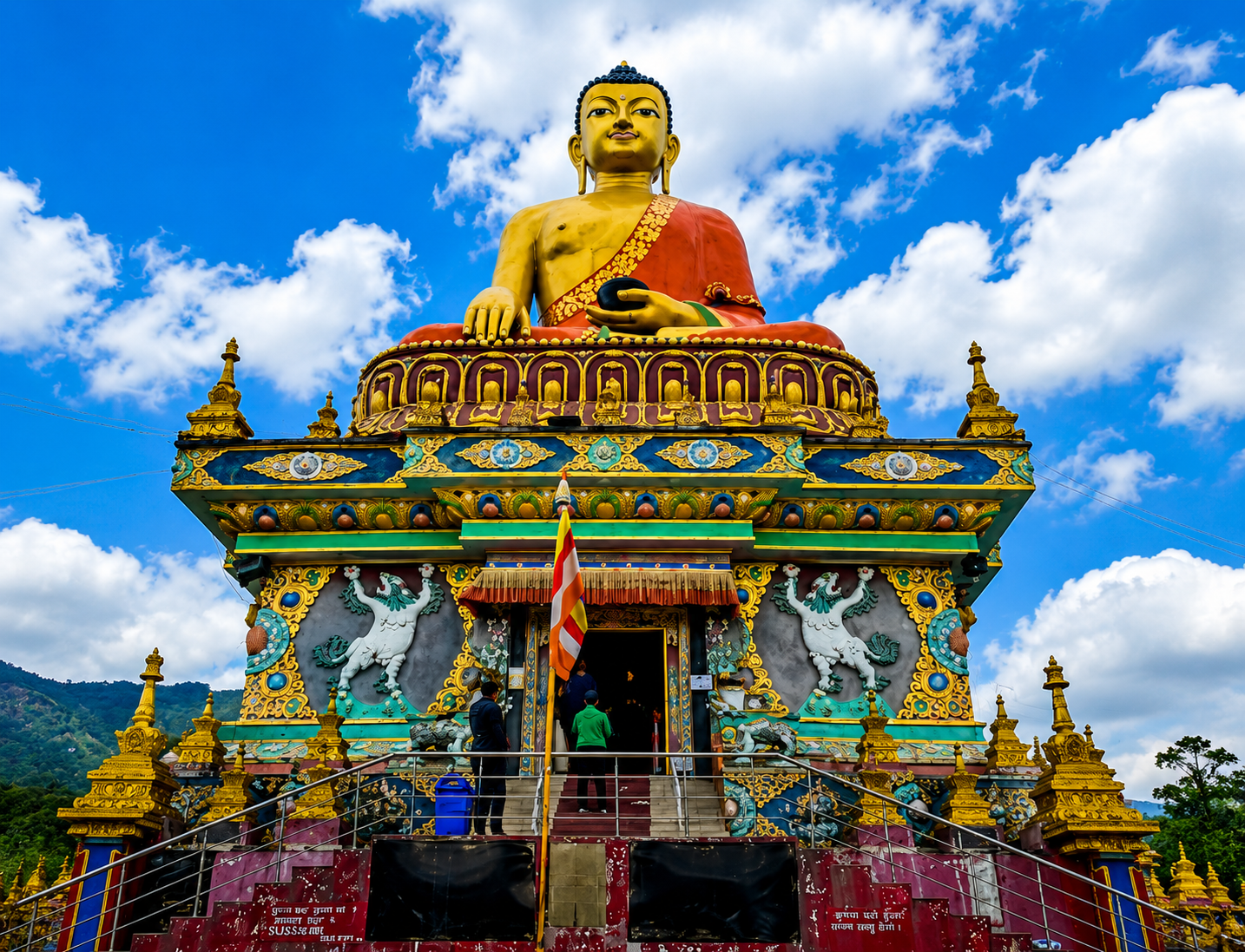
The Great Buddha Statue, an eighty-foot seated figure consecrated by the Dalai Lama, is another significant highlight. Set within landscaped gardens on the edge of town, the statue offers a serene and contemplative space, providing a compelling combination of modern devotion and ancient symbolism in a single vantage point.
🏯 International Monasteries
The cluster of international monasteries scattered around the town adds a rich cultural dimension to the visit, particularly for travelers interested in architecture and comparative religion, offering structures that range from ornate Thai temples to minimalist Japanese halls connecting people meaningfully with diverse expressions of Buddhist faith.
🎎 Seasonal Atmosphere
The visual experience of Bodh Gaya changes considerably with the calendar, as the lead-up to Buddha Purnima fills the town with pilgrims and festive energy, while the winter months bring large gatherings of monks for prayer ceremonies and a crisp clarity to the mornings. This seasonal variation adds depth to the visitor experience, making repeat visits particularly rewarding.
🚶 Activities
Temple visits and meditation sessions are the primary activities at Bodh Gaya, with the Mahabodhi Complex and surrounding monasteries offering spaces of varying scale and atmosphere. These visits provide opportunities to observe monastic rituals, participate in guided meditation, and witness the quiet devotion of pilgrims from around the world.
Walking tours of the monastery district are a popular way to experience the town, offering a gentle and immersive route through structures built by Thai, Tibetan, Bhutanese, and Japanese Buddhist communities. Early morning hours are particularly favorable, as the soft light and relative quiet create an atmosphere of contemplative calm.
The nearby Sujata Stupa and Dungeshwari Cave Temples, associated with episodes from the Buddha's life before enlightenment, offer further historical and spiritual interest, drawing pilgrims and curious visitors alike. Visiting the Archaeological Survey of India museum is also widely undertaken, rewarding those who make the effort with insight into the excavated artifacts and sculptures that trace the site's long history.
📅 Best Time to Visit
🌤️ Ideal Season
The most favorable period to visit Bodh Gaya is from October to March, when temperatures are pleasant and the skies tend to be clear, allowing for comfortable walking and extended time at outdoor sites. During these months, the cool air and moderate conditions make exploring the temple complex and surrounding monasteries particularly enjoyable, and this period also coincides with major prayer gatherings and teachings led by senior monks.
🪔 Buddha Purnima
The festival of Buddha Purnima, typically falling between April and May, transforms the town with celebration and a deeply devotional atmosphere that many visitors find profoundly moving. However, the accompanying heat and large crowds require some preparation.
🌧️ Summer & Monsoon
The summer months from April to June bring intense heat to the plains of Bihar, and the monsoon season from July to September introduces humidity and intermittent rainfall, though both periods offer a quieter, less crowded experience for those drawn to reflection over festivity.
🚆 Connectivity
Bodh Gaya is conveniently accessible from several major urban centers in eastern India. Gaya, located approximately 12 kilometres away, is the nearest city and serves as the most practical base for reaching the town by road and rail. Gaya also has its own airport with seasonal international and domestic flights, particularly during the pilgrimage season, while Patna's airport, roughly 100 kilometres away, provides broader year-round connectivity.
Rail connectivity is well established, with Gaya Junction offering regular services from Delhi, Kolkata, Varanasi, and other major cities. Road connectivity is efficient as well, with well-maintained routes linking Bodh Gaya to Gaya, Patna, and Varanasi, making it a highly practical inclusion in pilgrimage circuits and heritage itineraries across Bihar and Uttar Pradesh, as well as a popular destination for international Buddhist travelers visiting India.
Places to Visit Nearby
```