```html
🦏 Kaziranga National Park: India's Premier Wildlife Sanctuary and the Kingdom of the One-Horned Rhino
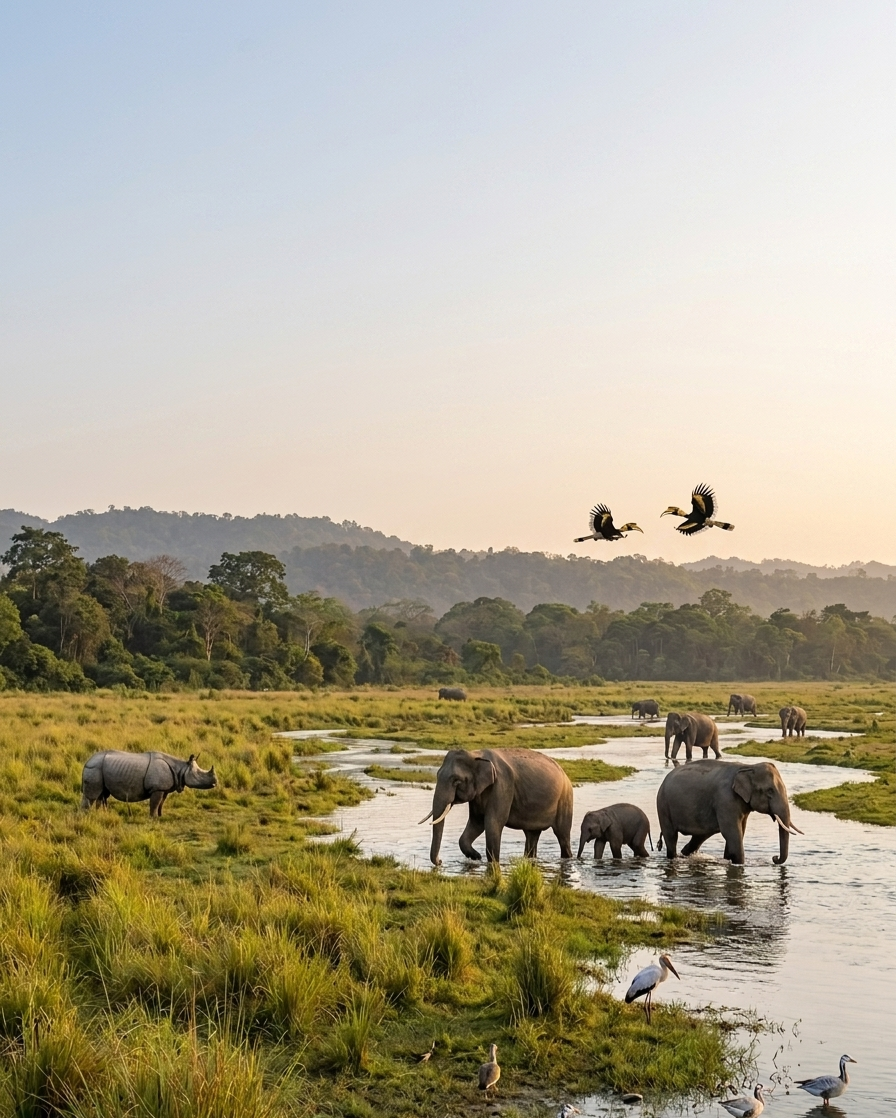
Spread across the floodplains of the Brahmaputra River in Assam, Kaziranga National Park stands as one of India's most celebrated wildlife destinations and a UNESCO World Heritage Site. Renowned worldwide as the stronghold of the one-horned rhinoceros, Kaziranga offers travelers an opportunity to witness some of the most extraordinary wildlife encounters in South Asia, set against a landscape of tall elephant grass, marshlands, and dense forest that stretches to the horizon.
🌿 Destination Overview
Kaziranga's significance goes far beyond its rhino population, though that is certainly its most famous calling card. The park represents one of the last areas in eastern India where large mammal populations thrive relatively undisturbed, and its ecosystem of grasslands, wetlands, and forest patches supports a level of biodiversity that few other parks in the country can match. For wildlife enthusiasts, photographers, and travelers seeking an immersive nature experience, Kaziranga consistently ranks among the top destinations not just in India, but in Asia as a whole.
⭐ Why Kaziranga Deserves a Place on Your Itinerary
🏛️ A UNESCO World Heritage Site
Kaziranga's inscription as a UNESCO World Heritage Site reflects its outstanding universal value as a habitat for some of the world's most endangered species. This recognition isn't just a badge of honor — it underscores the park's role in global conservation efforts and signals to visitors that they are entering an ecosystem of genuine ecological importance, carefully protected and managed for both wildlife preservation and sustainable tourism.
🦏 The Rhino Capital of the World
Kaziranga is home to the largest population of one-horned rhinoceroses anywhere on the planet, housing a significant majority of the world's wild population of this species. For most visitors, seeing these massive, armor-plated creatures grazing in the open grasslands or wallowing in marshy pools is the highlight of their trip — and often a genuinely emotional experience, given how close the species came to extinction in the not-so-distant past. The success of conservation efforts here has made Kaziranga something of a global model for species recovery.
🚙 A Premium Safari Destination
Beyond rhinos, Kaziranga offers a safari experience that rivals some of Africa's most famous parks in terms of density and diversity of sightings. Tiger, elephant, wild water buffalo, swamp deer, and a host of other species roam the park, and the relatively compact size of the safari ranges compared to some larger parks often means higher likelihoods of meaningful wildlife encounters within a shorter visit.
🌳 Rich Biodiversity
The park's location within the Brahmaputra floodplain creates a mosaic of habitats — tall grasslands, swamps, rivers, and patches of tropical forest — that support an extraordinary range of species. Beyond the large mammals that draw most visitors, Kaziranga is also a haven for birdlife, reptiles, and smaller mammals, making it a destination that rewards visitors interested in the full spectrum of the natural world, not just the headline species.
📍 Key Attractions
🚙 Central Safari Range (Kohora Range)
The Central Range is the most established and frequently visited part of the park, offering excellent infrastructure and a high probability of spotting rhinos, elephants, and other key species against the backdrop of classic Kaziranga scenery — vast grasslands dotted with water bodies and patches of forest. This range is often the starting point for first-time visitors and tends to offer a well-rounded introduction to the park's ecosystems.
🌾 Western Range (Bagori)
Known for its wetlands and water bodies, the Western Range offers a slightly different landscape character, with a strong reputation for rhino and elephant sightings, as well as excellent opportunities for observing the park's rich birdlife along its many pools and marshes. The range's terrain often makes for striking photographic compositions, particularly during the soft light of early morning safaris.
🌲 Eastern Range (Agoratoli)
The Eastern Range tends to be less crowded than the Central and Western ranges, offering a quieter safari experience with its own distinct landscape of grasslands and forest patches. This range is often favored by visitors looking for a more tranquil experience, away from the busier sections of the park, while still offering strong wildlife viewing opportunities.
🌺 Orchid Park
A complement to the wildlife-focused ranges, the Kaziranga Orchid and Biodiversity Park showcases the region's incredible diversity of orchids and other plant species, alongside cultural exhibits relating to the tribal communities of the region. This attraction offers a change of pace from the safari experience, combining botanical interest with cultural and educational elements, and makes for an excellent activity on a day when safari timings don't fill the entire schedule.
🎯 Activities for Visitors
🚙 Jeep Safari
Jeep safaris are the primary way most visitors explore Kaziranga's ranges, offering flexibility, comfort, and the ability to cover larger distances within the park in search of wildlife. Morning and afternoon safari slots each offer different lighting conditions and animal behavior patterns, and many repeat visitors choose to do safaris in multiple ranges to maximize the diversity of landscapes and sightings.
🐘 Elephant Safari
A more traditional way of exploring parts of the park, elephant safaris offer a unique vantage point and the ability to move through tall grasslands where jeeps cannot easily go, often bringing visitors remarkably close to grazing rhinos and other wildlife. This early-morning activity has long been one of Kaziranga's signature experiences, offering a different perspective on the landscape compared to vehicle-based safaris.
🦜 Birdwatching
With its mix of wetlands, grasslands, and forest, Kaziranga is a significant destination for birdwatchers, hosting both resident and migratory species throughout the year. Serious birders often spend extended time in the park's various habitats, particularly around water bodies, where waterfowl and wading birds congregate in significant numbers.
📸 Wildlife Photography
The combination of abundant wildlife, dramatic landscapes, and excellent light conditions — particularly during the cooler months — makes Kaziranga a favorite destination for both amateur and professional wildlife photographers. The park's varied ranges offer different backdrops and species compositions, encouraging photographers to explore multiple areas during their stay.
ℹ️ Practical Information
```