```html
🏛️ Vaishali
📖 Overview
Vaishali stands as one of the most historically profound and spiritually layered destinations in India, carrying the distinction of being recognised as one of the world's earliest republics and a place of deep sacred importance across both Buddhist and Jain traditions. Located in the Vaishali district of Bihar, approximately fifty-five kilometres north of Patna on the banks of the Gandak river plain, the site preserves a remarkable collection of ancient monuments, sacred tanks, and archaeological remains spread across a flat, fertile landscape that has been continuously inhabited since the sixth century BCE. The destination draws pilgrims, historians, and heritage travelers from across Asia and beyond, united by a shared recognition of Vaishali's extraordinary place in the story of human civilization.
What distinguishes Vaishali from other ancient sites in the region is the breadth of its historical associations compressed within a relatively compact area. It was here that the Licchavi republic flourished as a model of early democratic governance, that Lord Mahavira was born and spent his formative years, and that the Buddha delivered some of his final teachings before his passing, including the gift of a bowl of honey from a monkey that remains one of the most celebrated episodes in early Buddhist narrative. This convergence of political, Jain, and Buddhist memory gives Vaishali a layered significance that few destinations in the subcontinent can match.
✨ Why Visit Vaishali
The recognition of Vaishali as a site of world historical importance rests on its unique position as a place where the earliest experiments in republican governance coincided with the lives of two of the ancient world's most influential spiritual teachers. Unlike sites defined by a single monument or tradition, Vaishali offers a landscape of dispersed but deeply meaningful remains that reward patient and thoughtful exploration.
One of the most compelling reasons to visit is the opportunity to encounter the Ashoka Pillar, one of the best-preserved of Emperor Ashoka's celebrated edicts pillars, standing in solitary and serene dignity amid flat agricultural land. The pillar, crowned by a single lion capital, conveys both the reach of the Mauryan Empire and the personal devotion of Ashoka to the Buddhist faith, making it one of the most evocative imperial monuments surviving from ancient India. Nearby, the sacred Ramkund tank and the Coronation Tank associated with the Licchavi rulers add further historical texture to the immediate surroundings.
Additionally, Vaishali holds particular significance for followers of Jainism as the birthplace of Lord Mahavira, the twenty-fourth tirthankara, drawing pilgrims to the Kundalpur site and associated temples throughout the year. This dual religious importance, combined with the republican heritage of the Licchavis, makes Vaishali genuinely distinctive among Bihar's heritage destinations and a worthy anchor for any serious exploration of the region's ancient past.
🌟 Key Highlights Within the Area
🦁 Ashoka Pillar
Among the monuments at Vaishali, the Ashoka Pillar at Kolhua is the most immediately striking and atmospherically powerful. Rising to a height of approximately eighteen metres from a single shaft of polished Chunar sandstone, the pillar is surmounted by a lion capital and stands adjacent to a small sacred tank and the remains of a Buddhist stupa, creating a compact precinct of exceptional historical resonance. The combination of imperial monument, sacred water body, and brick stupa within a single enclosure offers a concentrated experience of Mauryan-era Buddhist piety.
🏺 Vaishali Museum
The Vaishali Museum, located near the main archaeological zone, houses a well-curated collection of terracottas, seals, coins, and sculptural fragments recovered from excavations across the district. The museum provides essential context for the dispersed remains visible across the landscape and is particularly valuable for understanding the material culture of the Licchavi period and the broader archaeological sequence of the site.
☮️ Vishwa Shanti Stupa
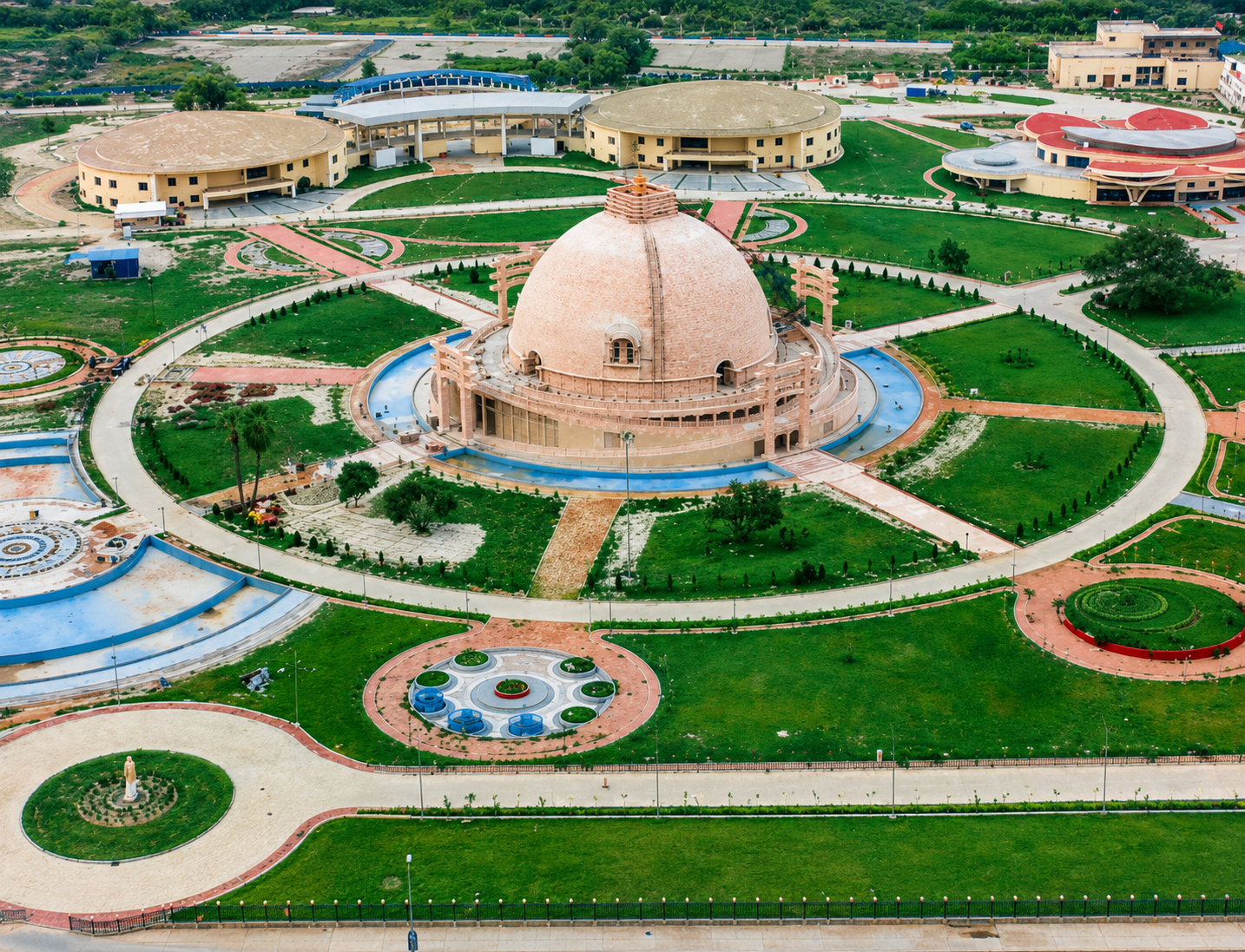
The Vishwa Shanti Stupa, a gleaming white peace pagoda constructed by the Japanese Buddhist organisation Nipponzan Myohoji, stands as one of the most visually prominent modern landmarks at Vaishali, echoing similar structures at Rajgir and other Buddhist pilgrimage sites across India. It houses relics of the Buddha and offers a calm, contemplative environment that draws both pilgrims and visitors seeking a moment of stillness within the broader itinerary.
🏞️ Coronation Tank
The ancient Coronation Tank, known as Abhishek Pushkarini, is believed to be the sacred water body where the elected representatives of the Licchavi republic were ceremonially consecrated, lending it a unique political and ritual significance that distinguishes Vaishali's heritage landscape from purely religious sites elsewhere in Bihar.
🚶 Activities
Exploring the dispersed archaeological precincts on the Vaishali circuit is the primary activity, with the Kolhua complex, the Coronation Tank, the Raja Vishal ka Garh earthwork enclosure, and the Vaishali Museum forming the core of a well-rounded visit. Moving between these sites, which are spread across a few kilometres of flat countryside, is best undertaken by bicycle, auto-rickshaw, or private vehicle, allowing visitors to set their own pace and linger at points of particular interest.
A visit to the Vaishali Museum is strongly recommended before or after exploring the main monuments, as the collection significantly deepens the understanding of the Licchavi republican period and the Buddhist associations of the site. The museum's numismatic collection, including punch-marked coins from the Licchavi era, is particularly illuminating for those interested in the economic and political organisation of early republics.
The Jain pilgrimage circuit centered on Kundalpur, the traditional birthplace of Lord Mahavira, offers a complementary dimension to the Buddhist and historical sites, drawing visitors into a living tradition of devotion that has continued uninterrupted for centuries. A day trip combining Vaishali with the nearby sites of Patna and its associated Mauryan remains is widely undertaken, placing Vaishali within the broader arc of Bihar's ancient civilizational heritage.
📅 Best Time to Visit
❄️ October to March
The most favorable period to visit Vaishali is from October to March, when the climate across the Bihar plains is cool and pleasant, allowing for comfortable movement between the dispersed monuments and extended time at outdoor sites. During these months, the clear winter light is particularly favorable for appreciating the Ashoka Pillar and the open archaeological landscape, and the moderate temperatures make walking the precincts an unhurried pleasure.
🌧️ July to September
The monsoon season from July to September transforms the flat agricultural landscape surrounding Vaishali into a vivid green expanse that lends the ruins a distinctive atmospheric quality, particularly around the ancient tanks and earthwork enclosures. However, waterlogging of some pathways and unpredictable rainfall require flexibility in planning and appropriate footwear.
☀️ April to June
The summer months from April to June bring considerable heat to the plains of northern Bihar, making extended outdoor exploration demanding during the midday hours. Early morning visits during this period remain rewarding, as the quiet of the site before the day's heat builds allows for an unhurried experience of the monuments and their surroundings.
🚗 Connectivity
Vaishali is conveniently accessible from Patna, which serves as the primary air and rail gateway for the region. Located approximately fifty-five kilometres south of the main Vaishali archaeological zone, Patna offers regular domestic flights from Delhi, Mumbai, Kolkata, and other major cities, and is connected by road to Vaishali in roughly ninety minutes to two hours depending on traffic conditions. The journey crosses the Gandak river plain and passes through a landscape of rural Bihar that is itself of considerable interest.
Road connectivity is the principal means of reaching Vaishali, with well-maintained routes linking it to Patna, Muzaffarpur, and Hajipur, the last of which serves as the nearest significant town and railway junction. Travelers approaching from Muzaffarpur or other points in the Tirhut division find Vaishali conveniently positioned along existing road corridors, and the site is increasingly included within organised heritage circuits covering Patna, Vaishali, Kesariya, and Lauriya Nandangarh for those wishing to explore the full breadth of Bihar's northern Buddhist trail.
Top Attractions Nearby
```