Dakhrain : Festival Of Joy & Harvest
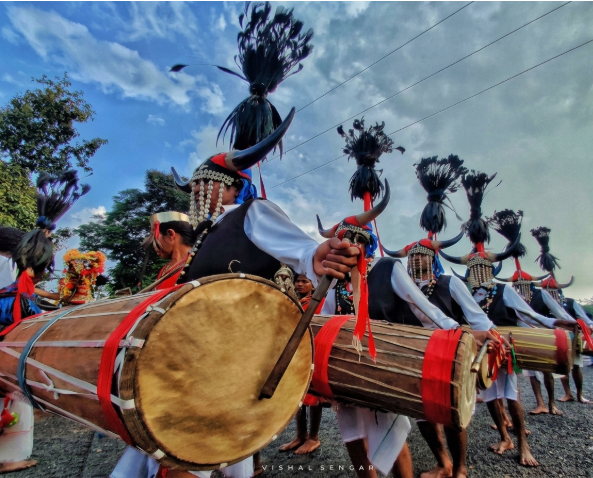
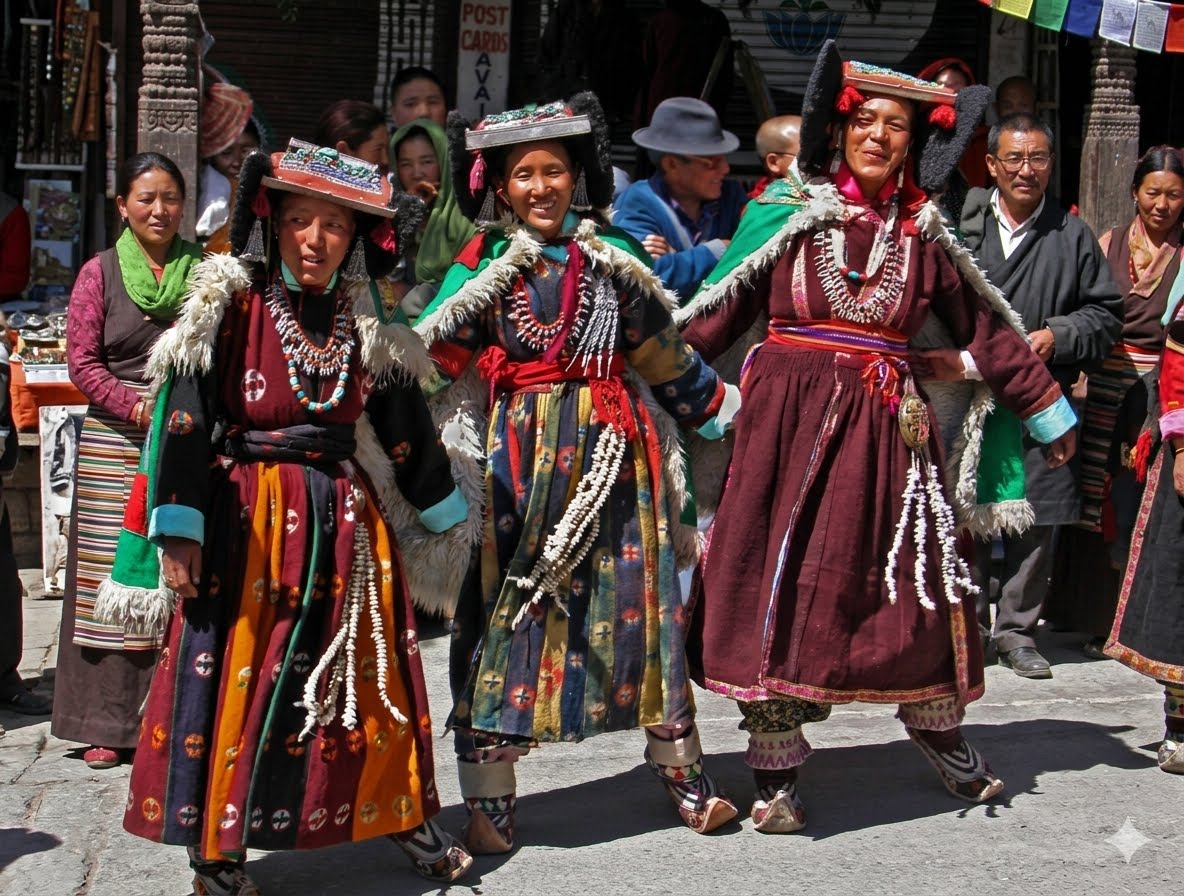
Hidden within the majestic Himalayan landscapes of Himachal Pradesh, the Dakhrain Festival offers travelers a rare opportunity to witness a living tradition that continues to shape the cultural identity of the region. As part of our carefully curated 12–15 day experiential journeys across India, Ocean Tripmakers invites international travelers to become part of this authentic three-day community celebration, where ancient customs, village life, spirituality, music, and hospitality come together in an unforgettable cultural experience. Dakhrain is much more than a local festival; it is a vibrant expression of Himachal's deep-rooted connection with nature, agriculture, community, and faith. Celebrated with devotion and enthusiasm by local villagers, the festival reflects the values that have sustained Himalayan communities for generations—gratitude for nature's abundance, respect for ancestral traditions, collective harmony, and the preservation of cultural heritage.
🏔️ Dakhrain – The Mystical Mountain Fair of Pangi Valley's Hudan
At Ocean Tripmakers, we believe that the most meaningful travel experiences are not created through sightseeing alone, but through discovering traditions that survive far from the beaten path. As part of our carefully curated journeys across the Indian Himalayas, we invite travelers to the remote Hudan valley of Pangi, Himachal Pradesh, to witness Dakhrain – a centuries-old mountain fair rooted in folklore, held beside a high-altitude lake few outsiders ever reach.
🌏 Location
Hudan Lake, Pangi Valley, Chamba, Himachal Pradesh
📅 Celebrated Around
18th July, In The Month Of Shravan
📖 Rooted In
Ancient Kol Tribal Folklore
🎭 Central Legend
The Tale Of Tunta Rakshas
🏵️ A Festival Born of Legend
Dakhrain traces its origins to the Kol tribe, believed to be the earliest inhabitants of this remote corner of Pangi. According to local legend, the festival takes its shape from an encounter with a demon named Tunta Rakshas, whose father Lal Losh is said to have once disguised himself and slipped into the community's night-time dance to prey upon unsuspecting villagers under cover of darkness. The story has been carried forward through generations, shaping the rituals observed to this day.
🔥 Three Nights Before the Fair
The lead-up to Dakhrain is marked by its own ritual. On the night three days prior, in a custom still followed today, villagers gather on the meadows above Hudan Lake for Banwaat, lighting a great bonfire as their ancestors once did, keeping the memory of the old tale – and the vigilance it demands – alive in the community's collective memory.
💃 The Shain Dance and Its Vow
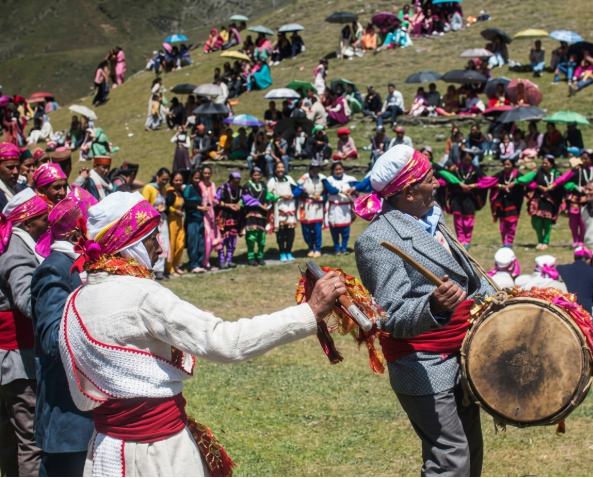
At the heart of the celebration is the Shain, a traditional circular dance performed by the community. Custom holds that once a dancer joins the circle from one end, they are bound to complete the full round and exit from the opposite end – a rule said to trace directly back to the night the disguised demon joined the dance under darkness, and one still respected by every participant today.
🏞️ A Fair in a Hidden Meadow
Held on the open grassy meadows beside Hudan Lake, high above Hudan Bhatori village, Dakhrain draws people from across Pangi and beyond, transforming a quiet, near-deserted spot into a lively gathering for a single day each year. Traders set up tents selling food, sweets, and local wares, while visitors from distant parts of Himachal, and occasionally further afield, arrive to take part in the festivities.
❤️ A Rare Window into Pangi's World
What makes Dakhrain so remarkable is how little it has changed. Tucked away in one of Himachal's most isolated valleys, accessible only through winding mountain roads, this is a festival still lived on its own terms – sacrifices, dances, and feasts carried out much as they were generations ago. For travelers who make the journey, it offers a rare glimpse into a living folk tradition that exists almost entirely outside the modern tourist trail.
🌟 Travel Partner Opportunity
For travel partners seeking truly offbeat Himalayan experiences, Dakhrain offers a striking addition to remote-region, folklore-based, and small-group expedition programs in Himachal Pradesh. It brings travelers face-to-face with a tradition shaped by mythology, altitude, and isolation – a side of the Himalayas few ever witness.
🇮🇳 The Essence of Pangi Valley
This is the Himalayas at their most mysterious, most remote, and most unforgettable.