Fagua : The Festival Of Colors And Joy
There is a version of Holi that most of urban India knows well — the water guns, the coloured powder packets from the market, the Bollywood songs playing from speakers. And then there is Fagua, the way Holi has been celebrated in Jharkhand for centuries among its tribal and rural communities — rawer, more rooted, more musically alive, and connected to the earth and the agricultural cycle in ways that the urban version has largely forgotten. In Jharkhand, Fagua is not simply the festival of colours. It is a celebration of spring's arrival, a community ritual of social renewal, a musical tradition of great sophistication, and a window into the ancient cultural soul of one of India's most historically rich and underappreciated states.
🎨 Fagua – Bihar's Soulful Folk Celebration of Holi
At Ocean Tripmakers, we believe that the most meaningful travel experiences are not created through sightseeing alone, but through genuine immersion in local life and living tradition. As part of our carefully curated journeys across India, we invite travelers to experience Fagua – the rustic, heartfelt version of Holi celebrated across Bihar and the wider Bhojpuri-speaking heartland, where colour, folk song, and community come together in one of India's most joyous village festivals.
🌏 Region
Bihar, Jharkhand & The Bhojpuri Heartland
🎶 Also Known As
Phaguwa Or Phagwa
📅 Celebrated In
The Hindu Month Of Phalgun (Feb–Mar)
🥁 Signature Element
Fagua Folk Songs & Dhol-Manjira Music
🏵️ A Festival of Songs and Spirit
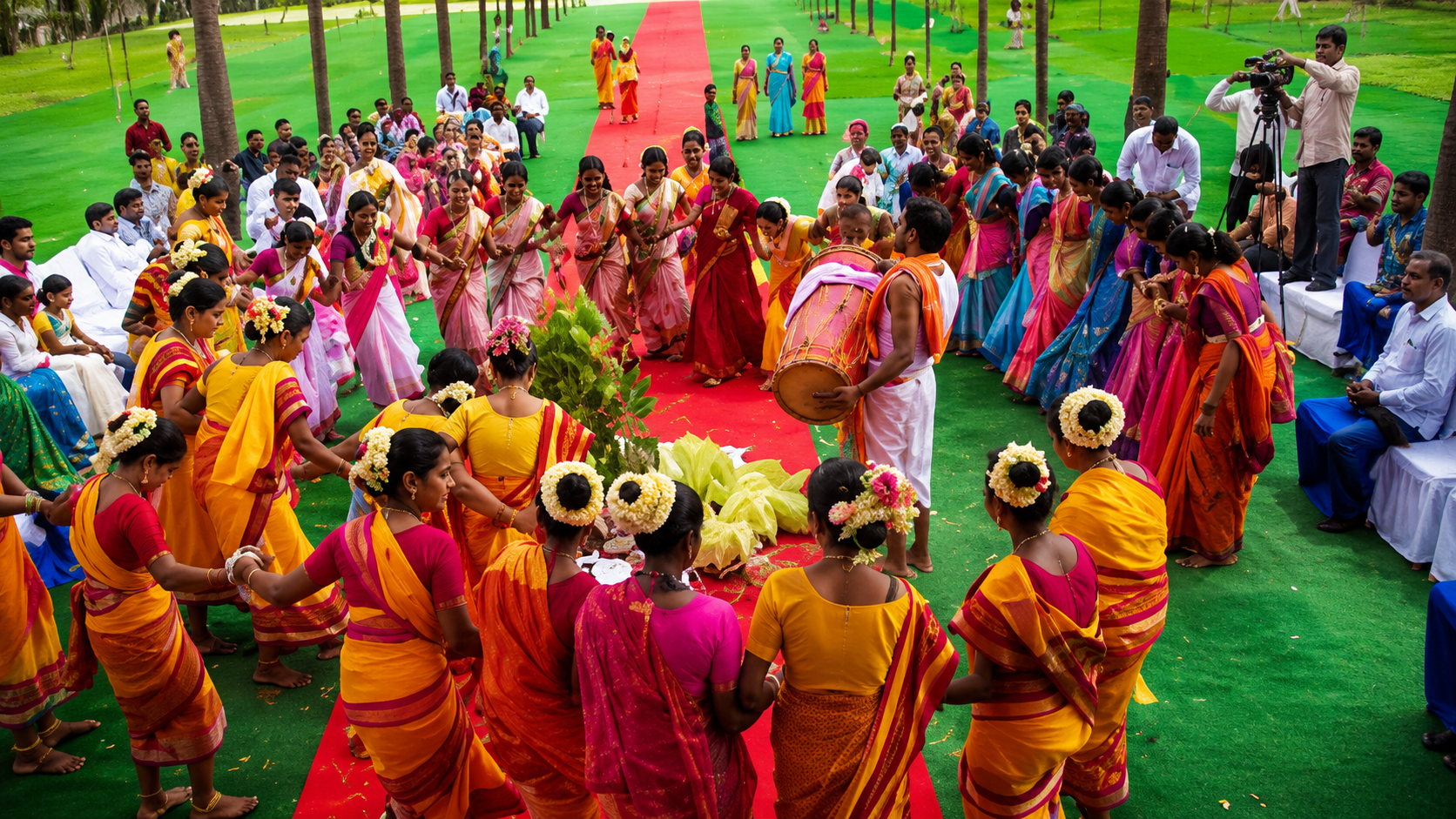
Fagua takes its name from the folk song tradition at its heart. Sung in groups to the beat of the dholak, kartal, and manjira, Fagua songs are devotional and playful in equal measure, celebrating the divine pairs of Shiva-Gauri, Radha-Krishna, and Rama-Sita as they play Holi. These songs, passed down through generations, turn the run-up to Holi into weeks of music-filled evenings across Bihar's villages and towns.
🔥 From Holika Bonfires to Colour
Like elsewhere in North India, Fagua begins on the eve of Phalgun Purnima with the lighting of the Holika bonfire, into which dung cakes, seasoned wood, and fresh harvest grains are offered as families mark the victory of good over evil. The following day erupts into colour, as gulal and abir fill the air and water guns and coloured water bring streets and courtyards alive with laughter.
🎭 Local Flavours of Celebration
Every district adds its own character to the festival. In parts of Patna, Bhagalpur, Jamui, and Shahabad, revellers celebrate "Kurta Fad Holi," where old shirts are worn especially to be torn apart in play. In some villages, colours are mixed in large ponds rather than buckets, drawing entire communities to bathe in colour together, while elsewhere, mud and clay are joyfully smeared alongside traditional gulal.
🍢 A Feast to Match the Festivities
No Fagua celebration is complete without its food. Homes prepare pua, thekua, dahi bada, kachori, and gujhiya, while thandai and bhang add to the festive, unhurried mood of the day. Sharing these delicacies with neighbours and welcoming guests, regardless of background, reflects the spirit of harmony that runs through the festival.
❤️ A Living Folk Tradition
What makes Fagua special is its deeply communal, unpolished character. This is not a festival staged for spectators but one lived by entire villages – where neighbours sing together, dance in circles to the beat of the dholak, and welcome the arrival of spring as one extended family. For travelers, witnessing Fagua offers a rare glimpse into the folk soul of Bihar, far removed from the more commercial Holi celebrations elsewhere.
🌟 Travel Partner Opportunity
For travel partners seeking authentic, offbeat cultural experiences, Fagua offers a vibrant addition to heritage, folk-culture, and community-immersion travel programs in Eastern India. It gives travelers a rare, unfiltered look at the songs, rituals, and warmth that define rural Bihar during its most colourful season.
🇮🇳 The Essence of Bihar
This is Bihar at its most colourful, most musical, and most unforgettable.