Hornbill : The Spirit Of Hornbill Festival
India is known for its incredible diversity, vibrant traditions, and colorful festivals, but beyond its famous landmarks lies a treasure trove of unique cultural experiences waiting to be explored. One such extraordinary celebration is the Hornbill Festival, often referred to as the "Festival of Festivals." Held annually in the beautiful state of Nagaland, the Hornbill Festival is a spectacular showcase of indigenous tribal heritage, traditional arts, music, dance, cuisine, and adventure. For international travel agencies, tour operators, wholesalers, and destination management companies (DMCs), the Hornbill Festival presents a remarkable opportunity to introduce travelers to one of India's most authentic and culturally immersive experiences. As global travelers increasingly seek off-the-beaten-path destinations and meaningful cultural encounters, the Hornbill Festival has become a must-visit event in India's tourism calendar.
Hornbill Festival
where every Naga tribe brings its own fire to one hillside.
A rare encounter with Nagaland's great gathering of tribes — sixteen distinct peoples, each with their own language and dress, coming together at Kisama to honour a shared identity built on individual heritage.
Kisama Heritage Village, Nagaland
Authentic Naga Tribal Gathering
2–3 Day Add-On Within A Broader Itinerary
Hornbill Festival, December 1 – 10
Not just a festival.
A nation of tribes, together.
The Hornbill Festival is far more than a cultural showcase. It is Nagaland's annual gathering of all its recognised Naga tribes, each with its own language, dress, and customs, brought together at Kisama to celebrate a shared identity while honouring individual heritage.
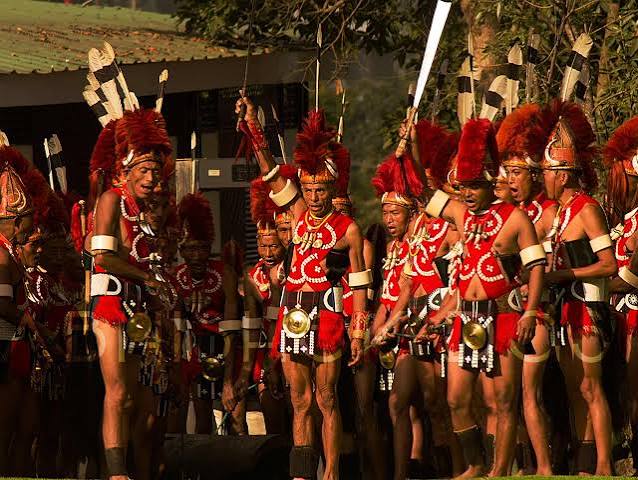
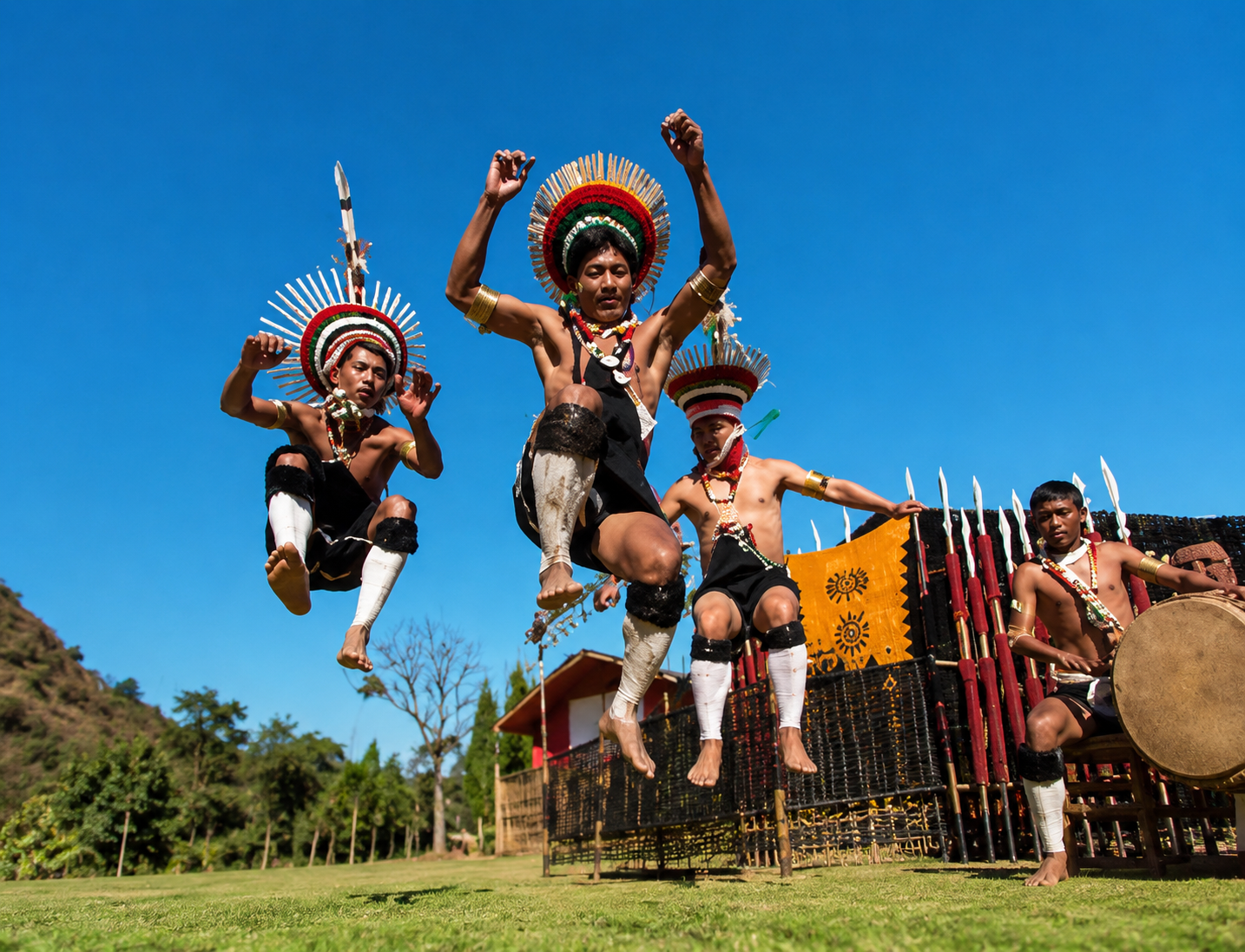
Named for the hornbill, a bird central to Naga mythology and warrior tradition, the festival brings war dances, indigenous games, and generations of feathered headgear and beadwork out of the village and onto one hillside.
An invitation, not an exhibit.
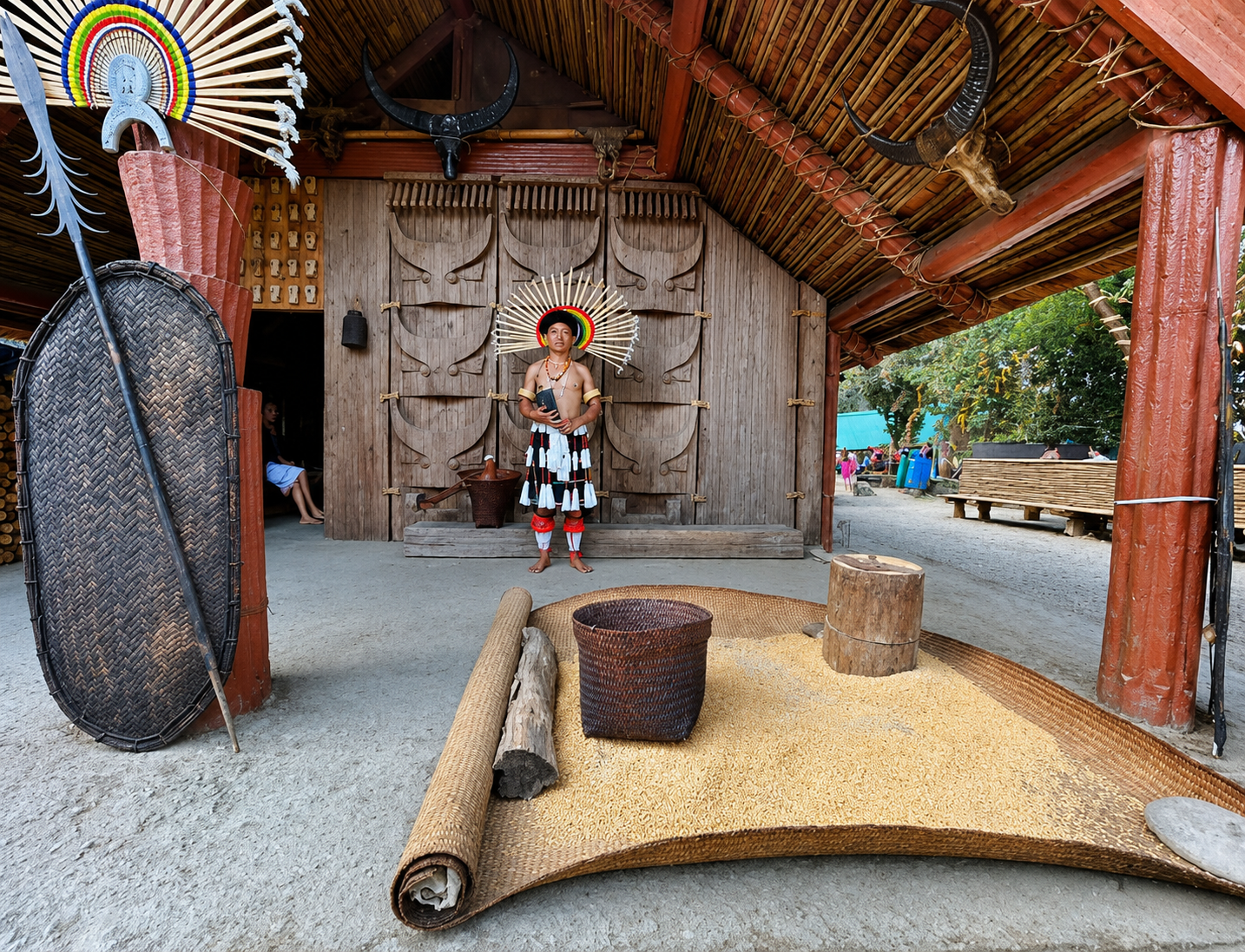
Through our exclusive local network, we connect travelers with Naga families and tribal representatives who welcome guests into their morungs — traditional community huts — built fresh each year at Kisama to represent their tribe.
This is not a museum display. It is a living gathering of Nagaland's own people, offering rare access to conversations, crafts, and stories most travelers never hear beyond a festival brochure.
What the days hold
During the days integrated within a broader itinerary, guests become part of the festival's daily rhythm. They may:
Walk through morungs representing different tribes, meeting elders and craftsmen who explain their attire, weapons, and customs firsthand. Watch war dances and folk performances staged in the central arena, drums and chants rolling across the hills. Taste tribal cuisine — smoked pork, bamboo shoot, and dishes built around the fiery king chilli. Witness traditional wrestling and indigenous games, and, by evening, take in Naga music at the Hornbill festival grounds, where old chants and new sounds share the same stage.
Between heritage and hillside
The experience reveals India in one of its most diverse forms — a single hillside holding sixteen distinct cultures at once.
Colour on the Hills
Morungs alive with drumbeats, feathered headgear, and beadwork against Nagaland's misty ranges.
Fire & Story
Bonfires, music, and storytelling carry the day's energy into the Naga night.
A Living Museum
Each community hut a self-contained window into one tribe's distinct history and craft.
Unity in Difference
Pride in individual tribal identity, held together by a shared Naga sense of belonging.
Not touring the tribes. Sitting among them.
What makes this experience truly exceptional is how openly each morung welcomes a stranger in. Rather than viewing tribal life from outside a rope line, guests are invited to sit inside the huts, ask questions of the elders, taste what's cooking over the fire, and hear history from the people who lived it.
They leave not simply having seen the tribes of Nagaland, but having sat with them.
Add the extraordinary to your itineraries
For travel partners seeking distinctive and authentic cultural experiences, our Hornbill Festival Experience provides an extraordinary addition to luxury, experiential, cultural, and small-group travel programs.
It offers travelers a rare combination of tribal diversity and communal celebration — memories that extend far beyond the journey itself.