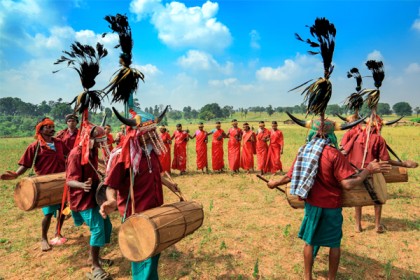
Madai : A Celebration Of Tribal Culture
India's cultural heartland holds extraordinary traditions that remain largely undiscovered by the wider world, and few are as vivid, authentic, and deeply rooted as the Madai Festival of Chhattisgarh. Celebrated across the tribal belt of Bastar and surrounding regions, Madai is a spectacular gathering of indigenous communities, devotion, music, trade, and ancestral customs that has endured for centuries. For international travel agencies, tour operators, wholesalers, and destination management companies (DMCs), Madai Festival presents a remarkable opportunity to introduce travelers to one of India's most authentic tribal cultural experiences. As global travelers increasingly seek off-the-beaten-path destinations, Madai has emerged as a compelling and distinctive addition to Central India's tourism calendar.
Madai Festival: the tribal soul of Central India, ready for your international programs.
Across the Bastar belt, villages take turns hosting Madai between November and February — a rotating season of gram devta processions, folk dance, and open-air trade fairs that has held tribal Chhattisgarh together for generations. For agencies, wholesalers, and DMCs building experiential India programs, it's a rare, dated product still well outside the mainstream circuit — and one Ocean Tripmakers can build directly into your Central India itineraries.
What your clients are actually buying
Madai centers on the gram devta, the village deity, honored through prayer and ritual for the wellbeing of land, livestock, and family. Around that sacred core, each village Madai grows into an open fair — trade, food, music, and dance drawing in neighbouring settlements for the day. Because the date rotates village to village, no two Madai your clients attend will look quite the same, which gives you a genuinely renewable product rather than a one-off event to sell once and repeat.
For clients moving past temples and monuments, this is a chance to stand inside a still-functioning tribal economy and belief system — not a recreation staged for visitors, but the real calendar of Bastar's indigenous communities.
What the day looks like
Guests can witness the sacred procession of the village deity through the community, and watch Panthi, Karma, and Raut Nacha folk dances performed to the rhythm of timki and mandar drums. The Madai bazaar runs alongside — tribal jewelry, crafts, and produce traded much as they have been for generations — while community feasting and oral storytelling round out the day's rhythm. Traditional attire, body art, and forest-based Chhattisgarhi cuisine, along with locally brewed beverages central to the celebration, round out an experience built entirely around lived tradition rather than performance for an audience.
Why photographers and content travel buyers respond to it
Elaborately adorned dancers, sacred processions through village streets, a bazaar in full color, and Bastar's surrounding forest landscape give this a level of visual richness that's genuinely rare to find alongside this much cultural authenticity. It's a strong sell to photography-led groups, documentary and content-travel clients, and any itinerary where the destination needs to carry its own story in images.
Extensions that combine naturally with Madai
Tribal Village Immersion
Multi-day stays with Bastar's indigenous communities beyond the festival itself.
Chitrakoot Waterfalls
India's widest waterfall, an easy scenic extension from Bastar.
Sirpur & Bhoramdeo Heritage
Temple architecture that anchors the region's deeper historical layer.
Kanger Valley Safari
Wildlife programs for clients extending into Central India's forests.
Craft Workshops
Hands-on sessions in Bastar Dhokra metalwork and Warli painting.
Photography Expeditions
Dedicated village and forest circuits built for serious camera-led groups.
The commercial case for your desk
Madai fills a gap most Central India programs don't currently cover — indigenous cultural tourism that's dated, renewable, and still largely untapped by mainstream operators.
- Rotating village dates across a four-month season give you a wide booking window rather than a single fixed date to plan around.
- Fits cleanly across product lines — FIT, premium small group, educational and student travel, and responsible/indigenous tourism programs.
- Combines naturally with existing Chhattisgarh and Central India itineraries, extending average trip length and spend.
- Local ground handling, community relationships, and permissions are already in place through our Bastar network.
Bring Madai into your Central India portfolio
Ocean Tripmakers builds custom Madai Festival programs for international agencies, wholesalers, and DMCs — from tribal immersion itineraries to full ground handling across Chhattisgarh.
Talk to Ocean Tripmakers