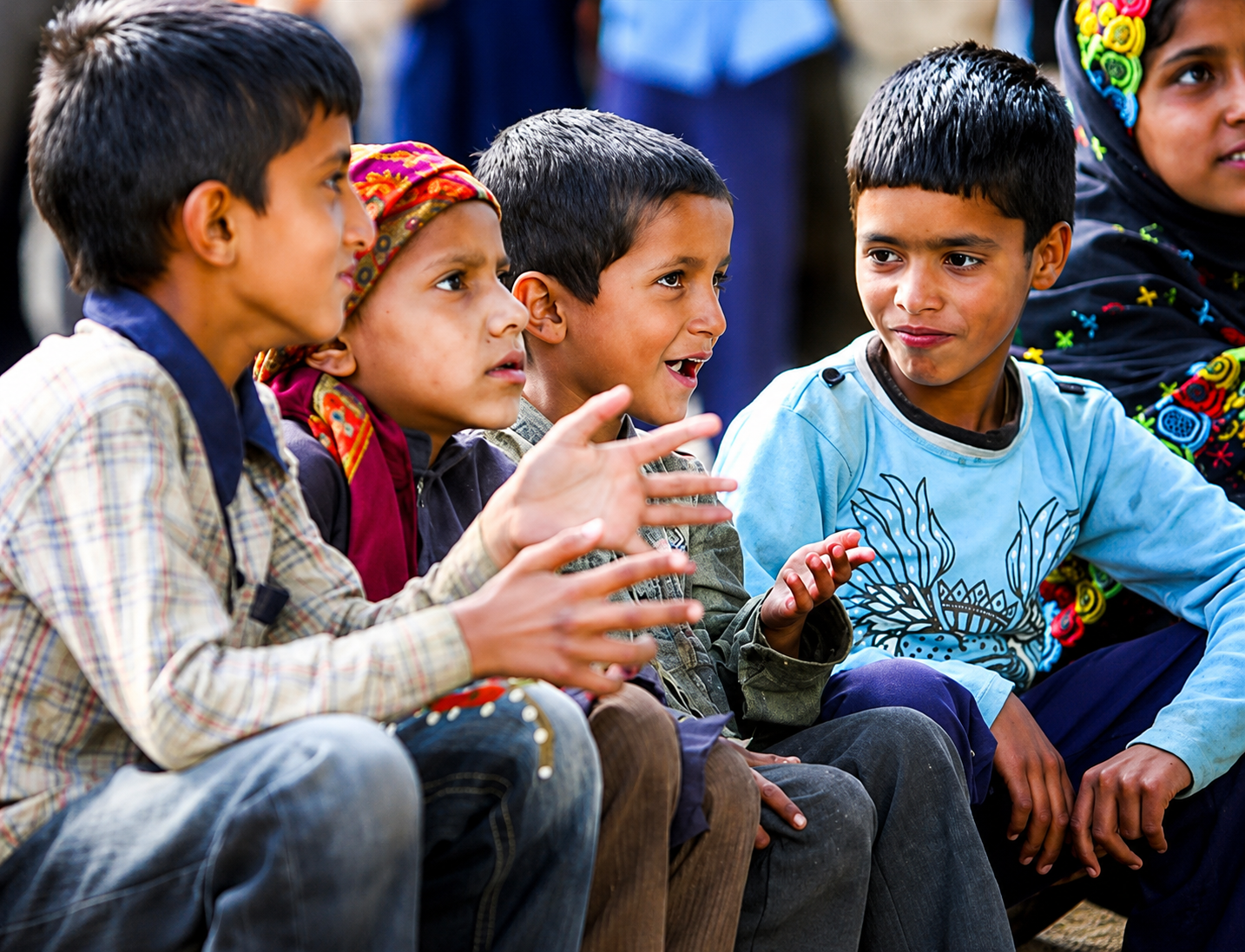
Dhadkai lies within the Gandoh (Bhalessa) Tehsil of Doda district, roughly 70 kilometres from Doda town and 220 kilometres from Jammu. Surrounded by mountains, forest, and valley terrain, the village remains relatively isolated, with limited road connectivity shaping day-to-day access.
🤟
Why It's Called the Silent Village
A significant share of Dhadkai's population lives with severe congenital hearing and speech impairment, with cases documented as far back as 1901. Multiple members within many families share the condition, making the village an unusual case among Indian settlements for the concentration of hereditary hearing loss.
Instead of a barrier, the village has built a shared local sign language, learned from childhood and used by hearing and non-hearing residents alike.
🧬
Scientific Research Behind the Condition
Medical researchers have studied Dhadkai to understand the causes of its widespread hearing loss, identifying mutations in genes known to play a role in hearing:
OTOF gene CLDN14 gene SLC26A4 gene
Researchers link the pattern to hereditary factors compounded by generations of marriage within a limited population — making Dhadkai a reference point for genetic and medical research into inherited hearing disorders.
🌾
Daily Life in the Village
Agriculture and livestock remain the primary livelihood in Dhadkai, much as in other Himalayan villages of the region. Visual communication, facial expression, and gesture carry everyday interaction, and community life — festivals, family gatherings, village events — continues much as it would anywhere else.
🕊️
A Note on Visiting Respectfully
Dhadkai is a living community, not an exhibit. Anyone travelling through the area for research, healthcare outreach, or general interest should keep that distinction in mind.
Consent
Ask before photographing residents, and accept a decline without pressing further.
Framing
Refer to residents by name and role where known, not primarily by their condition.
Access
Terrain and connectivity are genuinely limited — plan for a village visit, not a quick stop.
Purpose
Visits tied to genuine research, education, or healthcare outreach are more appropriate than casual sightseeing.