kuldhara : A Mystery Hidden in Rajasthan’s Sands
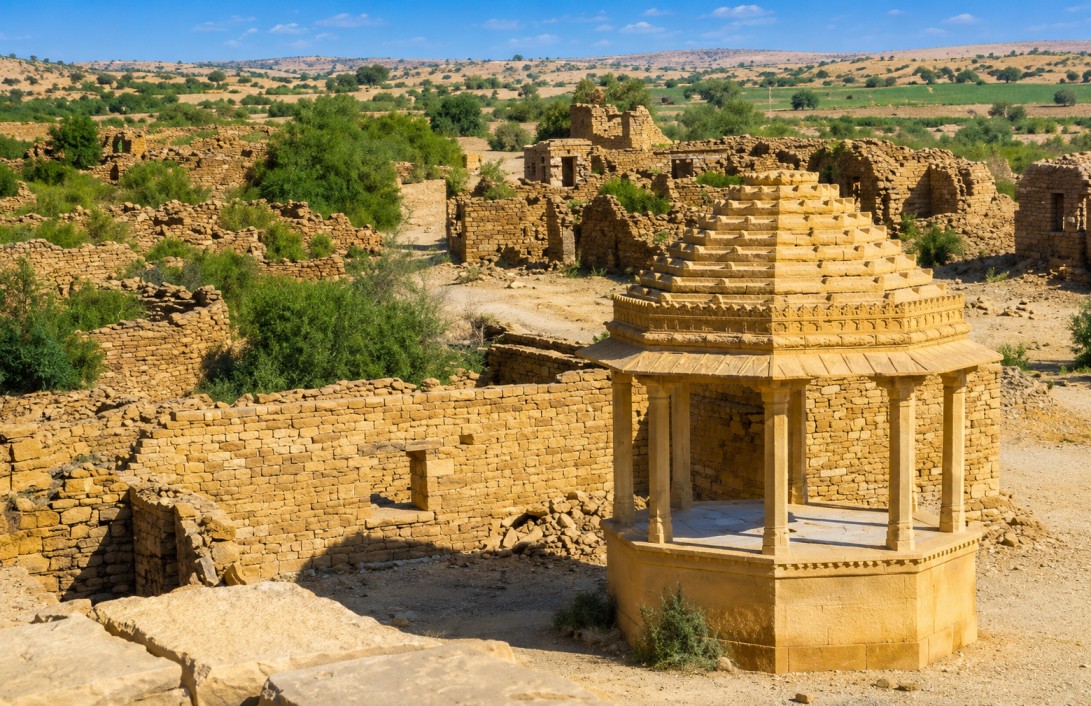
Tucked away in the golden sands of Rajasthan, roughly 18 kilometers southwest of Jaisalmer, lies Kuldhara — a village that was once alive with the footsteps of the Paliwal Brahmin community and is now frozen in silence. Kuldhara is one of Rajasthan's most compelling ghost towns, a place where crumbling sandstone homes, dusty lanes, and an old temple tell a story that has survived for nearly two centuries without ever being fully solved. For travelers exploring Jaisalmer, the "Golden City," Kuldhara offers something entirely different from forts and palaces: a hauntingly beautiful window into a mystery still debated by historians and locals alike.
Kuldhara: The Abandoned Village That Time Forgot in the Thar Desert
Tucked away in the golden sands of Rajasthan, roughly 18 kilometers southwest of Jaisalmer, lies Kuldhara — a village that was once alive with the footsteps of the Paliwal Brahmin community and is now frozen in silence. Kuldhara is one of Rajasthan's most compelling ghost towns, a place where crumbling sandstone homes, dusty lanes, and an old temple tell a story that has survived for nearly two centuries without ever being fully solved. For travelers exploring Jaisalmer, the "Golden City," Kuldhara offers something entirely different from forts and palaces: a hauntingly beautiful window into a mystery still debated by historians and locals alike.
📍 Location and First Impressions
Kuldhara sits right along the route that connects Jaisalmer to the Sam Sand Dunes, making it an easy and popular stop for anyone already heading into the Thar Desert for a desert safari or sunset camel ride. As you approach, the landscape shifts from open scrubland to a cluster of ruined houses laid out along straight streets, bordered by low sandstone walls. Doorframes stand without doors, courtyards sit empty, and the wind moves through empty window frames. It's quiet in a way that few tourist sites are, and that quiet is exactly what draws visitors in.
🕯️ A History Wrapped in Mystery
Kuldhara was founded around the 13th century by the Paliwal Brahmins, a community known for its skill in agriculture, trade, and desert architecture. Over generations, the settlement grew into a cluster of around 84 villages, with Kuldhara as one of its most prominent. Then, sometime in the early 19th century, the entire population is said to have vanished overnight.
No one knows exactly why. The most popular legend centers on Salim Singh, a powerful and feared minister of the Jaisalmer state, who is said to have set his sights on the daughter of the village chief and threatened the community with a heavy tax if his demands weren't met. Rather than surrender their daughter or their dignity, the villagers are said to have packed up and disappeared in a single night, leaving behind a curse that no one would ever be able to resettle the land. Other historical accounts point to more practical explanations — water scarcity, shifting trade routes, or unfair taxation policies imposed by the ruling powers of the time. Whichever version is closer to the truth, the result is the same: a village abandoned in an instant and never reoccupied.
🏛️ Culture, Architecture, and the Paliwal Legacy
Walking through Kuldhara is like reading a chapter of Rajasthan's rural history written in stone. The Paliwal Brahmins were known for their advanced understanding of desert farming and water conservation, and traces of that ingenuity are still visible in the layout of the settlement — narrow lanes designed to block sandstorms, homes built close together for shade, and an old temple that once served as the spiritual heart of the community. Inscriptions found within the temple have helped historians piece together fragments of the village's past, even though much remains unrecorded.
🧭 Why Kuldhara Appeals to Every Kind of Traveler
History enthusiasts & curious minds
History enthusiasts and curious minds will appreciate the chance to walk through genuine ruins rather than reconstructed monuments, getting a raw sense of how a real community once lived.
Photographers
Photographers are drawn to the interplay of golden sandstone, long shadows, and desert light, especially in the early morning or late afternoon when the ruins glow amber against the sky.
Couples & solo travelers
Couples and solo travelers often find the stillness of Kuldhara oddly romantic and reflective, a break from the noise of more crowded attractions.
Families with older children
Families traveling with older children enjoy the storytelling aspect — the legends of Salim Singh and the mysterious disappearance make for a memorable, slightly eerie tale that keeps kids engaged.
Adventure & offbeat travel fans
Adventure and offbeat travel fans appreciate that Kuldhara isn't a polished, ticketed monument but a genuinely atmospheric site best explored slowly, on foot, letting the silence set the mood.
🏜️ Nearby Attractions Worth Combining
Because of its location on the way to the Sam Sand Dunes, most visitors pair a Kuldhara visit with a broader desert itinerary. Bada Bagh, a garden complex with royal cenotaphs and windmills overlooking the desert, lies close by and is often included in the same day trip. The Sam Sand Dunes themselves, famous for camel safaris, jeep rides, and sunset views over rolling sand, make a natural next stop after exploring the ruins. Back in Jaisalmer city, the Jaisalmer Fort, Patwon Ki Haveli, and Gadisar Lake round out a well-paced desert getaway.
🍛 Local Flavor and Shopping
While Kuldhara itself has no shops or eateries — it's a preserved heritage site with no permanent residents — Jaisalmer city nearby is rich with Rajasthani cuisine and craft. Don't miss dal baati churma, ker sangri (a desert-bean delicacy), and kadhi served with bajra rotis at local restaurants. For shopping, Jaisalmer's markets near the fort are known for mirror-work textiles, leather juttis, silver jewelry, and hand-block printed fabrics, making for good souvenirs after a day in the desert.
🗓️ Best Time to Visit
The ideal months to visit Kuldhara are between October and March, when daytime temperatures are far more manageable than the punishing desert heat of summer. Early morning visits are especially rewarding, both for cooler weather and softer light for photography.
🚗 How to Reach Kuldhara
Jaisalmer is the nearest hub, with its own airport connected to major cities and a railway station linking it to Jaipur, Jodhpur, and Delhi. From Jaisalmer, Kuldhara is a short 30 to 40-minute drive by taxi, rented car, or as part of an organized desert safari tour, since most operators combine it with stops at Bada Bagh and the Sam Sand Dunes.
📋 Practical Travel Tips
Kuldhara is generally open daily, typically from around 8 a.m. until early evening, though timings can shift slightly on weekends or during local events, so it's worth confirming locally before setting out. A modest entry fee applies, with a small additional charge if you're bringing a vehicle inside the premises. As it's an archaeological site under official protection, visitors are asked to avoid climbing on unstable structures or removing any stones or artifacts. Carrying water, wearing comfortable walking shoes, and using sun protection are essential, since there's little shade once you're among the ruins. Guided tours from Jaisalmer are widely available and add valuable context to the legends and history that make Kuldhara so memorable.
Kuldhara isn't a place with rides, restaurants, or curated experiences — its appeal lies precisely in what's missing. For travelers seeking a quieter, more atmospheric side of Rajasthan, away from crowded palaces and bustling bazaars, this abandoned village offers a rare, contemplative encounter with history and legend side by side.