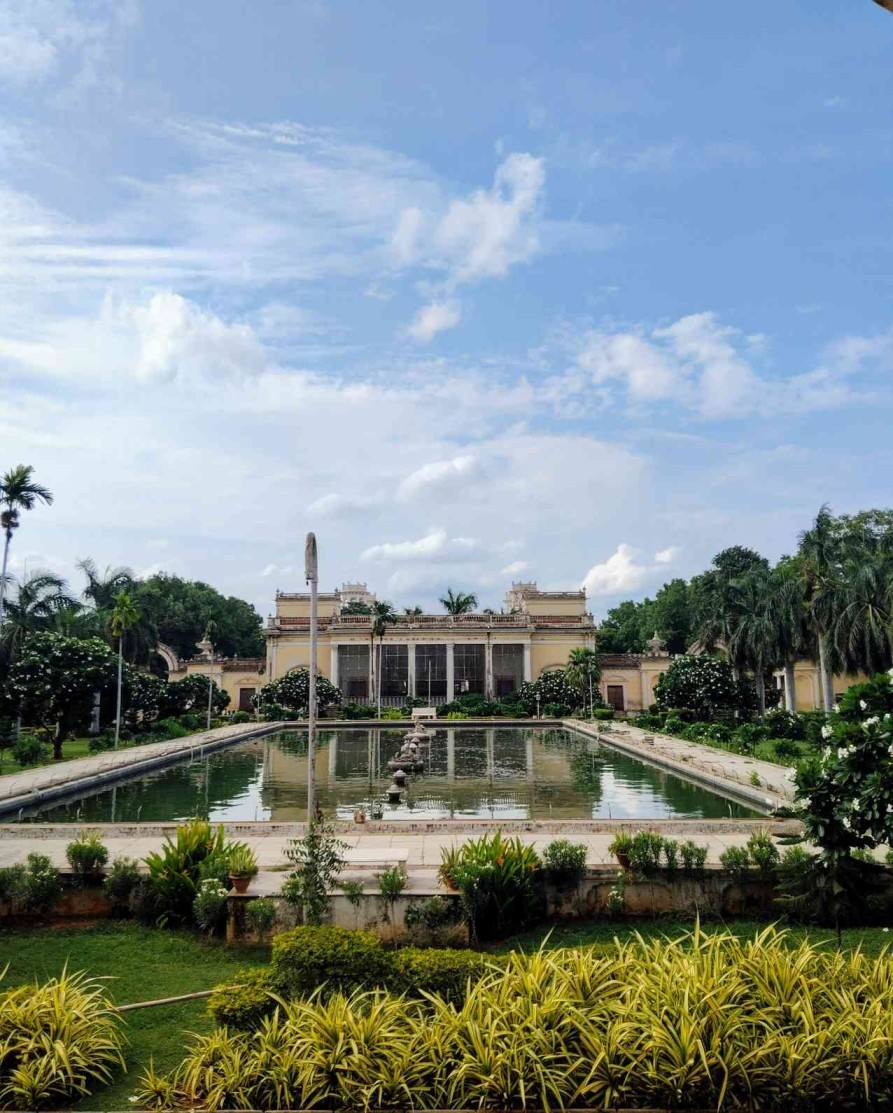
Chowmahalla Palace - The Jewel Of Hyderabad
Picture stepping through a grand gateway into a courtyard so vast and so elegant, it feels like time itself slowed down to admire its own reflection in the marble fountains. That's Chowmahalla Palace for you — not just a royal residence, but a living chapter of Hyderabad's Nizami legacy. The name itself comes from Persian and Urdu — "Chow" meaning four, and "Mahalla" meaning palaces — and true to its name, this sprawling complex is made up of four magnificent palaces arranged around two stunning courtyards, right in the heart of the old city.
🏛️ Chowmahalla Palace, Hyderabad – Where Four Palaces Tell One Royal Story
Picture stepping through a grand gateway into a courtyard so vast and so elegant, it feels like time itself slowed down to admire its own reflection in the marble fountains. That's Chowmahalla Palace for you — not just a royal residence, but a living chapter of Hyderabad's Nizami legacy. The name itself comes from Persian and Urdu — "Chow" meaning four, and "Mahalla" meaning palaces — and true to its name, this sprawling complex is made up of four magnificent palaces arranged around two stunning courtyards, right in the heart of the old city.
📜 A Little Bit of History First
Chowmahalla's story stretches back further than most people realize. Construction began under Nizam Salabat Jung in 1750, but the palace as it stands today was largely completed during the reign of Nizam Afzal-ud-Daulah in the 1860s, drawing inspiration from the Shah's Palace in Iran. For nearly two centuries, this was the official seat of the Asaf Jahi dynasty, the rulers of Hyderabad State, and the venue where Nizams received royal guests, conducted state affairs, and celebrated lavish ceremonies. The palace witnessed the coronation of every Nizam from Nizam Ali Khan onward, making it not just a residence but the political and ceremonial heart of one of India's wealthiest princely states.
✨ The Attractions That Will Leave You Breathless
🏰 Southern Courtyard
The palace complex is divided into two courtyards. The Southern Courtyard, the older of the two, houses four palaces — Afzal Mahal, Mahtab Mahal, Tahniyat Mahal, and Aftab Mahal — each showcasing a striking blend of Persian, Mughal, and European architectural styles. Their facades, lined with grand columns and arched doorways, surround a long reflecting pool with fountains that once provided cool relief during Hyderabad's hot summers.
💎 Khilwat Mubarak
The true showstopper, however, is the Khilwat Mubarak, the durbar hall in the Northern Courtyard, where the Nizams once held court. With its towering Belgian crystal chandeliers — 19 in total — and a magnificent marble throne platform, this hall radiates an opulence that's hard to put into words. Standing beneath those chandeliers, surrounded by intricately carved stucco work, gives you a genuine sense of the power and grandeur the Nizams commanded.
🕰️ Clock Tower
Don't miss the Clock Tower, locally known as Khilwat Clock, which has been ticking since 1884 and still chimes today.
🚘 Royal Collections
The palace also houses a fascinating collection of vintage cars once owned by the Nizams, along with royal costumes, weaponry, manuscripts, and ceremonial items displayed across various halls, offering visitors an intimate look into the everyday luxury of Hyderabad's royal household.
🎭 Culture, People, and Food
Chowmahalla sits in the bustling old city of Hyderabad, surrounded by centuries of Deccani culture, Islamic heritage, and the unmistakable charm of Nizami hospitality. The area around the palace, particularly near the iconic Charminar, buzzes with bangle shops, pearl traders, and the rhythmic calls of vendors selling everything from ittar (perfumes) to handwoven textiles.
No visit to this part of Hyderabad is complete without indulging in the city's legendary food. Hyderabadi biryani, slow-cooked with fragrant basmati rice and tender meat, is an absolute must. Pair it with mirchi ka salan and finish with double ka meetha or Qubani ka meetha for dessert. Street food lovers should make a beeline for the lanes around Charminar, where Irani chai and Osmania biscuits make for the perfect evening break between sightseeing.
🌤️ Best Time to Visit
The best time to visit Chowmahalla Palace is between October and February, when Hyderabad's weather turns pleasantly cool, making it comfortable to explore the open courtyards without the harsh sun. Summers, from March to June, can get extremely hot, while the monsoon season (July–September) brings welcome rain but occasional disruptions to outdoor sightseeing.
🚗 How to Get There
✈️ By Air
By Air: Rajiv Gandhi International Airport is the main gateway, located about 25 km from the old city. It's well-connected to major Indian and international cities, with taxis and cabs readily available for the drive into Hyderabad.
🚆 By Rail
By Rail: Hyderabad Deccan (Nampally) Railway Station is the closest major station, just a few kilometers from Chowmahalla Palace, with excellent connectivity to cities across India.
🛣️ By Road
By Road: Hyderabad has a well-developed road network, and the palace is easily reachable by local taxis, auto-rickshaws, or the city's metro and bus services. The drive through the old city, with its narrow lanes and bustling markets, is an experience in itself.
📍 Nearby Places Worth Exploring
Just a short walk from Chowmahalla Palace stands the iconic Charminar, Hyderabad's most recognizable landmark, along with the bustling Laad Bazaar, famous for its bangles and jewelry. The historic Mecca Masjid, one of India's largest mosques, is also within walking distance. A little further, Falaknuma Palace offers a glimpse into another chapter of Nizami opulence, while Golconda Fort, with its ancient ramparts and acoustic marvels, makes for a rewarding half-day trip.
🧳 A Few Travel Tips Before You Go
Wear comfortable footwear, as the palace grounds are extensive and best explored on foot.
Carry water and a hat if visiting during warmer months, as much of the courtyard area is open and shaded spots are limited.
Photography is generally allowed in most areas, but check signage near specific exhibits.
Visiting early in the day helps you avoid both the heat and the crowds, especially on weekends.
⭐ Why You Simply Must Visit Chowmahalla Palace
Some palaces impress with size. Chowmahalla impresses with soul. Every chandelier, every archway, every inch of marble here carries the weight of nearly two centuries of royal history, diplomacy, and quiet grandeur. Whether you're a history buff eager to walk in the footsteps of the Nizams, an architecture lover drawn to the fusion of Persian and European design, or simply a traveler seeking a slower, story-rich afternoon in Hyderabad, Chowmahalla Palace offers a deeply rewarding glimpse into a royal world that once ruled over one of India's richest kingdoms.