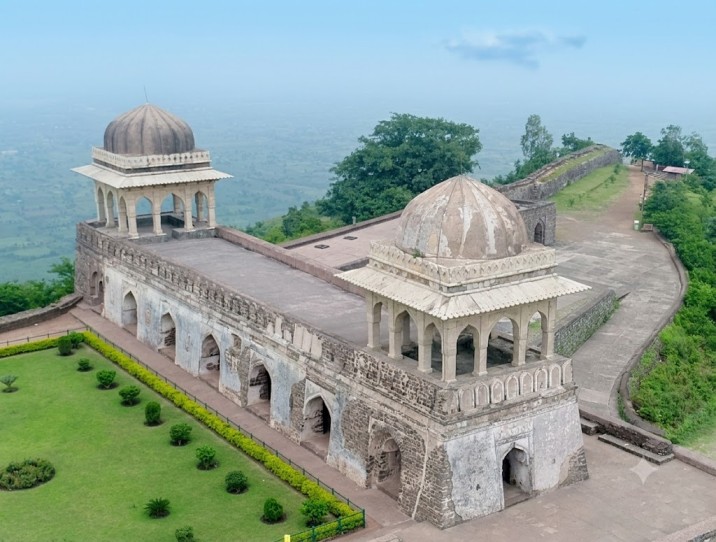
Rani Roopmati Pavilion Experience — Love, Poetry, and Sandstone Above the Nimar Plains
At Ocean Tripmakers, we look for monuments that carry a story worth telling on-site, not just a facade to photograph. Rani Roopmati Pavilion stands on Mandu's southern edge above the Narmada Valley — a former watchtower turned royal retreat, bound to the legendary romance of Rani Roopmati and Sultan Baz Bahadur.
Architectural Beauty and Scenic Landscapes
Built from locally sourced sandstone, the pavilion is a strong example of medieval Afghan-influenced architecture adapted to Mandu's hilltop terrain — graceful arches, spacious halls, elegant pavilions, and large domed chhatris.
Its position offers views across valleys, hills, forest and farmland toward the Narmada River. Monsoon cloud cover, and the colour of sunrise and sunset, place the pavilion among central India's strongest photography viewpoints.
History and Cultural Significance
The pavilion's history is tied to the legendary romance between Sultan Baz Bahadur, the last independent ruler of Malwa, and Rani Roopmati, a singer and poet from the Nimar region.
Tradition holds that Rani Roopmati agreed to marry Baz Bahadur only if she could continue viewing the sacred Narmada River she revered.
Built as her residence and viewing point, allowing daily prayer while gazing toward the distant river below.
History and folklore blend in the popular telling, but the monument endures as a recognised symbol of devotion and artistic patronage within the Malwa Sultanate's cultural record.
Major Attractions
Terraces, domed pavilions, corridors and elevated viewing platforms make up the core visit, with panoramic views particularly strong at sunrise, sunset, and during monsoon.
Local Experiences and Cultural Activities
Heritage walks through Mandu's ruins, guide-led storytelling around the site's history and legend, and photography across the day's changing light are the core activities here — with local festivals occasionally adding folk music and dance to the visit.
Cuisine, Shopping and Nearby Experiences
Dal Bafla, Bhutte Ka Kees, Poha, Sabudana Khichdi, Kachori, Jalebi, Malpua and regional vegetarian dishes at local restaurants.
Maheshwari and Chanderi textiles, tribal handicrafts, wooden artifacts, stone carvings and traditional jewellery in Mandu and nearby Dhar.
Best Time to Visit and How to Reach
October to March gives cool, comfortable sightseeing conditions. Monsoon (July–September) draws its own following, as cloud cover and green cover give the hilltop monuments a different, softer character.
Devi Ahilyabai Holkar Airport, Indore — approximately 100 km.
Indore Junction and Ratlam Junction.
Regular buses, taxis and private vehicles from Indore and Dhar.
October–March for comfort; July–September for the monsoon viewpoint.
Travel Partner Opportunity
For travel partners curating Madhya Pradesh heritage or romance-themed itineraries, Rani Roopmati Pavilion offers a monument with a built-in narrative — useful for honeymoon circuits, small-group heritage programs, and photography-led itineraries alike.
Positioned within Mandu's monument cluster, it pairs directly with Jahaz Mahal, Baz Bahadur's Palace, and the town's other heritage sites for a single-base, multi-attraction day.
A watchtower that became a love story, still facing the river it was built to overlook.