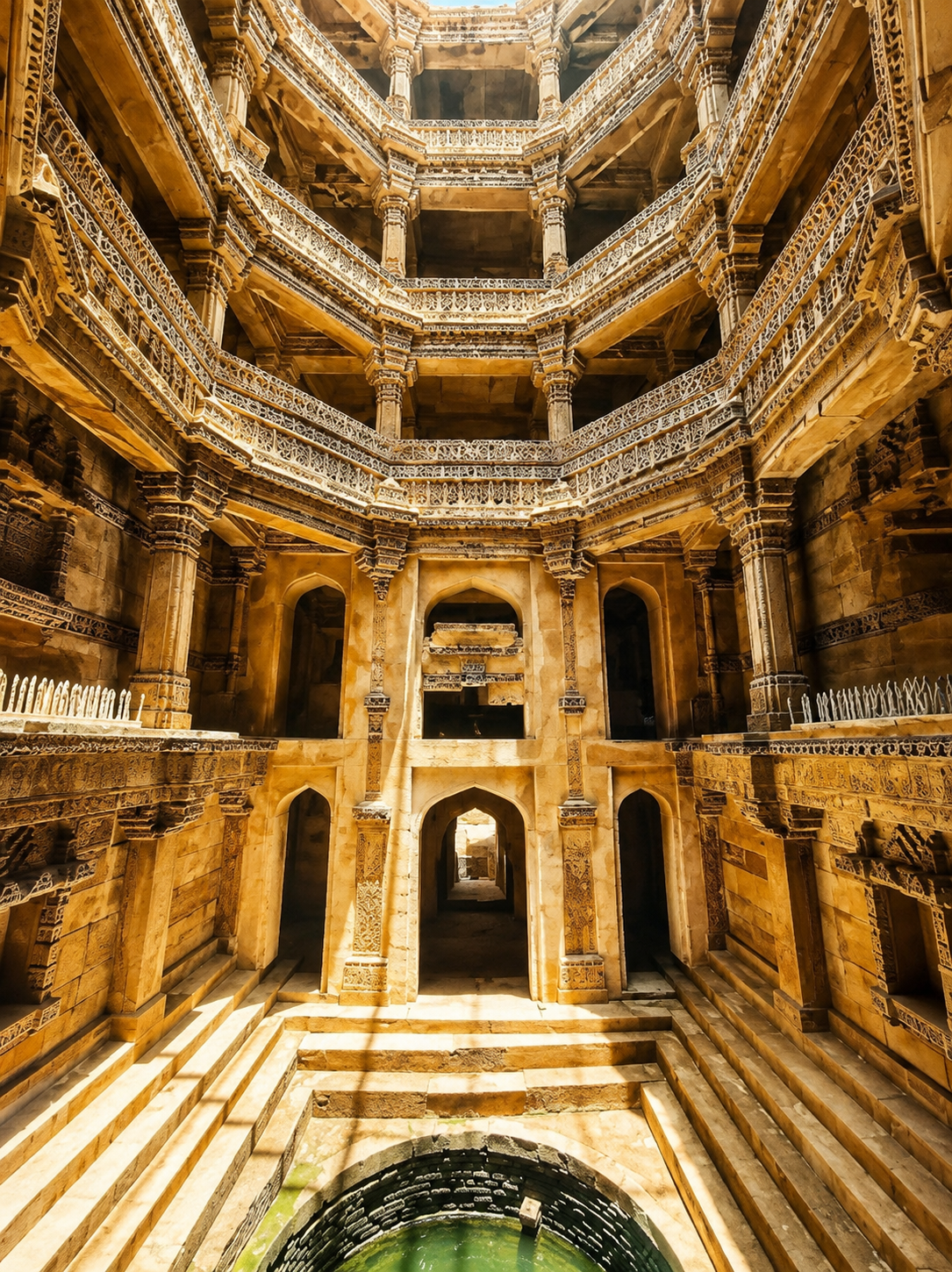
Adalaj stepwell : Gujarat's Timeless Beauty
Located in the village of Adalaj, around 18 kilometers north of Ahmedabad in Gujarat, Adalaj Stepwell (Adalaj ni Vav) is one of India's finest examples of historic water architecture. Built in the late 15th century, this magnificent five-story stepwell is admired for its intricate carvings, remarkable engineering, and fascinating history. More than just a water reservoir, Adalaj Stepwell served as a social gathering place, a resting point for travelers, and a spiritual retreat for local communities. Today, the monument is one of Gujarat's most visited heritage attractions, drawing history enthusiasts, architecture lovers, photographers, and cultural travelers from around the world. Its cool underground chambers, beautifully sculpted pillars, and peaceful ambiance create a unique experience unlike any other historical site in India.
Adalaj · Ahmedabad · Gujarat · India
Adalaj Stepwell: Gujarat's Architectural Marvel
Beneath the Earth
Explore the Timeless Beauty of Adalaj Stepwell
Located in the village of Adalaj, around 18 kilometers north of Ahmedabad in Gujarat, Adalaj Stepwell (Adalaj ni Vav) is one of India's finest examples of historic water architecture. Built in the late 15th century, this magnificent five-story stepwell is admired for its intricate carvings, remarkable engineering, and fascinating history. More than just a water reservoir, Adalaj Stepwell served as a social gathering place, a resting point for travelers, and a spiritual retreat for local communities.
Today, the monument is one of Gujarat's most visited heritage attractions, drawing history enthusiasts, architecture lovers, photographers, and cultural travelers from around the world. Its cool underground chambers, beautifully sculpted pillars, and peaceful ambiance create a unique experience unlike any other historical site in India.
Whether you're exploring Gujarat's cultural heritage or searching for hidden architectural treasures, Adalaj Stepwell offers an unforgettable journey into India's artistic and engineering brilliance.
📜 The History and Legacy of Adalaj Stepwell
Adalaj Stepwell was commissioned by Queen Rudabai, the wife of Rana Veer Singh Vaghela, the ruler of the region. Construction began under the Vaghela dynasty but remained unfinished after the king was killed in battle. According to historical accounts and local legend, Sultan Mahmud Begada later completed the stepwell in 1499 CE, preserving its architectural vision while incorporating elements of Indo-Islamic design.
Over the centuries, the stepwell became more than a source of water. It functioned as a resting place for merchants traveling along trade routes, a venue for community gatherings, and a sacred space where people sought relief from Gujarat's intense summer heat.
Today, Adalaj Stepwell is protected by the Archaeological Survey of India and remains one of the most significant examples of medieval Indian architecture.
🏛️ Architecture and Unique Attractions
Adalaj Stepwell is celebrated for its exceptional craftsmanship and innovative engineering.
🕳️ Five-Story Underground Structure
The stepwell descends five levels below ground, connected by a series of broad staircases, corridors, and platforms. The design naturally maintains cooler temperatures, providing welcome relief during hot summer months.
🪶 Intricate Stone Carvings
Every pillar, wall, and ceiling is decorated with detailed carvings featuring floral motifs, celestial symbols, mythological figures, elephants, vines, and geometric patterns. These sculptures showcase the extraordinary skills of 15th-century artisans.
🔯 Octagonal Entrance
The beautifully designed octagonal opening at the top allows natural sunlight to filter into the lower levels, creating dramatic light and shadow effects that change throughout the day.
🕌 Blend of Architectural Styles
One of Adalaj Stepwell's most distinctive features is its harmonious blend of Hindu, Jain, and Islamic architectural influences, reflecting Gujarat's diverse cultural heritage during the medieval period.
🏯 Pillared Pavilions
The spacious pavilions once provided resting areas for travelers, pilgrims, and traders. These elegant spaces continue to impress visitors with their symmetry and detailed ornamentation.
🌿 Natural Beauty and Surroundings
Although Adalaj Stepwell is primarily a heritage monument, its surroundings contribute to its peaceful atmosphere. Landscaped gardens, mature trees, and open courtyards create a pleasant environment for visitors.
The cool interiors contrast beautifully with Gujarat's warm climate, making the stepwell both a functional masterpiece and an architectural wonder. The combination of stone craftsmanship and natural light creates an almost meditative ambiance that encourages visitors to slow down and appreciate the monument's timeless beauty.
🌤️ Climate and Best Time to Visit
Gujarat experiences a semi-arid climate with hot summers, moderate monsoons, and pleasant winters.
The best time to visit Adalaj Stepwell is from October to March, when temperatures are comfortable for sightseeing.
Ideal weather for exploring the monument and nearby attractions.
Temperatures can be high, although the underground chambers remain noticeably cooler.
The surrounding greenery becomes more vibrant, offering beautiful photography opportunities despite occasional rainfall.
Morning and late afternoon visits provide softer lighting for photography and a more peaceful atmosphere.
🧭 Things to Do at Adalaj Stepwell
🪜 Explore the Underground Levels
Walking down the five levels allows visitors to appreciate the remarkable engineering that enabled the structure to conserve water while providing ventilation and natural cooling.
🪷 Admire the Stone Carvings
Take time to observe the intricate carvings on pillars, ceilings, and walls. Each section reveals remarkable artistic details inspired by mythology, nature, and daily life.
📷 Photography
Adalaj Stepwell is a favorite destination for photographers. The interplay of light, symmetrical architecture, carved pillars, and geometric patterns creates stunning compositions throughout the monument.
📖 Learn Local History
Hiring a knowledgeable guide adds depth to the experience by explaining the history, legends, symbolism, and architectural techniques behind the monument.
🎭 Culture and Local Experiences
A visit to Adalaj Stepwell offers insight into Gujarat's rich cultural heritage. Traditional Gujarati hospitality, colorful festivals, folk music, and regional crafts continue to shape the area's identity.
Nearby villages preserve many traditional customs, while Ahmedabad provides opportunities to experience museums, cultural performances, artisan workshops, and historic neighborhoods.
Visitors interested in heritage tourism often combine Adalaj Stepwell with other historic attractions to gain a deeper understanding of Gujarat's architectural legacy.
🍽️ Cuisine: Taste the Flavors of Gujarat
No visit to Gujarat is complete without sampling its famous cuisine.
Popular local dishes include:
Local sweet shops also offer traditional delicacies such as Mohanthal, Basundi, and Shrikhand, providing an authentic taste of Gujarati culinary traditions.
🛍️ Shopping Opportunities
Nearby Ahmedabad is one of Gujarat's best shopping destinations.
Popular items include:
Local artisan markets provide excellent opportunities to purchase authentic souvenirs that reflect Gujarat's artistic heritage.
🗺️ Nearby Attractions
Several popular destinations can easily be combined with a visit to Adalaj Stepwell.
🛕 Akshardham Temple, Gandhinagar
This magnificent temple complex features beautiful architecture, exhibitions, gardens, and spiritual experiences.
🕊️ Sabarmati Ashram
Located in Ahmedabad, Mahatma Gandhi's former residence offers valuable insights into India's independence movement.
🕌 Sidi Saiyyed Mosque
Famous for its iconic stone lattice windows, this historic mosque is an architectural masterpiece.
🚣 Kankaria Lake
Families can enjoy boating, recreational activities, gardens, toy trains, and lakeside walks at one of Ahmedabad's most popular attractions.
🧵 Calico Museum of Textiles
One of India's finest textile museums, showcasing centuries of craftsmanship and traditional weaving techniques.
❓ Why Visit Adalaj Stepwell?
For Families
Children and adults alike can learn about medieval engineering, architecture, and Indian history while exploring the monument's fascinating underground design.
For Couples
The peaceful surroundings, elegant architecture, and artistic beauty create a memorable heritage experience for couples.
For Solo Travelers
Independent travelers can explore the monument at their own pace while appreciating its history and intricate craftsmanship.
For Photographers
Adalaj Stepwell is one of India's finest photography destinations thanks to its symmetrical architecture, dramatic lighting, and detailed carvings.
For Architecture Enthusiasts
The monument offers an outstanding example of medieval engineering, water conservation, and artistic excellence.
For Cultural Travelers
Visitors interested in India's heritage, traditions, and historical architecture will find Adalaj Stepwell particularly rewarding.
🚉 How to Reach Adalaj Stepwell
The nearest airport is Sardar Vallabhbhai Patel International Airport, Ahmedabad, located approximately 20 kilometers away.
Ahmedabad Junction is well connected with major cities across India. From the railway station, taxis and buses provide easy access to Adalaj.
Excellent highways connect Adalaj with Ahmedabad, Gandhinagar, and other cities in Gujarat. Private taxis, local buses, and rental vehicles are readily available.
💡 Useful Travel Tips
- Visit during the morning or evening to avoid peak daytime temperatures.
- Wear comfortable footwear, as the monument includes multiple stairways.
- Carry drinking water, especially during summer.
- Respect heritage conservation rules and avoid touching delicate carvings.
- Hire a local guide to better understand the monument's history and symbolism.
- Combine your visit with Ahmedabad and Gandhinagar for a full cultural itinerary.
⭐ Interesting Facts About Adalaj Stepwell
- 01 Adalaj Stepwell was completed in 1499 CE and remains one of Gujarat's finest stepwells.
- 02 The underground design naturally keeps temperatures significantly cooler than the surface.
- 03 The monument combines Hindu, Jain, and Islamic architectural elements in a single structure.
- 04 It served as both a water conservation system and a social gathering place for travelers and local communities.
- 05 Every level features unique carvings, making the monument a masterpiece of medieval stone craftsmanship.
🌇 Final Thoughts
Adalaj Stepwell is far more than an ancient water reservoir—it is a remarkable blend of engineering, architecture, history, and culture. From its beautifully carved pillars and cool subterranean chambers to its fascinating legends and artistic heritage, every part of the monument reflects the ingenuity of medieval India.
Whether you are a history enthusiast, architecture lover, photographer, family traveler, or cultural explorer, Adalaj Stepwell offers a memorable travel experience that showcases Gujarat's rich heritage and timeless craftsmanship. A visit to this extraordinary monument is a journey into India's architectural legacy, where every step reveals stories carved in stone that have endured for more than five centuries.