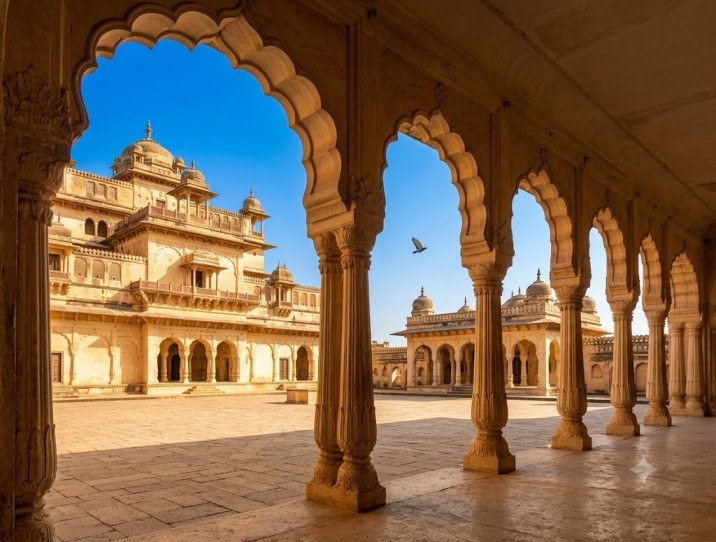
Ahhichatragarh fort - A Royal Legacy Of Rajasthan
Ahichhatragarh Fort stands as one of the most historically layered and architecturally magnificent destinations in Rajasthan, representing a vast medieval citadel of exceptional grandeur whose restored palaces, ancient mosques, ornate step wells, and remarkably intact fortification walls together compose one of the most complete and atmospherically evocative fort complexes surviving anywhere in the Indian subcontinent. Situated at the heart of the city of Nagaur in the arid landscape of the Marwar region of Rajasthan, Ahichhatragarh, meaning the Fort of the Hooded Cobra, is a destination of singular historical and architectural character, offering a landscape defined by the massive double fortification walls enclosing an area of considerable extent, the beautifully restored Akbari Mahal and Amar Singh Palace whose painted interiors and water channel systems represent some of the finest surviving examples of Rajput and Mughal period palace architecture in the entire state, the ancient Harshnath Temple complex within the fort precincts, and an atmosphere of layered royal heritage and architectural discovery that makes this one of the most genuinely extraordinary yet significantly undervisited heritage destinations in all of Rajasthan. The destination draws history enthusiasts, architecture lovers, heritage travelers, and curious explorers from across the country, offering an encounter with a fortification whose recorded history spans more than fifteen centuries and whose walls have sheltered the ambitions of the Nagavanshi rulers, the Delhi Sultanate, the Rathore dynasty of Marwar, the Mughal emperors, and the British colonial administration in successive chapters of remarkable historical depth and variety.
🏰 Ahichhatragarh Fort (Rajasthan)
Overview
📜 Overview
Ahichhatragarh Fort stands as one of the most historically layered and architecturally magnificent destinations in Rajasthan, representing a vast medieval citadel of exceptional grandeur whose restored palaces, ancient mosques, ornate step wells, and remarkably intact fortification walls together compose one of the most complete and atmospherically evocative fort complexes surviving anywhere in the Indian subcontinent. Situated at the heart of the city of Nagaur in the arid landscape of the Marwar region of Rajasthan, Ahichhatragarh, meaning the Fort of the Hooded Cobra, is a destination of singular historical and architectural character, offering a landscape defined by the massive double fortification walls enclosing an area of considerable extent, the beautifully restored Akbari Mahal and Amar Singh Palace whose painted interiors and water channel systems represent some of the finest surviving examples of Rajput and Mughal period palace architecture in the entire state, the ancient Harshnath Temple complex within the fort precincts, and an atmosphere of layered royal heritage and architectural discovery that makes this one of the most genuinely extraordinary yet significantly undervisited heritage destinations in all of Rajasthan. The destination draws history enthusiasts, architecture lovers, heritage travelers, and curious explorers from across the country, offering an encounter with a fortification whose recorded history spans more than fifteen centuries and whose walls have sheltered the ambitions of the Nagavanshi rulers, the Delhi Sultanate, the Rathore dynasty of Marwar, the Mughal emperors, and the British colonial administration in successive chapters of remarkable historical depth and variety.
What distinguishes Ahichhatragarh from other fort destinations in Rajasthan is not merely its historical antiquity or architectural scale, but the unique combination of an extraordinarily sophisticated water management system, painted palace interiors of exceptional quality and preservation, the synthesis of Rajput and Mughal architectural traditions within a single complex of considerable spatial generosity, and the particular atmosphere of a destination where the restoration work carried out under the guidance of the Getty Conservation Institute has returned the fort to a condition that allows its architectural quality to be appreciated with unusual completeness and clarity. This layered character elevates Ahichhatragarh beyond a conventional fort visit into a destination of genuine architectural magnificence, historical depth, and the particular pleasure of encountering a restored heritage complex that reveals the full ambition and refinement of its original builders with remarkable fidelity.
⭐ Why Visit Ahichhatragarh Fort
🏛 Heritage Importance
The recognition of Ahichhatragarh as one of the most significant and best-restored fort complexes in Rajasthan reflects its unparalleled importance within the architectural and cultural heritage landscape of the Marwar region, standing as a monument to the successive layers of royal patronage and architectural achievement that have accumulated within its walls across more than a millennium of continuous occupation and use. Unlike more famous or heavily visited Rajasthani forts, Ahichhatragarh offers a cohesive experience where exceptional palace architecture, the remarkable water channel and tank system that once sustained an entire royal city, the painted interiors of the Mughal and Rajput period apartments, and the vast and largely uncrowded fort complex work together to create a destination of exceptional architectural quality and the particular atmosphere of genuine and unhurried discovery.
💧 Water Heritage
One of the most compelling reasons to visit is the water management system of the fort, one of the most sophisticated and beautifully conceived hydraulic engineering achievements of the medieval period in Rajasthan. The network of channels, tanks, fountains, and cascades that once carried water through the palace apartments, the zenana quarters, and the formal garden spaces of the fort interior represents a remarkable feat of engineering ingenuity and aesthetic refinement, the pleasure of flowing water in an arid landscape elevated by its creators into an art form of considerable sophistication. The partially restored sections of this system offer a vivid and immediate impression of the sensory luxury that characterized royal life within the fort at the height of its occupation.
🎨 Palace Interiors
Additionally, Ahichhatragarh showcases the particular richness of its painted palace interiors, where the walls and ceilings of the Amar Singh Palace and surrounding apartments preserve remarkable examples of Rajput and Mughal period mural painting in a state of preservation that has benefited considerably from the careful conservation work undertaken at the fort. The combination of architectural magnificence, exceptional water heritage, painted interior richness, and the genuine quality of solitude and discovery available at this significantly less crowded alternative to the more famous forts of Jodhpur and Jaisalmer further strengthens its appeal as a deeply rewarding and long-remembered Rajasthani heritage experience.
🏛️ Key Highlights Within the Area
Amar Singh Palace
Among the architectural landmarks, the Amar Singh Palace stands out as the most iconic and architecturally refined structure within the Ahichhatragarh complex. Its painted apartments, ornate jali screens, and the elegant proportions of its courtyard and pavilion spaces display the Rajput architectural tradition at a level of refinement and decorative richness that places it among the finest surviving palace interiors in the Marwar region. The quality of the painted plasterwork on the interior walls and ceilings, depicting scenes of courtly life, floral and geometric patterns, and the decorative vocabulary of the Mughal-influenced Rajput tradition, rewards careful and extended observation with successive revelations of artistic detail and historical information.
🏰 Deepak Mahal & Shahi Mahal
The Deepak Mahal and the Shahi Mahal within the fort complex are additional highlights of considerable architectural significance, their surviving painted interiors and carved stone details offering complementary perspectives on the domestic and ceremonial architecture of the fort's royal period that together with the Amar Singh Palace compose a remarkably complete picture of Rajput palace life at Nagaur during the height of its prosperity and architectural ambition.
💧 Historic Water Heritage
The ancient step wells and water tanks within the fort, including the Shukr Talao and the Bhakt Sagar, are highlights of considerable engineering and aesthetic significance, their subterranean architecture and the quality of their carved stone construction offering an intimate and fascinating encounter with the water heritage that was central to the identity and functionality of this desert citadel. The massive double fortification walls and the towering bastions that punctuate the perimeter of the fort at regular intervals are landmarks of considerable military architectural significance, their scale and solidity conveying the defensive ambitions and engineering capability of the successive rulers who maintained and extended the fortification across the centuries.
📸 Activities
Explore the Palace Complex
Exploring the palace complex, painted apartments, and water heritage structures of the fort interior is the primary and most deeply rewarding activity at Ahichhatragarh, with the guided tour offered within the fort providing an informed and architecturally detailed introduction to the successive layers of construction, decoration, and historical occupation that together compose the remarkable character of this complex. The guided experience is particularly valuable at Ahichhatragarh, where the context provided by knowledgeable guides significantly enhances the appreciation of the painted interiors, the water system, and the architectural history of the successive building campaigns visible within the fort.
📷 Heritage Photography
Photography of the painted palace interiors, the carved stone details of the jali screens and brackets, and the dramatic fortification architecture of the outer walls and bastions is a deeply rewarding pursuit that draws architecture enthusiasts and photographers with an interest in heritage documentation, as the quality and variety of the architectural material at Ahichhatragarh offers photographic opportunities of exceptional richness across every section of the fort complex.
🐪 Nagaur Cattle Fair
The Nagaur Cattle Fair, one of the largest and most traditional cattle fairs in Rajasthan held annually in the fields outside the fort, offers a vibrant and visually extraordinary cultural spectacle that draws visitors from across the state and adds a dimension of living folk culture and rural Rajasthani tradition to the historical character of the fort visit.
🗓️ Best Time to Visit
October to March
The most favorable period to visit Ahichhatragarh Fort is from October to March, when the pleasant winter temperatures of the Rajasthan desert make extended exploration of the fort complex comfortable and the clear winter light provides the most favorable conditions for appreciating the painted interiors and carved stone details of the palace architecture at their most visually sharp and revealing. The Nagaur Cattle Fair, typically held in January or February, offers an additional and compelling reason to visit during these months, combining the architectural richness of the fort with one of the most atmospherically extraordinary traditional gatherings in Rajasthan.
☀️ Summer Season
The summer months from April to June bring intense heat to the desert landscape of the Marwar region, making extended outdoor exploration of the fort demanding during the middle hours of the day, though the early morning hours remain rewarding for those who plan their visit around the cooler parts of the day.
🚗 Connectivity
Ahichhatragarh Fort is situated at the heart of Nagaur city, making it directly accessible from the urban center through local transport options. Nagaur is connected by road and rail to Jodhpur, situated approximately 135 kilometres away and serving as the most practical major gateway city with a well-connected airport offering regular domestic flights from Delhi, Mumbai, and other major Indian cities. Road connectivity from Jodhpur, Bikaner, Ajmer, and Jaipur is efficient and well maintained through the national highway network, making Ahichhatragarh a highly practical inclusion in Rajasthan heritage itineraries for travelers combining the fort with visits to the royal city of Jodhpur, the blue pottery heritage of Bikaner, and the broader cultural and architectural landscape of the Marwar region.
```