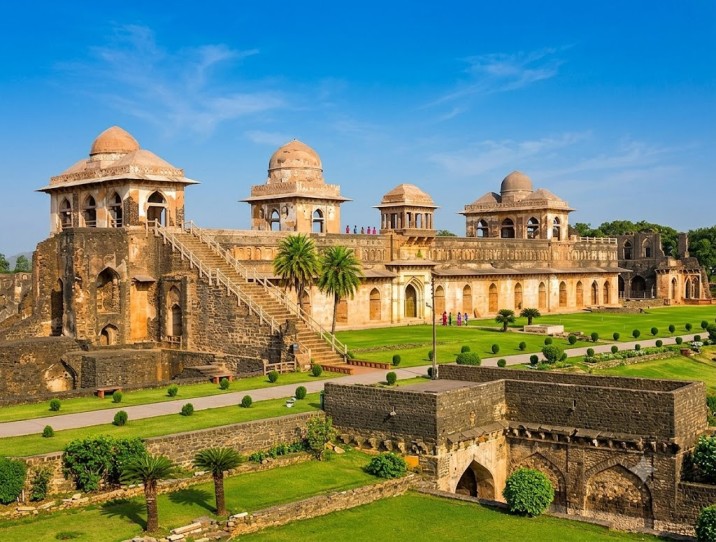
Jahaz Mahal Experience — A Floating Vision of Sandstone Between Two Lakes
At Ocean Tripmakers, we believe the most meaningful travel experiences are not created through sightseeing alone, but through genuine encounters with a place's architectural and historical character. Within our curated Madhya Pradesh itineraries, we bring travelers to Jahaz Mahal — one of India's finest examples of medieval Afghan architecture, poised between the Munj Talao and Kapur Talao like a ship at rest.
Architectural Beauty and Surroundings
Built from sandstone and lime mortar, this two-storeyed palace balances elegance with function — graceful arches, spacious halls, open terraces, balconies, ornamental chhatris, and windows positioned for natural ventilation throughout.
Its position between Munj Talao and Kapur Talao creates the palace's famous "floating ship" appearance. During monsoon, when both lakes are full, the reflection intensifies the effect, making it one of the most photographed monuments in Mandu.
History and Cultural Significance
Jahaz Mahal was built during the reign of Sultan Ghiyas-ud-Din Khilji (1469–1500 CE), a ruler known for his patronage of art, architecture, and refined living. Historical accounts describe the palace as a royal retreat and residence for the Sultan's extensive household.
The structure reflects the prosperity of the Malwa Sultanate, one of central India's most influential medieval kingdoms — its water management systems, cooling chambers, and rainwater harvesting techniques evidence of advanced engineering for the period.
Major Attractions
Beyond the palace itself — its halls, rooftop terraces, decorative balconies, and courtyards — Mandu holds one of India's richest collections of medieval Islamic architecture within easy reach.
Evening walks around the lakes offer quieter moments and reliable sunset photography conditions.
Cuisine, Shopping and Nearby Experiences
Dal Bafla, Bhutte Ka Kees, Poha, Sabudana Khichdi, Kachori, Malpua, Jalebi and other regional specialties at local restaurants.
Maheshwari and Chanderi textiles, handcrafted wooden items, tribal handicrafts, stone and metal crafts, and traditional jewellery in Mandu and nearby Dhar.
Heritage walks, birdwatching near the lakes, and an extensive network of forts, palaces, mosques and stepwells across the hilltop city.
Guided walks through Mandu's historic streets, with occasional cultural festivals featuring folk music and regional art forms.
Best Time to Visit and How to Reach
October to March offers the most comfortable sightseeing conditions. The monsoon months of July to September bring a different appeal — the surrounding lakes fill with water and the palace takes on its full floating-ship character.
Devi Ahilyabai Holkar Airport, Indore — approximately 100 km away.
Indore Junction and Ratlam Junction, both well connected to major Indian cities.
Accessible from Indore, Dhar and nearby towns via regular buses, taxis and private vehicles.
October–March for comfort; July–September for the monsoon floating-ship view.
Why Visit Jahaz Mahal?
Jahaz Mahal brings together medieval architecture, royal history, scenic lake views, and cultural heritage in a single site. Families find an educational heritage stop, couples appreciate the lakeside setting, solo travelers immerse themselves in history, and photographers capture reflections and architectural detail throughout the day.
With its timeless design and ship-like silhouette, it remains one of Madhya Pradesh's most recognisable monuments and a natural anchor point for any heritage itinerary through Mandu.
Travel Partner Opportunity
For travel partners seeking distinctive heritage additions to their Madhya Pradesh programs, the Jahaz Mahal Experience offers a strong anchor point for architecture-led, photography-focused, and small-group cultural itineraries through Mandu.
Combined with the surrounding monuments of the ancient hilltop city, it gives travelers a concentrated, well-preserved introduction to medieval Islamic and Afghan-influenced architecture in central India.
A ship that has never sailed, yet has floated between two lakes for over five hundred years.