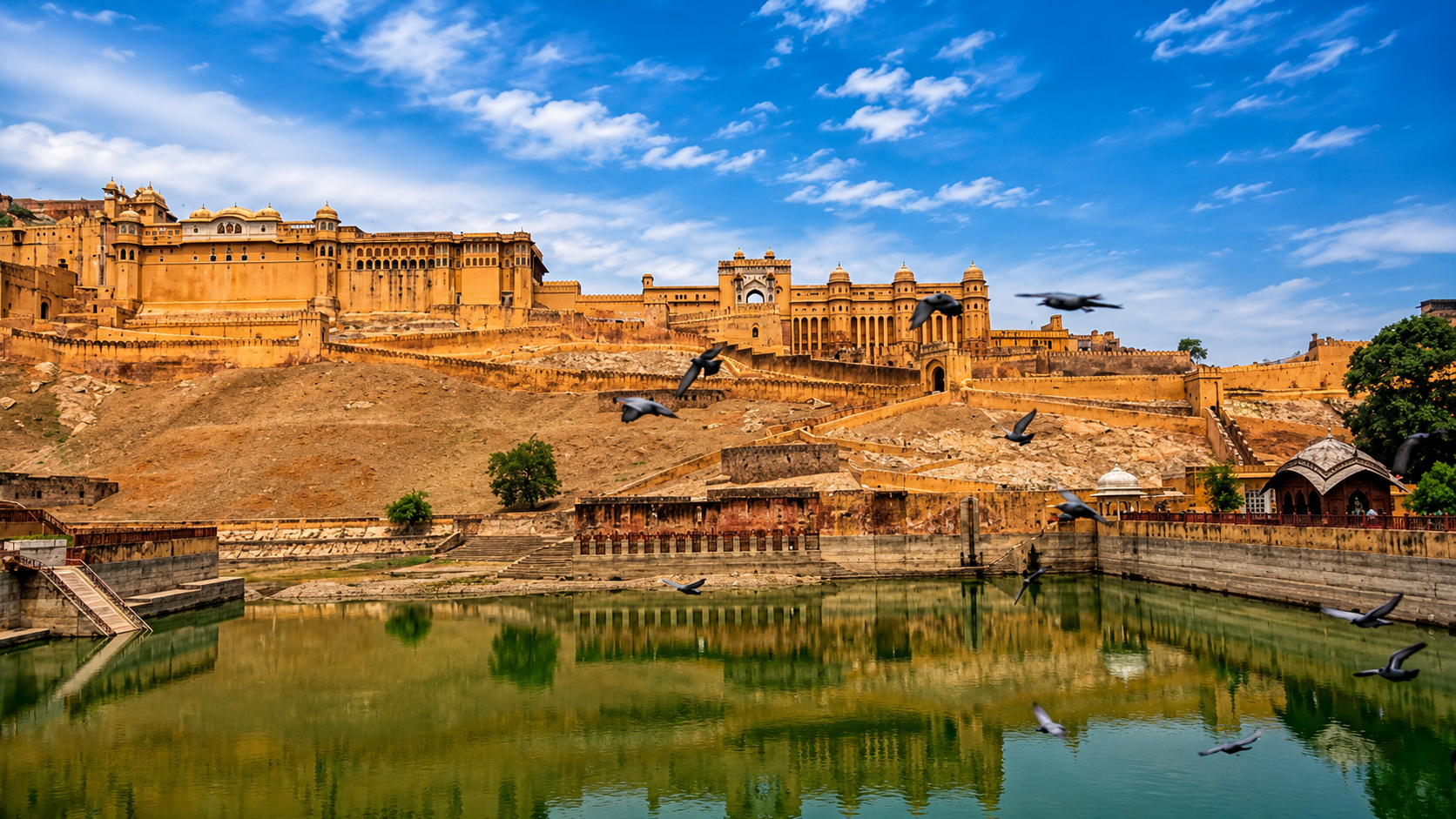
Jaigarh Fort : Where Ancient Weaponry Still Guards Royal Secrets
Imagine standing atop a hilltop fortress and learning that beneath your feet lies one of the world's largest cannons, a weapon so magnificent that it's never fired in anger despite being cast over 300 years ago. The walls around you echo with stories of military innovation, strategic brilliance, and the technological prowess of medieval Rajasthan. Sunlight glints off ancient stone fortifications, and suddenly you're standing in a place where warfare strategy, engineering marvel, and architectural genius converge into something truly extraordinary. This is Jaigarh Fort—a sprawling hilltop stronghold that sits proudly on the Aravalli Hills overlooking Jaipur, guarding the Pink City with silent, unyielding strength. Built in 1726 by Maharaja Sawai Jai Singh II, the visionary founder of Jaipur, this fort represents the peak of Rajasthani military architecture and engineering. What makes Jaigarh truly unique is that it's a fort designed not just for defense but for manufacturing weaponry—a weapons factory hidden within fortress walls. Unlike many forts that inspire awe through tales of battles fought, Jaigarh impresses through sheer engineering brilliance, sophisticated water management systems, and artifacts that reveal the technological advancement of medieval India. Once you walk through its gates, you realize that this fort is less about conquest and more about the pursuit of military excellence.
🏰 Jaigarh Fort
⚔️ Where Ancient Weaponry Still Guards Royal Secrets
✨ Introduction
Imagine standing atop a hilltop fortress and learning that beneath your feet lies one of the world's largest cannons, a weapon so magnificent that it's never fired in anger despite being cast over 300 years ago. The walls around you echo with stories of military innovation, strategic brilliance, and the technological prowess of medieval Rajasthan. Sunlight glints off ancient stone fortifications, and suddenly you're standing in a place where warfare strategy, engineering marvel, and architectural genius converge into something truly extraordinary. This is Jaigarh Fort—a sprawling hilltop stronghold that sits proudly on the Aravalli Hills overlooking Jaipur, guarding the Pink City with silent, unyielding strength. Built in 1726 by Maharaja Sawai Jai Singh II, the visionary founder of Jaipur, this fort represents the peak of Rajasthani military architecture and engineering. What makes Jaigarh truly unique is that it's a fort designed not just for defense but for manufacturing weaponry—a weapons factory hidden within fortress walls. Unlike many forts that inspire awe through tales of battles fought, Jaigarh impresses through sheer engineering brilliance, sophisticated water management systems, and artifacts that reveal the technological advancement of medieval India. Once you walk through its gates, you realize that this fort is less about conquest and more about the pursuit of military excellence.
📜 The Fortress of Innovation – 1726 and Beyond
Jaigarh Fort's story is intimately connected with Jaipur's founding. When Maharaja Sawai Jai Singh II constructed the city of Jaipur in 1727, he planned it with mathematical precision—geometric streets, calculated dimensions, and a sophisticated defense system. Jaigarh Fort was built a year earlier, in 1726, as a protective fortress and military arsenal for this soon-to-be constructed city.
The fort's name itself is revealing—"Jai" meaning victory, and "garh" meaning fort, literally translating to "fort of victory." Unlike many Rajasthani forts built primarily for defense against invading armies, Jaigarh was conceived as a military innovation center. Jai Singh II, a forward-thinking ruler known for his scientific interests and architectural vision, envisioned a fort that would produce weapons, store ammunition, and serve as a technological hub for military advancement.
What distinguishes Jaigarh's history is its remarkable preservation and continued relevance. Built during a period of relative stability—Jai Singh II had strong diplomatic ties with the Mughal Empire—the fort was designed with long-term sustainability in mind. It was built to withstand centuries, and it has, remaining largely intact and functional for nearly 300 years. The fort never saw the kind of devastating sieges that characterized many other Rajasthani forts, which paradoxically allowed it to preserve its original structures and purpose with extraordinary completeness.
🏛️ The Architecture That Showcases Engineering Mastery
Approaching Jaigarh Fort, the first impression is of sheer scale and strategic positioning. The fort spreads across a vast area on the hilltop, with walls that seem to grow organically from the rocky terrain. Built from pale golden sandstone, the fortress blends tactical functionality with aesthetic consideration—every wall, every bastion, every passage serves a deliberate purpose.
What's architecturally significant is how Jaigarh was designed as a multi-functional complex. Unlike purely defensive forts, Jaigarh incorporates foundries, workshops, storage areas, and residential spaces all within its fortifications. The layout reveals sophisticated understanding of workflow—raw materials entered at one point, were processed in designated areas, and finished weaponry was stored in secure vaults.
The Water Management System is perhaps Jaigarh's most impressive engineering achievement. The fort features elaborate underground reservoirs, channels, and tanks that collected and stored rainwater. This system ensured the fort could sustain a large population and weapons production facility even during the arid desert summers. The engineering demonstrates knowledge of hydraulics and hydrodynamics that predates modern science.
The Bastions and Walls are built with varying heights and angles, calculated to provide overlapping fields of fire while maximizing defensive coverage. The stonework is precise, with massive blocks fitted together without mortar—an engineering technique that allowed the structure to shift slightly with earthquakes while remaining intact.
⚔️ The Treasures Within These Legendary Walls
The Jaivaan Cannon is the fort's crown jewel and one of the world's largest cannons. Cast in the fort's foundry around 1720, this magnificent weapon stretches over 6 meters in length and weighs approximately 50 tons. Despite its size and power, the cannon was never used in actual warfare—it served primarily as a deterrent and symbol of military might. Its existence itself was a statement: Jaipur possessed technological sophistication and manufacturing capability that few kingdoms could match.
The Arsenal and Ammunition Storage reveals the fort's primary purpose. Multiple chambers housed different types of weaponry—swords, spears, muskets, and cannonballs. The storage areas were strategically positioned to prevent catastrophic explosions should fire break out. The careful organization of weapons demonstrates military sophistication and supply chain management that's impressive even by modern standards.
The Royal Armory Museum displays weapons, armor, and military artifacts spanning centuries. Ornate swords with jeweled hilts sit alongside functional battle weapons. Shields, helmets, and protective gear showcase the evolution of military technology. Each piece tells a story of warfare, craftsmanship, and the warrior culture that defined Rajasthan.
The Palace Structures within the fort reveal royal comfort alongside military functionality. The Laxmi Vilas and other residential structures showcase ornate latticed windows and decorated courtyards. These spaces reveal that the fort, despite its military purpose, accommodated royal life with aesthetic refinement.
The Foundry Remains are fascinating archaeological remnants. Visiting areas where weapons were cast, where metal was shaped through intense heat and skilled craftsmanship, you understand the technological advancement of medieval India. The remnants of furnaces and work areas reveal production techniques and craftsmanship that rival contemporary European armories.
🛡️ A Fortress Still Standing Guard
What profoundly distinguishes Jaigarh is its remarkable state of preservation. Walking these walls, you encounter structures in astonishing condition—wooden beams still intact, carvings still detailed, passages still passable. This preservation has allowed the fort to remain functional in ways most heritage sites cannot. The Archaeological Survey of India maintains the fort meticulously, and it continues to serve as both a historical monument and an active research site.
📍 Visitor Information
🌤️ Best Time to Visit
October to March offers ideal weather—cool mornings and pleasant afternoons make exploration comfortable. April to June brings intense heat, though early morning visits are manageable. Monsoon (July-September) occasionally causes water seepage but transforms the landscape beautifully.
🚗 How to Get There
Jaigarh Fort is located on the Aravalli Hills, approximately 15 kilometers from central Jaipur. It's easily accessible by taxi, auto-rickshaw, or private car. The drive takes 30-40 minutes from the city center. The fort sits near Nahargarh Fort, and many visitors explore both in a single day.
Plan 3-4 hours to explore Jaigarh comprehensively. The fort is vast, and thorough exploration of all structures, museums, and the cannon warrant unhurried exploration.
🗺️ Nearby Treasures
Nahargarh Fort (just 2 km away) offers sunset views over Jaipur. City Palace (20 km) showcases royal grandeur. Jantar Mantar (22 km) displays astronomical instruments. Albert Hall Museum (25 km) houses art and artifacts.
💡 A Few Travel Tips
Wear comfortable shoes—the terrain is rocky and uneven. Carry water and sun protection. Photography is permitted and encouraged. The museum areas have limited hours; check beforehand. The fort can be surprisingly windy; carry a light jacket. Guide services are available and highly recommended—they explain the technological aspects that make this fort unique.
✨ Why You Simply Must Visit Jaigarh Fort
Jaigarh Fort represents something rare—a place where military might was expressed not through tales of conquest but through engineering achievement. It's where ancient India's technological sophistication becomes tangible, where you can stand beside a cannon that could shake the earth, and where centuries-old water management systems still function.
Standing atop Jaigarh's walls, gazing at the city it was built to protect, you understand that some forts are about dominance. Jaigarh is about something deeper—the marriage of innovation and power, of strategic thinking and technical mastery, of a ruler's vision manifested in stone and metal.
Walk Jaigarh's magnificent walls. Touch ancient cannons. Explore the foundries where weapons were born. Understand why Jai Singh II chose engineering brilliance over mere firepower. You'll leave transformed, understanding that true strength lies not in destroying your enemies but in possessing the capability to do so while pursuing something greater—progress, innovation, and excellence.