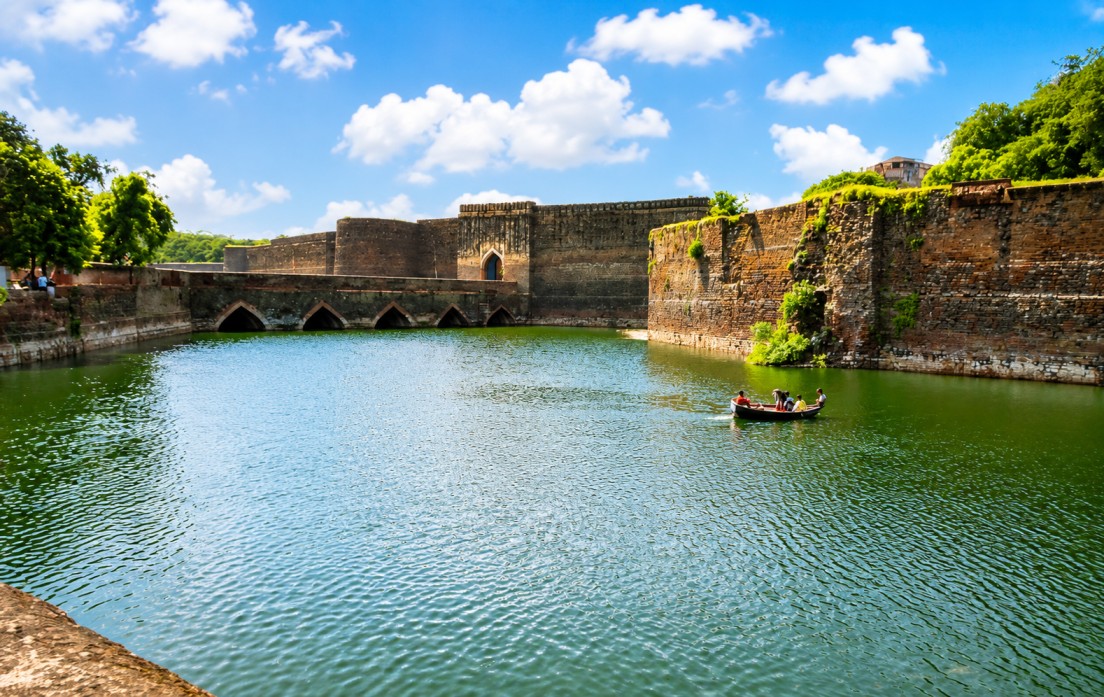
Lohagarh-Fort : The Iron Fort Of Bharatpur
Lohagad Fort stands as one of the most historically significant and scenically captivating destinations in Maharashtra, representing a formidable hilltop fortification of considerable Maratha heritage importance whose well-preserved walls, distinctive four-pronged gateway system, and commanding position above the Sahyadri landscape combine to create a destination of genuine historical depth and natural scenic grandeur. Situated near the town of Malavli in the Pune district of Maharashtra, rising above the lush green valleys of the Western Ghats at an elevation of approximately 1033 metres above sea level, Lohagad is a destination of striking geographical and historical character, offering a landscape defined by the remarkably intact stone ramparts climbing the hillside through dense monsoon forest, the iconic Vinchukata or Scorpion Tail bastion extending along a narrow rocky ridge like the curved tail of a scorpion, sweeping views across the surrounding Sahyadri valleys toward Visapur Fort and the distant Pawna Lake shimmering in the plains below, and an atmosphere of Maratha martial heritage and highland natural beauty that makes this one of the most rewarding and accessible trekking and heritage destinations in the entire Pune region. The destination draws history enthusiasts, trekkers, Maratha heritage travelers, weekend explorers, and nature lovers from across Maharashtra and beyond, offering an encounter with a fortification whose long and eventful history spans the Satavahana, Chalukya, Rashtrakuta, Yadava, Bahmani, Nizam Shahi, Mughal, and Maratha periods of Maharashtra's layered past.
🏰 Lohagad Fort (Maharashtra)
📖 Overview
Lohagad Fort stands as one of the most historically significant and scenically captivating destinations in Maharashtra, representing a formidable hilltop fortification of considerable Maratha heritage importance whose well-preserved walls, distinctive four-pronged gateway system, and commanding position above the Sahyadri landscape combine to create a destination of genuine historical depth and natural scenic grandeur. Situated near the town of Malavli in the Pune district of Maharashtra, rising above the lush green valleys of the Western Ghats at an elevation of approximately 1033 metres above sea level, Lohagad is a destination of striking geographical and historical character, offering a landscape defined by the remarkably intact stone ramparts climbing the hillside through dense monsoon forest, the iconic Vinchukata or Scorpion Tail bastion extending along a narrow rocky ridge like the curved tail of a scorpion, sweeping views across the surrounding Sahyadri valleys toward Visapur Fort and the distant Pawna Lake shimmering in the plains below, and an atmosphere of Maratha martial heritage and highland natural beauty that makes this one of the most rewarding and accessible trekking and heritage destinations in the entire Pune region. The destination draws history enthusiasts, trekkers, Maratha heritage travelers, weekend explorers, and nature lovers from across Maharashtra and beyond, offering an encounter with a fortification whose long and eventful history spans the Satavahana, Chalukya, Rashtrakuta, Yadava, Bahmani, Nizam Shahi, Mughal, and Maratha periods of Maharashtra's layered past.
⭐ Why Visit Lohagad Fort
The recognition of Lohagad as one of the most historically layered and architecturally intact forts in the Pune district reflects its unparalleled importance within the Maratha heritage landscape of Maharashtra, having served at various points in its history as a treasury fort under Chhatrapati Shivaji Maharaj and as a strategically critical fortification controlling the trade routes between the Deccan plateau and the Konkan coast. Unlike more remote or demanding Sahyadri forts, Lohagad offers a cohesive experience where a moderately accessible trekking ascent, a richly layered historical narrative spanning nearly two thousand years, remarkable surviving fortification architecture, and the dramatic natural beauty of the Western Ghats monsoon landscape work together to create a destination of exceptional historical and scenic reward that is accessible to a broad range of visitors.
One of the most compelling reasons to visit is the Vinchukata bastion, a narrow rocky ridge that extends from the main fort body in a series of fortified walls and bastions that curve along the ridgeline in a formation whose resemblance to a scorpion's tail is immediately and vividly apparent from the surrounding viewpoints. Walking along the Vinchukata, with the hillside dropping steeply away on both sides and successive bastions extending ahead along the narrowing ridge, offers a physical and visual experience of considerable drama and historical atmosphere that represents one of the most distinctive architectural encounters available at any Sahyadri hill fort. The combination of historical depth spanning multiple dynasties, the remarkable Vinchukata feature, the panoramic views encompassing Visapur Fort and Pawna Lake, and the manageable trekking approach that makes the fort accessible to families and casual walkers as well as experienced trekkers further strengthens its appeal as a deeply rewarding and widely inclusive heritage destination.
📍 Key Highlights Within the Area
Among the architectural landmarks, the four-pronged gateway system of Lohagad stands out as one of the most strategically ingenious and historically fascinating features of the fort. The approach to the main entrance passes through a succession of gates set at deliberate angles to each other, forcing any attacking force to slow, turn, and expose itself to defensive fire from the walls above at each successive threshold, a design that reflects the sophisticated military thinking of the fort's builders and makes the gateway sequence one of the most architecturally interesting defensive systems surviving in the Sahyadri fort landscape.
The Vinchukata bastion, extending along its narrow rocky ridge from the main fort body, is the most visually distinctive and photographically celebrated feature of Lohagad. The series of walls and bastions following the contours of the ridge in their scorpion tail formation offers a perspective of extraordinary visual drama from the main fort plateau, while the experience of walking along the Vinchukata itself, with sheer drops on either side and the green Sahyadri valleys spread far below, provides one of the most memorable physical encounters available at any fort in Maharashtra.
The panoramic views from the fort summit encompass a landscape of considerable scenic richness, with the twin bulk of Visapur Fort rising directly opposite across the intervening valley, the glittering expanse of Pawna Lake visible in the plains to the north, and the layered ridgelines of the Western Ghats extending in every direction beneath the vast open sky of the Sahyadri highlands. The visual experience of Lohagad changes considerably with the seasons, as the monsoon months transform the surrounding valleys into an intensely vivid green landscape of waterfalls, mist, and cloud-draped ridgelines that many visitors consider the most atmospherically beautiful time to experience the fort.
🥾 Activities
Trekking the ascent trail from the base village of Lohagadwadi to the fort entrance is the primary and most widely undertaken activity at Lohagad, with the moderately graded path climbing through forested hillside terrain past successive sections of fortification wall and offering gradually expanding views across the surrounding Sahyadri landscape as the elevation increases. The ascent takes approximately one to one and a half hours for most visitors and is manageable for families with older children and casual walkers as well as experienced trekkers, making Lohagad one of the most inclusive trekking destinations in the Pune region.
Exploring the fort interior and walking the Vinchukata bastion are the most rewarding activities on the summit plateau, with the surviving cisterns, temples, and residential structures within the fort walls offering a contemplative engagement with the daily life and military organization of the garrison that once inhabited this highland citadel. Photography of the Vinchukata from the fort plateau and of the surrounding Sahyadri landscape from the rampart edges is a deeply rewarding pursuit, particularly during the monsoon months when the dramatic interplay of mist, cloud, and vivid green vegetation creates conditions of exceptional natural and atmospheric beauty.
🌦️ Best Time to Visit
The most favorable period to visit Lohagad Fort divides naturally into two distinct and contrasting windows of experience. The monsoon months from June to September transform the surrounding Sahyadri landscape into a vivid green world of waterfalls, mist, and dramatic cloud formations that many visitors consider the most atmospherically beautiful and memorable time to experience the fort, with the rain-washed stone walls and the misty valley views creating a quality of romantic highland atmosphere that is unique to this season. The post-monsoon and winter months from October to February offer a contrasting experience of clear skies, firm trails, and the sharpest panoramic views across the surrounding landscape, with the comfortable temperatures making extended exploration of the fort and the Vinchukata particularly enjoyable.
🚗 Connectivity
Lohagad Fort is conveniently accessible from Pune, situated approximately 52 kilometres away, and from Mumbai, situated approximately 100 kilometres away, making it one of the most practically accessible heritage trekking destinations in Maharashtra for visitors based in either of the state's two principal cities. Malavli Railway Station on the Mumbai-Pune railway line, situated at the base of the fort hill and served by regular local and express trains from both Mumbai and Pune, provides a particularly convenient and atmospheric approach to the fort, making Lohagad one of the few Sahyadri hill forts directly accessible by train. Road connectivity from Pune, Mumbai, and Lonavala is efficient and well maintained, with the Expressway placing the fort within a comfortable driving distance from both cities and making Lohagad a highly practical inclusion in Pune and Mumbai weekend itineraries, as well as a natural companion destination for travelers exploring the broader heritage and natural landscape of the Lonavala region.