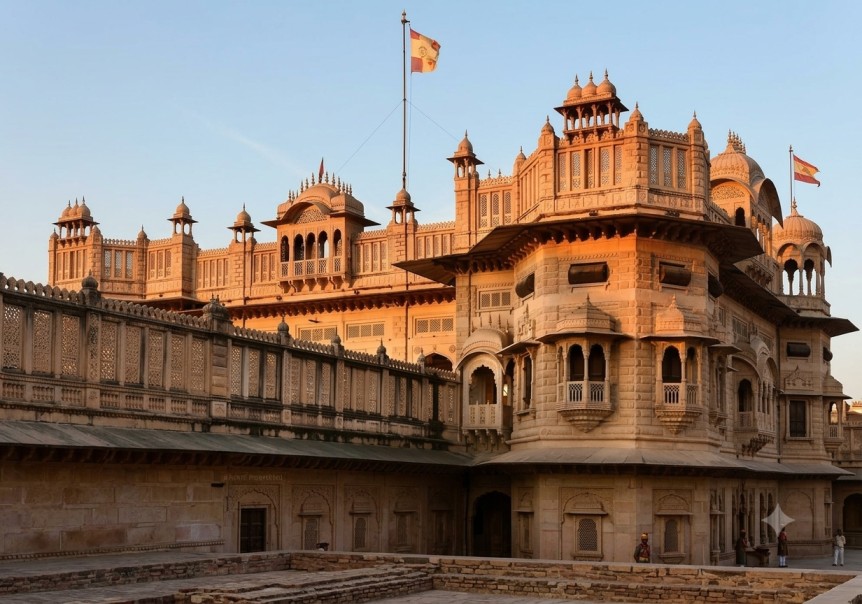
Moti Mahal: A Palace of Elegance and Legacy
Picture stepping through soaring sandstone gates into a world of marble pavilions, cascading fountains, and rooms once reserved for the most intimate moments of Mughal royal life. That's Moti Mahal for you — not just a hall, but a hush. Tucked within the sprawling Red Fort complex in Old Delhi, this "Pearl Palace" was once a private chamber where emperors retreated from the weight of the throne, and even today, its quiet marble corridors carry an air of forgotten secrets.
🏛️ Moti Mahal, Delhi – The Pearl Palace Within the Red Fort
Picture stepping through soaring sandstone gates into a world of marble pavilions, cascading fountains, and rooms once reserved for the most intimate moments of Mughal royal life. That's Moti Mahal for you — not just a hall, but a hush. Tucked within the sprawling Red Fort complex in Old Delhi, this "Pearl Palace" was once a private chamber where emperors retreated from the weight of the throne, and even today, its quiet marble corridors carry an air of forgotten secrets.
📜 A Little Bit of History First
Moti Mahal's story is woven into the larger tapestry of the Red Fort, built by Emperor Shah Jahan in 1648 when he shifted the Mughal capital from Agra to Delhi.
While the Red Fort itself is famous for grand structures like the Diwan-i-Aam and Diwan-i-Khas, Moti Mahal served a more personal purpose — it was part of the imperial private quarters, believed to have been used by the royal family for rest, relaxation, and quiet contemplation away from courtly duties.
The name "Moti," meaning pearl, reflects the luminous white marble used throughout, a material the Mughals favored for spaces meant to feel serene, pure, and removed from the noisy business of empire.
Over the centuries, as the Mughal dynasty declined and the British took control of Delhi, the fort and its palaces suffered significant damage and neglect, with many original structures altered or repurposed.
Today, what remains of Moti Mahal offers just a glimpse of the luxury that once defined Mughal domestic life.
✨ The Attractions That Will Leave You Breathless
Within the Red Fort complex, the area surrounding Moti Mahal reveals the layered brilliance of Mughal architecture.
The Diwan-i-Khas, or Hall of Private Audience, sits nearby, famous for its intricately carved marble pillars and the inscription that reads, in Persian, that if there is paradise on earth, it is here.
Just beside it, the Rang Mahal, or Palace of Colors, once housed the imperial harem and features a beautifully carved marble basin that historians believe was used for cooling water through a clever system of channels.
The Hayat Bakhsh Bagh, or Life-Bestowing Garden, stretches nearby with manicured lawns and the remains of intricate water channels that once carried cooling streams through the royal apartments during scorching Delhi summers.
The Khas Mahal, the emperor's personal palace, sits close by too, with its delicate marble screens and a tower from which the emperor would appear before his subjects each morning.
Walking through this part of the fort, visitors can still spot traces of pietra dura inlay work, the same technique famously used in the Taj Mahal, where semi-precious stones were embedded into marble to create intricate floral patterns.
Even in their weathered state, these details hint at just how opulent this corner of the fort once was.
🍽️ Culture, People, and Food
The Red Fort area, and Old Delhi surrounding it, pulses with a culture shaped by centuries of Mughal influence layered over generations of local Delhi life.
Just outside the fort walls, the bustling lanes of Chandni Chowk hum with the energy of one of India's oldest and busiest markets, a sharp contrast to the meditative stillness inside Moti Mahal.
No visit to this part of Delhi is complete without sampling the food.
Karim's, a legendary eatery near the fort, has been serving Mughlai delicacies like mutton korma and seekh kebabs for generations, said to carry recipes passed down from royal kitchen chefs.
Street stalls around Chandni Chowk serve paranthe, jalebis, and rich chaat, while the area is also historically linked to the invention of butter chicken, born from Delhi's deep love affair with tandoori cooking.
📍 Visitor Information
🌤️ Best Time to Visit
The best time to explore the Red Fort and Moti Mahal is between October and March, when Delhi's weather turns pleasantly cool, making it comfortable to walk through the expansive open-air complex.
Summers, from April to June, bring intense heat that can make outdoor exploration exhausting, while monsoon months (July–September) offer occasional relief but also unpredictable showers.
✈️ By Air
Indira Gandhi International Airport is the main gateway, located about 25 km from the Red Fort, with taxis, metro connections, and app-based cabs readily available.
🚆 By Rail
Old Delhi Railway Station is the closest, just a couple of kilometers away, making it an extremely convenient option for travelers arriving by train.
🚇 By Road and Metro
The Red Fort is well connected via Delhi Metro, with Lal Quila Station on the Violet Line dropping visitors right at the entrance.
Buses and auto-rickshaws are also widely available throughout Old Delhi.
🕌 Nearby Places Worth Exploring
Beyond the fort walls, Jama Masjid, one of India's largest mosques, sits just a short walk away, its towering minarets offering panoramic views of Old Delhi.
Chandni Chowk beckons with centuries-old bazaars selling everything from spices to silver jewelry.
A little further, Raj Ghat, the memorial to Mahatma Gandhi, offers a peaceful, reflective contrast to the bustling energy of Old Delhi's streets.
🎒 A Few Travel Tips Before You Go
Wear comfortable shoes, as the Red Fort complex is vast and involves considerable walking on uneven stone pathways.
Carry water, especially during warmer months, as shaded rest areas are limited.
Photography is allowed in most areas, though certain restricted sections may have rules, so check signage as you go.
Visiting early in the morning helps avoid both the crowds and the midday heat.
🌟 Why You Simply Must Visit Moti Mahal
Some places shout their grandeur. Moti Mahal whispers it.
Hidden within the grander narrative of the Red Fort, this pearl-white palace invites you to slow down and imagine a quieter side of Mughal life — one of reflection, comfort, and beauty crafted purely for the soul rather than the throne.
Whether you're a history lover tracing the footsteps of emperors or simply a curious traveler seeking Delhi's layered past, Moti Mahal offers a moment of stillness in the heart of a city that rarely stops moving.