Rampuriya--Haveli : The Hidden Gem Of Rajasthan's Heritage
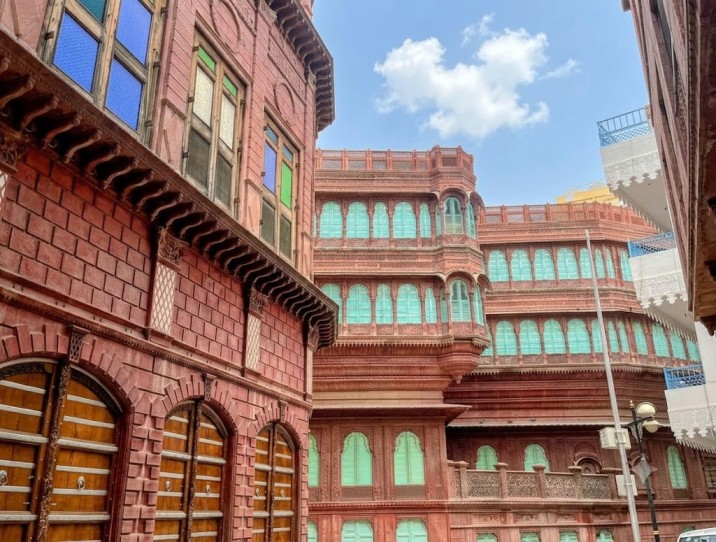
Rampuria Haveli stands as one of the most architecturally exquisite and culturally resonant heritage destinations in Rajasthan, representing a remarkable cluster of elaborately decorated merchant mansions whose ornate red sandstone facades, intricate carved jharokha balconies, and delicate latticework screens together compose one of the finest surviving examples of the Marwari merchant architectural tradition in the entire state. Situated in the heart of the old city of Bikaner in Rajasthan, the Rampuria Haveli complex occupies a street of considerable historic character in the merchant quarter of the city, its successive facades presenting an almost continuous frontage of carved sandstone ornamentation of exceptional variety and craftsmanship that reflects the wealth, ambition, and aesthetic sophistication of the Rampuria merchant family who commissioned these extraordinary structures across successive generations during the nineteenth and early twentieth centuries. The destination draws architecture enthusiasts, heritage travelers, photographers, and culturally curious visitors from across the country, offering an encounter with the distinctive tradition of haveli architecture that reached its most refined and elaborate expression in the merchant cities of Rajasthan and whose surviving examples at Bikaner represent a body of decorative stone carving of exceptional quality and historical significance.
Rampuria Haveli
Rajasthan's finest example of Marwari merchant architecture featuring exceptional carved sandstone facades and intricate ornamental craftsmanship
Architectural Excellence & Heritage Significance
The Rampuria Haveli complex stands as one of Rajasthan's most architecturally exquisite heritage destinations, representing a remarkable cluster of elaborately decorated merchant mansions. The ornate red sandstone facades, intricate carved jharokha balconies, and delicate latticework screens compose one of the finest surviving examples of the Marwari merchant architectural tradition in the entire state.
Situated in the heart of Bikaner's old city merchant quarter, the complex occupies a street of considerable historic character. The successive facades present an almost continuous frontage of carved sandstone ornamentation of exceptional variety and craftsmanship, reflecting the wealth, ambition, and aesthetic sophistication of the Rampuria merchant family across successive generations.
These extraordinary structures attract architecture enthusiasts, heritage travelers, photographers, and culturally curious visitors from across the globe, offering an encounter with the distinctive tradition of haveli architecture at its most refined and elaborate expression in Rajasthan.
Key Highlights
Carved Sandstone Facades
Iconic ornate sandstone facades featuring successive storeys of jharokha balconies, pierced stone screens, and elaborate bracket details creating a streetscape of extraordinary architectural richness.
Light & Shadow Interplay
The deeply undercut ornamental details create a visual experience of constantly shifting beauty, with warm amber light of early morning and late afternoon bringing three-dimensional carving to dramatic expression.
Living Urban Heritage
The surrounding merchant quarter preserves historic character and architectural continuity, contextualizing the Rampuria mansions within the broader merchant culture and heritage streetscape that produced them.
Craftsmanship Excellence
Floral arabesques, geometric lattice patterns, and figurative panels depicting courtly and daily life showcase exceptional decorative achievement and lasting historical significance of artisan mastery.
Cultural Fusion
European influences alongside indigenous Rajput and Mughal vocabulary demonstrate the cosmopolitan connections of Rampuria merchants, with colonial-era motifs synthesized with traditional decorative elements.
Architectural Refinement
Reflecting the particular refinement and ambition of the Bikaner sandstone carving tradition at its most accomplished, the complex stands as a monument to extraordinary merchant wealth and cultural patronage.
Visitor Experience & Activities
Heritage Lane Exploration
Walking through the heritage lanes of Bikaner's old merchant quarter and observing the Rampuria facades at close quarters. Unhurried exploration reveals changing perspectives from different street positions and the broader atmosphere of the historic merchant quarter, creating an architectural discovery experience of considerable depth.
Photographic Documentation
The carved stone details provide exceptional opportunities for architectural and heritage photography. The interplay of light and shadow across facades at different hours creates visually stunning compositions that capture the essence of traditional haveli craftsmanship.
Cultural & Architectural Studies
Ideal for heritage researchers, architecture students, and cultural enthusiasts seeking to understand Marwari merchant traditions and the sophisticated craftsmanship traditions that define Rajasthani architectural heritage.
Contextual Heritage Tourism
A natural inclusion in comprehensive Rajasthan heritage itineraries alongside Junagarh Fort, Lalgarh Palace, and Gajner Palace, offering partners complete heritage destination packages for international travelers.
Visitor Information & Access
Best Time to Visit
The most favorable period to visit Rampuria Haveli is from October to March. During these months, pleasant desert winter temperatures make extended walking exploration of the old city comfortable, and the clear winter light falls most revealingly across the carved sandstone facades, providing optimal conditions for architectural appreciation and photography.
Connectivity & Transportation
Location
Situated within the old city of Bikaner, accessible from the city center by local transport options. The destination is easily navigable for visitors exploring the historic merchant quarter on foot.
Rail Connectivity
Bikaner Junction offers regular rail services from Delhi, Jaipur, and Jodhpur. Direct connections facilitate easy integration into broader Rajasthan heritage travel itineraries for international and domestic travelers.
Regional Integration
Strategic location within Rajasthan's heritage triangle makes Rampuria Haveli an essential component of comprehensive cultural tourism packages combining multiple architectural and historical destinations.