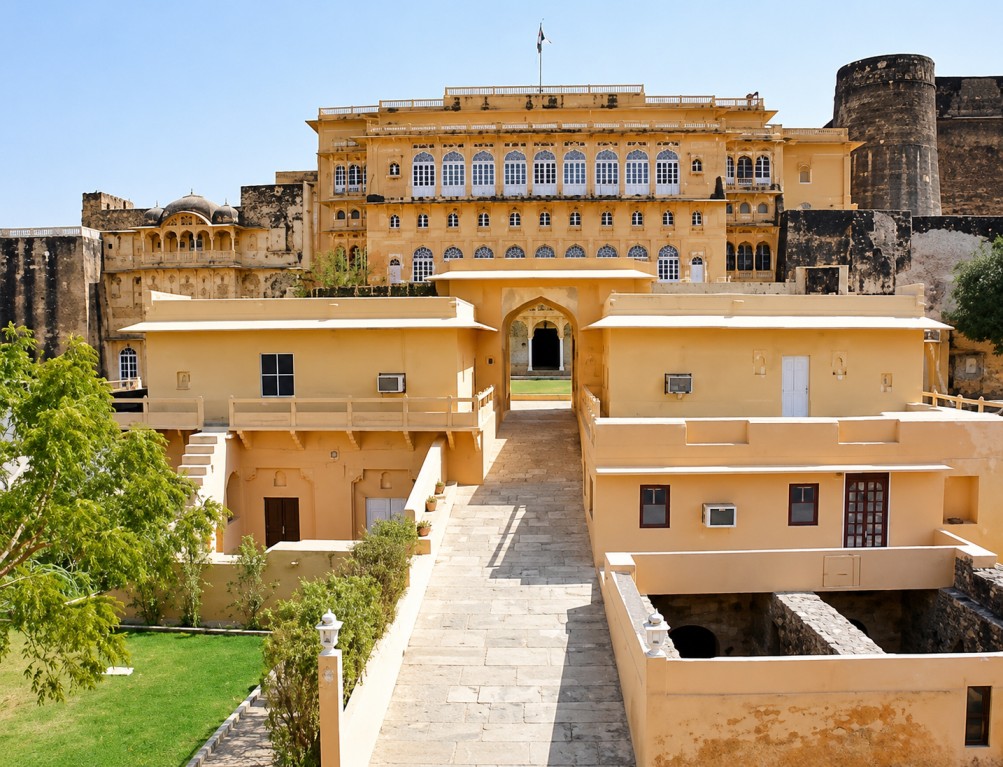
Roopangarh-Fort : A Royal Heritage Gem Of Rajasthan
Roopangarh Fort stands as one of the most historically evocative and atmospherically distinctive heritage destinations in Rajasthan, representing a seventeenth century royal fortification of considerable architectural character whose massive bastions, ancient gateways, and ornate palace structures rise above the small town of Roopangarh in the Ajmer district in a setting of quiet desert grandeur that has largely escaped the commercialization of more celebrated Rajasthani heritage destinations. Situated approximately 50 kilometres from Ajmer and conveniently positioned along the road between Ajmer and Jaipur, Roopangarh Fort was built in 1648 by Maharaja Roop Singh of the Kishangarh royal family, whose dynasty stamped the broader Ajmer region with a distinctive legacy of architectural ambition and cultural patronage that found its most celebrated expression in the miniature painting tradition of Kishangarh and its most enduring physical monument in the solid bastions and palace courtyards of this remarkable fort. The destination draws heritage travelers, architecture enthusiasts, and curious explorers from across the country and beyond, offering an encounter with a Rajasthani fort of genuine historical depth and considerable architectural interest that has been thoughtfully converted into a heritage hotel of exceptional atmospheric character, allowing visitors to experience the living environment of the fort as a residential space rather than merely as a visited monument.
Roopangarh Fort
1648 Royal Fort Transformed Into Authentic Heritage Hospitality
An architecturally distinguished seventeenth-century Rajasthani fort converted into a premier heritage hotel. Massive bastions, ornate palace chambers, and authentic atmosphere preserving centuries of royal heritage while offering exceptional hospitality experiences.
Historical Depth & Authentic Heritage Experience
Roopangarh Fort stands as one of Rajasthan's most historically evocative and atmospherically distinctive heritage destinations, representing a seventeenth-century royal fortification of considerable architectural character. Built in 1648 by Maharaja Roop Singh of the Kishangarh royal family, the fort's massive bastions, ancient gateways, and ornate palace structures rise above the small town of Roopangarh in the Ajmer district in a setting of quiet desert grandeur that has largely escaped the commercialization of more celebrated Rajasthani heritage destinations.
The Kishangarh royal dynasty stamped the broader Ajmer region with a distinctive legacy of architectural ambition and cultural patronage that found its most celebrated expression in the miniature painting tradition of Kishangarh and its most enduring physical monument in the solid bastions and palace courtyards of this remarkable fort. The thoughtful conversion into a heritage hotel has preserved essential historical atmosphere while enabling visitors to experience the living environment of the fort as a residential space rather than merely as a visited monument.
Situated approximately 50 kilometres from Ajmer and conveniently positioned along the road between Ajmer and Jaipur, Roopangarh Fort occupies a location on the historic trade route between two of Rajasthan's most important cities. The settlement that grew around its walls served for centuries as a waypoint and market town on one of the economically important road corridors in the Rajputana region, giving the fort a historical identity shaped by the movement of goods, travelers, and ideas.
Key Highlights
Massive Circular Bastions
The massive bastions and entrance gateways stand out as the most immediately impressive architectural features, their solid stone construction and commanding positions conveying the defensive ambition and military confidence of the Kishangarh rulers with considerable clarity and physical force.
Palace Courtyards
The inner palace courtyard and decorated apartments surrounding it offer highlights of considerable architectural and atmospheric significance, their carved stone details and painted plasterwork reflecting Rajput domestic and ceremonial architectural traditions preserved through heritage hotel conversion.
Spatial Character
The spatial character of courtyard spaces creates an immersive environment enabling visitors to reconstruct the original inhabited character of the fort with unusual vividness and conviction, enhanced through thoughtful contemporary use and ongoing preservation care.
Craft Heritage District
The surrounding town preserves traditional craft traditions including distinctive hand block printing and pottery heritage historically recognized and developed under patronage of the Kishangarh royal family, adding living culture to the fort experience.
Arched Gateways
Arched gateways of considerable architectural confidence compose a picture of Rajput military and domestic architecture at a scale and in a state of preservation allowing deep historical appreciation and understanding of original fort design principles.
Stone Architecture
The ornately decorated palace apartments within the inner courtyard showcase exceptional stone carving and architectural detailing characteristic of princely Rajasthani design, preserved through sensitive heritage hotel conversion and management.
B2B Hospitality Value
Heritage Hotel Operations
Authentic fort-converted hospitality experience offering distinctive positioning for luxury hotel operators and heritage hospitality brands seeking genuine historical properties with exceptional atmospheric character and guest appeal.
Premium Tour Integration
Strategic positioning on historic Ajmer-Jaipur corridor enables seamless inclusion in luxury Rajasthan itineraries, offering differentiated accommodation experiences between two major heritage destinations.
Cultural Experience Programs
Living craft heritage district surrounding fort enables cultural tourism programming, artisan interaction opportunities, and authentic experiential content for heritage-focused travel operators and content creators.
Historical Tourism Appeal
Exceptional positioning for architecture specialists, history enthusiasts, and cultural educators seeking world-class authentic experiences within genuinely preserved historical environments with scholarly depth.
Exclusive Hospitality Positioning
Limited-capacity heritage property commanding premium positioning for ultra-luxury operators seeking exclusive, distinctive, and architecturally significant accommodation experiences unavailable elsewhere in Rajasthan.
Multi-Destination Connectivity
Geographic positioning between Ajmer and Jaipur provides natural itinerary anchoring capabilities for comprehensive heritage tourism operators designing premium multi-city Rajasthan travel experiences and programs.
Hospitality Experience & Activities
Fort Exploration & Architecture
Exploring the fort architecture while staying within the heritage hotel offers the most rewarding experience, enabling extended engagement with the architectural features, spatial character, and historical atmosphere throughout day and evening hours within the authentic environment.
Artisan Craft Heritage
Visiting the surrounding town provides meaningful engagement with traditional craft traditions including hand block printing and pottery heritage flourishing under royal patronage, offering experiential learning and direct artisan interaction opportunities within living cultural contexts.
Light & Landscape Photography
Exploration during optimal light hours—early morning and late afternoon—enables exceptional photography and artistic documentation of stone bastions and palace facades as light reveals architectural details and creates atmospheric perspectives of historical significance.
Historical & Cultural Study
The fort's genuine historical depth and architectural integrity enable meaningful engagement for architecture specialists, historians, and culturally-engaged travelers seeking authentic understanding of Rajput military architecture and princely domestic life during the Mughal and colonial periods.
Heritage Hotel Experience
Authentic Hotel Conversion
Roopangarh Fort has been thoughtfully converted into a heritage hotel of exceptional atmospheric character, preserving essential historical and architectural integrity while enabling contemporary hospitality operations. Guest accommodations within palace apartments and period structures maintain authentic period character while providing modern amenities, creating a distinctive balance between historical authenticity and contemporary comfort that differentiates this property from conventional heritage hotel offerings.
Guest Experience Positioning
The rare quality of a fort that has been preserved and adapted for contemporary use without sacrificing essential historical atmosphere makes the experience of staying within its walls deeply rewarding. Guests experience the living environment of the fort as a residential space rather than merely as a visited monument, enabling immersion in authentic historical and architectural contexts that generate memorable and distinctive travel experiences differentiating Roopangarh Fort within premium hospitality markets.
Connectivity & Visitor Information
Optimal Visiting Period
The most favorable period to visit Roopangarh Fort is from October to March, when the pleasant winter temperatures of the Rajasthan desert make exploration of the fort exterior and surrounding town comfortable and the clear winter light falls most beautifully across the stone bastions and palace facades, providing optimal conditions for photography and architectural appreciation.
Regional Connectivity & Positioning
From Ajmer
Well-maintained national highway connectivity. Approximately 1.5 hours travel time from Ajmer city center. Convenient for multi-destination heritage itineraries combining major Ajmer attractions.
From Jaipur
Excellent highway connectivity through national routes. Approximately 2 hours travel time from Rajasthan's capital. Natural waypoint for travelers moving between Jaipur and Ajmer heritage destinations.
Historic Route Location
Strategically positioned on historic trade route between Ajmer and Jaipur. Historical significance as waypoint and market town on economically important Rajputana road corridor.
Itinerary Integration
Roopangarh Fort stands as a natural and rewarding inclusion in comprehensive Rajasthan heritage itineraries for travelers moving between Ajmer and Jaipur, offering distinctive accommodation experiences that enhance overall journey narratives. The fort's positioning, historical significance, and authentic hospitality character make it an excellent strategic anchor for premium multi-city heritage tourism packages targeting culturally-engaged international travelers and hospitality-focused tour operator