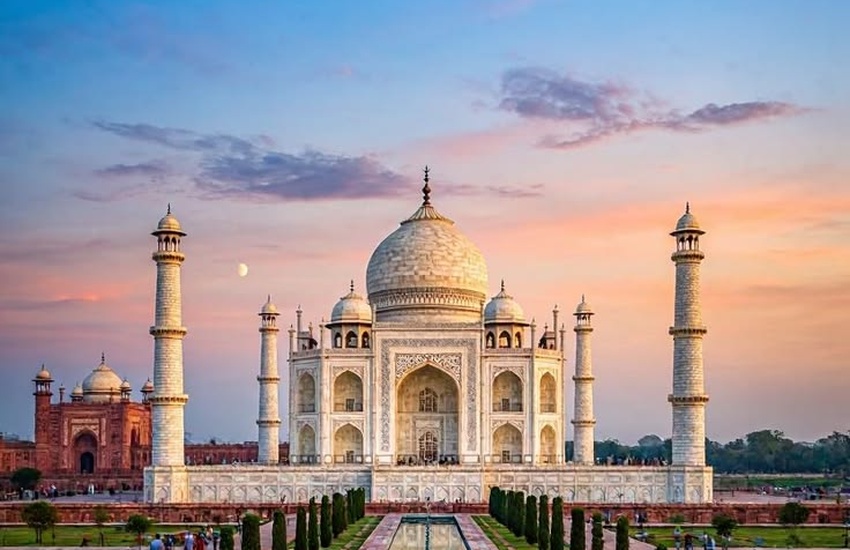
Taj Mahal : A Masterpiece Of Mughal Splendor
The Taj Mahal was commissioned by Mughal Emperor Shah Jahan in memory of his beloved wife Mumtaz Mahal, who died in 1631 CE during the birth of their fourteenth child. Shah Jahan and Mumtaz Mahal had been married for nineteen years, and by all accounts their relationship was one of genuine devotion unusual among the politically arranged marriages of the Mughal court. Her death reportedly devastated Shah Jahan so completely that his hair is said to have turned white within weeks.
Agra · Uttar Pradesh · India
Taj Mahal: A Timeless Symbol
of Love, Heritage & Indian Grandeur
Discover the Iconic Beauty of Taj Mahal
Located on the banks of the Yamuna River in Agra, Uttar Pradesh, the Taj Mahal is one of the world's most celebrated architectural wonders and a symbol of India's rich cultural heritage. Known for its breathtaking white marble structure, intricate craftsmanship, and romantic history, the Taj Mahal attracts millions of travelers from across the globe every year. As a UNESCO World Heritage Site, it represents the finest blend of Mughal architecture, artistic excellence, and timeless beauty.
Beyond its famous silhouette, the Taj Mahal offers visitors a deeper experience of India's history, traditions, local culture, and the royal legacy of the Mughal era. From peaceful gardens and riverside views to vibrant markets and historic monuments nearby, Agra provides a fascinating journey into India's past.
📜 The History and Legacy of Taj Mahal
The story of the Taj Mahal began in the 17th century during the reign of Mughal Emperor Shah Jahan. The monument was commissioned in 1632 as a mausoleum for his beloved wife Mumtaz Mahal, who passed away after giving birth to their fourteenth child. Built over approximately 22 years, the Taj Mahal brought together thousands of skilled artisans, architects, calligraphers, and craftsmen from different parts of Asia.
The monument reflects the brilliance of Mughal architecture, combining Persian, Islamic, and Indian design influences. Its symmetrical gardens, grand entrance gates, marble domes, detailed carvings, and delicate inlay work showcase the extraordinary skills of the craftsmen of that period.
The Taj Mahal is not only a monument of love but also a representation of India's artistic traditions and historical achievements.
🏛️ Architecture and Unique Attractions of Taj Mahal
The beauty of the Taj Mahal lies in its perfect balance of design, materials, and artistic details.
🤍 White Marble Architecture
The main mausoleum is built from white Makrana marble, which changes appearance throughout the day depending on the sunlight. During sunrise, the monument appears soft and golden, while moonlight gives it a peaceful, glowing appearance.
💎 Intricate Marble Inlay Work
Visitors can admire Pietra Dura, a traditional decorative technique where semi-precious stones are carefully placed into marble to create beautiful floral patterns. The detailed artwork reflects the precision and creativity of Mughal artisans.
🌿 Charbagh Gardens
The Taj Mahal complex features a classic Mughal-style garden known as Charbagh. Divided into four sections with pathways and water channels, the garden creates a peaceful atmosphere and enhances the monument's symmetry.
🕋 Main Gateway and Calligraphy
The grand entrance gate features impressive Islamic calligraphy and provides a dramatic first view of the Taj Mahal. The Quranic inscriptions and artistic details highlight the cultural importance of the monument.
🌤️ Climate and Best Time to Visit Taj Mahal
Agra experiences a typical North Indian climate with hot summers, monsoon rains, and cool winters.
✨ Best Time to Visit
The ideal time to visit the Taj Mahal is from October to March, when the weather is pleasant for sightseeing and outdoor exploration.
Best season for photography and comfortable sightseeing.
Pleasant temperatures with fewer crowds compared to peak winter months.
Hot weather, especially during afternoons, but early morning visits are still enjoyable.
Occasional rainfall creates a fresh atmosphere, though humidity can be high.
For the most memorable experience, visiting during sunrise or sunset is highly recommended.
🎭 Cultural Experiences in Agra
A visit to the Taj Mahal is also an opportunity to explore the culture and traditions of Agra.
The city has a rich Mughal heritage reflected in its architecture, food, handicrafts, and local lifestyle. Visitors can explore traditional markets, interact with local artisans, and experience the warm hospitality of Uttar Pradesh.
🎉 Local Festivals and Traditions
Agra celebrates various cultural events that showcase regional music, dance, and traditions. Festivals such as Taj Mahotsav highlight Indian handicrafts, classical performances, folk arts, and local cuisine.
🧭 Things to Do Around Taj Mahal
🏰 Explore Agra Fort
Located near the Taj Mahal, Agra Fort is another UNESCO World Heritage Site and an important Mughal monument. Its massive red sandstone walls, royal halls, and viewpoints offer fascinating insights into Mughal history.
🌇 Visit Mehtab Bagh
Situated across the Yamuna River, Mehtab Bagh provides one of the best alternative views of the Taj Mahal. The garden is especially popular among photographers looking for peaceful sunset views.
🕌 Discover Fatehpur Sikri
Around 40 kilometers from Agra, Fatehpur Sikri is a historic Mughal city built by Emperor Akbar. Its palaces, courtyards, and impressive gateways make it an excellent addition to an Agra itinerary.
🛍️ Explore Local Markets
Agra is famous for traditional handicrafts, especially marble souvenirs inspired by Taj Mahal designs. Visitors can explore markets for:
🦜 Wildlife and Nature Experiences Near Agra
Although Agra is mainly known for heritage tourism, nature lovers can explore nearby attractions.
🐦 Keoladeo National Park
Located near Bharatpur, about 55 kilometers from Agra, this UNESCO-listed national park is famous for birdwatching. Migratory birds visit the wetlands during winter, making it a great destination for photographers and wildlife enthusiasts.
🐊 Chambal Wildlife Sanctuary
The Chambal region offers opportunities to experience river landscapes and observe wildlife such as gharials, dolphins, crocodiles, and various bird species.
🍽️ Local Cuisine: Flavors of Agra
Agra's food culture reflects its Mughal heritage and traditional North Indian flavors.
Popular local dishes include:
A famous sweet made from ash gourd, available in many flavors.
Rich dishes featuring aromatic spices, meat, and traditional cooking methods.
Popular breakfast items served with spicy curry.
A crunchy local snack enjoyed by visitors.
Exploring Agra's food scene adds another dimension to the Taj Mahal experience.
🧳 Taj Mahal for Different Types of Travelers
For Couples
The Taj Mahal remains one of the most romantic destinations in the world, offering unforgettable sunrise views, peaceful gardens, and beautiful photography opportunities.
For Families
Families can enjoy exploring historical monuments, learning about Mughal history, and experiencing local culture together.
For Solo Travelers
Solo visitors can discover architecture, photography, local markets, and cultural stories at their own pace.
For Photographers
The changing light, detailed architecture, reflections, and surrounding landscapes make Taj Mahal a dream destination for photographers.
For History and Culture Lovers
Travelers interested in heritage will find endless stories in Agra's monuments, museums, and traditional crafts.
🚉 How to Reach Taj Mahal
The nearest airport is Agra Airport, though many international travelers prefer flying to Indira Gandhi International Airport in Delhi, which has better connectivity.
Agra is well connected by railway. High-speed trains from Delhi, including the Gatimaan Express, make travel convenient.
Agra is connected by major highways and can be reached easily from Delhi, Jaipur, and other North Indian cities.
💡 Useful Travel Tips for Visiting Taj Mahal
- Visit early morning to avoid crowds and enjoy better weather.
- Carry a valid identification document for entry.
- Wear comfortable footwear as the complex requires walking.
- Hire official guides for deeper historical insights.
- Respect the monument by following photography and preservation guidelines.
- Combine Taj Mahal with Agra Fort, Fatehpur Sikri, and local cultural experiences for a complete journey.
⭐ Interesting Facts About Taj Mahal
- 01 The Taj Mahal is recognized as one of the New Seven Wonders of the World.
- 02 The monument uses marble that was transported from Makrana in Rajasthan.
- 03 The four minarets slightly tilt outward to protect the main structure in case of earthquakes.
- 04 The Taj Mahal appears to change color depending on the time of day and lighting conditions.
🌙 Final Thoughts: Experience the Timeless Beauty of Taj Mahal
The Taj Mahal is more than a monument; it is a journey through India's history, artistry, and cultural heritage. From its magnificent marble architecture and peaceful gardens to Agra's traditional cuisine and nearby historical treasures, the destination offers unforgettable experiences for every traveler.
Whether you are visiting for romance, photography, history, family exploration, or cultural discovery, the Taj Mahal remains a remarkable destination that captures the essence of India's timeless beauty.