Victoria Memorial : Where Imperial Grandeur Meets Cultural Renaissance
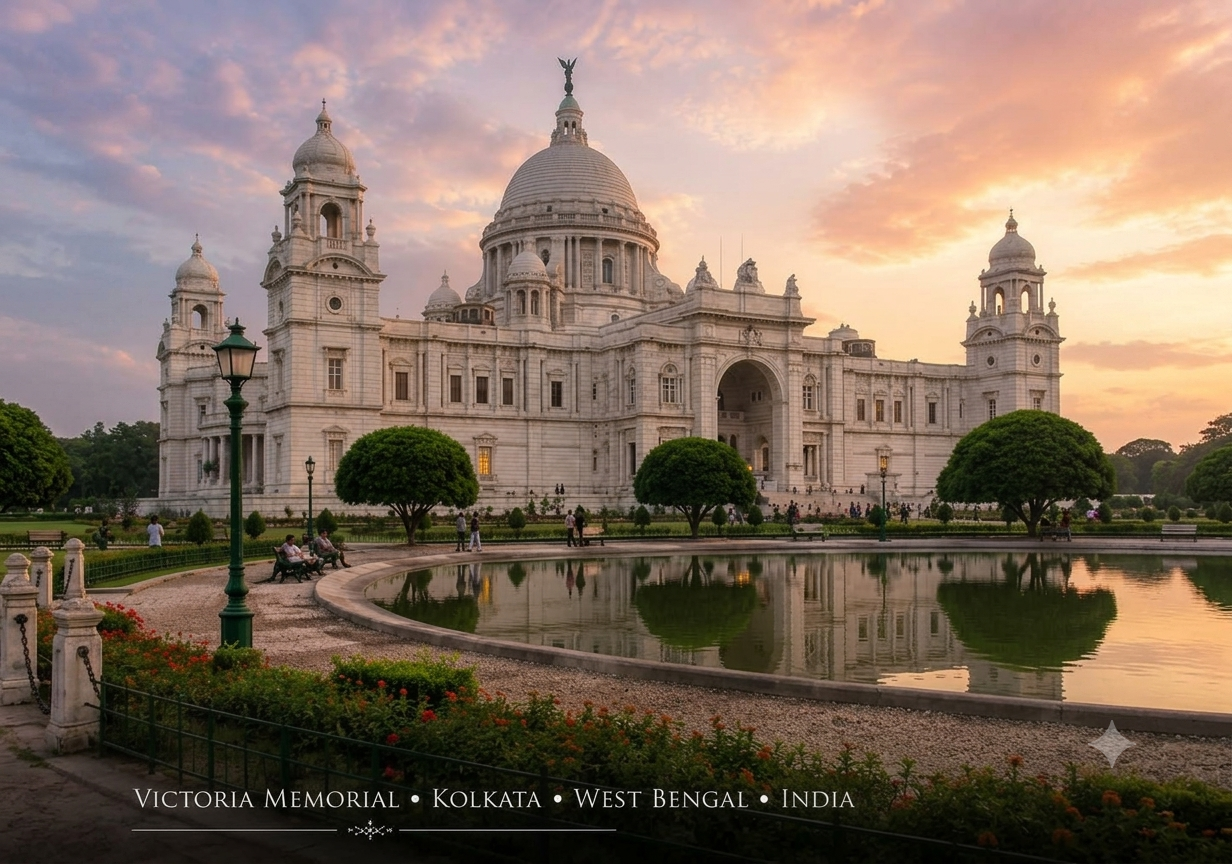
Imagine approaching a colossal white marble building emerging from gardens of geometric perfection, its dome catching sunlight like a precious jewel, while the Hooghly River flows gently beside it. The air carries the fragrance of blooming flowers mixed with the weight of colonial history, and suddenly you're standing before one of India's most iconic monuments—a place where British imperial ambition met Indian architectural sensibility in an extraordinary act of transformation. This is Victoria Memorial in Kolkata—a magnificent monument built to honor Queen Victoria, the British monarch, yet it has evolved into something far more meaningful: a symbol of Kolkata's cultural renaissance and India's journey from colonization to independence. Constructed between 1906 and 1921, this white marble palace rises majestically on the Maidan, Kolkata's vast open space, serving as a beacon of architectural brilliance and historical significance. What makes Victoria Memorial truly extraordinary is that though it was built by a colonial power to celebrate their queen, it has become profoundly Indian in character—a beloved landmark where millions of Indians have come to celebrate their own nation's cultural achievements. Once you walk through its grand entrances and witness the interplay of imperial design with Indian sensibilities, you understand that this monument transcends its original purpose to become something universally meaningful.
🏛️ Victoria Memorial
✨ Where Imperial Grandeur Meets Cultural Renaissance
🌟 Introduction
Victoria Memorial – Where Imperial Grandeur Meets Cultural Renaissance
Imagine approaching a colossal white marble building emerging from gardens of geometric perfection, its dome catching sunlight like a precious jewel, while the Hooghly River flows gently beside it. The air carries the fragrance of blooming flowers mixed with the weight of colonial history, and suddenly you're standing before one of India's most iconic monuments—a place where British imperial ambition met Indian architectural sensibility in an extraordinary act of transformation. This is Victoria Memorial in Kolkata—a magnificent monument built to honor Queen Victoria, the British monarch, yet it has evolved into something far more meaningful: a symbol of Kolkata's cultural renaissance and India's journey from colonization to independence. Constructed between 1906 and 1921, this white marble palace rises majestically on the Maidan, Kolkata's vast open space, serving as a beacon of architectural brilliance and historical significance. What makes Victoria Memorial truly extraordinary is that though it was built by a colonial power to celebrate their queen, it has become profoundly Indian in character—a beloved landmark where millions of Indians have come to celebrate their own nation's cultural achievements. Once you walk through its grand entrances and witness the interplay of imperial design with Indian sensibilities, you understand that this monument transcends its original purpose to become something universally meaningful.
📜 The Monument of Transformation – 1901 to 1921
Victoria Memorial's story begins in 1901, shortly after Queen Victoria's death, when the British Colonial administration in India decided to construct a grand memorial in Kolkata—then the capital of British India. Lord Curzon, the Viceroy of India, championed the project and commissioned British architect William Emerson to design a structure that would honor the Queen while acknowledging Indian architectural traditions.
What's fascinating about Victoria Memorial's history is how it reflected the complex dynamics of the British Raj. Built to glorify imperial power, it paradoxically became a space where Indian nationalism and cultural consciousness would flourish. The monument took 15 years to complete, requiring meticulous craftsmanship and the importation of white marble from Italy and Belgium. The construction itself was a statement—India had the resources and skill to create something of global architectural importance.
After India's independence, many assumed the monument would be dismantled or repurposed as a symbol of colonial oppression. Instead, the nation chose to preserve and celebrate it, recognizing that great architecture transcends its political origins. Today, Victoria Memorial stands as a monument not just to Queen Victoria but to India's cultural sophistication and Kolkata's historical significance.
🏗️ The Architecture That Mesmerizes Every Visitor
Approaching Victoria Memorial, the first impression is of overwhelming grandeur. The central structure rises majestically, crowned with a large gilded bronze dome adorned with a statue representing Victory. The building extends approximately 180 meters in length and 105 meters in width, making it a colossal presence on the Maidan landscape.
The architectural style brilliantly blends British classical traditions with Mughal and Indian design elements. The marble facade is inlaid with semi-precious stones in patterns inspired by Mughal aesthetics.
Intricate stone carvings depicting flora and fauna showcase Indian craftsmanship. Four towers—minarets—frame the structure, their design influenced by Indian architecture yet executed in marble with classical proportions. This fusion creates something genuinely unique—a monument that belongs neither entirely to East nor West, but somehow to both.
The Dome is architecturally magnificent—its gilded bronze catches sunlight at different angles throughout the day, appearing to change color from golden to subtle orange to brilliant white. The engineering required to support this massive dome demonstrates the technical sophistication of early 20th-century construction.
The Exterior Decorations include intricate latticed screens and balconies inspired by Mughal palaces. Marble inlay work with lapis lazuli, jade, and agate creates patterns of breathtaking beauty. Each decorative element serves aesthetic purposes while maintaining structural integrity.
🏛️ The Treasures Within These Marble Halls
Entering Victoria Memorial, you step into the Central Hall, a vast chamber crowned by the impressive dome. Natural light filters through decorative screens, creating ethereal patterns on the marble floors. The acoustics are designed to carry sound beautifully, and sometimes you'll hear classical music echoing through the space.
The Victoria Memorial Museum houses extraordinary collections spanning Indian history and culture. Paintings depicting Indian historical moments, sculptures celebrating Indian heritage, and artifacts representing different periods of Indian civilization fill the galleries. The museum doesn't simply celebrate the Queen—it celebrates India itself, its art, architecture, and cultural achievements.
The Grand Staircase is an architectural marvel—white marble steps rise ceremonially, inviting visitors to ascend and experience the monument from multiple levels. Balustrades carved with delicate patterns guide your journey upward.
The Sculptures and Statuary throughout the monument deserve attention. Various sculptures represent themes of justice, truth, wisdom, and courage. Each sculpture contributes to a larger narrative about human values and civilization.
The Surrounding Gardens are masterpieces of landscape design. Geometric pathways, symmetrical flower beds, and ornamental fountains create spaces of serene beauty. The gardens extend across acres, providing respite and reflection spaces.
🤝 A Monument That Belongs to Everyone
What profoundly distinguishes Victoria Memorial is its transformation into a genuinely Indian space. Though built to honor a British queen, it has become a place where Indian culture is celebrated. Educational institutions use it for cultural programs. Artists display work within its halls. Couples choose it for engagement photographs. Families gather for picnics in its gardens. School groups visit to learn about Indian history and architecture.
The monument has successfully transcended colonial origins to become a beloved cultural institution that Indians take pride in and international visitors come to admire.
📍 Visitor Information
🌤️ Best Time to Visit
November to February offers ideal weather—cool mornings and pleasant afternoons make exploration comfortable. March to May brings heat, though early morning visits are rewarding. Monsoon (June-September) occasionally causes closures but transforms the gardens beautifully. October is excellent with post-monsoon freshness and clear skies.
🚕 How to Get There
Victoria Memorial is located in central Kolkata on the Maidan, easily accessible from hotels and major attractions. The nearest metro station is Rabindra Sarovar, just 10-minute walk away. Taxis, auto-rickshaws, and buses readily serve the location. The monument is approximately 15 kilometers from Netaji Subhas Chandra Bose International Airport (1-hour drive).
Plan 2-3 hours to explore Victoria Memorial comprehensively. The museum sections, gardens, and architectural details warrant unhurried exploration.
🏛️ Nearby Treasures
Indian Museum (nearby) houses one of India's most significant art and artifact collections. St. Paul's Cathedral showcases colonial-era architecture. Rabindra Sarovar Lake offers peaceful walking paths. Mother Teresa's House reflects modern spiritual heritage. Marble Palace displays private art collections.
💡 A Few Travel Tips
Photography is permitted throughout most areas. Wear comfortable shoes for navigating gardens and interior passages. The marble floors can be slippery; walk carefully. Carry water, especially during warm months. Guides are available and add valuable context about architectural details and historical significance. Evening light creates magical photographic conditions. The monument is beautifully illuminated at night, making evening visits particularly atmospheric.
✨ Why You Simply Must Visit Victoria Memorial
Victoria Memorial represents something rare—a monument that transcends its original purpose to become something universally meaningful. It's where colonial history meets Indian pride, where architectural magnificence serves cultural celebration, where the past dialogues thoughtfully with the present.
Standing beneath the soaring dome, surrounded by marble that seems to glow with inner light, you understand that great architecture transcends political origins. Victoria Memorial whispers lessons about transformation, resilience, and the power of beauty to unite rather than divide. Walk its halls, explore its gardens, ascend to its galleries, and understand why Kolkata chose to preserve and celebrate this magnificent monument as its own.
Must-Visit Tourist Spots
```