🌄 Where Ancient Kingdom's Glory Stands Unyielding
Imagine standing before massive gateposts carved from stone, each rising like a silent sentinel guarding secrets of kingdoms long past. Picture walking through crumbling arches where rulers once paraded, their footsteps echoing down centuries, their legacies etched into every weathered brick and carved facade. Envision a majestic lake reflecting the fort's silhouette at sunset, painted in hues of amber and rose, as peacocks call from the surrounding gardens. That's Warangal Fort for you — not merely ruins scattered across a landscape, but a living chronicle of the Kakatiyan empire's brilliance and indomitable spirit. Located in the heart of Telangana, this extraordinary fortress stands as a testament to medieval Indian engineering, military strategy, and architectural magnificence. Known far and wide as the "Gateway to Telangana's Heritage," Warangal Fort has silently witnessed the rise and fall of empires, waiting patiently for adventurers and history seekers to uncover the tales locked within its ancient stones.
📜 A Rich Tapestry of History
Warangal's story is one of triumph, tragedy, and timeless cultural expression. The fort's most glorious chapter unfolded between the 12th and 14th centuries when it served as the majestic capital of the great Kakatiya dynasty — one of South India's most progressive and powerful kingdoms. Under the rule of visionary kings like Prataparudra, Warangal became a beacon of prosperity, learning, and cultural refinement, earning fame across the subcontinent for its magnificent temples, advanced irrigation systems, and thriving trade networks.
The name "Warangal" derives from Sanskrit — "Verangal" meaning "One-Stone," a reference to the monolithic gateway stones that still stand as monuments to Kakatiya craftsmanship. As you walk through the crumbling gates and peer at the weathered stones, you can almost hear the trumpets of victory, the clang of the royal court's ceremonies, and the steady stream of merchants and traders who once made this fortress their destination. The fort has transcended empires — from the Kakatiyas to the Bahmani sultanate, from the Qutb Shahi dynasty to the Mughal emperors — gracefully holding onto its essential character throughout every transformation.
🏛️ The Monuments That Define Warangal
The Thousand Pillar Temple stands as the crowning jewel of Warangal's architectural heritage. Despite its name suggesting 1,000 pillars, this magnificent 12th-century shrine is a masterpiece of Kakatiya temple architecture, showcasing intricate stone carvings, ornate pillars, and sculptural brilliance that represents the zenith of medieval craftsmanship. Walking through this temple feels like stepping into a sculptor's dream — every surface tells a story through its carefully chiseled details. The temple's fusion of ritual space with artistic expression creates an atmosphere of profound spiritual and aesthetic beauty.
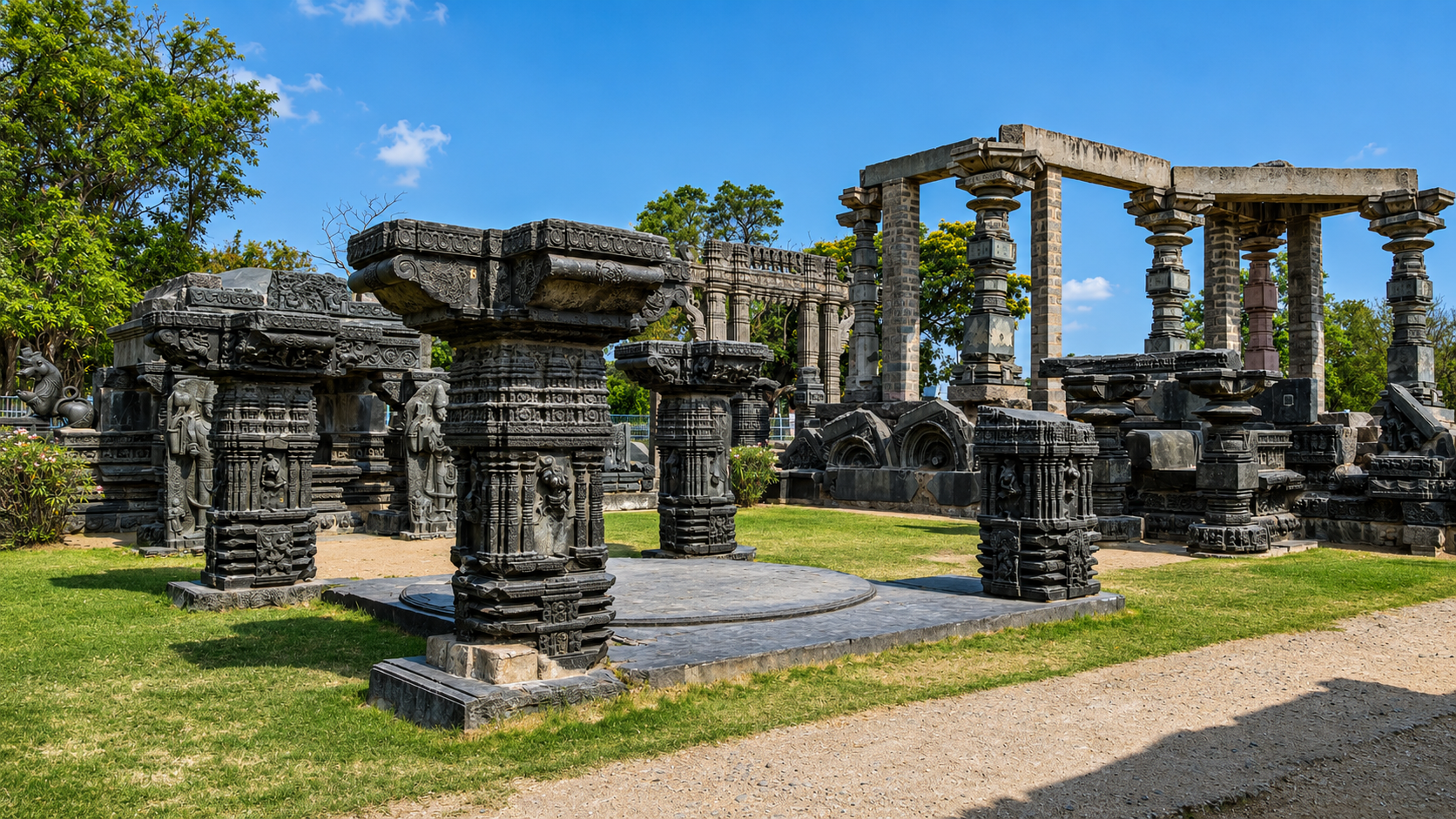
The Fort Gates themselves are architectural marvels. The massive stone gateways, particularly the ornamental gates with their elaborate carvings, showcase the military engineering prowess of Kakatiya builders. These aren't mere defensive structures — they're statements of power and artistic ambition, each carved stone placed with deliberate precision. Standing before these gates, you grasp why medieval travelers spoke of Warangal in hushed tones of reverence and awe.
Warangal Lake, artificially created by the Kakatiyas through sophisticated irrigation engineering, surrounds much of the fort, creating a natural moat of stunning beauty. The lake is not merely functional — it's a testament to the civilization's advanced understanding of water management and landscape design. Sunset reflections transform the water into liquid gold, while the morning mist rising from its surface creates an ethereal quality that photographers and poets alike find irresistible.
The Shilpa Kala Vedika and the fort's sculptural remains showcase the artistic brilliance of the Kakatiya era. Fragments of sculptures, intricate stone carvings, and architectural elements scattered throughout the site tell stories of a civilization that valued beauty as much as strength.
🔎 Living Heritage and Ongoing Discovery
What makes Warangal particularly compelling is that it's an active archaeological site where history continues to reveal itself. Excavations regularly unearth new artifacts, offering fresh insights into daily life during the Kakatiya period. The fort isn't merely a monument to the past — it's a living classroom where experts and enthusiasts work to piece together the complete narrative of this remarkable civilization.
The nearby Warangal Museum houses an impressive collection of artifacts, sculptures, and historical documents that provide context and depth to your fort exploration. Viewing these pieces before or after your fort visit creates a richer understanding of the civilization that built this fortress.
🎭 Culture, Local Experiences, and Authentic Encounters
Warangal's character is distinctly Telangana — a blend of ancient grandeur, temple traditions, and contemporary vitality. The locals are warm and genuinely interested in sharing their heritage with visitors. You'll encounter guides who are passionate storytellers, vendors selling traditional handicrafts, and families who've lived here for generations, their own stories intertwined with the fort's narrative.
The bazaars near the fort area offer traditional Telangana handicrafts, including the famous Warangal weaving and intricate stone carvings. These aren't mass-produced souvenirs — they're authentic expressions of living traditions. Wander through the markets and discover hand-woven fabrics, brass items, and stone sculptures created by artisans whose craft lineage traces back centuries.
The food culture around Warangal reflects Telangana's rich culinary heritage. Seek out authentic local cuisine — the famous Warangal biryani with its unique spice blend, paya (slow-cooked meat curry), and traditional sweets like Warangal's signature 'Gayyalu' (a sweet preparation). Street food vendors near the fort area offer authentic snacks like gongura (sorrel) dishes and jowar preparations that provide genuine taste of regional flavors.
Visit the local temples that still function, adding layers of spiritual experience to your historical exploration. The combination of archaeological interest with living religious tradition creates a unique atmosphere that purely ancient sites cannot replicate.
📅 Best Time to Visit
Warangal is best explored from October to February, when the weather is pleasantly cool and ideal for walking through the sprawling fort complex. The clear skies during this period provide excellent visibility across the landscape and ideal lighting for photography. The comfortable temperatures allow for extended exploration without the exhaustion that comes with summer heat.
Monsoon months (June to September) transform the fort's landscape into verdant green, with the lake swelling to impressive proportions. While the atmosphere is magical and crowds are minimal, trekking through muddy pathways can be challenging. Summer (March to May) is scorching hot but offers the advantage of complete solitude — ideal if you're seeking meditative introspection away from crowds. Winter (December to January) is particularly wonderful, with crisp mornings and pleasant afternoons perfect for extended fort exploration.
🚆 How to Get There
By Air: Hyderabad International Airport (HYD), approximately 145 kilometres away, is the nearest major airport. It's exceptionally well-connected to all major Indian cities and many international destinations. From the airport, taxis and car rental services will deliver you to Warangal in approximately 3-3.5 hours.
By Rail: Warangal has its own railway station — a major junction on India's rail network with regular services from Delhi, Mumbai, Bengaluru, Chennai, Kolkata, and numerous other cities. The journey itself is enriching — watch the landscape gradually transform from bustling urban centers to rural countryside as you approach Telangana's heart.
By Road: Warangal is extremely well-connected by excellent highways. National Highway 44 connects it to Hyderabad (145 kilometres), making it a straightforward drive of 3-3.5 hours. State transportation corporations operate regular buses from Hyderabad and other neighboring cities. If you're driving your own vehicle, the roads are well-maintained, and the journey offers beautiful glimpses of Telangana's landscape.
🌿 Nearby Treasures Worth Your Time
While Warangal Fort deserves at least a full day of unhurried exploration, the surrounding region offers compelling attractions that enhance your visit. The Pakhal Lake, approximately 60 kilometres away, offers serene natural beauty and additional historical temples. Hyderabad, just 145 kilometres south, presents the magnificent Charminar, bustling bazaars, and world-class museums. The Kakatiya temples in smaller towns around Warangal offer additional examples of Kakatiya architectural brilliance. The Ramappa Temple, about 80 kilometres away, showcases stunning temple architecture and is a UNESCO World Heritage site.
🎒 Travel Tips Before You Pack Your Bags
Wear sturdy, comfortable walking shoes — the fort's terrain is uneven, with scattered stones, crumbling pathways, and sometimes slippery surfaces. Carry plenty of water and sun protection; there's minimal shade throughout much of the fort, and the Telangana sun can be intense. Hire a local guide; their knowledge transforms scattered ruins into vivid narratives. The guide will point out architectural details you'd otherwise miss and share local legends that bring history alive.
Bring a camera — whether it's a professional setup or your smartphone, Warangal offers endless photographic opportunities, particularly during golden hour when the ancient stones are bathed in warm light. Visit the museum before exploring the fort itself; it provides crucial context that deepens your understanding of every structure you encounter.
Most importantly, move slowly through Warangal. This isn't a destination to check off a list. Sit by the lake's edge, let the silence settle into you, imagine the fort in its heyday, and allow the weight of centuries to inform your experience.
✨ Why Warangal Must Call You
Warangal speaks to those who believe that history is more than textbook narratives — it's stories written in stone, preserved in architectural brilliance, and carried in the hearts of descendants. It's for travelers who can find profound beauty in ruins, who understand that fragmented structures often tell richer stories than intact ones, and who seek to understand India's medieval kingdoms and their extraordinary achievements.
Whether you're a history enthusiast fascinated by the Kakatiya dynasty, an architecture lover drawn to medieval stone masonry, a photographer seeking dramatic landscapes and golden hour magic, or simply a wanderer seeking connection with India's magnificent past, Warangal has something that will resonate with your soul. The sensation of touching stones that emperors once walked upon, the architectural harmony that still speaks across centuries, the unexpected smile from a local guide sharing a forgotten legend, the peacock's call echoing through the ruins at dusk — these are the moments that remain etched in memory long after you've left.
So pack your curiosity, wear your comfortable shoes, and let Warangal reveal its timeless stories to you. This fortress has stood sentinel for over eight centuries. Now, it's your turn to discover why.