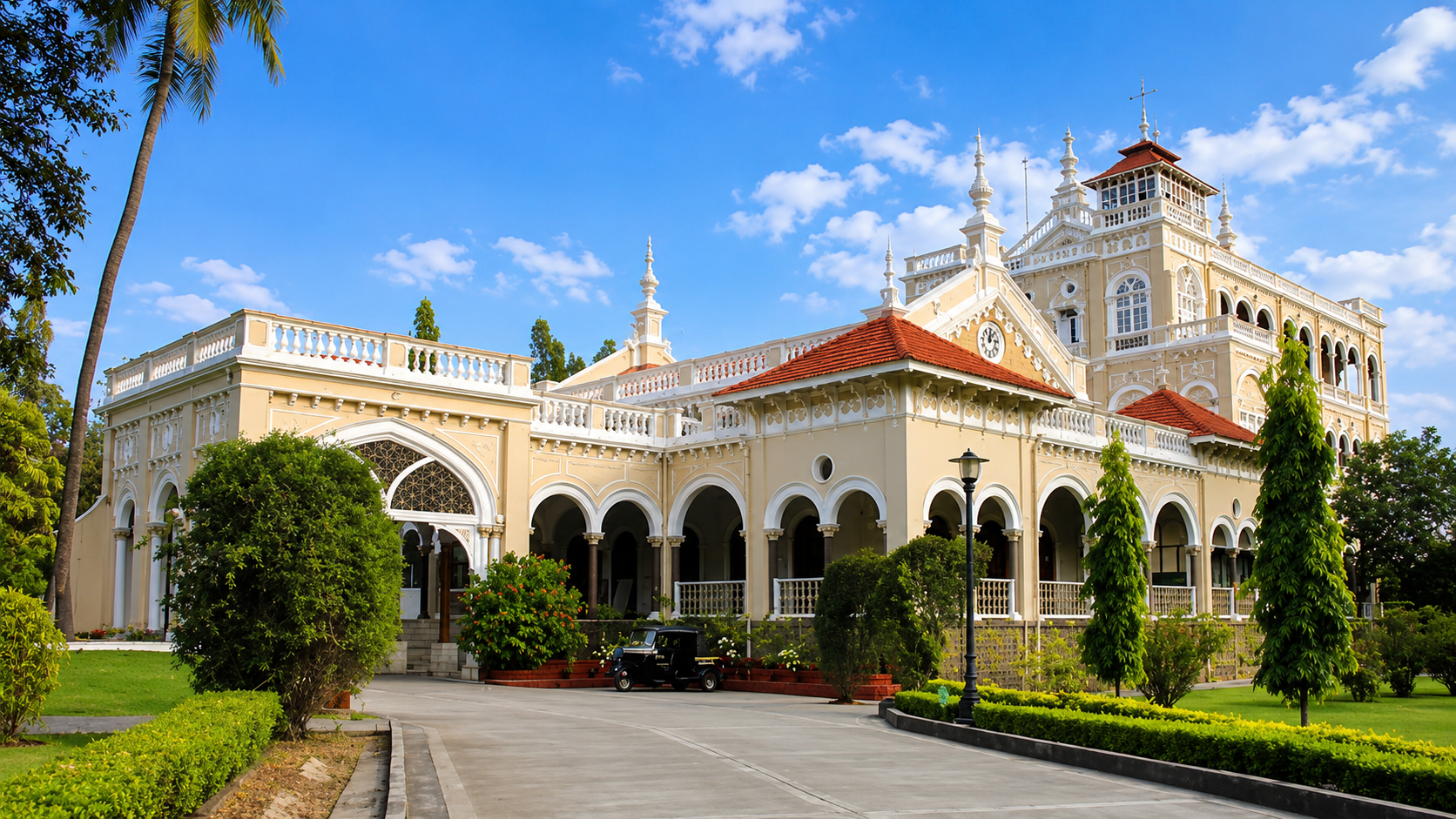
Aga Khan Palace: A Legacy Beyond Royalty
Imagine standing in a sun-drenched courtyard, the rustle of dry leaves underfoot and the faint scent of old stone and marigolds in the air. Around you, arched Italian-style corridors frame a meticulously kept lawn, and somewhere in the garden, a white marble monument gleams quietly in the afternoon light. That is the Aga Khan Palace — not merely a building, but a living chapter of India's freedom struggle, a monument to love, sacrifice, and an unshakeable spirit. Located in Yerawada, Pune, this palace carries within its walls some of the most poignant memories of the Indian independence movement, making every visit feel less like sightseeing and more like a pilgrimage.
📜 A Little Bit of History First
The Aga Khan Palace was built in 1892 by Sultan Muhammad Shah, Aga Khan III — the 48th Imam of the Shia Ismaili Muslim community. His intent was deeply humanitarian: to provide employment to the people of the surrounding region who were suffering through a severe famine. What emerged from that act of compassion was one of the most stunning pieces of architecture in Maharashtra — a grand palace spread across 19 acres, inspired by Italian arched design, and unlike anything in the region at the time.
But the palace's most defining chapter came decades later. After the historic Quit India Movement of 1942, the British government used the palace as a detention camp. Mahatma Gandhi, his wife Kasturba Gandhi, and his secretary Mahadev Desai were imprisoned here. Mahadev Desai passed away within days of their internment. Kasturba Gandhi, frail and unwell, breathed her last within these walls on February 22, 1944. Gandhi spent nearly two years here, and the palace witnessed both his deepest personal grief and his unwavering resolve. Today, their samadhis — memorial shrines — stand in the palace garden, drawing thousands of visitors who come not just to see history, but to feel it.
✨ The Attractions That Will Leave You Breathless
The Samadhis of Kasturba Gandhi and Mahadev Desai are the soul of this place. Set in a serene garden, these white marble memorials are simple yet deeply moving. Visitors often stand in silence here, the weight of history settling gently over them. Flowers are offered daily, and the space is maintained with great care and reverence.
The Gandhi National Memorial occupies a significant portion of the palace and houses a remarkable collection of photographs, letters, personal belongings, and documents from Gandhi's life. The rooms where he was held captive have been preserved much as they were during his detention — spare, quiet, and profoundly humanising.
The palace architecture itself deserves unhurried attention — wide arched verandas, elegant high-ceilinged halls, and expansive open courtyards that bathe the interiors in golden light. The Italian-influenced design is unusual for Indian palaces of the era, and the craftsmanship of the original construction remains evident in every carved pillar and stone archway.
🌿 Culture, People, and the Spirit of the Place
The palace is managed by the Gandhi National Memorial Society, and the team that looks after it does so with evident pride and devotion. Guides here are knowledgeable and passionate — they do not simply recite facts but tell stories, often pausing to let the enormity of a moment sink in. The atmosphere encourages contemplation rather than casual tourism.
The surrounding Yerawada neighbourhood sits within Pune's quietly layered character — a city of ancient forts, modern campuses, Marathi heritage, and cosmopolitan energy all at once. The palace stands as a meditative island in the middle of this bustle, a reminder of values that transcend time.
📅 Best Time to Visit
The palace is open year-round, but the most comfortable time to visit is between October and February, when Pune's weather is cool and pleasant. The monsoon months from June to September turn the palace grounds lush green and lend a quiet intimacy to the memorial spaces. Avoid April and May if you can, as Pune's summer heat makes the outdoor gardens less comfortable to explore.
🚗 How to Get There
✈️ By Air
Pune International Airport (PNQ) is well-connected to all major Indian cities. The palace is approximately 8–10 km from the airport, easily reached by taxi or auto-rickshaw.
🚆 By Rail
Pune Junction is a major railway hub with frequent trains from Mumbai, Delhi, Bengaluru, and beyond. The palace is about 5 km from the station, best reached by cab or auto.
🛣️ By Road
The Mumbai–Pune Expressway makes the roughly 150 km drive a smooth two-hour journey. City buses, cabs, and app-based taxis easily reach Yerawada from anywhere in Pune.
📍 Nearby Places Worth Exploring
Pune rewards extended exploration. The magnificent Shaniwar Wada — the 18th-century fortified palace of the Peshwas — is a short drive away and unmissable for history lovers. Dagdusheth Halwai Ganesh Temple is one of the city's most revered spiritual sites. For nature lovers, Sinhagad Fort about 35 km away offers a rewarding trek with panoramic Deccan views. And Pune's thriving café culture along Fergusson College Road makes for wonderful evenings of food and people-watching.
🎒 A Few Travel Tips Before You Go
Dress respectfully — this is a memorial site, and modest attire is appreciated. Photography is allowed in most areas, but be mindful near the samadhis. Entry fees are nominal, and the palace is closed on national holidays, so check ahead. Weekday mornings offer the quietest, most reflective experience. Plan for at least two to three hours to explore without rushing.
⭐ Why You Simply Must Visit Aga Khan Palace
Some buildings hold architecture. This one holds memory. Standing where Kasturba Gandhi took her final breath, reading the letters Gandhi wrote in confinement, walking the same courtyard where India's most extraordinary chapter quietly unfolded — these are not tourist moments. They are human ones.
So when you find yourself in Pune, set aside an afternoon, leave the noise of the city behind, and walk through those arched corridors. Let the palace do what it has always done — tell its story to anyone willing to listen.