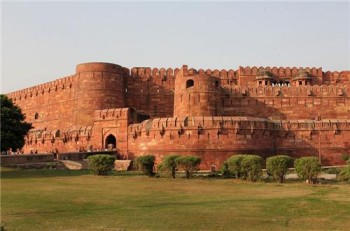
Agra Fort: A UNESCO Treasure of Mughal Grandeur
Agra Fort stands as one of the most magnificent and historically consequential monuments in India, a vast complex of palatial buildings, audience halls, mosques, and residential quarters enclosed within formidable red sandstone ramparts that together represent the most complete and authentically preserved expression of Mughal imperial power and architectural ambition surviving anywhere in the subcontinent. Located in the city of Agra in Uttar Pradesh, on the right bank of the Yamuna river approximately two and a half kilometres northwest of the Taj Mahal, the fort served as the principal residence and seat of government of the Mughal emperors from the reign of Akbar in the sixteenth century through the early decades of Shah Jahan's reign in the seventeenth, accumulating across this period a succession of buildings of extraordinary architectural distinction that reflect the evolving tastes, ambitions, and personal histories of the dynasty's greatest rulers. The destination draws historians, architectural enthusiasts, Mughal heritage travelers, and the vast international audience drawn to Agra by the Taj Mahal who discover in the fort a monument of equal historical depth and considerably greater architectural variety than the world's most famous mausoleum
🏰 Agra Fort (Uttar Pradesh)
Overview
📍 Location
Agra, Uttar Pradesh
🌍 Status
UNESCO World Heritage Site
🏛️ Dynasty
Mughal Empire
🚆 Connectivity
Rail, Road & Air Access
📖 Overview
Agra Fort stands as one of the most magnificent and historically consequential monuments in India, a vast complex of palatial buildings, audience halls, mosques, and residential quarters enclosed within formidable red sandstone ramparts that together represent the most complete and authentically preserved expression of Mughal imperial power and architectural ambition surviving anywhere in the subcontinent.
Located in the city of Agra in Uttar Pradesh, on the right bank of the Yamuna river approximately two and a half kilometres northwest of the Taj Mahal, the fort served as the principal residence and seat of government of the Mughal emperors from the reign of Akbar in the sixteenth century through the early decades of Shah Jahan's reign in the seventeenth, accumulating across this period a succession of buildings of extraordinary architectural distinction that reflect the evolving tastes, ambitions, and personal histories of the dynasty's greatest rulers.
The destination draws historians, architectural enthusiasts, Mughal heritage travelers, and the vast international audience drawn to Agra by the Taj Mahal who discover in the fort a monument of equal historical depth and considerably greater architectural variety than the world's most famous mausoleum.
What distinguishes Agra Fort from other Mughal monuments in India is the extraordinary completeness and variety of the imperial complex preserved within its walls, encompassing buildings from the reigns of Akbar, Jahangir, and Shah Jahan that together illustrate the full arc of Mughal architectural development from the robust red sandstone solidity of the early empire to the refined white marble sophistication of its greatest period.
The fort is simultaneously a military fortification of impressive engineering, a royal palace of exceptional beauty, a seat of imperial administration of continental reach, and, in its final chapter, the prison within which Shah Jahan spent the last years of his life gazing across the Yamuna at the Taj Mahal he had built for his beloved empress, a circumstance of historical poignancy that gives the monument a human narrative as compelling as its architectural magnificence.
The UNESCO World Heritage Site designation, awarded in 1983, reflects an international recognition of a monument whose significance to the history of human civilisation extends well beyond the borders of India.
⭐ Why Visit Agra Fort
The recognition of Agra Fort as a UNESCO World Heritage Site alongside the Taj Mahal reflects the global significance of a monument that served for over a century as the political and administrative heart of one of the wealthiest and most powerful empires in the world.
Unlike the Taj Mahal, whose transcendent beauty is concentrated in a single architectural masterpiece of focused perfection, Agra Fort offers a sprawling, complex, and endlessly varied engagement with the full range of Mughal imperial life, from the grandeur of the public audience halls to the intimate refinement of the private residential quarters and the devotional atmosphere of the mosques and prayer chambers.
One of the most compelling reasons to visit is the opportunity to walk through the physical spaces where some of the most consequential events in Indian history unfolded, from Akbar's consolidation of the Mughal empire and Jahangir's complex negotiations with the East India Company to Aurangzeb's imprisonment of his own father Shah Jahan within the marble apartments of the Musamman Burj, from whose octagonal tower the deposed emperor could see the Taj Mahal in the distance until his eyesight failed him in his final years.
The layering of historical event upon architectural magnificence gives Agra Fort a narrative richness that few monuments in India can match, rewarding those who approach it with historical knowledge and curiosity with a depth of engagement that goes far beyond the visual pleasure of the buildings themselves.
Additionally, Agra Fort offers some of the most dramatic and revealing views of the Taj Mahal available from any publicly accessible vantage point, with the white marble dome and minarets of the mausoleum visible across the Yamuna from the fort's riverside ramparts and from the windows of the Musamman Burj in a manner that immediately communicates the physical and emotional relationship between the two monuments and the river landscape that connects them.
This visual dialogue between the fort and the Taj Mahal across the Yamuna is one of the most historically charged and aesthetically powerful experiences that Agra offers, and it is available only to those who visit both monuments with an understanding of the human story that binds them.
🏛️ Key Highlights Within the Fort
👑 Diwan-i-Am
The Diwan-i-Am, or Hall of Public Audience, is one of the most architecturally impressive and historically significant structures within the fort complex, a vast colonnaded hall of red sandstone where the Mughal emperors held their daily public audiences, received petitions from their subjects, and dispensed imperial justice from the elevated marble throne alcove at its western end.
✨ Diwan-i-Khas
The Diwan-i-Khas, or Hall of Private Audience, is a more refined and intimate structure of white marble that served as the emperor's private reception room for meetings with senior ministers, foreign dignitaries, and visiting rulers of particular importance.
🕊️ Musamman Burj
The Musamman Burj, an octagonal marble tower of extraordinary refinement that projects from the fort's northeastern rampart above the Yamuna, is the most historically poignant structure in the entire complex.
🏯 Jahangiri Mahal
The Jahangiri Mahal, the largest and most architecturally distinctive of the fort's residential palaces, is a remarkable structure built by Akbar in the robust red sandstone style of his reign.
🌿 Anguri Bagh
The Anguri Bagh, or Grape Garden, a formal char bagh of geometric water channels and planted beds set within the residential quarters of the fort, represents the Mughal tradition of garden design at its most intimate and refined.
🚶 Activities
Exploring the fort complex on foot at an unhurried pace, moving methodically through the sequence of gateways, courtyards, audience halls, residential palaces, and mosques that constitute the full visitor circuit, is the primary and most rewarding activity at Agra Fort.
Engaging a knowledgeable and authorised guide at the entrance significantly enriches the experience, as the historical narratives, architectural details, and human stories embedded in the fort's buildings are not communicated by the physical structures alone and require informed contextualisation to reveal their full depth and significance.
Visiting the fort in combination with the Taj Mahal within a single Agra itinerary allows the two monuments to illuminate each other in ways that neither visit alone can achieve.
Viewing the Taj Mahal from the riverside ramparts of the fort, particularly from the area near the Musamman Burj, at different times of day offers a perspective on the mausoleum's relationship to the river landscape and the broader Agra setting that the view from the Taj Mahal's own gardens cannot provide.
Exploring the fort in the early morning hours significantly enhances the experience of moving through the complex and allows a quality of unhurried observation and personal reflection within the fort's spaces that the busier midday hours cannot provide.
📅 Best Time to Visit
The most favorable period to visit Agra Fort is from October to March, when the winter months bring cool and pleasant temperatures to the Gangetic plain.
The months of October and November, immediately following the monsoon, offer the particular advantage of a freshly washed landscape and cleaner air that improve visibility across the river to the Taj Mahal from the fort's northeastern ramparts.
The summer months from April to June bring intense heat to the Gangetic plain that makes extended outdoor exploration of the fort's open courtyards and sun-exposed ramparts genuinely demanding during the midday hours.
The monsoon months of July to September bring relief from the heat but reduce the quality of light and visibility across the river, and the humid conditions make extended walking within the fort less comfortable than during the cool season.
🚆 Connectivity
Agra is one of the best-connected heritage destinations in India, served by excellent rail, road, and air links that make it accessible from Delhi and the major cities of northern India with considerable ease.
The Agra Cantt railway station, the principal station serving the city, is connected to Delhi by several high-speed and express services including the Gatimaan Express, the fastest train in India.
The Shatabdi Express and numerous other daily services provide additional options for rail travel between Delhi and Agra at various departure times and journey durations.
The Yamuna Expressway, a high-quality six-lane highway connecting Agra to Greater Noida and Delhi, allows the road journey between the two cities to be completed in approximately three hours under good traffic conditions.
Agra is also served by the Agra airport at Kheria, which handles limited domestic flight services, and the broader connectivity of the city within the Golden Triangle tourist circuit connecting Delhi, Agra, and Jaipur ensures that transport options between these three destinations are extensive, well-organised, and catering to the full range of traveler budgets and preferences.