Ajanta Caves : The Timeless Masterpiece Of Ancient Buddhist Art
There's a particular kind of silence that hits you inside the Ajanta Caves — not empty silence, but the kind that feels full of something. Maybe it's the weight of two thousand years. Maybe it's the painted eyes of a Bodhisattva watching you from a wall lit only by reflected sunlight. Whatever it is, almost every visitor describes the same feeling: they walked in as a tourist and walked out a little changed. Carved into a steep, horseshoe-shaped cliff above the Waghora River in northern Maharashtra, the Ajanta Caves are one of India's true masterpieces — a UNESCO World Heritage Site that ranks among the finest surviving examples of ancient Buddhist art anywhere on Earth. If you've ever wanted to stand inside history rather than just read about it, this is the place.
🏛️ Ajanta Caves, Maharashtra: Stepping Into 2,000 Years of Art, Faith, and Wonder
📖 Introduction
There's a particular kind of silence that hits you inside the Ajanta Caves — not empty silence, but the kind that feels full of something. Maybe it's the weight of two thousand years. Maybe it's the painted eyes of a Bodhisattva watching you from a wall lit only by reflected sunlight. Whatever it is, almost every visitor describes the same feeling: they walked in as a tourist and walked out a little changed.
Carved into a steep, horseshoe-shaped cliff above the Waghora River in northern Maharashtra, the Ajanta Caves are one of India's true masterpieces — a UNESCO World Heritage Site that ranks among the finest surviving examples of ancient Buddhist art anywhere on Earth. If you've ever wanted to stand inside history rather than just read about it, this is the place.
✨ Why Ajanta Caves Is So Special
What makes Ajanta extraordinary isn't just that it's old — plenty of places are old. It's that artists working with nothing but hand tools, oil lamps, and extraordinary patience managed to carve entire monasteries and prayer halls directly out of solid rock, then cover the walls and ceilings with paintings so detailed and emotionally expressive that art historians still study them today. The caves include rock-cut sculptures and paintings described as among the finest surviving examples of ancient Indian art, particularly for how they convey emotion through gesture, pose, and form. There's nothing quite like watching torchlight (or carefully filtered modern lighting) bring a 1,500-year-old mural to life right in front of you.
And there's the location itself — a dramatic cliff curving around a river gorge, surrounded by forest, with the caves seemingly emerging from the rock face itself. It's the kind of setting that would be beautiful even without the art. With it, Ajanta becomes unforgettable.
📜 History and Interesting Facts
Ajanta is home to 29 rock-cut Buddhist cave monuments, created in two distinct phases roughly between the 2nd century BCE and around 480 CE. The earlier caves belong to the Hinayana phase of Buddhism, while the later, more elaborately decorated caves reflect the Mahayana tradition, complete with grand sculptures of the Buddha and rich narrative paintings depicting his past lives, known as the Jataka tales.
Here's the part that genuinely amazes most visitors: the caves were abandoned and slowly swallowed by jungle for over a thousand years, until a British officer named John Smith stumbled upon them in 1819 while on a tiger-hunting expedition. Imagine pushing through overgrown forest and suddenly finding an entire cliff face of painted temples that the rest of the world had forgotten existed. That accidental rediscovery is part of what gives Ajanta its almost mythical reputation today.
Another fascinating detail — the artists who painted these caves used natural pigments and a unique technique involving layers of mud, dung, and lime plaster as a base, a method so effective that traces of the original color have survived for well over a millennium.
🏞️ Major Attractions and Activities
🎨 Cave 1 and Cave 2
Famous for their breathtaking murals, including the iconic painting of the Bodhisattva Padmapani, often considered the artistic crown jewel of Ajanta.
🛕 Cave 26
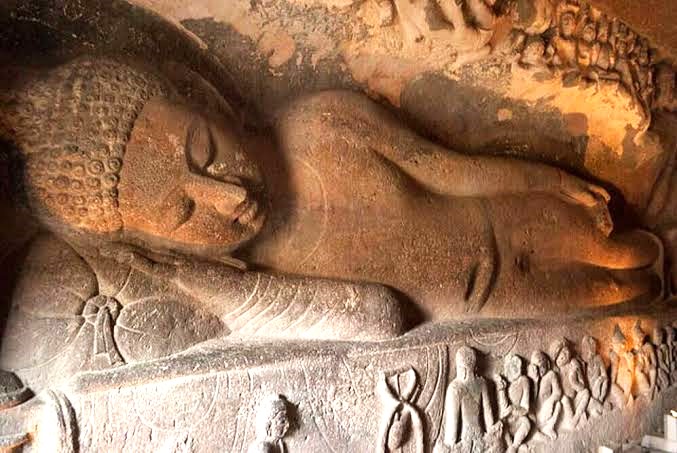
A stunning chaitya (prayer hall) featuring a massive reclining Buddha sculpture depicting the Mahaparinirvana, or final liberation.
🏺 Cave 19
Known for its intricately carved facade and beautifully proportioned stupa.
📸 Viewpoint Trek
A short uphill walk to the viewpoint across the gorge offers the single best panoramic photograph of the entire horseshoe-shaped cave complex — don't skip it.
🚶 Guided Heritage Walks
Licensed guides at the site bring the carvings and paintings to life with context you simply won't get wandering alone.
🎧 Visitor Centre & Light-and-Sound Show
A great starting point to understand the history before you explore the caves themselves.
🍲 Local Culture and Cuisine
The region around Ajanta sits in the heart of the Marathwada area of Maharashtra, known for its warm hospitality and hearty, flavor-packed food. Once you're done exploring, treat yourself to authentic Maharashtrian thalis featuring puran poli (a sweet stuffed flatbread), spicy misal pav, and the fiery, iconic Aurangabadi naan-qorma, a local specialty blending Mughlai and Marathi influences. Nearby Aurangabad is also known for its Himroo textile weaving, a centuries-old craft producing silk-and-cotton fabrics that make for a beautiful, meaningful souvenir of your trip.
🌤️ Best Time to Visit
The ideal time to visit Ajanta Caves is during the rainy and winter months, roughly between July and March, when the surrounding hills turn lush green and temperatures stay comfortable for exploring. Summers can get punishingly hot in this part of Maharashtra, so if you don't mind the heat, the off-season does offer thinner crowds — but for the best overall experience, winter (October to February) is hard to beat. The caves are typically open from 9:00 AM to 5:30 PM, and they remain closed on Mondays, so plan your visit accordingly.
🚗 How to Reach Ajanta Caves
By Air: The nearest airport is Chhatrapati Sambhaji Maharaj Airport in Aurangabad, located around 100 km from the caves and well connected with direct and connecting flights to Mumbai, Delhi, and other major Indian cities. From the airport, taxis and pre-arranged cabs are the most convenient way to reach Ajanta. International travelers typically fly into Mumbai first and take a connecting flight or road journey onward.
By Rail: Jalgaon Junction is the nearest railway station, located about 60 km from the caves, and is a major railhead on the Central Railway line with frequent fast and superfast trains connecting it to Mumbai, Delhi, Pune, and Bhopal. Alternatively, Aurangabad Railway Station, around 100–120 km away, is also well connected to major cities including Mumbai, Pune, Delhi, Hyderabad, and Chennai. From either station, taxis and buses are readily available for the onward journey to Ajanta.
By Road: Maharashtra's highway network makes Ajanta easily reachable by road from across the state and beyond. The Mumbai–Aurangabad highway connects smoothly to cities like Pune, Indore, Shirdi, and Ahmedabad. From Aurangabad, both state-run MSRTC buses and private operators run regular and AC Volvo services directly to Ajanta, making it a comfortable and budget-friendly option if you'd rather skip driving yourself.
💡 Travel Tips for First-Timers
- Wear comfortable, grippy footwear — there's a fair bit of walking and some uneven stone steps inside the caves.
- Photography without flash is usually allowed, but flash photography can damage the delicate ancient paintings, so always check current rules at the entrance.
- Carry water and a hat, especially if visiting outside the cooler months — there's limited shade along the walking paths.
- Hire a licensed guide at the entrance; the historical context dramatically improves the experience.
- Visit early in the day to avoid both the heat and the peak tourist crowds, particularly on weekends.
- Combine it with Ellora Caves, located about 100 km away, if your itinerary allows — though they showcase different art and require a separate full day.
📍 Nearby Places to Explore
- Ellora Caves – Another UNESCO World Heritage Site about 100 km away, featuring an extraordinary mix of Buddhist, Hindu, and Jain rock-cut temples, including the awe-inspiring Kailasa Temple.
- Bibi Ka Maqbara – Often called the "Mini Taj Mahal," this elegant mausoleum in Aurangabad is a beautiful detour.
- Daulatabad Fort – A massive medieval hill fortress with fascinating defensive architecture, located between Aurangabad and Ellora.
- Panchakki (Water Mill) – A unique 17th-century water-powered mill and serene garden complex in Aurangabad.
- Grishneshwar Temple – One of the twelve revered Jyotirlinga shrines dedicated to Lord Shiva, located near Ellora.
❤️ Why You Should Visit Ajanta Caves
Because some places don't just show you history — they let you feel it. Ajanta isn't a museum behind glass; it's a living, breathing testament to human creativity, faith, and patience, carved directly into the bones of a mountain by people who believed their work mattered enough to last forever. And it has.
Whether you're a history enthusiast, an art lover, a spiritual traveler, or simply someone chasing places that leave a mark on you, Ajanta delivers an experience that's equal parts humbling and inspiring. Few destinations in India — or the world — offer this much beauty, mystery, and meaning in a single visit.
So lace up your walking shoes, bring your curiosity, and let two thousand years of artistry tell you a story carved in stone