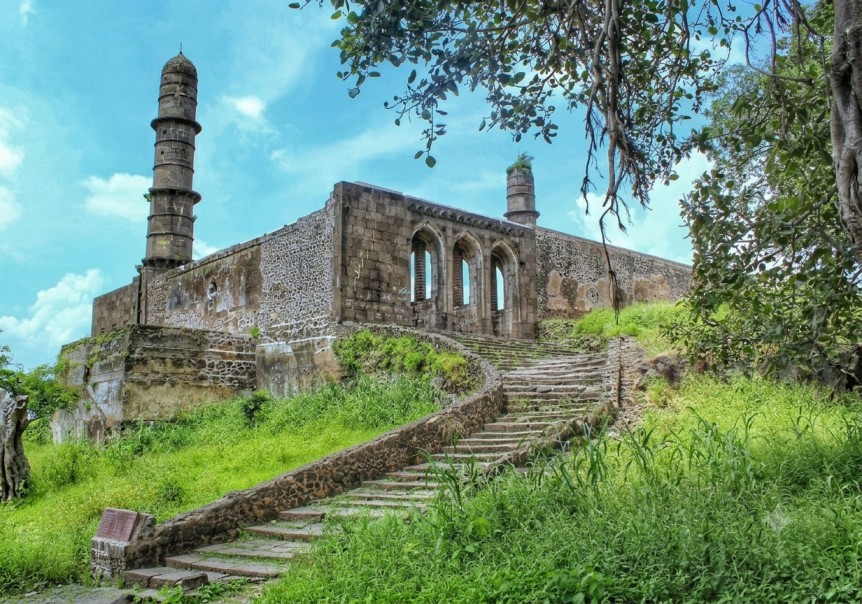
Asirgarh Fort - A Gateway To The Deccan
Picture a fortress so formidable that it was never once defeated in open battle — only ever taken through trickery, deceit, and conspiracy. That's Asirgarh for you, a stronghold perched high in the Satpura Range, standing guard over the gateway between northern India and the Deccan plateau for over six centuries. Located about 20 km north of Burhanpur in Madhya Pradesh, this weathered giant has earned nicknames like the "Gibraltar of India" and the "Key to the Deccan," and once you stand atop its ramparts, you'll understand exactly why
<!DOCTYPE html>
<html lang="en">
<head>
<meta charset="UTF-8">
<meta name="viewport" content="width=device-width, initial-scale=1.0">
<title>Asirgarh Fort – The Key to the Deccan</title>
<style>
:root{
--primary:#1f4d3a;
--secondary:#8b6b3f;
--accent:#d9c29c;
--light:#f8f6f1;
--dark:#222;
--card:#ffffff;
--border:#d4c4a4;
}
*{
margin:0;
padding:0;
box-sizing:border-box;
}
body{
font-family:'Segoe UI',Tahoma,Geneva,Verdana,sans-serif;
background:var(--light);
color:var(--dark);
line-height:1.9;
}
.container{
width:min(1200px,92%);
margin:auto;
padding:40px 0;
}
.hero{
background:linear-gradient(135deg,var(--primary),#2e6d54);
color:#fff;
padding:50px;
border-radius:18px;
margin-bottom:35px;
box-shadow:0 10px 30px rgba(0,0,0,.15);
}
.hero h1{
font-size:clamp(2rem,4vw,3rem);
margin-bottom:15px;
}
.section{
margin-bottom:30px;
}
.section h2{
color:var(--primary);
margin-bottom:18px;
border-bottom:3px solid var(--accent);
padding-bottom:10px;
font-size:1.8rem;
}
.section p{
text-align:justify;
margin-bottom:18px;
}
.callout{
background:var(--card);
border-left:6px solid var(--secondary);
padding:22px;
margin:22px 0;
border-radius:12px;
box-shadow:0 4px 12px rgba(0,0,0,.08);
}
.info-grid{
display:grid;
grid-template-columns:repeat(auto-fit,minmax(250px,1fr));
gap:20px;
margin:25px 0;
}
.info-card{
background:#fff;
border:1px solid var(--border);
border-radius:14px;
padding:22px;
box-shadow:0 3px 10px rgba(0,0,0,.05);
}
.info-card h3{
color:var(--secondary);
margin-bottom:10px;
}
.travel-grid{
display:grid;
grid-template-columns:repeat(auto-fit,minmax(300px,1fr));
gap:20px;
margin-top:20px;
}
.travel-card{
background:#fff;
padding:22px;
border-radius:14px;
border-top:5px solid var(--primary);
box-shadow:0 4px 12px rgba(0,0,0,.08);
}
.highlight{
background:#fff;
border-left:5px solid var(--primary);
padding:20px;
margin:20px 0;
border-radius:12px;
}
footer{
margin-top:40px;
text-align:center;
color:#666;
font-size:.95rem;
}
@media(max-width:768px){
.hero{
padding:30px;
}
}
</style>
</head>
<body>
<div class="container">
<div class="hero">
<h1>🏰 Asirgarh Fort, Madhya Pradesh – The Key to the Deccan</h1>
</div>
<section class="section">
<div class="callout">
<p>Picture a fortress so formidable that it was never once defeated in open battle — only ever taken through trickery, deceit, and conspiracy. That's Asirgarh for you, a stronghold perched high in the Satpura Range, standing guard over the gateway between northern India and the Deccan plateau for over six centuries. Located about 20 km north of Burhanpur in Madhya Pradesh, this weathered giant has earned nicknames like the "Gibraltar of India" and the "Key to the Deccan," and once you stand atop its ramparts, you'll understand exactly why.</p>
</div>
</section>
<section class="section">
<h2>📜 A Little Bit of History First</h2>
<p>Asirgarh's story reads like something out of a legend — because in many ways, it is one. history suggests the fort was built by a herdsman-turned-king named Asa Ahir, later strengthened by the Farooqi rulers, though older folklore ties the hill to the Mahabharata itself, with believers claiming the warrior Ashwatthama still visits its Shiva temple to pray.</p>
<div class="callout">
<p>The fort's first true betrayal came in 1399, when Nasir Khan of the Faruqi dynasty asked Asa Ahir to shelter women of his family from danger. Asa Ahir agreed and opened his gates — but the palanquins carried armed soldiers instead, and the fort fell not to swords on a battlefield, but to a lie. From there, the Faruqi dynasty ruled for generations, until Akbar besieged and captured the fort on 17 January 1601, again through trickery rather than force. Centuries later, history repeated itself: the British took the fort's outer town in 1803, and its garrison surrendered shortly after, and during the Third Anglo-Maratha War, Asirgarh stood as the last Maratha holdout before falling to a massive British assault in April 1819.</p>
</div>
</section>
<section class="section">
<h2>🌄 The Attractions That Will Leave You Breathless</h2>
<p>Asirgarh isn't a single fort but three layered together — Malaygarh, Kamargarh, and the inner citadel of Asirgarh itself — each ring designed to slow down an attacker who somehow made it past the last. Climbing through them feels like peeling back centuries one gate at a time.</p>
<div class="info-grid">
<div class="info-card">
<h3>🛕 Gupteshwar Mahadev Temple</h3>
<p>Inside, the Gupteshwar Mahadev Temple stands as one of the fort's most striking sights, built in a style reminiscent of ancient South Indian shrines and still drawing devotees who believe its sanctity has never faded.</p>
</div>
<div class="info-card">
<h3>🕌 Jama Masjid</h3>
<p>Close by, the Jama Masjid, constructed in solid black stone, reflects the grandeur of the Mughal era, and the presence of a mosque, a temple, and even a gurudwara within the same walls speaks to the fort's layered, multi-faith past.</p>
</div>
<div class="info-card">
<h3>👑 Mughal Legacy</h3>
<p>History buffs will want to linger at the spots tied to the Mughal court's darker chapters — this is the fort where Emperor Jahangir is said to have imprisoned his blinded son Khusrau, and where, generations later, Aurangzeb based much of his long Deccan campaign.</p>
</div>
<div class="info-card">
<h3>💧 Water Systems & Views</h3>
<p>The fort also held three man-made ponds for water supply, a reminder of just how self-sufficient it needed to be during long sieges. From the summit, the views stretch across the Tapti valley in every direction — the kind of view that makes the fort's old nickname, "Key to the Deccan," feel entirely earned.</p>
</div>
</div>
</section>
<section class="section">
<h2>🎭 Culture, People, and Food</h2>
<div class="highlight">
<p>Burhanpur, the town below the fort, carries its own rich character — a meeting point of Mughal heritage, Sufi shrines, and Maratha-era memory. The town is closely tied to traditional Burhanpur silk weaving, a craft that flourished under Mughal patronage and still survives in pockets of the old city.</p>
</div>
<div class="highlight">
<p>For food, expect hearty Central Indian and Mughlai-influenced fare — biryani, kebabs, and rich curries — alongside simpler regional staples like dal-bafla and poha. Burhanpur's old bazaars are worth wandering for a sense of the town's everyday rhythm before heading up to the fort.</p>
</div>
</section>
<section class="section">
<h2>🌤️ Best Time to Visit</h2>
<div class="callout">
<p>The fort can technically be visited year-round, but the best time to visit is between October and March, when the weather is cool enough for the steep climbs and long walks the site demands. Summers turn brutally hot, and the surrounding hills can feel punishing by midday.</p>
</div>
</section>
<section class="section">
<h2>🚗 How to Get There</h2>
<div class="travel-grid">
<div class="travel-card">
<h3>✈️ By Air</h3>
<p>By Air: The nearest airport is Devi Ahilyabai Holkar Airport in Indore, well connected to major Indian cities, from where taxis or buses run toward Burhanpur.</p>
</div>
<div class="travel-card">
<h3>🚆 By Rail</h3>
<p>By Rail: Burhanpur Railway Station is the most convenient stop, connected to Indore, Bhopal, and other major junctions, with Asirgarh roughly 20 km further north.</p>
</div>
<div class="travel-card">
<h3>🛣️ By Road</h3>
<p>By Road: Burhanpur sits on State Highway 27, linking it to Indore, and from the town, taxis or autos carry visitors up to the fort. The final stretch involves a steep, winding climb best tackled with sturdy footwear.</p>
</div>
</div>
</section>
<section class="section">
<h2>📍 Nearby Places Worth Exploring</h2>
<div class="callout">
<p>Burhanpur itself rewards a slow wander — the Dargah-e-Hakimi, a striking white marble shrine sacred to Dawoodi Bohra Muslims, sits nearby and is sometimes called "Chota Amreeka" for its pristine upkeep. History lovers can also explore Burhanpur's old Mughal-era mosques and step-wells scattered through the town.</p>
</div>
</section>
<section class="section">
<h2>🧳 A Few Travel Tips Before You Go</h2>
<div class="info-grid">
<div class="info-card">
<p>Wear sturdy shoes — the climb up Asirgarh is steep and uneven in places.</p>
</div>
<div class="info-card">
<p>Carry water, as the route offers little shade once you're past the lower gates.</p>
</div>
<div class="info-card">
<p>The fort has no facilities for overnight stays, so plan to base yourself in Burhanpur.</p>
</div>
<div class="info-card">
<p>Hiring a local guide adds enormous value here, since much of the fort's most fascinating history — the betrayals, the sieges, the legends — isn't written on any plaque.</p>
</div>
</div>
</section>
<section class="section">
<h2>⭐ Why You Simply Must Visit Asirgarh Fort</h2>
<div class="callout">
<p>Some forts are remembered for the battles they won. Asirgarh is remembered for never losing one — and falling anyway, again and again, to deception instead of swords. It's a place where Rajput grit, Mughal ambition, and Maratha defiance all left their mark on the same crumbling stone. For anyone drawn to layered history, quiet legend, and views that stretch across an entire valley, Asirgarh Fort offers a journey that few monuments in Central India can match.</p>
</div>
</section>
</div>
</body>
</html>