Black Taj Mahal: The Mystery That Still Haunts Agra
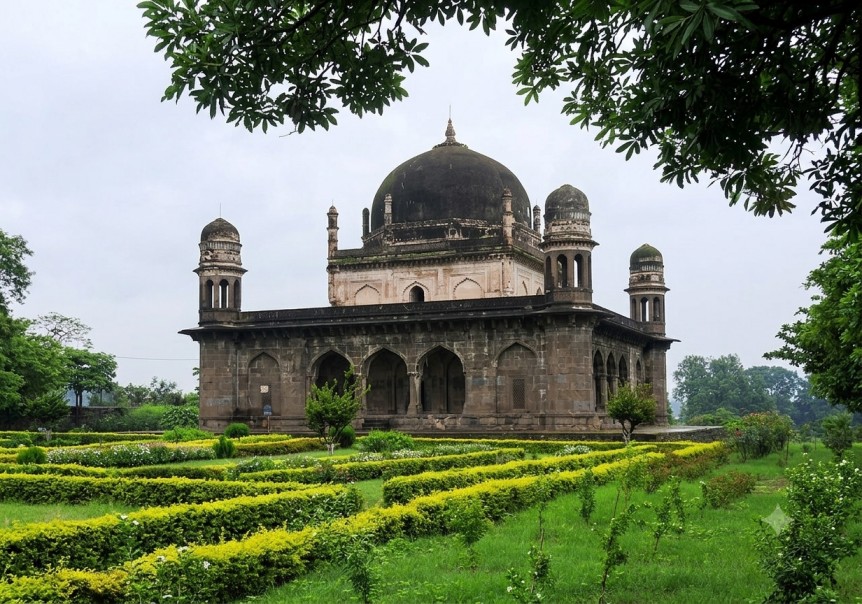
Imagine standing before a monument draped in dark stone, its dome rising against a pale sky, its silence holding centuries of untold stories. No jostling crowds, no selfie sticks, no souvenir hawkers — just you, the wind, the sound of the nearby river, and a piece of Mughal history that most of India has somehow forgotten. Welcome to the Black Taj Mahal of Burhanpur — a gem hiding in plain sight in the heart of Madhya Pradesh, waiting for those curious enough to seek it out.
🖤 The Black Taj Mahal, Burhanpur — India's Dark and Forgotten Wonder
Imagine standing before a monument draped in dark stone, its dome rising against a pale sky, its silence holding centuries of untold stories. No jostling crowds, no selfie sticks, no souvenir hawkers — just you, the wind, the sound of the nearby river, and a piece of Mughal history that most of India has somehow forgotten. Welcome to the Black Taj Mahal of Burhanpur — a gem hiding in plain sight in the heart of Madhya Pradesh, waiting for those curious enough to seek it out.
📜 A Little Bit of History First
When the Mughal emperor Shah Jahan came to Burhanpur on a military campaign, he brought his beloved wife Mumtaz Mahal along. Mumtaz had three deliveries in Burhanpur and died giving birth to their fourteenth child. For six months, Mumtaz was buried in Burhanpur itself — in a garden known as the Zainabad Garden — before her remains were moved to Agra. Shah Jahan wished that the Taj Mahal should be built in Burhanpur itself, but due to the presence of termites in the soil and the low water level of the River Tapti, the architect of the time advised against it. The design, however, was conceived here — making Burhanpur the spiritual birthplace of the Taj Mahal.
The brave soldier Shah Nawaz Khan, born in Ahmedabad, was the eldest son of Abdur Rahim Khan-i-Khana, the commander of Burhanpur. He was bestowed the title of Shah Nawaz after contributing to Jahangir's victory in several battles in the south, and was also conferred the prestigious post of Panch Hazari Mansabdaar. Shah Nawaz Khan died at the early age of 44. Jahangir was more distraught than his own father at the untimely death of this loyal and brave soldier. As a tribute to this young hero, Jahangir got a mausoleum of black stone constructed on the banks of the Badi Utavali River.
It was constructed between 1622 and 1623 AD and is referred to locally as the Kala Taj Mahal. The building earned its evocative name simply from its material — it is made of locally found black-coloured stone, hence the name Black Taj.
🏛️ The Architecture That Will Leave You Speechless
This is not a copy of the Taj — it is a precursor to it, a dark mirror of that great love story.
The tomb's layout adheres to the Mughal penchant for symmetry. The main mausoleum is surrounded by a well-maintained garden that follows the Charbagh (four-part garden) pattern, symbolising paradise in Islamic culture. The monument is square in shape with a central dome and has hexagonal minarets on the four corners with arched verandas running all around it. Inside, the walls of the dome have beautiful paintings. The tomb is also adorned with elaborate carvings and inlays, showcasing floral patterns and calligraphy. The design and domes, which are well-lit and airy, are exactly like those of the Taj Mahal, giving it the name 'Black Taj'. The grave of Shah Nawaz Khan lies in the crypt of the mausoleum, similar to the grave of Queen Mumtaz which is also kept in the crypt of the Taj Mahal. The sun rays fall on Shah Nawaz Khan's tomb just like they fall on the tomb of Queen Mumtaz in the Taj Mahal.
Considered architecturally special among Mughal monuments, the painting and workmanship of the mausoleum, despite its age, is still in pristine condition.
Next to it is a ruined monument called Paandan Mahal, so named because it is shaped like a paandan (betel leaf box). It sits quietly beside the Black Taj, a crumbling echo of a grander past.
✨ What Makes It Truly Special
The tomb is a site of local reverence, with annual commemorations and cultural events in its vicinity that often include traditional music, dance, and storytelling, keeping the legacy of Shah Nawaz Khan alive.
Though not as famous as the Taj Mahal in Agra, the Black Taj Mahal attracts a steady stream of tourists, historians, and architecture enthusiasts. It offers a quieter, more intimate experience, allowing visitors to explore its beauty without the crowds typical of more famous sites. That quietude is, in itself, the gift. You can stand before the dome and actually hear your own thoughts — a rare luxury in today's frenzied travel culture.
🌤️ Best Time to Visit
The cooler months from October to February are ideal, when Burhanpur's weather is mild and pleasant. Avoid peak summer (April–June) as the Deccan heat can be fierce. Monsoon (July–September) brings lush greenery to the gardens surrounding the tomb, making it strikingly beautiful if you don't mind occasional rains.
Timings: 9 AM to 4 PM, closed on Wednesdays. Entry is free.
🚗 How to Get There
✈️ By Air
The nearest airport is Indore (Devi Ahilya Bai Holkar Airport). From Indore, Burhanpur is about 3–4 hours by road or rail.
🚆 By Rail
Burhanpur falls on the Mumbai–Delhi and Mumbai–Allahabad Central Railway routes, with direct rail connectivity to cities like Mumbai, Delhi, Agra, Varanasi, Gwalior, Jabalpur, Jhansi, and Bhopal. The Black Taj is about 7 km from Burhanpur Railway Station — an easy auto-rickshaw ride away.
🛣️ By Road
Being close to the Maharashtra state border, there are very good roads to Bhusawal, Jalgaon, and Aurangabad. State buses and private cabs connect Burhanpur well to neighbouring cities.
📍 Why You Simply Must Visit
India is full of monuments. But very few carry the weight of being the template for one of the world's greatest wonders. The Black Taj Mahal of Burhanpur is not a footnote in history — it is a chapter that was quietly skipped. Every arch, every carved floral pattern, every sunbeam that falls precisely on the crypt inside tells a story of Mughal brilliance, of love, of loss, and of a city that shaped an empire's greatest masterpiece.
Come here not to compare it to Agra's Taj — come here to understand it. Come for the stillness, the dark stone catching afternoon light, and the humbling realisation that some of the world's most profound places are the ones the crowds have yet to discover