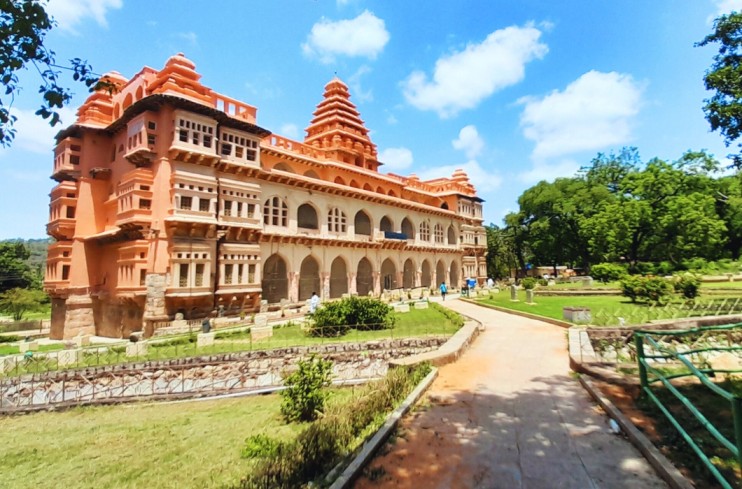
Chandragiri Fort - Echoes Of a Glorious Empire
Imagine standing atop a granite hill, the wind whispering centuries-old secrets in your ear, as you gaze out over the ancient city of Tirupati below. Before you rise the proud walls of Chandragiri Fort — not merely a structure of stone, but a living chronicle of ambition, empire, and resilience. Perched on a rocky hill about 11 kilometres from Tirupati in Andhra Pradesh, this magnificent fortress has silently witnessed the rise and fall of kingdoms, the footsteps of emperors, and the passage of time itself. Once you stand within these walls, the past doesn't feel distant at all — it feels like it's breathing right beside you.
📜 A Little Bit of History First
The story of Chandragiri Fort stretches back over a thousand years. Built around the 11th century by the Yadava Naidu kings, the fort initially served as a modest stronghold. However, it rose to true prominence in the 16th and 17th centuries when it became one of the last bastions of the mighty Vijayanagara Empire. After the catastrophic Battle of Talikota in 1565, when the great capital of Hampi was devastated, the royal court shifted south — and Chandragiri became the new seat of power. It was here, in 1639, that a historic moment unfolded: the Vijayanagara king granted the British East India Company permission to establish a trading post on the coast — a transaction that quietly led to the founding of Madras, the city we know today as Chennai. That single decision, made within these very walls, changed the course of Indian history.
✨ The Attractions That Will Leave You Breathless
🏛️ Raja Mahal
Raja Mahal is the crown jewel of the fort complex — a beautifully preserved palace blending Indo-Saracenic and Rajput architectural styles in a way that feels both grand and intimate. Its arched gateways, ornate pillars, and intricately carved ceilings speak of a royal life lived with extraordinary elegance. Today, it houses an Archaeological Museum displaying coins, sculptures, and artefacts that bring the Vijayanagara era vividly to life.
👑 Rani Mahal
Rani Mahal, the queen's palace, stands nearby — quieter and more graceful, its architecture a testament to the refined tastes of the royal household. Together, the two palaces paint a compelling portrait of life at the Vijayanagara court in its twilight years.
🌄 Fort Ramparts & Views
The fort's ramparts offer sweeping views of the surrounding plains and the distant Tirupati Hills. Climb to the highest point at dusk and you'll be rewarded with a golden panorama that stretches as far as the eye can see — the kind of view that makes you feel briefly, magnificently, at the centre of the universe.
🎭 Sound and Light Show
The Sound and Light Show held each evening is an experience not to be missed. As darkness falls over the ancient stones, a dramatic narration of the fort's history unfolds in light and sound, transporting visitors back through centuries of glory, conflict, and legend.
🍛 Culture, People, and Food
Chandragiri sits in the cultural heartland of Andhra Pradesh, where Telugu tradition runs deep and warmly. The town itself is modest and unhurried — its pace a gentle contrast to the grandeur of the fort above. Locals are friendly and proud of their heritage. Being close to Tirupati, the area carries that distinctive devotional energy — jasmine and incense in the air, pilgrims and everyday life weaving naturally together. For food, hearty Andhra meals await: fiery chutneys, crispy pesarattu, tangy tamarind rice, and freshly made temple town sweets. Pull up a chair at a local mess and let the food do the talking.
🌤️ Best Time to Visit
The ideal time is between October and March, when the weather is cool, clear, and perfect for exploring the outdoor fort complex. Summers (April–June) can be intensely hot, so early morning visits are advisable. The monsoon (July–September) softens the landscape beautifully, though the rocky hillside paths can become slippery.
🚗 How to Get There
✈️ By Air
By Air: The nearest airport is Tirupati Airport (TIR), just 15 km away, with flights to Hyderabad, Chennai, and Bengaluru. Taxis and autos to Chandragiri are readily available.
🚆 By Rail
By Rail: Tirupati Railway Station is well-connected to Chennai, Hyderabad, Bengaluru, and Delhi. Chandragiri is just 11 km from the station — a short auto or taxi ride.
🛣️ By Road
By Road: Easily accessible via NH716 from Tirupati. State buses, private cabs, and autos make regular trips. If driving, the route is straightforward and well-signposted.
📍 Nearby Places Worth Exploring
A visit to Chandragiri pairs beautifully with a pilgrimage to the Tirumala Venkateswara Temple, one of the most visited religious sites in the world, just 20 km away. The Sri Govindarajaswamy Temple in Tirupati town is another architectural gem. History enthusiasts should also head to Srikalahasti Temple (about 36 km away), a masterpiece of Dravidian architecture dedicated to Lord Shiva.
🎒 A Few Travel Tips Before You Go
Wear comfortable, sturdy footwear — the fort involves walking over uneven terrain. Carry water and sunscreen in warmer months. The fort is open from 9 AM to 5 PM, so plan accordingly. The Sound and Light Show begins after sunset — check local timings before your visit. Entry fees are nominal, and the museum inside is a must even if you're short on time.
⭐ Why You Simply Must Visit Chandragiri Fort
Some places are merely old. Chandragiri Fort is ancient in the best possible way — alive with stories, thick with atmosphere, and generous in the way it opens its history to those willing to listen. Standing within its weathered walls, you are standing at the intersection of empires, at the very spot where decisions were made that shaped a nation. Whether you're a history lover, a photographer chasing dramatic silhouettes against the Andhra sky, or simply someone who finds magic in old stones and forgotten corridors — Chandragiri will give you something you didn't know you were looking for. Pack your curiosity, leave your hurry behind, and let this timeless fort remind you that history didn't happen elsewhere, to someone else. It happened here. And some of it, quietly, is still unfolding.