Dabhai Kund: Discover Rajasthan's Hidden Geometric Stepwell
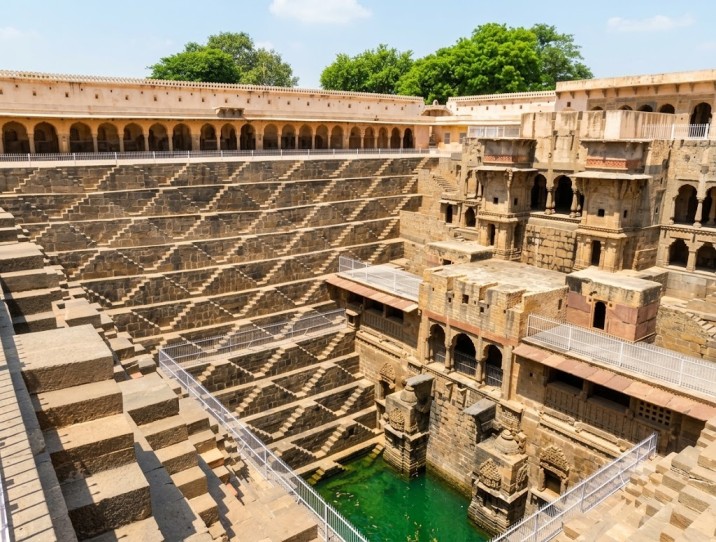
Dabhai Kund stands as one of the most remarkable and lesser-known stepped water tanks in Rajasthan, representing a striking example of the region's extraordinary tradition of monumental water architecture whose deep geometric stepped structure, carved stone platforms, and quiet historical character together create a destination of considerable architectural and engineering interest for travelers seeking to explore beyond the more celebrated stepwells of Bundi and the broader Hadoti region. Situated within the Bundi district of Rajasthan, in the landscape surrounding this town long celebrated for possessing one of the densest concentrations of stepwells and stepped tanks anywhere in India, Dabhai Kund reflects the same deep cultural and practical commitment to water conservation that produced the region's more famous structures, descending in symmetrical tiers of carved stone steps toward the water level below in a design intended to provide reliable access to water across the fluctuating seasonal levels of the region's groundwater table. The destination draws heritage enthusiasts, architecture lovers, and travelers with a particular interest in the vernacular water engineering traditions of Rajasthan, offering an encounter with a structure whose relative obscurity compared to the grander stepwells of Bundi town allows for a quieter and more contemplative engagement with this distinctive regional architectural form.
Dabhai Kund The Quiet Tank
A lesser-known stepped water tank in the Bundi countryside, its symmetrical stone tiers descending toward the water table in quiet, uncrowded tranquility.
Overview
Dabhai Kund stands as one of the most remarkable and lesser-known stepped water tanks in Rajasthan, representing a striking example of the region's extraordinary tradition of monumental water architecture whose deep geometric stepped structure, carved stone platforms, and quiet historical character together create a destination of considerable architectural and engineering interest for travelers seeking to explore beyond the more celebrated stepwells of Bundi and the broader Hadoti region. Situated within the Bundi district of Rajasthan, in the landscape surrounding this town long celebrated for possessing one of the densest concentrations of stepwells and stepped tanks anywhere in India, Dabhai Kund reflects the same deep cultural and practical commitment to water conservation that produced the region's more famous structures, descending in symmetrical tiers of carved stone steps toward the water level below in a design intended to provide reliable access to water across the fluctuating seasonal levels of the region's groundwater table. The destination draws heritage enthusiasts, architecture lovers, and travelers with a particular interest in the vernacular water engineering traditions of Rajasthan, offering an encounter with a structure whose relative obscurity compared to the grander stepwells of Bundi town allows for a quieter and more contemplative engagement with this distinctive regional architectural form.
Why Visit Dabhai Kund
The recognition of Dabhai Kund as part of the broader and remarkable tradition of stepped water architecture in the Bundi region reflects the importance of understanding this destination within the wider context of Rajasthan's historic response to the challenge of water scarcity in an arid landscape. One of the most compelling reasons to visit is the opportunity to engage with this vernacular architectural tradition away from the more frequently visited and increasingly crowded stepwells of central Bundi, allowing for a slower and more reflective appreciation of the geometric precision and engineering logic that defines these remarkable structures. The descending tiers of stone steps, narrowing as they approach the water level, demonstrate the same practical hydrological understanding found throughout the region's stepwell tradition, allowing access to water at varying depths depending on the season and the level of the water table at any given time of year. The combination of architectural interest, relative tranquility, and the opportunity to explore a lesser-known example of this distinctly Rajasthani building tradition further strengthens the appeal of Dabhai Kund for travelers with a genuine curiosity about the region's heritage beyond its most famous and heavily visited landmarks.
💧 Built for Water Scarcity
Dabhai Kund reflects Rajasthan's historic response to the challenge of water scarcity in an arid landscape, its descending tiers allowing access to water at varying depths depending on the season and the level of the water table.
Key Highlights Within the Area
The symmetrical descending stone steps of Dabhai Kund stand out as the principal architectural feature of the site, their geometric regularity creating a visual rhythm as the structure narrows toward the water level far below, characteristic of the broader stepwell tradition found throughout the Bundi region. The carved stone platforms and supporting structures along the descent offer points of interest for those examining the construction techniques and structural logic employed by the builders of these remarkable water tanks. The quieter and less commercialized atmosphere surrounding Dabhai Kund, compared to the more prominent stepwells within Bundi town itself, allows visitors a more contemplative and unhurried experience of the structure and its surrounding landscape, offering a glimpse into the everyday and practical role that such tanks played in the life of the surrounding rural and town communities across generations.
🌾 A Contemplative Atmosphere
The quieter and less commercialized atmosphere surrounding Dabhai Kund allows visitors a more contemplative and unhurried experience, offering a glimpse into the everyday and practical role such tanks played across generations.
Activities
Exploring the descending stepped architecture of Dabhai Kund and examining its construction at close quarters is the primary activity for visitors, offering an opportunity to appreciate the engineering and architectural traditions of Rajasthani water structures away from more crowded sites. Photography of the geometric stepped patterns, particularly in the soft light of early morning, is a rewarding pursuit for those interested in documenting the region's distinctive stepwell architecture.
Trip at a Glance
Best Time to Visit
The most favorable period to visit Dabhai Kund is from October to March, when the pleasant winter temperatures of Rajasthan make exploring the site and the surrounding Bundi region comfortable and enjoyable.
Connectivity
Dabhai Kund is situated within the Bundi district of Rajasthan, accessible from Bundi town, which serves as the most practical base for exploring the structure alongside the region's other celebrated stepwells. Bundi is connected by road to Kota, situated approximately 35 kilometres away and serving as the nearest major railway junction with regular services from Delhi, Mumbai, and Jaipur, making Dabhai Kund a rewarding addition to a broader heritage itinerary focused on the remarkable stepwell architecture of the Bundi region.