Daulatabad : Where Unbreakable Defenses Guard Unbreakable Spirit
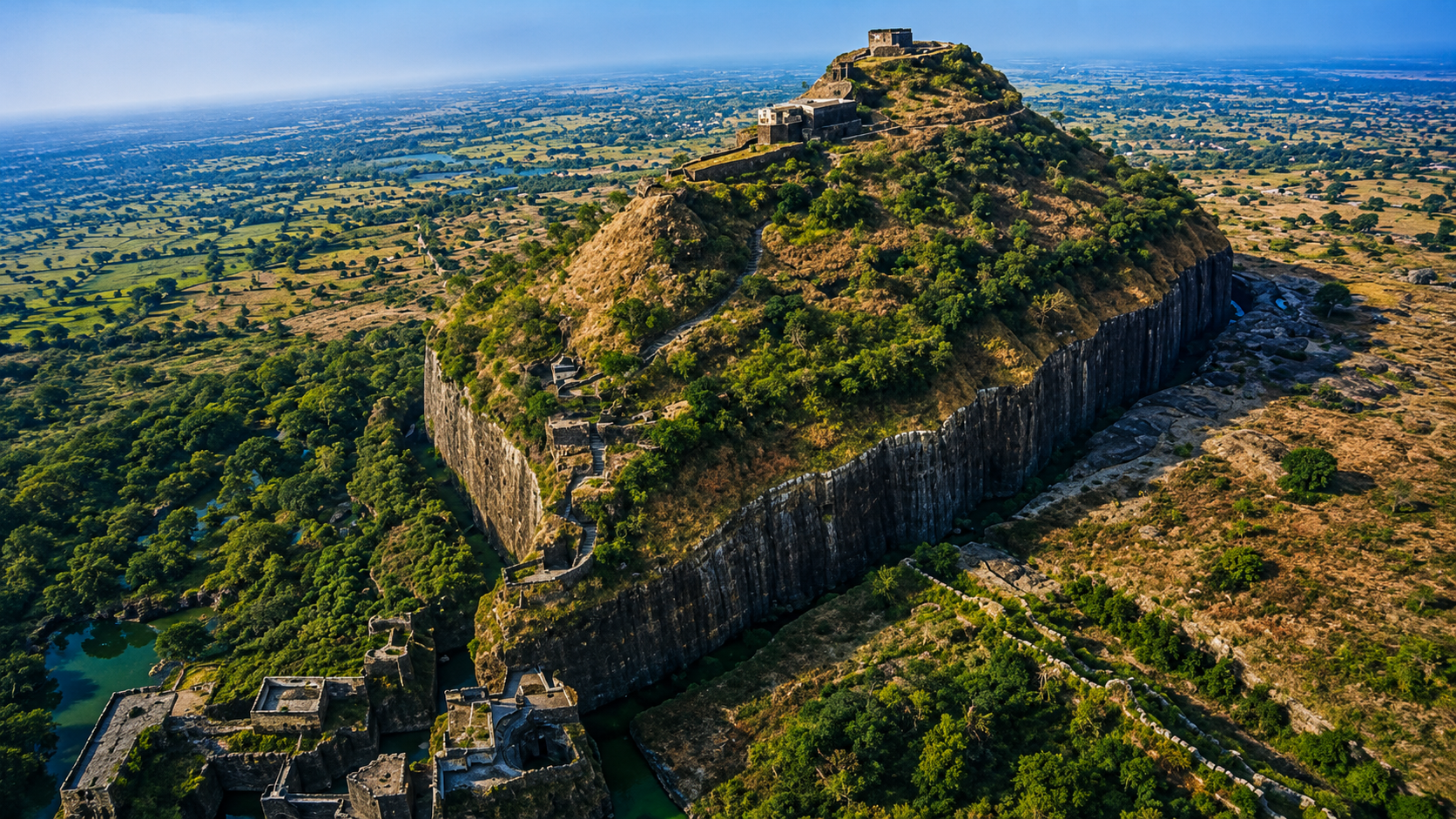
Imagine approaching a fortress so formidably positioned that it rises like a colossal stone sentinel from the plains, its defenses so ingeniously designed that no enemy army has ever breached it through warfare. A conical hill towers above you, surrounded by concentric rings of walls that seem to defy gravity and assault simultaneously. The air carries the weight of centuries—a place where strategies were hatched, where empires clashed, and where military engineering reached heights of sophistication that still astound modern defense strategists. This is Daulatabad Fort in Maharashtra—one of India's most impregnable medieval fortresses, located near Aurangabad, standing as a testament to architectural genius and strategic brilliance. Originally called Devagiri and built by the Yadava dynasty in the 12th century, this fort was renamed Daulatabad—meaning "Abode of Wealth"—in the 14th century when Muhammad bin Tughlak of the Delhi Sultanate forcibly relocated his entire capital here. What makes Daulatabad truly extraordinary is that despite centuries of siege attempts and military campaigns, no army has ever conquered it through warfare—its defenses were simply too formidable. Once you stand before this mountain-like fortress, you understand why this place has inspired both awe and fear in the hearts of warriors and rulers for nearly a thousand years.
🏰 Daulatabad Fort
⚔️ Where Unbreakable Defenses Guard Unbreakable Spirit
✨ Introduction
Imagine approaching a fortress so formidably positioned that it rises like a colossal stone sentinel from the plains, its defenses so ingeniously designed that no enemy army has ever breached it through warfare. A conical hill towers above you, surrounded by concentric rings of walls that seem to defy gravity and assault simultaneously. The air carries the weight of centuries—a place where strategies were hatched, where empires clashed, and where military engineering reached heights of sophistication that still astound modern defense strategists. This is Daulatabad Fort in Maharashtra—one of India's most impregnable medieval fortresses, located near Aurangabad, standing as a testament to architectural genius and strategic brilliance. Originally called Devagiri and built by the Yadava dynasty in the 12th century, this fort was renamed Daulatabad—meaning "Abode of Wealth"—in the 14th century when Muhammad bin Tughlak of the Delhi Sultanate forcibly relocated his entire capital here. What makes Daulatabad truly extraordinary is that despite centuries of siege attempts and military campaigns, no army has ever conquered it through warfare—its defenses were simply too formidable. Once you stand before this mountain-like fortress, you understand why this place has inspired both awe and fear in the hearts of warriors and rulers for nearly a thousand years.
📜 The Fortress That Defied Conquest – 1187 and Beyond
Daulatabad's story begins in 1187 when the Yadava dynasty of the Deccan constructed this fortress as their capital. Originally named Devagiri—meaning "Hill of the Gods"—the fort was built on a naturally occurring conical hill, a geographical advantage that the Yadava builders exploited brilliantly. For over a century, Devagiri thrived as the capital of a powerful kingdom, its wealth flowing from trade routes and agricultural prosperity.
The fort's destiny changed dramatically in 1327 when Muhammad bin Tughlak, the ambitious and controversial Sultan of Delhi, captured it and renamed it Daulatabad, attempting to shift the capital of the Delhi Sultanate from Delhi to this location. Tughlak's attempt to move an entire empire—administrative machinery, population, treasuries—to this remote location was audacious but ultimately failed. However, the fort remained strategically important for centuries, changing hands between various dynasties including the Bahmani Sultanate, the Nizams of Hyderabad, and finally the British during colonial rule.
What's historically significant about Daulatabad is not the number of successful conquests but the absolute absence of them. While the fort changed rulers through negotiations and political maneuvering, no military force ever breached its defenses through direct assault. This remarkable record speaks volumes about the engineering brilliance embedded in its design. Warriors respected Daulatabad not because they had conquered it, but because they understood the futility of trying.
🏛️ The Architecture That Defies Assault
Standing before Daulatabad Fort, your first impression is of sheer, overwhelming defensive genius. The fort occupies a conical hill approximately 200 meters high, utilizing natural topography as its primary defense. But the human additions to this natural fortress showcase medieval military architecture at its absolute peak.
The fort is defended by Three Concentric Walls, each positioned at different elevations on the hillside. These walls don't simply encircle the hill—they exploit the terrain's natural contours, making each successive ring progressively more difficult to assault. An attacking army would need to breach multiple fortifications while fighting uphill, exhausted and exposed to projectile attacks from defenders positioned above.
The Fortification System is a masterclass in defensive design. Bastions protrude strategically from the walls, allowing defenders to cover all approaches and maintain crossfire. Gun emplacements are positioned to maximize range and coverage. The walls themselves are built from large stone blocks fitted with such precision that they've remained intact for centuries. Crenellations—notches in the top of walls—provide shelter for defenders while allowing them to fire at approaching enemies.
The Moat System surrounding the lowest wall was engineered to be formidable and difficult to cross. Underground passages connect various parts of the fort, allowing rapid troop movement and strategic repositioning. These passages also served as escape routes during siege conditions.
What's architecturally brilliant is how Daulatabad combines multiple defensive layers without sacrificing internal functionality. The fort wasn't just a military fortification—it was a functioning city with palaces, administrative buildings, temples, and residential areas.
🏰 The Treasures Within These Unbreakable Walls
The Chand Minar (Tower of the Moon) is Daulatabad's most iconic structure—a cylindrical tower rising 56 meters with intricate carvings and inscriptions. Built by Muhammad bin Tughlak, this tower served multiple purposes: a watchtower for surveillance, a symbol of power visible for miles, and a minaret for the fort's mosque. The tower's engineering is remarkable—its walls taper as they rise, and internal staircases wind through the structure allowing access to the top.
The Royal Palace Ruins reveal the grandeur of medieval Deccan royalty. Remnants of ornate chambers, decorated courtyards, and intricate stonework showcase the aesthetic refinement that accompanied military functionality. The palace was designed to accommodate royalty while maintaining proximity to defensive structures.
The Cannon Batteries scattered throughout the fort display the weapons that once thundered from these hilltops. Massive cannons sit silently, their barrels still pristine despite centuries of exposure to elements. These weren't mere decorative pieces—they represented cutting-edge military technology of their era.
The Underground Passages and Tunnels are particularly fascinating. Some descend deep into the hillside, reportedly connecting to distant locations. These passages served multiple purposes—water channels, escape routes, storage for provisions during siege conditions, and strategic corridors for troop movement. The engineering required to tunnel through solid rock demonstrates remarkable determination and technical knowledge.
The Baradari (twelve-pillared pavilion) showcases architectural elegance alongside military purpose. Built as a viewing platform, it allowed commanders to observe the surrounding plains and monitor approaching threats.
🛡️ A Fortress That Still Commands Respect
What distinguishes Daulatabad is how thoroughly it maintained its integrity despite never needing to achieve its primary purpose. The fort wasn't destroyed and rebuilt repeatedly like many medieval fortifications. It stood guard, unconquered and unconquerable, for centuries. This continuity allowed it to preserve structures and systems that many other forts lost to conflict and reconstruction.
Walking these ancient walls, exploring the passages, standing atop the Chand Minar gazing across the plains where no army ever dared successfully assault—you feel the weight of history. This fort doesn't inspire awe through tales of dramatic battles but through the profound respect that comes from understanding military genius.
📍 Visitor Information
🌤️ Best Time to Visit
October to March offers ideal weather—cool mornings and pleasant afternoons make exploration comfortable. April to June brings intense heat, though early morning and evening visits are rewarding. Monsoon (July-September) occasionally causes slippery passages but transforms the landscape beautifully.
🚗 How to Get There
Daulatabad Fort is located 15 kilometers from Aurangabad city in Maharashtra. Aurangabad has its own airport with connections to major cities. The fort is easily accessible by taxi, auto-rickshaw, or private car from Aurangabad (30-40 minute drive). It's conveniently located between Aurangabad and the Ajanta and Ellora Caves, making it an easy addition to heritage itineraries.
Plan 4-5 hours to explore Daulatabad comprehensively. The climb is steep and the fort is vast—proper exploration requires time and physical stamina.
🗺️ Nearby Treasures
Ajanta Caves (60 km) showcase Buddhist rock-cut architecture and art. Ellora Caves (30 km) display Hindu, Buddhist, and Jain temples carved into rock. Aurangabad Caves (12 km) offer Buddhist monuments. Bibi Ka Maqbara in Aurangabad showcases Mughal architecture.
💡 A Few Travel Tips
Wear sturdy, comfortable shoes—the terrain is extremely steep and uneven. Carry abundant water and sun protection. The climb is physically demanding; take your time. Photography is permitted throughout. Guides are available and invaluable—they explain the engineering sophistication that makes Daulatabad unique. Early morning visits are ideal for avoiding crowds and heat. The fort has limited facilities; carry snacks and water.
✨ Why You Simply Must Visit Daulatabad Fort
Daulatabad Fort tells a different kind of story—not of conquest through warfare but of defenses so impeccable that conquest became unnecessary. It's where ancient India's military engineering was pushed to remarkable heights, where natural geography and human ingenuity combined to create something nearly impregnable.
Standing atop Chand Minar, gazing across the plains below, you understand that true power sometimes lies not in the ability to destroy but in the confidence that destruction is impossible. Daulatabad whispers this lesson in stone, and once you hear it, you leave transformed—understanding that some monuments inspire through victory, while others inspire through the simple, profound fact that they could never be conquered.