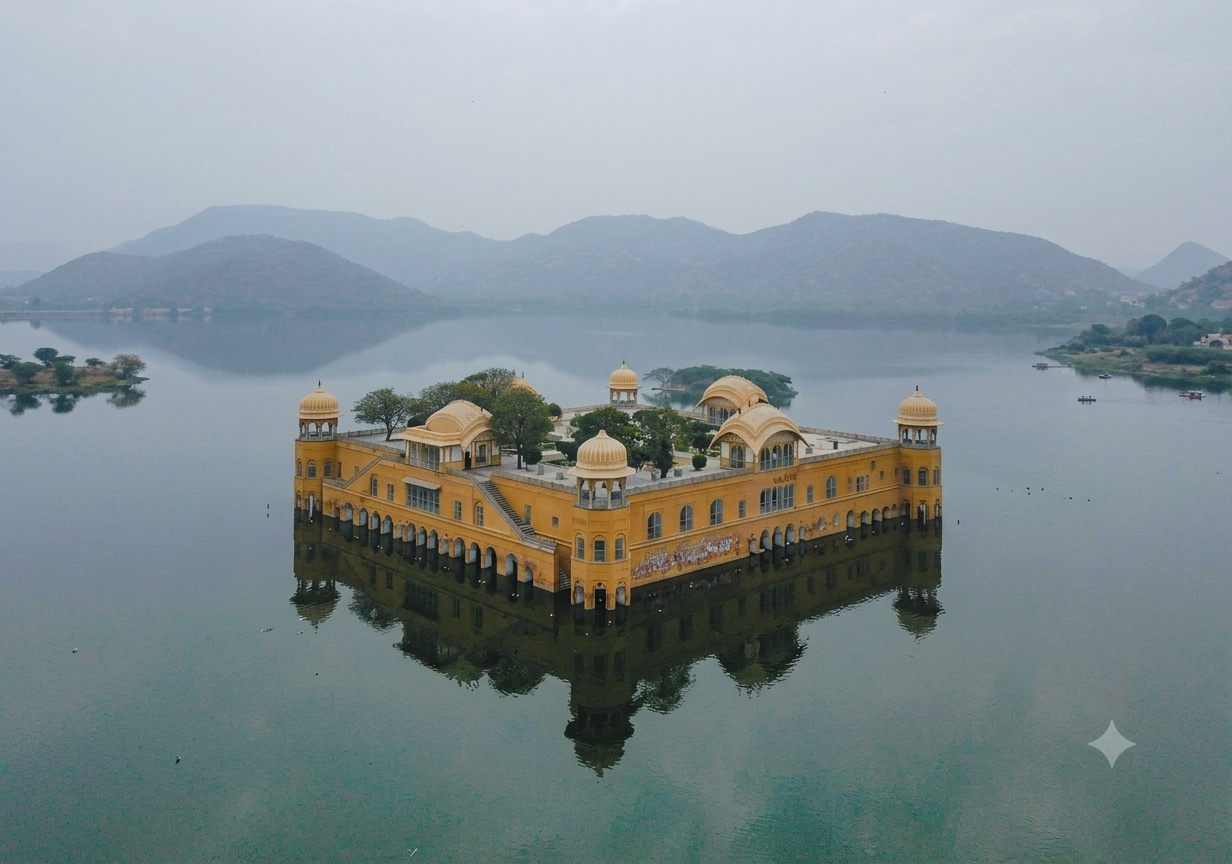
Jal Mahal : Where a Palace Floats Between Water and Sky
Picture yourself standing on the shores of Man Sagar Lake as the first rays of sunlight paint the Aravalli Hills in shades of gold. The still waters mirror a magnificent palace that appears to float effortlessly upon the lake's surface. Gentle breezes ripple across the water, while migratory birds glide overhead, adding life to a scene that feels almost dreamlike. This is Jal Mahal—not merely a palace, but one of Jaipur's most enchanting landmarks. Rising gracefully from the heart of Man Sagar Lake, Jal Mahal stands as a masterpiece of Rajput architecture, blending royal elegance with the tranquility of nature. Unlike grand forts and bustling palaces, Jal Mahal captivates through its serenity, creating an atmosphere where history, water, and sky exist in perfect harmony.
🏰 Jal Mahal, Jaipur
🌊 Where a Palace Floats Between Water and Sky
✨ Introduction
Picture yourself standing on the shores of Man Sagar Lake as the first rays of sunlight paint the Aravalli Hills in shades of gold. The still waters mirror a magnificent palace that appears to float effortlessly upon the lake's surface. Gentle breezes ripple across the water, while migratory birds glide overhead, adding life to a scene that feels almost dreamlike. This is Jal Mahal—not merely a palace, but one of Jaipur's most enchanting landmarks. Rising gracefully from the heart of Man Sagar Lake, Jal Mahal stands as a masterpiece of Rajput architecture, blending royal elegance with the tranquility of nature. Unlike grand forts and bustling palaces, Jal Mahal captivates through its serenity, creating an atmosphere where history, water, and sky exist in perfect harmony.
👑 A Royal Retreat Amidst the Waters
Jal Mahal's story dates back to the 18th century when Maharaja Madho Singh I commissioned the palace as a royal leisure retreat. Designed as a place where the rulers of Jaipur could escape the demands of court life, the palace offered an oasis of calm surrounded by the pristine waters of Man Sagar Lake.
The location was carefully chosen. Nestled between the Nahargarh Hills and the expanding city of Jaipur, the palace provided a peaceful setting for royal picnics, duck-hunting expeditions, and private gatherings. Over the centuries, Jal Mahal became an enduring symbol of Jaipur's royal heritage and architectural sophistication.
What makes Jal Mahal truly remarkable is its relationship with the lake itself. During periods of high water, four of its five stories remain submerged, leaving only the upper floor visible above the waterline. This unique design creates the illusion of a floating palace, one of the most iconic sights in Rajasthan.
🏛️ Architectural Beauty That Defies Expectations
The moment you catch sight of Jal Mahal, you understand why it is considered one of Jaipur's most photographed landmarks. Built primarily in red sandstone, the palace showcases a refined blend of Rajput and Mughal architectural styles.
Elegant chhatris crown the roofline, while delicately carved balconies and symmetrical façades reflect the artistic excellence of the era. The structure's design is both graceful and functional, engineered to withstand fluctuating water levels while maintaining its aesthetic charm.
Unlike many royal residences built to impress through sheer scale, Jal Mahal enchants through simplicity and balance. Its reflection shimmering across the lake doubles its beauty, creating a scene that changes with every shift in light. Sunrise bathes the palace in soft gold, while sunset transforms it into a silhouette against Jaipur's colorful skies.
🌅 What Makes Jal Mahal Special
Unlike most historic palaces that invite visitors into courtyards and chambers, Jal Mahal is admired primarily from the lakeside promenade. This unique experience adds to its mystique. Visitors are encouraged to appreciate the palace as part of a larger landscape rather than as an isolated monument.
The surrounding area has become one of Jaipur's most scenic viewpoints. Walking along the lakeside, visitors can enjoy uninterrupted views of the palace framed by the Aravalli Hills. During winter months, the lake attracts numerous migratory birds, making it a favorite destination for photographers, nature enthusiasts, and birdwatchers.
The palace itself has undergone extensive conservation efforts to preserve its architectural integrity and restore the ecological health of Man Sagar Lake. These initiatives have revived both the monument and its natural surroundings, ensuring that future generations can continue to experience its beauty.
🌿 A Harmony of Nature and Heritage
What truly distinguishes Jal Mahal is its seamless integration with the environment. The palace does not dominate the landscape; instead, it complements it. Water, hills, sky, and architecture combine to create one of the most peaceful settings in Rajasthan.
For centuries, the lake has served as a vital ecological habitat while also enhancing the palace's visual appeal. The result is a rare example of heritage and nature coexisting in perfect balance. Standing by the lake, visitors often find themselves lingering longer than expected, captivated by the calmness that surrounds the monument.
📍 Visitor Information
☀️ Best Time to Visit
The ideal time to visit Jal Mahal is between October and March when Jaipur enjoys pleasant weather and clear skies. During these months, the lake is particularly beautiful, and migratory birds add life and color to the surroundings.
Early morning and late afternoon are the most rewarding times to visit. The changing light creates stunning reflections on the water, while cooler temperatures make lakeside walks especially enjoyable. Sunset is particularly magical, as the palace glows against the backdrop of the Aravalli Hills.
🚗 How to Reach
Jal Mahal is located on the Jaipur-Amer Road, approximately 6 kilometers from Jaipur's city center. It is easily accessible by taxi, auto-rickshaw, or private vehicle from anywhere in Jaipur.
The monument lies conveniently along the route to several of Jaipur's major attractions, making it a natural stop during a day of sightseeing. Most visitors spend 30 minutes to an hour enjoying the views, taking photographs, and exploring the lakeside promenade.
🗺️ Nearby Places Worth Exploring
Jal Mahal enjoys a strategic location close to many of Jaipur's iconic landmarks. The magnificent Amber Fort is only a short drive away, while Nahargarh Fort offers spectacular panoramic views of the city. The historic City Palace, Hawa Mahal, and Jantar Mantar can also be easily combined into a comprehensive Jaipur itinerary.
The bustling local markets and traditional Rajasthani eateries nearby provide opportunities to experience the city's vibrant culture and cuisine.
✨ Why You Simply Must Visit Jal Mahal
Some palaces impress through grandeur. Jal Mahal captivates through tranquility. Standing beside Man Sagar Lake, watching the palace appear to float effortlessly upon the water, you realize that true beauty does not always demand attention—it quietly earns it.
For photographers, the reflections and changing light offer endless creative possibilities. For couples, the setting feels undeniably romantic. For history lovers, the palace represents a unique chapter in Jaipur's royal legacy. And for travelers seeking a moment of peace amid Rajasthan's vibrant energy, Jal Mahal provides exactly that.
The palace whispers stories of royal retreats, serene evenings, and centuries of architectural brilliance. More importantly, it reminds us that heritage can exist in harmony with nature, creating experiences that are both timeless and unforgettable.
Stand by the lake. Watch the palace mirror itself in the water. Feel the calm of the Aravallis around you. And discover why Jal Mahal remains one of Jaipur's most beloved and enchanting landmarks.