🌐 Overview
One of Northern India's Most Historically Layered Destinations
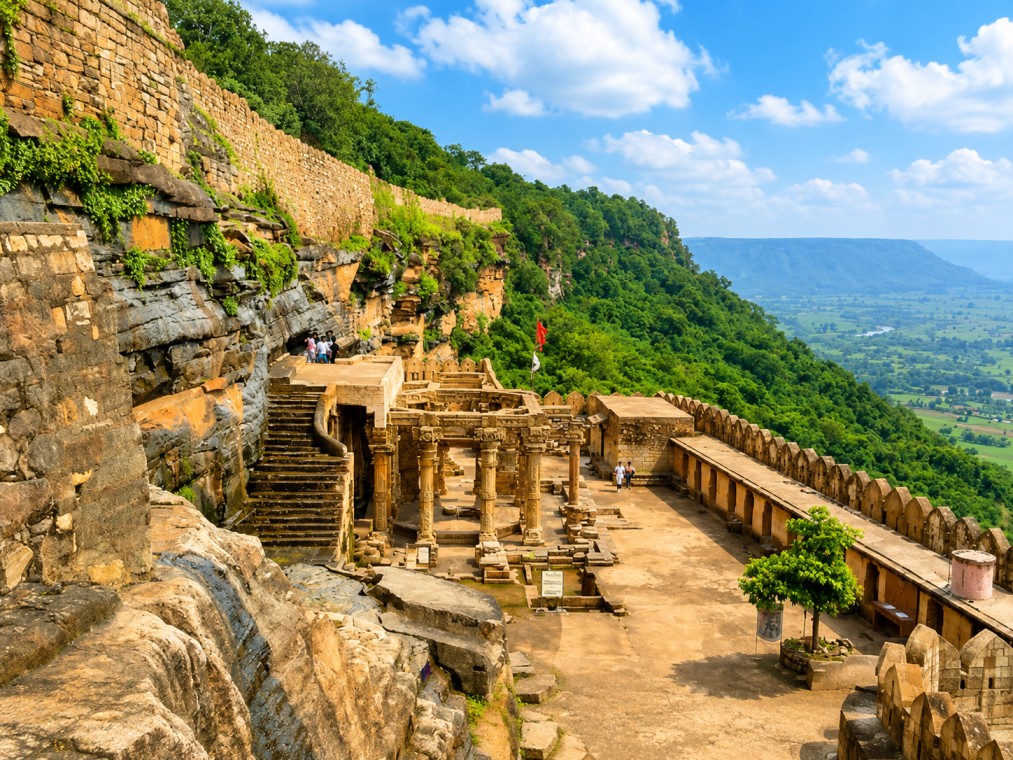
Kalinjar Fort stands as one of the most historically layered and atmospherically commanding destinations in northern India, representing a hilltop citadel of extraordinary antiquity and strategic importance whose massive stone ramparts, rock-cut sculptures, ancient temples, and deeply evocative ruins together compose one of the most complete and historically significant medieval fort landscapes surviving anywhere in the Indian subcontinent.
Situated in the Banda district of Uttar Pradesh, rising dramatically above the surrounding plains of the Bundelkhand region atop a plateau of the Vindhya range at an elevation of approximately 244 metres, Kalinjar is a destination of singular historical and geographical character, offering a landscape defined by the massive defensive walls climbing the hillside through scrub forest, the extraordinary concentration of rock-cut images, inscriptions, and sculptural panels distributed across the fort interior, the ancient Neelkanth Temple of considerable religious significance, and an atmosphere of deep historical solitude and layered cultural memory that makes this one of the most genuinely extraordinary yet remarkably undervisited heritage destinations in all of northern India.
The destination draws history enthusiasts, archaeology lovers, Shaivite pilgrims, and heritage explorers from across the country, offering an encounter with a fortification whose recorded history spans more than two thousand years and whose walls have been contested by some of the most powerful rulers and empires in the history of the subcontinent.
✨ Why Visit
An Unparalleled Heritage of Dynasties, Devotion & Discovery
The recognition of Kalinjar as one of the most historically significant forts in northern India reflects its unparalleled importance within the cultural and military heritage landscape of the Bundelkhand region, having served across successive centuries as a stronghold of the Chandela dynasty, a coveted prize of the Delhi Sultanate, a fortress contested by Sher Shah Suri who met his death here in 1545 during its siege, and a strategic possession of the Mughal empire under Akbar. Unlike more commercialized or heavily restored fort destinations, Kalinjar offers a cohesive experience where the sheer antiquity of the site, the remarkable density of rock-cut sculptures and inscriptions embedded in its walls and chambers, the living pilgrimage tradition of the Neelkanth Temple, and the dramatic natural setting of the Vindhya plateau together create a destination of exceptional historical depth and the particular atmosphere of a place where the weight of accumulated history is felt at every step.
One of the most compelling reasons to visit is the extraordinary concentration of rock-cut art and sculpture distributed throughout the fort interior, where images of Shiva, Vishnu, Kali, and numerous other deities have been carved directly into the living rock of the hillside plateau across successive centuries of occupation, creating an open-air gallery of religious art of remarkable antiquity and artistic quality.
The Neelkanth Temple, housing a naturally occurring Shivalinga of great sanctity and drawing pilgrims throughout the year, adds a dimension of living spiritual practice to the archaeological richness of the site, making Kalinjar a destination where ancient religious tradition and historical significance are inseparable from each other. The combination of extraordinary historical depth spanning multiple dynasties and empires, the remarkable rock-cut artistic heritage, the living pilgrimage tradition, and the genuine sense of solitude and discovery available at this significantly undervisited destination further strengthens its appeal as a profoundly rewarding heritage experience.
🔑 Key Highlights Within the Area
Landmarks of Extraordinary Significance
The Seven Gateways
Among the historical landmarks, the massive fortification walls and successive gateways that define the approach to the fort summit stand out as the most immediately imposing and atmospherically distinctive features of Kalinjar. The ascent to the fort plateau passes through a series of seven gateways, each named and each representing a successive line of defence, their massive stone construction and commanding positions above the approach route conveying the military ambition and defensive sophistication of the Chandela rulers who brought the fort to the height of its power between the ninth and thirteenth centuries. The scale and quality of the masonry in these gateways, much of it still remarkably intact, offers an immediate and visceral encounter with medieval military architecture of the highest order.
The Neelkanth Temple
The Neelkanth Temple, located within the fort complex and housing one of the most sacred naturally occurring Shivalingas in the Bundelkhand region, is a highlight of profound religious and artistic significance. The temple and its surrounding rock-cut panels feature some of the finest sculptural work on the entire plateau, with images of Shiva in his various manifestations, the Ardhanarishvara form combining male and female principles, and numerous attendant figures carved with a quality and expressive power that reflects the artistic achievements of the Chandela period at its most accomplished.
The Bhairava Kund
The Bhairava Kund, an ancient water tank carved into the rock of the plateau and associated with one of the most striking rock-cut images on the entire fort, featuring a colossal panel of Kala Bhairava depicted with extraordinary power and sculptural confidence, is another highlight of exceptional artistic and religious significance. The combination of the ancient water tank, the carved image, and the surrounding rock-cut panels creates a setting of accumulated sacred and artistic meaning that is genuinely without parallel at any other fort destination in northern India.
🌿 A Landscape That Changes with the Seasons
The visual experience of Kalinjar changes considerably with the seasons, as the winter months bring a crisp clarity to the plateau air and sharp views across the surrounding Bundelkhand landscape, while the post-monsoon months lend a fresh green intensity to the scrub vegetation of the hillside and fill the ancient rock-cut tanks with water that reflects the surrounding carved stone in surfaces of considerable natural beauty.
🎯 Activities
How to Experience Kalinjar
Exploring the fort plateau and its remarkable concentration of rock-cut sculptures, ancient temples, and historical structures is the primary and most deeply rewarding activity at Kalinjar, with the dispersed distribution of heritage elements across the expansive summit plateau requiring several hours of unhurried walking to fully appreciate. The experience of moving between successive carved panels, ancient cisterns, ruined palaces, and temple structures across the plateau landscape, with the vast Bundelkhand plain visible in every direction from the rampart edges, offers a quality of historical immersion and discovery that is rare at any heritage destination in northern India.
Visiting the Neelkanth Temple and engaging with the living pilgrimage tradition of the site adds a meaningful dimension of spiritual atmosphere to the archaeological exploration of the fort, as the presence of devotees, the sound of temple bells, and the continuous devotional activity around the ancient Shivalinga create a sense of the fort as a living sacred landscape rather than merely a historical monument. Photography of the rock-cut sculptures, the gateway architecture, and the panoramic views from the rampart edges is a deeply rewarding pursuit, particularly in the clear light of the winter months when the quality of natural illumination on the carved stone surfaces is at its most revealing and atmospheric.
📅 Best Time to Visit
When to Plan Your Journey
🌤️ October – March (Recommended)
The most favorable period to visit Kalinjar Fort is from October to March, when the pleasant winter temperatures of the Bundelkhand plateau make the extended walking exploration of the fort comfortable and the clear winter skies sharpen the panoramic views from the rampart edges to their most dramatic and rewarding extent. During these months, the settled conditions and comfortable temperatures make spending a full day exploring the scattered heritage elements of the fort plateau a genuinely pleasurable and unhurried experience.
🌧️ July – September (Monsoon)
The monsoon months from July to September bring a green freshness to the hillside vegetation and fill the ancient rock-cut tanks with water, lending the plateau landscape a quality of natural vitality and atmospheric beauty that contrasts with the drier months, though some sections of the approach trail can become slippery during heavy rainfall and require appropriate footwear and caution.
🚗 Connectivity
Getting to Kalinjar Fort
Kalinjar Fort is accessible from Banda, the nearest district headquarters, situated approximately 55 kilometres away and connected to the broader rail network of Uttar Pradesh with services from Allahabad, Jhansi, and other regional centers. Allahabad, known as Prayagraj, situated approximately 200 kilometres to the northeast, serves as the most practical major gateway city with broader air and rail connectivity from across the country.
Road connectivity from Banda, Prayagraj, Khajuraho, and Satna is established through national and state highway routes, making Kalinjar a practical and deeply rewarding inclusion in Bundelkhand heritage itineraries for travelers combining the fort with visits to the magnificent temple complex of Khajuraho, the ghats of Chitrakoot, and the broader cultural and historical landscape of this remarkable region of central India.