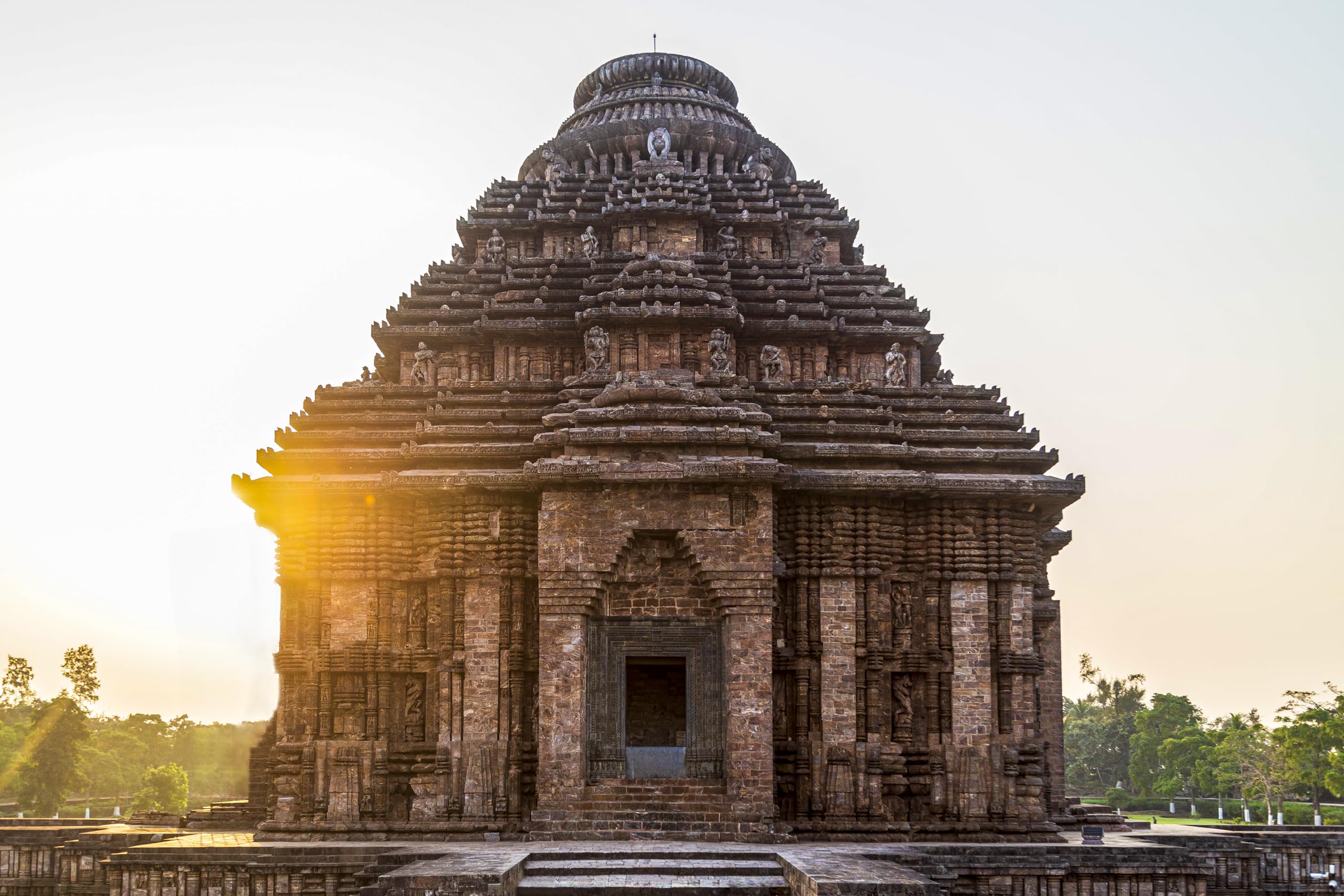
Konark-Sun-Temple : The Chariot Of The Sun God
On the eastern coast of India, where the Bay of Bengal meets the golden sands of Odisha, stands one of the most audacious architectural achievements in human history. The Konark Sun Temple — a colossal stone chariot dedicated to Surya, the Hindu sun god — rises from the landscape with a grandeur that stops visitors in their tracks. A UNESCO World Heritage Site since 1984, this 13th-century marvel is not simply a place of worship. It is a calendar, an astronomical instrument, a sculpture gallery, and a philosophical statement, all rolled into one breathtaking structure.
☀️ Konark Sun Temple: The Chariot of the Gods Frozen in Stone
On the eastern coast of India, where the Bay of Bengal meets the golden sands of Odisha, stands one of the most audacious architectural achievements in human history. The Konark Sun Temple — a colossal stone chariot dedicated to Surya, the Hindu sun god — rises from the landscape with a grandeur that stops visitors in their tracks. A UNESCO World Heritage Site since 1984, this 13th-century marvel is not simply a place of worship. It is a calendar, an astronomical instrument, a sculpture gallery, and a philosophical statement, all rolled into one breathtaking structure.
📍 Location
35 kilometres northeast of Puri, Odisha
🏛 UNESCO Status
World Heritage Site since 1984
📅 Period
13th Century CE
☀️ Dedicated To
Surya, the Hindu sun god
📍 Location and First Impressions
Located about 35 kilometres northeast of Puri in Odisha, Konark sits at the confluence of the Chandrabhaga River and the sea — a location chosen with deliberate spiritual intent. The name itself is a compound of two Sanskrit words: Kona (corner or angle) and Arka (sun), together meaning "Sun of the Corner" or, more poetically, "the sun at its angle." On a clear morning, when the first light of dawn touches the temple's amber stone and the air carries the faint salt of the ocean, it is difficult not to feel that the ancient builders chose this site with an almost cinematic sense of drama.
👑 History and Origins: The Vision of Narasimhadeva I
The Konark Sun Temple was built in the 13th century CE under the patronage of King Narasimhadeva I of the Eastern Ganga dynasty, who ruled Odisha from 1238 to 1264 CE. According to historical accounts, the king commissioned the temple to commemorate his military victories, particularly against the Muslim sultanates of Bengal — though the temple's spiritual ambition clearly transcended any single political moment.
Construction is believed to have taken approximately twelve years, involving around 1,200 artisans, architects, and labourers. The chief architect is traditionally named as Bishu Maharana, though like most ancient Indian construction history, the precise record of individual contributions is difficult to verify. What is certain is that the scale and complexity of the project were staggering for the era.
The temple was built in the Kalinga style of architecture, the dominant tradition of temple construction in Odisha, characterised by its distinctive curvilinear towers (called deul) and elaborately decorated outer walls. Konark represents the pinnacle of this tradition — the point at which Kalinga architecture reached its most ambitious and sophisticated expression.
🛕 The Architecture: A Chariot Written in Stone
The conceptual genius of Konark lies in its fundamental metaphor. The entire temple is designed as the sun god's chariot — a massive stone vehicle with 24 intricately carved wheels, each roughly three metres in diameter, and seven horses straining at the front as if pulling Surya across the sky. Every wheel is not merely decorative: each functions as a precise sundial. The spokes cast shadows that allow a trained observer to read the time of day with remarkable accuracy, down to the minute.
The 24 wheels are widely interpreted as representing the 24 hours of the day, the 24 fortnights of the Hindu calendar, or the cycle of seasons — scholars differ, and perhaps all interpretations are intentionally valid. The seven horses symbolise the seven days of the week as well as the seven colours of sunlight.
The original structure included a main sanctum tower (deul) that is said to have soared to approximately 70 metres — taller than many European cathedrals of the same era. This tower no longer stands, having collapsed at some point between the 17th and early 20th centuries under disputed circumstances. The surviving structure — the jagamohana or assembly hall — still rises to about 30 metres and continues to inspire awe.
🎨 Sculptural Richness: Every Surface Tells a Story
If Konark's architecture is its skeleton, its sculptures are its soul. The outer walls of the temple are covered in an extraordinary density of carvings — estimated in the thousands — depicting gods and goddesses, celestial musicians, dancers, animals, military processions, hunting scenes, and erotic figures reminiscent of those at Khajuraho.
The erotic sculptures at Konark have puzzled and fascinated observers for centuries. Several interpretations exist: they may represent the worldly realm that devotees must pass through before entering the divine space of the sanctum; they may reflect the Tantric traditions prominent in medieval Odisha; or they may simply celebrate the fullness of human life as understood through the lens of Hindu philosophy, where desire (kama) is one of the four legitimate pursuits of existence.
Three sun sculptures — one facing east to catch the rising sun, one facing south for the midday sun, and one facing west for the setting sun — were positioned to be lit by natural sunlight at different hours. Only two of these original solar images survive intact today, but the engineering logic behind their placement speaks volumes about the builders' understanding of both aesthetics and astronomy.
📖 Legends and Lore: The Magnet Stone and the Priest's Son
Konark carries legends as richly layered as its stone carvings. The most famous involves a massive lodestone — a natural magnet — said to have been placed at the apex of the original tower, powerful enough to attract ships and disrupt their compasses. Portuguese sailors allegedly removed this stone, causing the structural imbalance that eventually led to the tower's collapse. This story remains unverified but has persisted for centuries.
Another legend concerns Dharamapada, the twelve-year-old son of the chief architect. Unable to solve a structural problem that threatened to delay or abandon the entire project, young Dharamapada reportedly devised the solution that allowed the tower's capstone to be placed correctly — and then threw himself from the top of the completed structure, sacrificing his life so that no one else could claim credit for his father's masterwork. The story is heartbreaking and possibly apocryphal, but it endures in Odisha's cultural memory.
🌅 Visiting Konark: Atmosphere, Timing, and What to Expect
The Konark Sun Temple is open daily, and the grounds are well-maintained by the Archaeological Survey of India. The best time to visit is between October and February, when Odisha's climate is cool and pleasant. Mornings are particularly magical — as the sun rises and its light falls across the carved horses and wheels, the temple seems almost to move, the stone warmed to a rich ochre gold.
The annual Konark Dance Festival, held every November against the dramatic backdrop of the temple, brings together classical Indian dance forms — Odissi, Bharatanatyam, Kathak, and others — in performances that feel genuinely connected to the site's ancient artistic traditions. It is one of India's most atmospheric cultural events and draws visitors from across the world.
🏆 Heritage Tourism and Lasting Significance
The Konark Sun Temple is not merely a tourist attraction. It is an active site of cultural identity for Odisha and a benchmark of human creative ambition. For international travellers, it offers a profound encounter with an architectural tradition entirely distinct from anything in the Western canon. For Indian visitors, it is a source of deep pride — a reminder that medieval India produced engineering and artistic achievements that stand comparison with anything the ancient world has left behind.
As awareness of India's heritage tourism grows globally, Konark continues to rise in international recognition. It appears on countless bucket lists, inspires artists and architects, and anchors the famous Golden Triangle of Odisha alongside Puri and Bhubaneswar as a pilgrimage of culture and history.
To stand before the Sun Temple at dawn — when the carved wheels catch the light and the stone horses seem poised to gallop — is to understand why human beings have always built monuments. Not merely to worship, but to say: we were here, and we reached for something greater than ourselves.