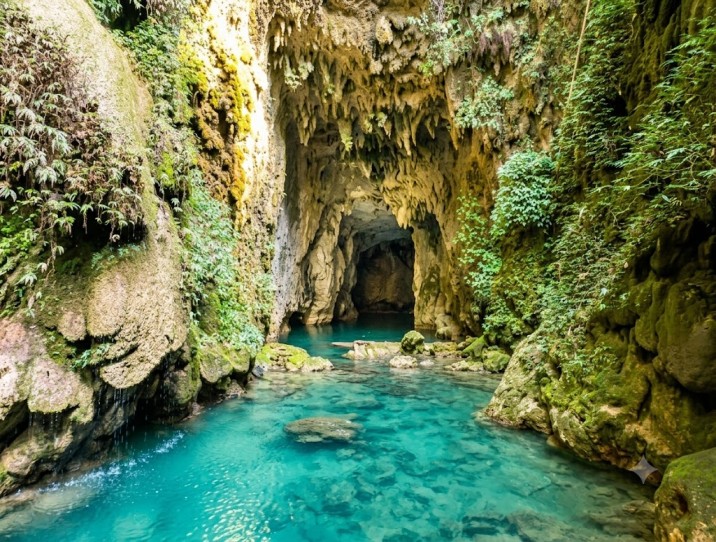
Krem Puri: Journey Through India's Longest Natural Cave
Krem Puri stands as one of the most remarkable subterranean destinations in India, representing one of the largest sandstone caves in the world and a cave system of extraordinary geological significance whose vast chambers, intricate passages, and the sheer scale of its sandstone architecture have established it as one of the most important speleological discoveries in the entire Indian subcontinent. Situated in the West Jaintia Hills district of Meghalaya, within the dense and largely undisturbed forest landscape of the Khasi-Jaintia plateau, Krem Puri extends across a mapped length of more than 24 kilometres, making it not only the longest sandstone cave in the Indian subcontinent but one of the longest in the world, a distinction that places this relatively unknown destination among the most scientifically significant cave systems on the planet. The destination draws speleologists, adventure cavers, geology enthusiasts, and intrepid travelers from across the country and the world, offering an encounter with a subterranean landscape of soaring chambers, narrow crawl passages, underground streams, and the rare and delicate ecosystem of cave-adapted species that thrive in the absolute darkness of this remarkable sandstone labyrinth carved over millennia by the slow and patient work of flowing water through the porous rock of the Meghalaya plateau.
Krem Puri Sandstone Labyrinth
One of the largest sandstone caves on earth — a 24-kilometre subterranean world of soaring chambers, crawl passages, and underground streams beneath the Khasi-Jaintia plateau.
Overview
Krem Puri stands as one of the most remarkable subterranean destinations in India, representing one of the largest sandstone caves in the world and a cave system of extraordinary geological significance whose vast chambers, intricate passages, and the sheer scale of its sandstone architecture have established it as one of the most important speleological discoveries in the entire Indian subcontinent. Situated in the West Jaintia Hills district of Meghalaya, within the dense and largely undisturbed forest landscape of the Khasi-Jaintia plateau, Krem Puri extends across a mapped length of more than 24 kilometres, making it not only the longest sandstone cave in the Indian subcontinent but one of the longest in the world, a distinction that places this relatively unknown destination among the most scientifically significant cave systems on the planet. The destination draws speleologists, adventure cavers, geology enthusiasts, and intrepid travelers from across the country and the world, offering an encounter with a subterranean landscape of soaring chambers, narrow crawl passages, underground streams, and the rare and delicate ecosystem of cave-adapted species that thrive in the absolute darkness of this remarkable sandstone labyrinth carved over millennia by the slow and patient work of flowing water through the porous rock of the Meghalaya plateau.
Why Visit Krem Puri
The recognition of Krem Puri as one of the longest sandstone caves in the world reflects its unparalleled importance within the global speleological landscape, distinguishing Meghalaya as a region of exceptional cave geology where the unique combination of heavy rainfall and porous sandstone has produced one of the densest concentrations of significant cave systems found anywhere on earth. Unlike the more commonly visited limestone caves found in many parts of the world, Krem Puri's sandstone composition creates a cave environment of distinctive character, with passages and chambers shaped by a different geological process that produces formations and structural patterns unlike those found in conventional limestone cave systems. One of the most compelling reasons to visit is the sheer scale and complexity of the cave's interior, where successive chambers of considerable height and width connect through narrow passages and crawl spaces in a labyrinthine network that has taken international caving expeditions years of dedicated exploration and mapping to document fully. The cave system also holds considerable ecological significance, sheltering populations of bats and other cave-adapted fauna whose presence underscores the broader importance of Meghalaya's karst and sandstone cave networks to the region's biodiversity.
🪨 Sandstone, Not Limestone
Krem Puri's sandstone composition creates a cave environment of distinctive character, with passages and chambers shaped by a different geological process that produces formations unlike those found in conventional limestone cave systems.
Key Highlights Within the Area
Among the subterranean landmarks, the vast central chambers of Krem Puri stand out as the most awe-inspiring feature of the cave, their soaring sandstone ceilings and considerable spatial volume creating an underground landscape of genuine grandeur that is difficult to anticipate from the relatively unassuming forest entrance above. The labyrinthine network of connecting passages, some requiring careful crawling through narrow sandstone corridors while others open into expansive walkable galleries, offers a caving experience of considerable variety and technical interest. The underground streams that run through sections of the cave system add a further dimension of natural complexity, their slow erosive action over geological time having shaped much of the cave's distinctive sandstone architecture. The dense forest surrounding the cave entrance, part of the broader Jaintia Hills landscape, adds a rich natural setting to the approach, with the contrast between the green forest canopy above and the dark mineral world below heightening the sense of entering an entirely different and hidden dimension of the Meghalaya landscape.
💧 Underground Streams
Underground streams running through sections of the cave system add a further dimension of natural complexity, their slow erosive action over geological time having shaped much of the cave's distinctive sandstone architecture.
Activities
Guided caving expeditions into Krem Puri, undertaken strictly with experienced local guides and recognized caving organizations familiar with the system's extensive passages, are the primary and essential activity for visitors, as the scale and technical complexity of the cave make independent exploration both inadvisable and effectively impossible for those without specialized expertise. These expeditions, ranging from shorter introductory visits to the more accessible chambers to longer and more demanding explorations into the deeper sections of the system, offer a rare opportunity to experience one of the world's most significant sandstone cave environments under expert supervision. Photography within the accessible sections of the cave is a rewarding pursuit for those equipped with appropriate lighting equipment, capturing the scale and texture of the sandstone chambers in a manner that is otherwise difficult to convey.
Guides Required: Independent exploration of Krem Puri is inadvisable and effectively impossible without specialized expertise — always undertake expeditions with experienced local guides and recognized caving organizations.
Krem Puri at a Glance
Best Time to Visit
The most favorable period to visit Krem Puri is from November to April, during the drier months when water levels within the cave passages are at their lowest and most manageable, making the cave system safer and more accessible for guided exploration. The monsoon months from May to October bring substantially higher water levels through the cave's internal streams and passages, significantly increasing the risk and difficulty of any exploration during this period.
Connectivity
Krem Puri is accessible from Jowai, the headquarters of the West Jaintia Hills district, situated within a reasonable driving distance of the cave entrance through the surrounding forest terrain. Shillong, the capital of Meghalaya, situated approximately 80 to 100 kilometres from the Jaintia Hills cave region, serves as the most practical gateway city, connected to Guwahati's Lokpriya Gopinath Bordoloi International Airport by a road journey of approximately three to four hours. Road connectivity from Shillong and Jowai is reasonably established, though visitors are strongly advised to arrange their visit through specialized caving organizations or experienced local guides given the considerable technical demands and the largely unmarked nature of the approach to this remarkable and scientifically significant cave system.