🌄 Where the Walls of History Embrace the Aravallis
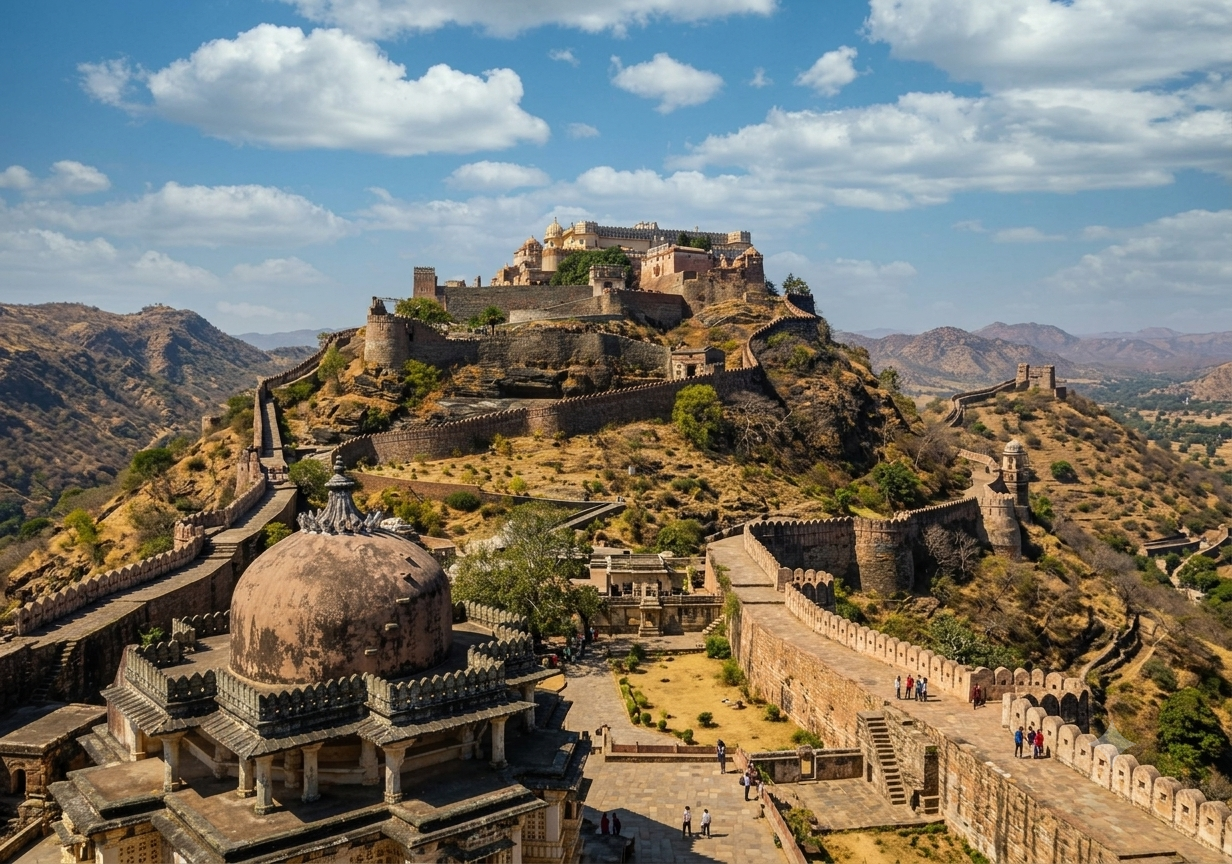
Imagine standing atop a rugged hill in the heart of the Aravalli Range, where endless stone walls snake across the mountains like a silent guardian of centuries past. The wind carries tales of Rajput valor, resilience, and sacrifice, while the vast wilderness stretches as far as the eye can see. This is Kumbhalgarh Fort—not merely a monument of stone and mortar, but one of India's greatest symbols of strength and royal pride. Rising dramatically above the forests of Rajasthan, Kumbhalgarh is celebrated for its massive fortifications, extraordinary architecture, and its role in safeguarding the legacy of Mewar. Recognized as part of the UNESCO-listed Hill Forts of Rajasthan, it remains one of the most impressive and best-preserved forts in India.
🛡️ A Fortress Built for Eternity
The story of Kumbhalgarh Fort begins in the 15th century during the reign of Maharana Kumbha, one of the most visionary rulers of Mewar. Constructed between 1443 and 1458 CE, the fort was designed as an impregnable stronghold capable of protecting the kingdom during times of conflict. Perched at an elevation of over 1,100 meters above sea level, it served as a strategic refuge for the rulers of Mewar and played a crucial role in preserving Rajput independence.
Kumbhalgarh is perhaps best known as the birthplace of Maharana Pratap, the legendary warrior king who became a symbol of resistance against the Mughal Empire. Throughout its history, the fort remained remarkably secure, falling only once due to a combination of enemy forces and exceptional circumstances. Its formidable defenses earned it a reputation as one of the strongest forts in the Indian subcontinent.
🏯 The Great Wall of India
The first sight of Kumbhalgarh leaves visitors speechless. Encircling the fort is an enormous defensive wall stretching approximately 36 kilometers, making it the second-longest continuous wall in the world after the Great Wall of China. In some sections, the wall is wide enough for several horses to ride abreast.
The fort complex encompasses a series of gateways, massive bastions, palaces, temples, and water reservoirs, all carefully integrated into the mountainous terrain. Every stone reflects the military genius of Rajput architecture, where defense and beauty coexist in perfect harmony.
🏛️ Architectural Grandeur Amidst Wilderness
Unlike the ornate palaces of Rajasthan's cities, Kumbhalgarh's beauty lies in its rugged majesty. The fort's thick walls, towering gates, and commanding viewpoints create an atmosphere of power and permanence. Seven fortified gateways protect the approach to the main citadel, each designed to slow and weaken invading armies.
Inside the fort, visitors discover a fascinating collection of structures. The Badal Mahal, or Palace of Clouds, stands at the highest point of the fort and offers breathtaking panoramic views of the surrounding hills. Its colorful chambers, delicate balconies, and airy design contrast beautifully with the fort's military character.
Scattered throughout the complex are more than 360 temples, including both Hindu and Jain shrines. These sacred structures demonstrate that Kumbhalgarh was not only a military fortress but also a thriving center of faith and culture. Intricate carvings, stone sculptures, and temple architecture add a spiritual dimension to the fort's imposing landscape.
⚔️ A Symbol of Rajput Courage
Kumbhalgarh is deeply connected to the history of Mewar and the enduring spirit of the Rajputs. It provided refuge to rulers and warriors during periods of invasion and political turmoil. The fort's strategic location, hidden among dense forests and mountains, allowed it to remain a powerful defensive center for centuries.
Walking through its gateways and courtyards, visitors can almost hear echoes of soldiers preparing for battle and royal families seeking sanctuary within its walls. The fort stands as a reminder of an era when honor, loyalty, and courage defined the identity of Rajasthan.
📅 Best Time to Visit
The ideal time to visit Kumbhalgarh Fort is from October to March, when the weather is cool and pleasant for exploring the expansive complex. During the monsoon season from July to September, the surrounding Aravalli hills become lush and green, creating spectacular scenery and enhancing the fort's dramatic setting. Summer months can be quite hot, particularly during midday.
To fully appreciate the fort, visitors should allow at least three to four hours for exploration. The evening light-and-sound show provides additional insight into the history of Mewar and is highly recommended.
🚗 How to Reach
Kumbhalgarh Fort is located in Rajasthan's Rajsamand district, approximately 85 kilometers from Udaipur. The nearest airport is Maharana Pratap Airport in Udaipur, while Udaipur Railway Station serves as the closest major railhead. The fort is easily accessible by road, with private vehicles and taxis being the most convenient options.
🌿 Nearby Attractions
The fort is surrounded by several attractions that enrich the visitor experience. The Kumbhalgarh Wildlife Sanctuary offers opportunities to spot wildlife amidst scenic forest landscapes. The magnificent Ranakpur Jain Temple, renowned for its intricate marble architecture, lies nearby and is considered one of Rajasthan's finest religious monuments. Udaipur, the City of Lakes, also serves as an excellent extension to any Kumbhalgarh itinerary.