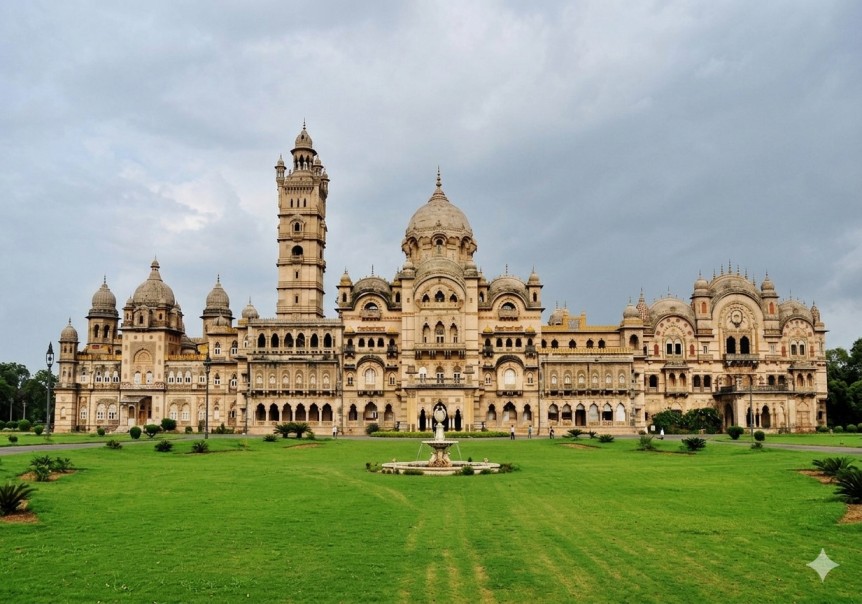
Lakshmi Vilas Palace: A Royal Residence Beyond Imagination
Picture a palace so vast it could swallow four Buckingham Palaces whole, its domes catching the golden Gujarat sun, peacocks strutting across manicured lawns, and the quiet hum of history humming through every Indo-Saracenic arch. That's Laxmi Vilas Palace for you — not just a royal residence, but a statement. Located in Vadodara (formerly Baroda), Gujarat, this magnificent palace remains one of the largest private residences ever built, and stepping through its gates feels less like sightseeing and more like stepping into a forgotten chapter of princely India.
Picture a palace built almost entirely of teakwood, its pillars painted with delicate floral patterns, standing quietly amid the chaos of one of India's busiest cities. That's Tipu Sultan's Summer Palace for you — a fragile, fragrant whisper of the 18th century tucked away in the heart of modern Bengaluru. Located near Krishna Rajendra Market in the old city, this wooden marvel once served as the retreat of one of South India's fiercest rulers, the "Tiger of Mysore" himself, and even today, it carries the quiet dignity of a bygone empire.
📜 A Little Bit of History First
The palace's story actually begins with Tipu Sultan's father, Hyder Ali, who started its construction in the 1760s. Tipu Sultan, upon ascending the throne, completed the structure in 1791, intending it as a summer retreat away from the formalities of his main residence.
Built almost entirely in the Indo-Islamic style using wood rather than stone, the palace reflects a deliberate architectural choice — lightweight, breathable, and beautifully suited to Bengaluru's pleasant climate, which even then was known for its cool, garden-city charm.
The structure once stood within the precincts of the Bangalore Fort, a sprawling fortification that Hyder Ali and Tipu Sultan used as their stronghold in the region, though much of the fort has since vanished into the city's urban sprawl.
✨ The Attractions That Will Leave You Breathless
Step inside, and you're immediately struck by the sheer artistry of the woodwork. The palace's balconies, arches, and pillars are intricately carved, many of them once adorned with vibrant floral and geometric paintings in vivid hues — traces of which can still be faintly seen on the ceilings and upper sections, protected from centuries of wear.
The structure is two-storied, with the upper floor believed to have served as Tipu Sultan's private chambers, offering a sense of the intimate, almost humble scale at which even powerful rulers once lived, in contrast to the sprawling stone palaces elsewhere in India.
A small museum within the premises displays portraits, replicas of weapons, and informational panels detailing Tipu Sultan's military campaigns, his innovations in rocket artillery — he is often credited as a pioneer of military rocketry — and his fierce resistance against British colonial expansion.
Just outside, the surrounding gardens, though modest compared to their original grandeur, offer a peaceful green pocket amid the surrounding market chaos.
A short walk away lies Bangalore Fort, or what remains of it — primarily the Delhi Gate, a striking stone entrance that once guarded the fort's northern access.
History lovers can also visit the nearby Venkataramanaswamy Temple, built within the same period and reflecting the syncretic culture Tipu Sultan's reign was known for, where Hindu temples and Islamic structures coexisted within the same fortified complex.
🎭 Culture, People, and Food
The area surrounding the palace is one of Bengaluru's oldest and most bustling neighborhoods, home to the sprawling KR Market, one of Asia's largest flower and vegetable markets.
The streets here pulse with a different energy than the tech-driven Bengaluru most visitors expect — narrow lanes, old shops, the fragrance of jasmine and marigold, and a culture deeply rooted in Karnataka's Mysore-era history.
For food, this part of the city is a haven for authentic Karnataka cuisine. Don't miss trying Bisi Bele Bath, a comforting rice-and-lentil dish, or crispy Mysore Masala Dosa, served at countless small eateries nearby.
The area is also known for excellent filter coffee, and adventurous eaters can sample street food specialties around the market, from spicy chaats to fresh fruit stalls overflowing with seasonal produce.
🌤️ Best Time to Visit
Bengaluru's pleasant climate makes the palace a year-round destination, but the most comfortable months to visit are between October and February, when the weather is cool and ideal for walking through the old city.
Summers, from March to May, can get warm during midday, so early morning visits are recommended. Monsoon months bring relief from the heat but occasional showers may disrupt outdoor exploration.
🚗 How to Get There
✈️ By Air
Kempegowda International Airport is Bengaluru's main airport, located about 40 km from the city center, with excellent connectivity to major Indian and international cities.
🚆 By Rail
Bengaluru City Railway Station (KSR) is the closest major station, just a few kilometers from the palace, well connected to cities across India.
🛣️ By Road
The palace is easily accessible by auto-rickshaw, cab, or Bengaluru's metro and bus network, given its central location in the old city.
📍 Nearby Places Worth Exploring
While in the area, don't miss the magnificent Bangalore Palace, a Tudor-style royal residence built much later by the Wadiyar dynasty, located a short drive away.
The Vidhana Soudha, Karnataka's grand legislative building, and Lalbagh Botanical Garden, with its stunning glasshouse and diverse flora, are also easily combined into a day of sightseeing.
For those interested in colonial history, Bangalore Fort's Delhi Gate is just steps from the palace itself.
🧳 A Few Travel Tips Before You Go
Visit during weekday mornings to avoid both market crowds and tourist rushes. Photography is generally allowed, but check signage near the museum section.
Wear comfortable footwear, as exploring the surrounding old-city lanes involves considerable walking. Carry small change, as the nearby market stalls and street food vendors often don't accept cards.
❤️ Why You Simply Must Visit Tipu Sultan's Summer Palace
Some monuments overwhelm with their scale. This one moves you with its restraint. Tipu Sultan's Summer Palace doesn't shout its history — it whispers it, through carved wood and faded paint, through the quiet dignity of a ruler who chose simplicity even in retreat.
Whether you're a history buff tracing the footsteps of the Tiger of Mysore, an architecture admirer fascinated by Indo-Islamic woodwork, or simply a curious traveler wandering Bengaluru's old quarters, this palace offers a rare, intimate glimpse into a fierce yet thoughtful ruler's private