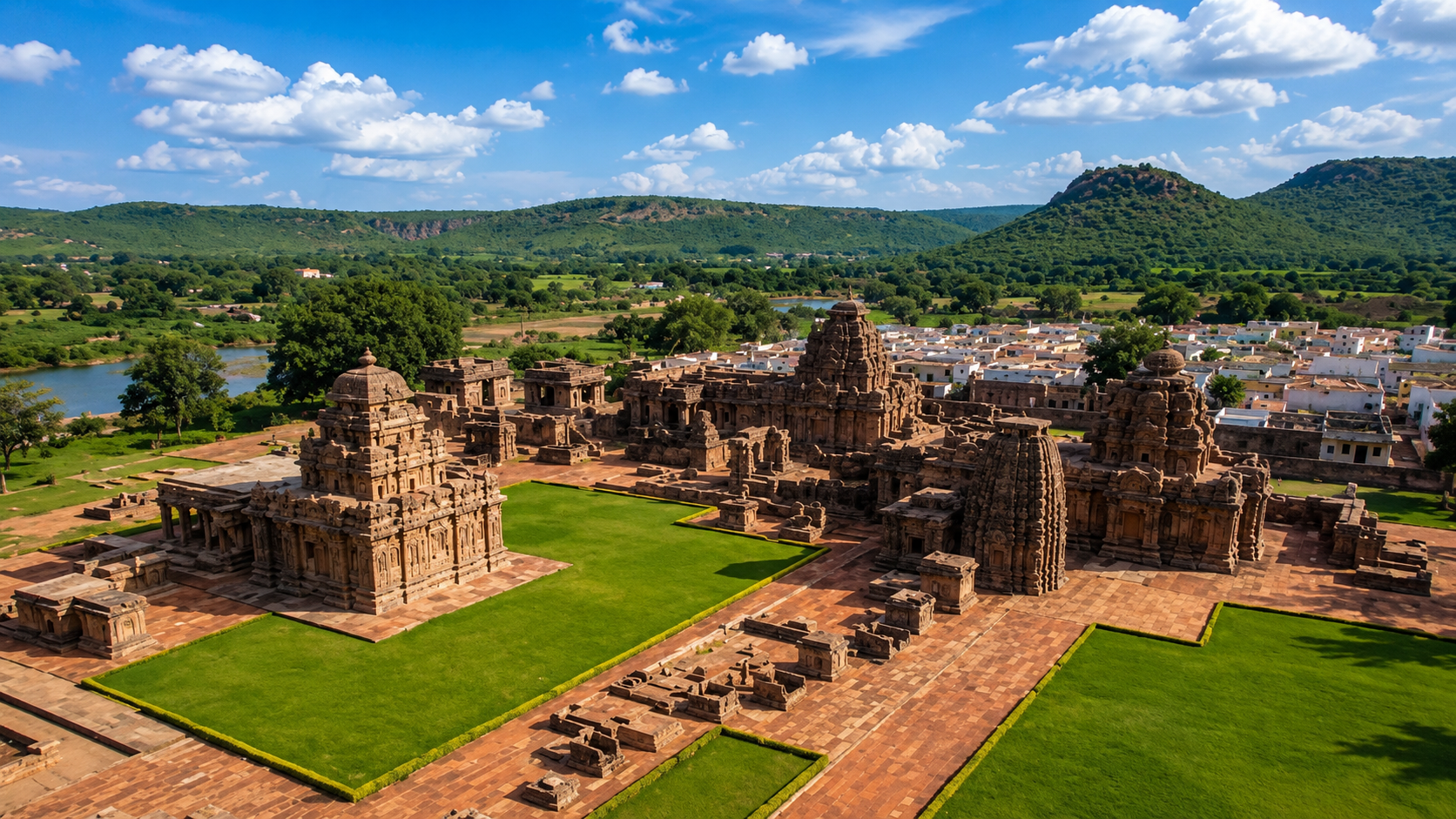
Pattadakal: A UNESCO Masterpiece of Temple Architecture
Imagine standing in the middle of a quiet plain beside a winding river, surrounded by towering temples carved from deep red sandstone, each one a different architectural language, each one a declaration of devotion that has endured for over thirteen centuries. That's Pattadakal for you — not just a UNESCO World Heritage Site, but a conversation between heaven and earth written in stone. Tucked away in the Bagalkot district of northern Karnataka along the banks of the Malaprabha River, this extraordinary complex of temples remains one of India's most breathtaking and undervisited historical treasures. Come here once, and the stones will stay with you long after you leave.
🏛️ Pattadakal, Karnataka – Where Stone Speaks and Empires Pray
Imagine standing in the middle of a quiet plain beside a winding river, surrounded by towering temples carved from deep red sandstone, each one a different architectural language, each one a declaration of devotion that has endured for over thirteen centuries. That's Pattadakal for you — not just a UNESCO World Heritage Site, but a conversation between heaven and earth written in stone. Tucked away in the Bagalkot district of northern Karnataka along the banks of the Malaprabha River, this extraordinary complex of temples remains one of India's most breathtaking and undervisited historical treasures. Come here once, and the stones will stay with you long after you leave.
📜 A Little Bit of History First
Pattadakal's story is as magnificent as the monuments it left behind. The name is believed to derive from "Raktapura" — the City of Ruby-Red Stones — a fitting tribute to the warm sandstone that glows like ember at sunrise. This was the ceremonial coronation city of the Chalukya dynasty, the powerful rulers who dominated the Deccan between the 6th and 8th centuries CE. It was here that the great Chalukya kings were crowned, their reigns consecrated by the gods themselves within these very walls.
What makes Pattadakal truly extraordinary is what it represents architecturally — a bold and conscious experiment in style. The Chalukya rulers, confident and culturally ambitious, built temples here in both the Nagara style of North India and the Dravida style of the South, creating a unique meeting point of two great architectural traditions. In 1987, UNESCO recognised this genius by inscribing Pattadakal on the World Heritage List. And yet, despite its monumental significance, Pattadakal remains beautifully uncrowded — a rare gift for the traveller who seeks depth over crowds.
✨ The Temples That Will Leave You Breathless
The Virupaksha Temple is the crown jewel of Pattadakal. Built by Queen Lokamahadevi in the 8th century to celebrate her husband King Vikramaditya II's victory over the Pallavas, this towering Dravida-style temple is covered in panels of exquisite sculpture — mythological scenes, celestial beings, and epic narratives from the Ramayana and Mahabharata carved with staggering detail. Walk slowly around its corridors and you will find stories within stories.
The Mallikarjuna Temple, built by the king's second queen, stands as a near twin to Virupaksha — a friendly architectural rivalry between royal consorts that produced two masterpieces instead of one.
The Papanatha Temple is older and distinctly different, blending North and South Indian styles in a way that feels both experimental and confident — a monument that seems to say: why choose one tradition when you can honour both?
The Sangameshvara Temple, the Galaganatha Temple, and the exquisite Jain Narayana Temple nearby complete an ensemble that is staggering in its collective beauty. Each temple has its own character, its own mood, its own secrets waiting to be discovered.
🎨 Culture, Sculpture, and Storytelling in Stone
What sets Pattadakal apart from other heritage sites is the extraordinary quality of its sculpture. Every surface tells a story. You will find panels depicting scenes from the Ramayana — the abduction of Sita, the battle of Lanka — alongside images from the Mahabharata, depictions of Shiva and Vishnu, celestial musicians, guardian figures, and mythological creatures of breathtaking imagination.
For art lovers, historians, and curious travellers, these sculptures are not decorations — they are ancient texts. Spend an unhurried morning at Pattadakal and you will leave feeling as though you have read an entire library written not in words, but in sandstone.
📸 Photography and the Magic of Light
Pattadakal is a dream for photographers. The warm red sandstone catches the early morning light and turns the entire complex into something that feels impossibly golden. The riverside setting adds a layer of calm beauty, and the relative quiet of the site means you can frame your shots without negotiating with crowds.
Visit at sunrise for soft, dramatic light across the temple spires. Stay into the late afternoon when the shadows deepen the carved panels and the river shimmers beyond the tree line. Every hour here offers a different frame, a different feeling.
📅 Best Time to Visit
Pattadakal is best visited between October and March, when the weather in northern Karnataka is cool and pleasant. Summers (April–June) can be intense with heat, and while the monsoon (July–September) brings lush greenery to the surroundings, some paths can get slippery. Early mornings any time of year are magical — arrive when the gates open and you may have the temples almost entirely to yourself.
🚆 ✈️ 🛣️ How to Get There
By Air: The nearest airport is Hubli Airport (HBX), approximately 130 km away, with connections to Bengaluru and Mumbai. Belagavi Airport is around 160 km away and also a practical option.
By Rail: The closest railway station is Badami, about 22 km from Pattadakal, with connections to Hubli and Bengaluru. From Badami, taxis and autos are readily available.
By Road: Pattadakal is well connected by road. It sits just 22 km from Badami and 14 km from Aihole, making it a natural stop on the famous Badami–Aihole–Pattadakal heritage circuit. Karnataka State Road Transport buses and private taxis serve the route regularly.
📍 Nearby Places Worth Exploring
Pattadakal sits at the heart of one of India's greatest heritage triangles. Badami, just 22 km away, offers stunning cave temples carved into ochre cliffs above a sacred lake — a site of equal drama and beauty. Aihole, 14 km in the other direction, is considered the cradle of Indian temple architecture, with over a hundred temples scattered across a small village. Together, these three sites form a heritage circuit that is among the most rewarding in all of India. Plan a minimum of two full days to do it justice.
🧳 A Few Travel Tips Before You Go
Wear comfortable walking shoes — the temple complex requires unhurried exploration on foot. Carry water and sunscreen, as shade within the complex is limited. Hire a local guide; the sculpture panels become infinitely more meaningful with a knowledgeable storyteller by your side. Book accommodation in Badami, which offers the widest range of stays in the region.
❤️ Why You Simply Must Visit Pattadakal
Some places make you feel small in the most wonderful way. Pattadakal is one of them. Standing beneath a temple tower built by a queen thirteen centuries ago, surrounded by stone figures still frozen mid-dance, mid-battle, mid-prayer — you feel the weight and the wonder of human devotion in a way that no museum ever quite manages.
Pattadakal does not shout for attention the way more famous sites do. It waits, quietly magnificent, for the traveller patient enough to find it. And when you do — when the morning light falls across the Virupaksha Tower and a lone temple bell echoes across the river — you will understand why some places are not just visited, but carried home inside you forever.
So pack your bags, follow the Malaprabha River north, and let Pattadakal do what these stones have always done — make you believe that beauty, when built with enough devotion, truly does last forever.