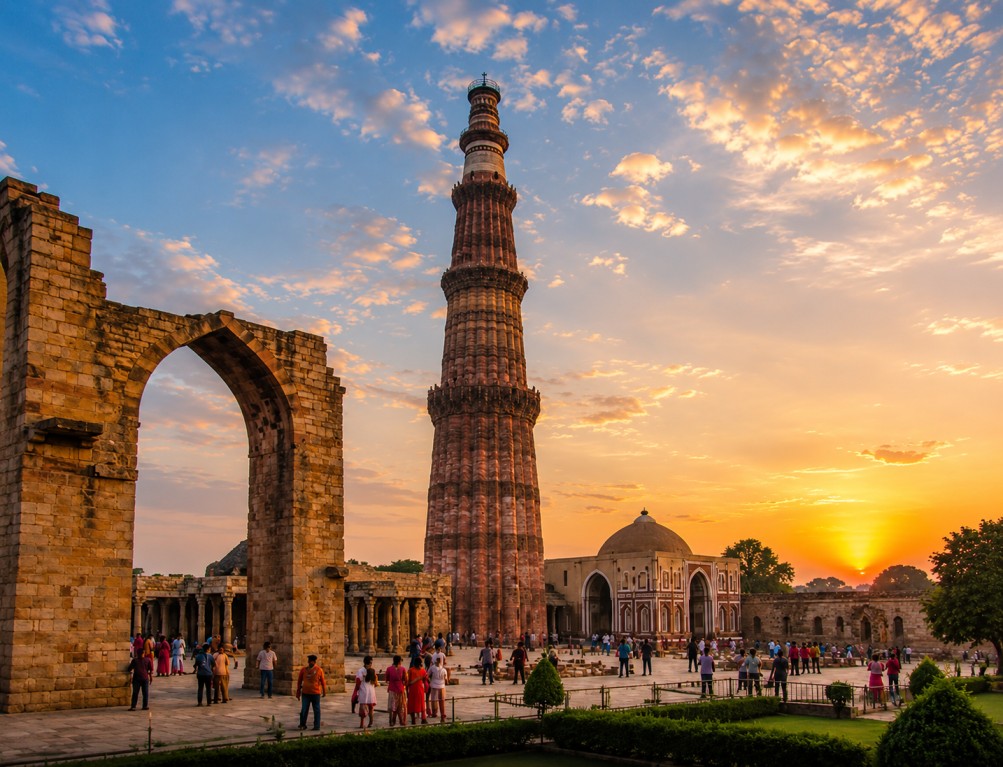
Qutub Minar, Delhi: A UNESCO Marvel of Medieval India
There are monuments that mark time, and then there are monuments that make it. Standing at 72.5 metres in the Mehrauli neighbourhood of South Delhi, the Qutub Minar belongs firmly in the second category. A minaret and victory tower built during the Delhi Sultanate, the Qutub Minar is one of the most frequented heritage spots in the city — and for good reason. It is not merely the tallest brick minaret in the world. It is the physical signature of a political turning point: the moment when Islamic rule first took root in the Indian subcontinent, carved in red sandstone and raised into the Delhi sky. The ensemble of mosques, minars, and other structures in the Qutub Minar complex is an outstanding testimony to the architectural and artistic achievements of Islamic rulers after they first established their power in the Indian subcontinent in the 12th century. UNESCO recognised this significance by designating the Qutb complex a World Heritage Site — a distinction that places it in the company of the world's most irreplaceable places.